
Why did Krishna run to embrace a poor brahmin in rags? Read the Sudama story from the Bhagavatam and learn how a...
Latest posts
-
 Krishna and Sudama: The Poor Brahmin Who Became Wealthy in LoveRead more
 -
 Vamana Avatar: How Three Steps Humbled Bali MaharajaRead more
Why did a powerful king give away three worlds to a boy asking for three steps? Learn the Vamana avatar story from...
-
 The Bhagavatam on Marriage: Duty, Love and Spiritual PartnershipRead more
What does the Bhagavatam say about marriage? Through the stories of Kardama and Devahuti, Rukmini's secret letter and...
-
 What Is Prema? The Bhagavatam's Highest Stage of Love for GodRead more
Prema is love for God with no "because" attached. Learn how the Bhagavatam describes it, the nine steps from faith to...
-
 Is Shiva Parvati Kalyana Mentioned in Srimad Bhagavatam? What the Scripture Really SaysRead more
Looking for Shiva and Parvati's wedding in the Srimad Bhagavatam? Find out what the scripture actually describes,...
-
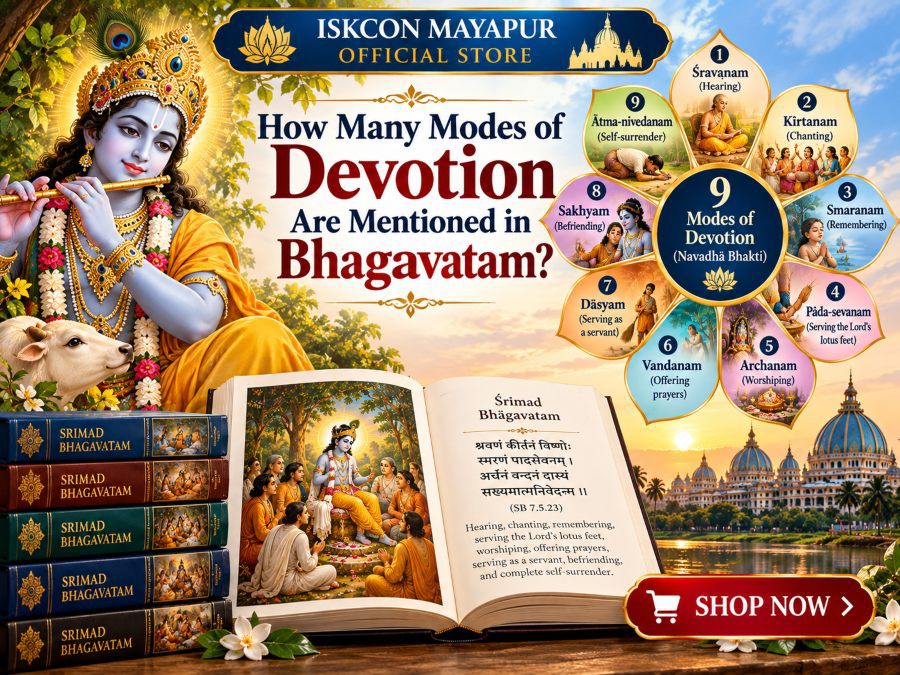 How Many Modes of Devotion Are Mentioned in Bhagavatam?Read more
A young boy named Prahlada listed nine ways to serve God, and the Bhagavatam keeps them as its answer. Learn what the...
-
 What Is Bhagavatam and Why Has It Been Read for 5,000 Years?Read more
A dying king asked one question, and the answer became the Bhagavatam. Learn what this Sanskrit scripture contains,...
-
 Who Is Lord Krishna? His Meaning, Teachings and Pastimes ExplainedRead more
Discover who Krishna is according to Srimad Bhagavatam, including His divine identity, childhood pastimes, teachings,...
-
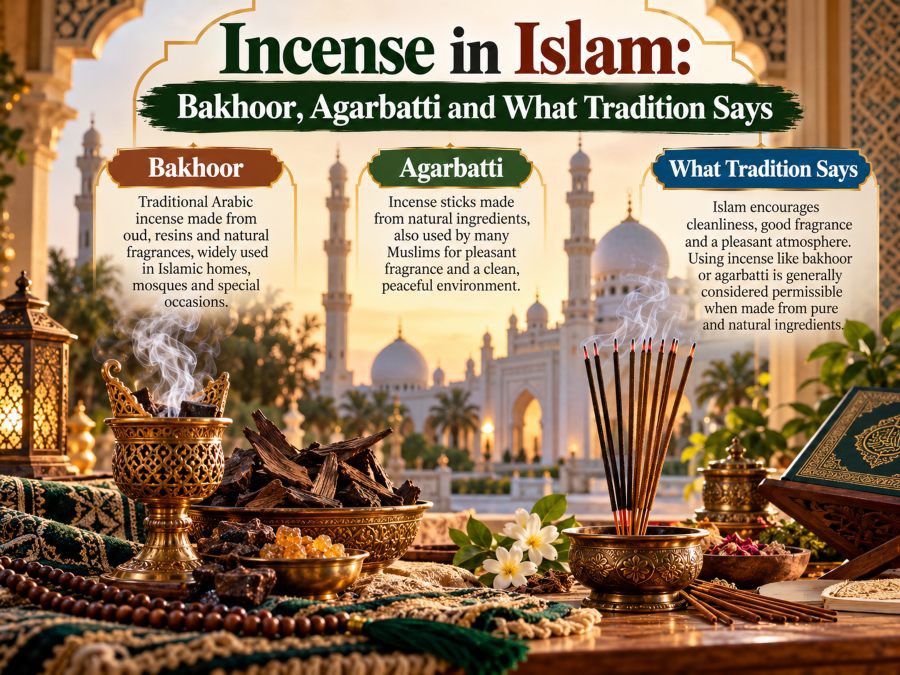 Incense in Islam: Bakhoor, Agarbatti and What Tradition SaysRead more
Is burning fragrance part of Muslim tradition? Explore incense in Islam, from the Prophetic practice of fumigating...
-
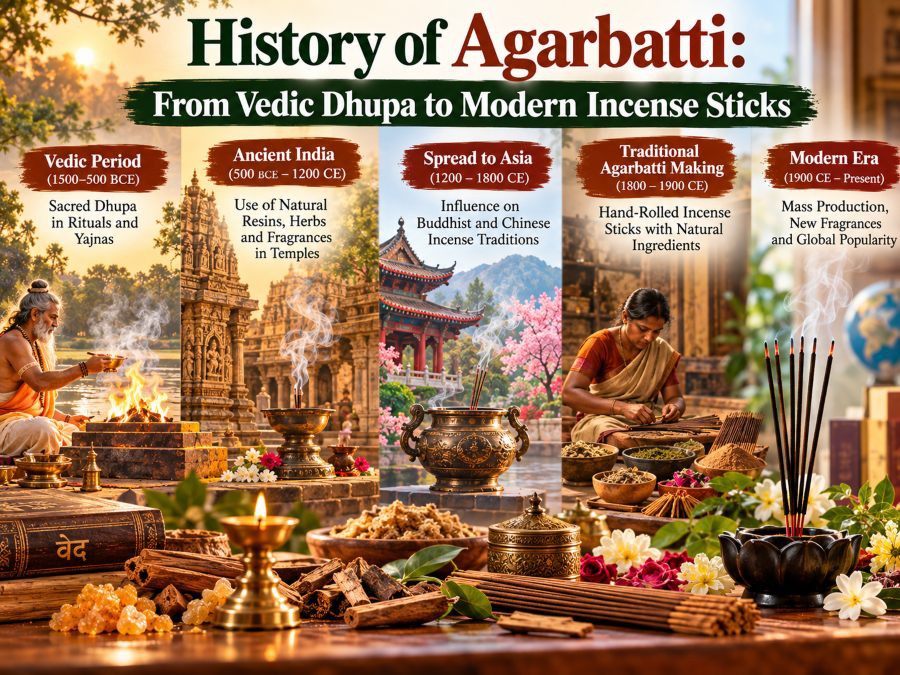 History of Agarbatti: From Vedic Dhupa to Modern Incense SticksRead more
Where did agarbatti really come from? Follow the history of agarbatti from Vedic fire rituals and temple dhupa to...
Blog categories
- Default category (0)
- MUSICAL INSTRUMENT (1)
- BOOK (5)
- DEVOTIONAL GIFT (0)
- Blog (30) click
- CHANDAN (12)
- Bhagavatam Wisdom Series (68)
- Krishna Consciousness (14)
- Mridangam Musical Instrument (6)
- Bhagavad Gita for Beginners (13)
- Bhagavad Gita As It Is (37) click
- Bhagavad Gita As It Is Telugu (0)
- Bhagavad Gita As It Is Marathi (0)
- Bhagavad Gita As It Is In Hindi (0)
- Bhagavad Gita As It Is In English (0)
- Bhagavad Gita As It Is In Bengali (8)
- Bhagavad Gita As It Is In Kannada (0)
- Bhagavad Gita As It Is In Gujarati (0)
- Bhagavad Gita As It Is In Panjabi (0)
- Bhagavad Gita As It Is In Tamil (0)
- Bhagavad Gita As It Is Odia (0)
- BHAGAVAD GITA As It Is GERMAN (0)
- Bhagavad Gita As It Is In French (0)
- Bhagavad Gita As It Is In Nepali (0)
- Bhagavad Gita As It Is In Assamese (0)
- Incense or Agarbatti (38)
- Lord Chaitanya Mahaprabhu (3)
- Vedic Temple Mayapur (14)
- kalki (15)
- Mahabharata – Dharma & Destiny (27)
- Vaishnava Scriptures (4)
- healthy product (4)
- chaitanya mahaprabhu (5)
- Tulsi Mala Guide (17)
Search in blog
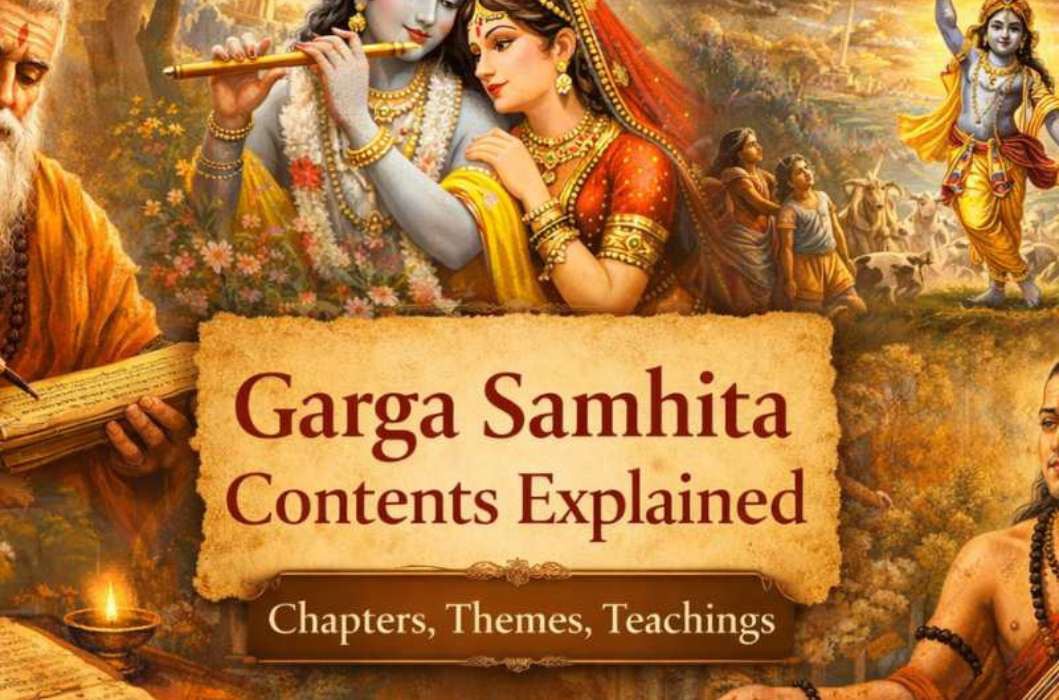
Garga Samhita Contents Explained: Chapters, Themes, and Teachings of the Sacred Vaishnava
Garga Samhita Contents Explained: A Complete Overview of Chapters, Themes, and Teachings
Introduction
The Garga Samhita is one of the most spiritually rich yet lesser-discussed scriptures within Vaishnava literature. While many devotees are familiar with texts like the Bhagavad Gita and Srimad Bhagavatam, the Garga Samhita remains a hidden reservoir of bhakti, especially treasured in the Gaudiya Vaishnava tradition.
A common question among readers and researchers is:
What are the contents of the Garga Samhita?
This article provides a detailed, 100% unique, and SEO-friendly 3000-word explanation of the contents of the Garga Samhita, covering its structure, major sections, philosophical teachings, devotional narratives, and spiritual objectives. Rather than merely listing chapters, this guide explains what each section conveys spiritually, making it useful for devotees, scholars, bloggers, and spiritual seekers alike.
Shop Garga Samhita – Official ISKCON Edition
What Is the Garga Samhita?
The Garga Samhita is a Vaishnava devotional scripture traditionally attributed to Maharshi Garga, the family priest of the Yadu dynasty and the sage who named Lord Krishna and Balarama.
Unlike historical epics, the Garga Samhita is not focused on chronology or political events. Its primary purpose is to reveal:
- The supreme position of Lord Krishna
- The eternal love of Radha and Krishna
- The superiority of bhakti (devotion)
- The spiritual glory of Vrindavan and Braj
The entire scripture is structured to awaken prema-bhakti (pure love of God).
Overall Structure of the Garga Samhita
Although manuscripts may vary slightly, the Garga Samhita is broadly divided into major sections (khandas). Each khanda focuses on a specific dimension of Krishna’s divine manifestation and devotional theology.
Main Divisions (Traditional Understanding)
- Vrindavan Khanda
- Mathura Khanda
- Dvaraka Khanda
- Radha-Krishna Mahatmya and Bhakti Teachings
These sections together create a complete devotional map, guiding the reader from intimate divine love to majestic divine sovereignty—while always prioritizing Vrindavan bhakti.
.jpg)
Vrindavan Khanda: Core Contents and Teachings
Glory of Vrindavan
The Vrindavan Khanda opens with extensive glorification of Vrindavan as Krishna’s eternal abode. The text emphasizes that Vrindavan is not an ordinary earthly place but a spiritual realm (Goloka) manifest on earth.
Key teachings include:
- Vrindavan exists beyond material time
- Every tree, river, and dust particle is conscious and divine
- Residence in Vrindavan is the highest spiritual fortune
Childhood Pastimes of Krishna (Bala-Lila)
A major portion of the contents describes Krishna’s childhood activities, including:
- Butter-stealing pastimes
- Play with cowherd boys
- Affectionate exchanges with Mother Yashoda
- Protection of cows and calves
These stories emphasize madhurya (sweetness)—Krishna’s willingness to become subordinate to the love of His devotees.
Subduing Demons Without Losing Sweetness
Krishna’s killing of demons such as Putana, Trinavarta, and others is narrated not as violent conquest but as compassionate liberation.
The content teaches:
- Evil is destroyed effortlessly by divine will
- Devotion remains Krishna’s primary identity
- Power never overshadows love
READ ALSO:- Synopsis of Garga Samhita
Radha-Krishna Section: The Heart of the Garga Samhita
Identity and Supremacy of Radha
One of the most distinctive contents of the Garga Samhita is its clear and repeated glorification of Radha.
The text states that:
- Radha is Krishna’s internal pleasure potency
- She embodies maha-bhava (highest devotion)
- Krishna Himself is controlled by Radha’s love
This theological clarity makes the Garga Samhita especially important for Gaudiya Vaishnavas.
Divine Love Beyond Material Morality
The rasa-lila and other intimate pastimes are described with deep reverence. The contents repeatedly clarify that:
- These pastimes are purely spiritual
- They must not be judged by material standards
- They represent the soul’s ultimate longing for God
The Garga Samhita warns readers against superficial interpretation and encourages humble, devotional hearing.
Role of the Gopis in the Contents
The gopis are presented as the highest devotees, surpassing even great sages and demigods.
Key teachings include:
- The gopis abandon all ego and social identity
- Their love is spontaneous and unconditional
- Krishna values love over ritual perfection
This section reinforces the central theme: bhakti alone conquers Krishna.
Mathura Khanda: Separation and Divine Purpose
Krishna’s Departure from Vrindavan
The Mathura Khanda narrates Krishna’s journey from Vrindavan to Mathura. This section introduces vipralambha-bhava (love in separation).
Key emotional themes:
- Intense sorrow of Radha and the gopis
- Separation deepening devotion
- Remembrance becoming stronger than physical presence
The text teaches that separation is not loss—it is transformation.
Slaying of Kamsa
Krishna’s killing of Kamsa is described as:
- Restoration of dharma
- Fulfillment of divine prophecy
- Protection of devotees
Yet even here, the Garga Samhita minimizes political triumph and emphasizes Krishna’s compassion and cosmic balance.
READ ALSO:- Who Wrote Garga Samhita
Dvaraka Khanda: Majesty Without Sweetness Loss
Krishna as King of Dvaraka
In this section, Krishna is portrayed as:
- A divine king
- Husband to many queens
- A ruler surrounded by opulence
However, the contents repeatedly remind readers that Krishna’s heart remains in Vrindavan.
Contrast Between Aishwarya and Madhurya
A major philosophical lesson emerges here:
- Dvaraka represents aishwarya (majesty)
- Vrindavan represents madhurya (intimacy)
The Garga Samhita clearly establishes madhurya as superior, reinforcing its Vrindavan-centered theology.
Dialogues and Speakers in the Garga Samhita
Role of Narada Muni
Narada Muni appears frequently as:
- The questioner
- The carrier of divine knowledge
- The ideal devotee
Through Narada’s inquiries, complex truths are revealed in a simple, devotional tone.
Teaching Method Used in the Text
The contents rely heavily on:
- Dialogue format
- Symbolic storytelling
- Emotional theology
This makes the Garga Samhita accessible even to non-scholars.
Philosophical Teachings Embedded in the Contents
Krishna as Svayam Bhagavan
The text repeatedly declares that:
- Krishna is the original source of all incarnations
- Vishnu and Narayana emanate from Him
This conclusion aligns with Srimad Bhagavatam and Gaudiya siddhanta.
Bhakti as the Supreme Path
The Garga Samhita’s contents firmly reject the idea that:
- Karma alone leads to perfection
- Jnana alone brings fulfillment
Instead, it proclaims:
“Only loving devotion grants access to Krishna’s eternal world.”
Spiritual Practices Encouraged in the Garga Samhita
Hearing and Chanting (Shravanam & Kirtanam)
The text repeatedly emphasizes:
- Hearing Krishna’s pastimes
- Chanting His names
- Remembering Radha-Krishna
These practices are described as especially powerful in Kali-yuga.
Mood of Humility and Surrender
Readers are advised to approach the text with:
- Humility
- Faith
- Emotional openness
The contents warn against pride, dry scholarship, and ego-driven spirituality.
Why the Contents of the Garga Samhita Are Unique
What makes the Garga Samhita’s contents stand out is:
- Its exclusive focus on Krishna bhakti
- Its bold glorification of Radha
- Its emotional depth over ritual detail
It is less about rules and more about relationship.
Relevance of the Garga Samhita Contents Today
In the modern world, where spirituality is often reduced to techniques, the Garga Samhita offers:
- A heart-centered path
- A relational understanding of God
- Emotional healing through devotion
Its contents speak directly to seekers longing for meaning, love, and connection.
Conclusion: Understanding the Garga Samhita Through Its Contents
The contents of the Garga Samhita form a complete spiritual universe centered on Radha-Krishna devotion. Every section—Vrindavan, Mathura, and Dvaraka—ultimately points back to pure bhakti as life’s highest goal.
This scripture is not meant merely to be read but to be heard, remembered, and lived.
For anyone seeking to understand Krishna not only as God, but as the beloved of the soul, the Garga Samhita stands as an irreplaceable guide.
Posted in: Vaishnava Scriptures
Related posts
-
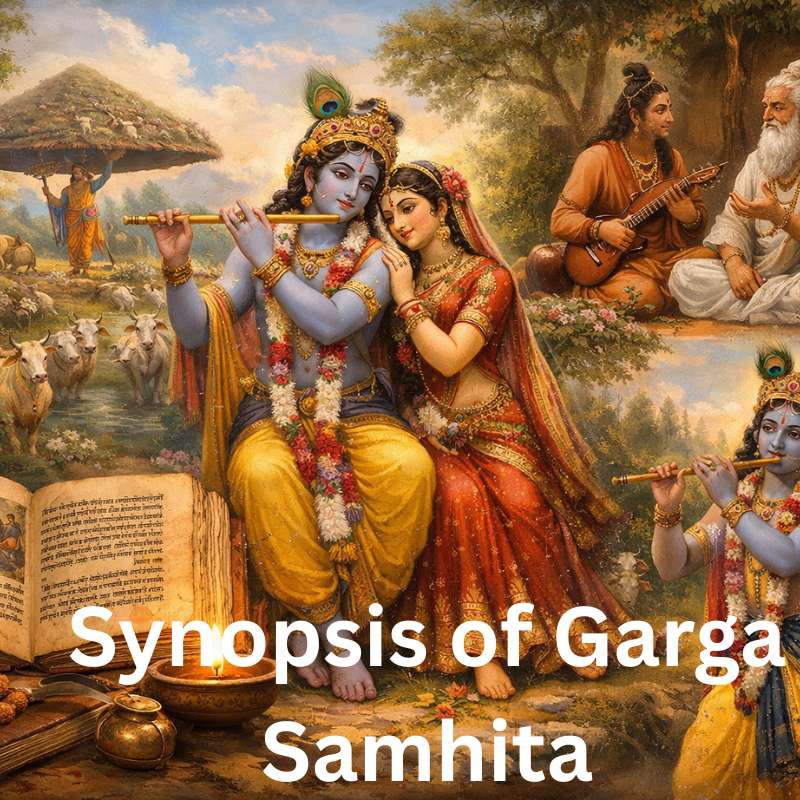 Synopsis of the Garga Samhita: A Complete Overview of Krishna’s Divine PastimesThe Garga Samhita is a revered Vaishnava scripture that reveals the divine pastimes of Lord Krishna and the supreme...Read more
 -
 Who Wrote the Garga Samhita? The Sage, History, and Spiritual Authority ExplainedWho wrote the Garga Samhita? This article explains why Maharshi Garga is credited as the author, explores his...Read more
 -
 When Was the Garga Samhita Written? History, Timeline, and Scriptural Evidence ExplainedThis article explains when the Garga Samhita was written, tracing its origins to the Dvapara Yuga during Lord...Read more
Leave a comment