
Why did Krishna run to embrace a poor brahmin in rags? Read the Sudama story from the Bhagavatam and learn how a...
Latest posts
-
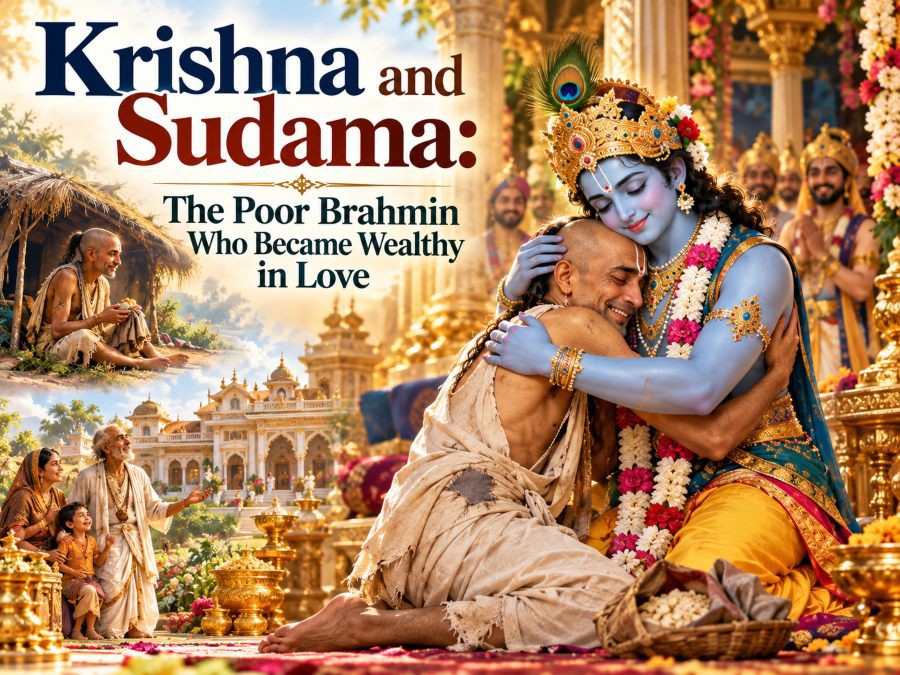 Krishna and Sudama: The Poor Brahmin Who Became Wealthy in LoveRead more
 -
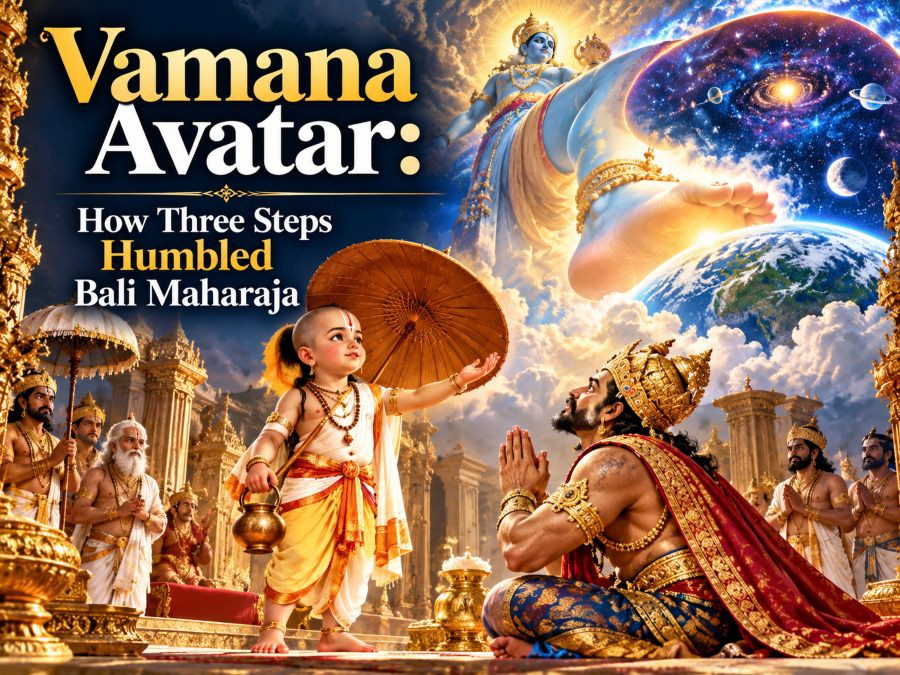 Vamana Avatar: How Three Steps Humbled Bali MaharajaRead more
Why did a powerful king give away three worlds to a boy asking for three steps? Learn the Vamana avatar story from...
-
 The Bhagavatam on Marriage: Duty, Love and Spiritual PartnershipRead more
What does the Bhagavatam say about marriage? Through the stories of Kardama and Devahuti, Rukmini's secret letter and...
-
 What Is Prema? The Bhagavatam's Highest Stage of Love for GodRead more
Prema is love for God with no "because" attached. Learn how the Bhagavatam describes it, the nine steps from faith to...
-
 Is Shiva Parvati Kalyana Mentioned in Srimad Bhagavatam? What the Scripture Really SaysRead more
Looking for Shiva and Parvati's wedding in the Srimad Bhagavatam? Find out what the scripture actually describes,...
-
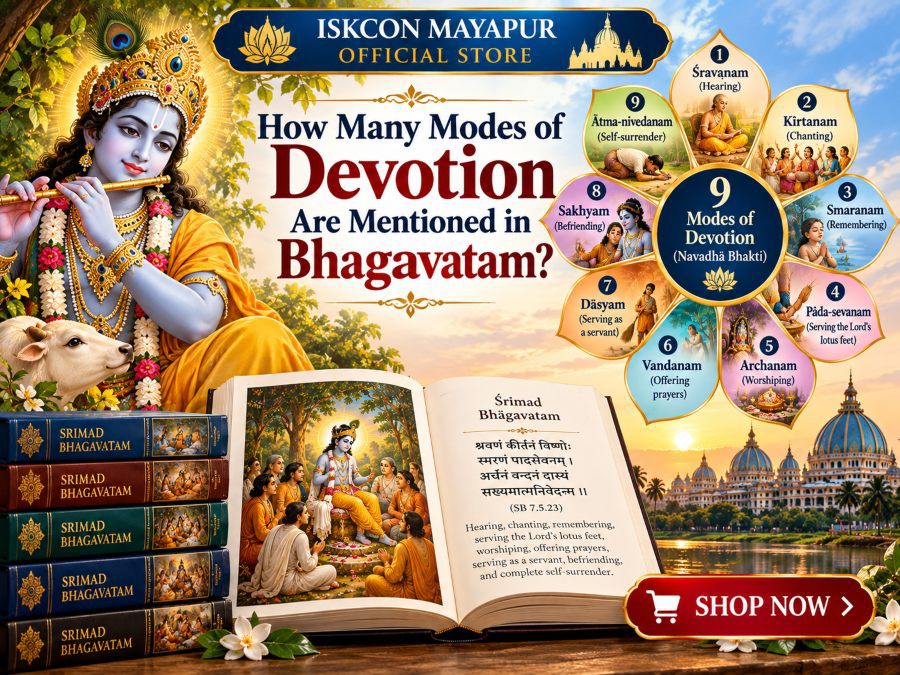 How Many Modes of Devotion Are Mentioned in Bhagavatam?Read more
A young boy named Prahlada listed nine ways to serve God, and the Bhagavatam keeps them as its answer. Learn what the...
-
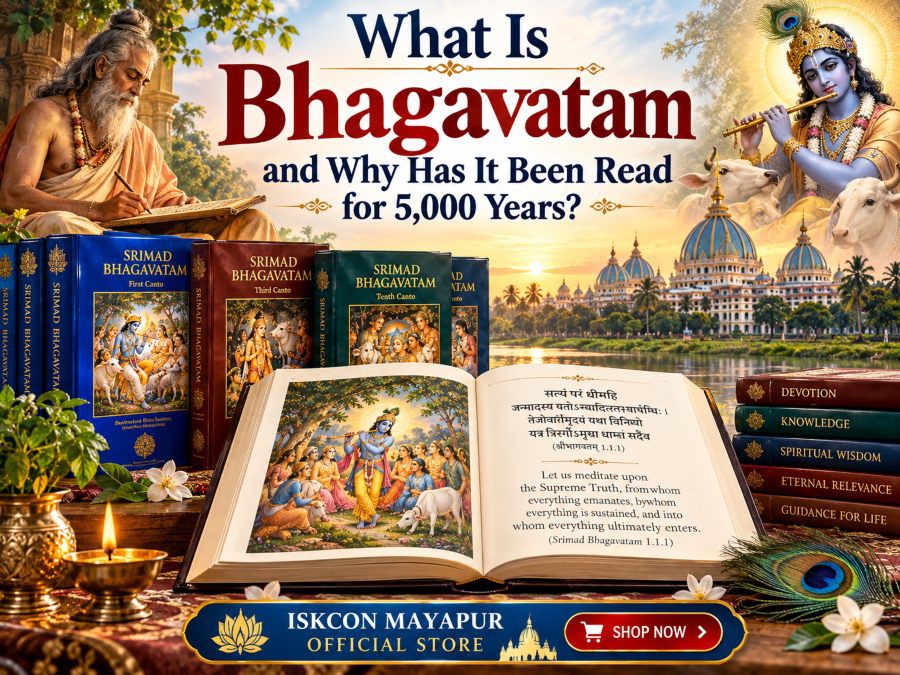 What Is Bhagavatam and Why Has It Been Read for 5,000 Years?Read more
A dying king asked one question, and the answer became the Bhagavatam. Learn what this Sanskrit scripture contains,...
-
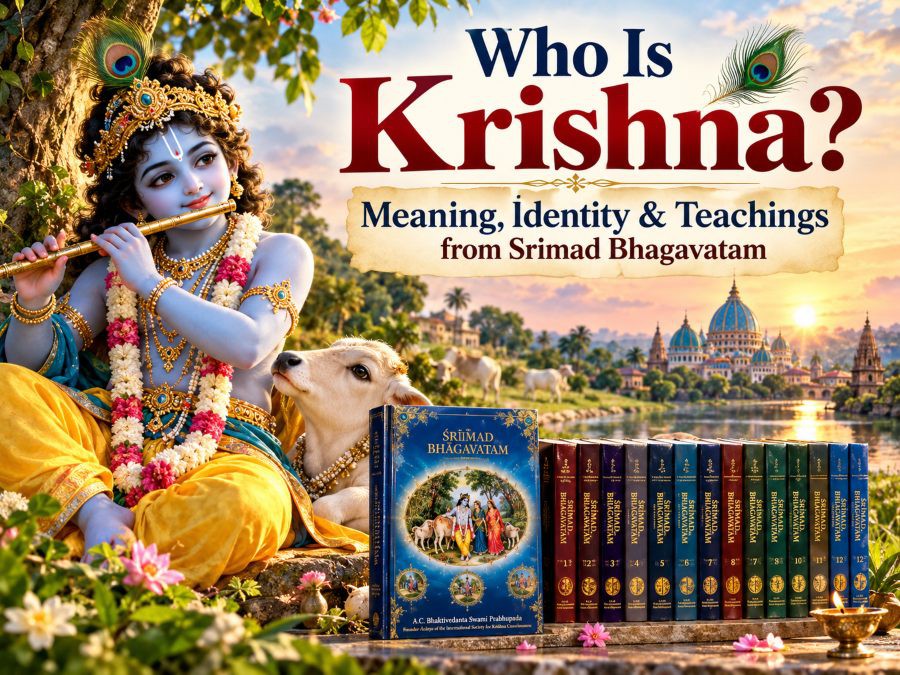 Who Is Lord Krishna? His Meaning, Teachings and Pastimes ExplainedRead more
Discover who Krishna is according to Srimad Bhagavatam, including His divine identity, childhood pastimes, teachings,...
-
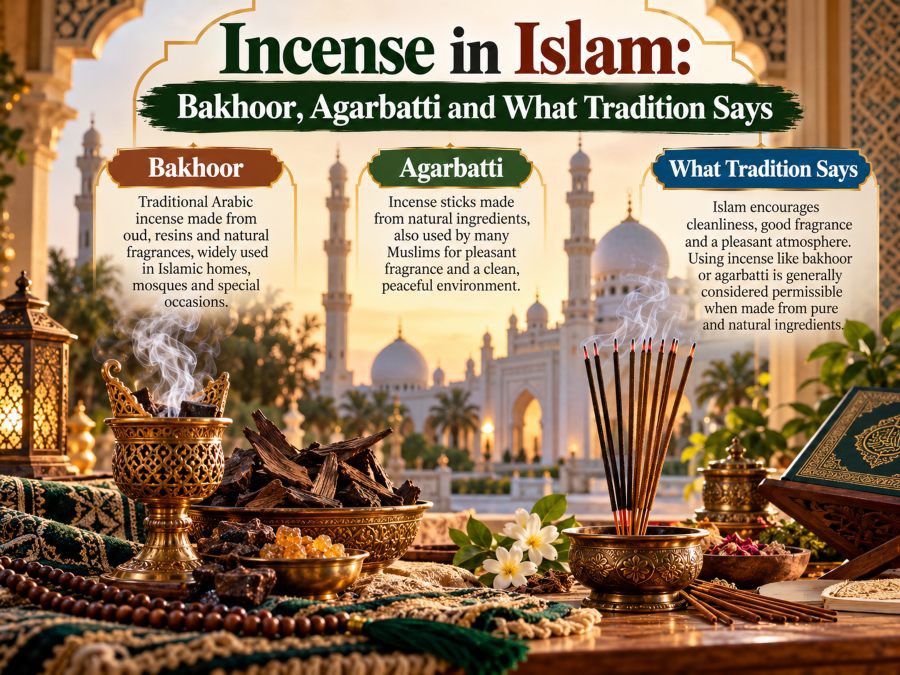 Incense in Islam: Bakhoor, Agarbatti and What Tradition SaysRead more
Is burning fragrance part of Muslim tradition? Explore incense in Islam, from the Prophetic practice of fumigating...
-
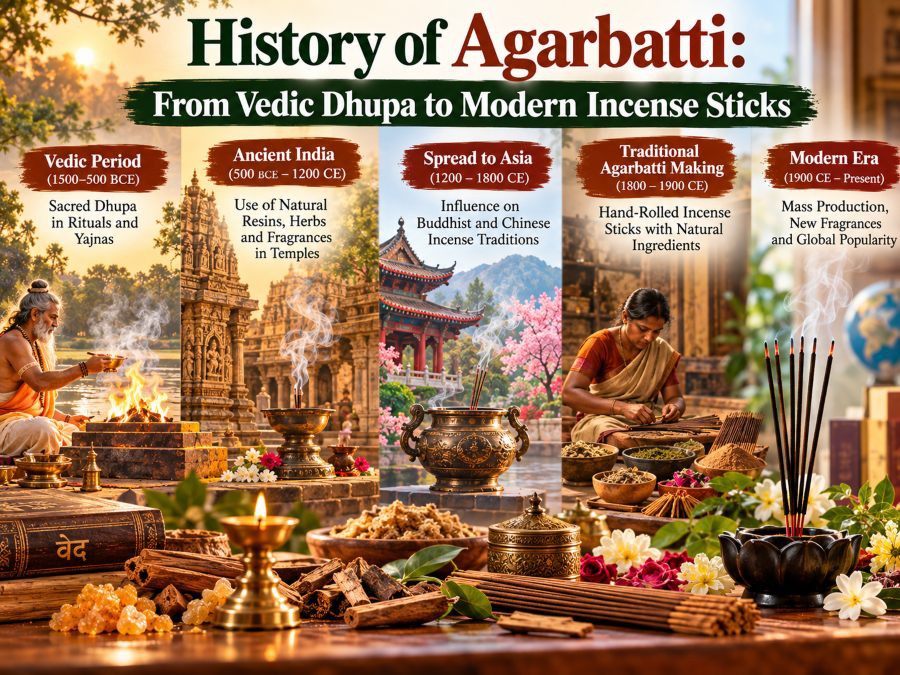 History of Agarbatti: From Vedic Dhupa to Modern Incense SticksRead more
Where did agarbatti really come from? Follow the history of agarbatti from Vedic fire rituals and temple dhupa to...
Blog categories
- Default category (0)
- MUSICAL INSTRUMENT (1)
- BOOK (5)
- DEVOTIONAL GIFT (0)
- Blog (30) click
- CHANDAN (12)
- Bhagavatam Wisdom Series (68)
- Krishna Consciousness (14)
- Mridangam Musical Instrument (6)
- Bhagavad Gita for Beginners (13)
- Bhagavad Gita As It Is (37) click
- Bhagavad Gita As It Is Telugu (0)
- Bhagavad Gita As It Is Marathi (0)
- Bhagavad Gita As It Is In Hindi (0)
- Bhagavad Gita As It Is In English (0)
- Bhagavad Gita As It Is In Bengali (8)
- Bhagavad Gita As It Is In Kannada (0)
- Bhagavad Gita As It Is In Gujarati (0)
- Bhagavad Gita As It Is In Panjabi (0)
- Bhagavad Gita As It Is In Tamil (0)
- Bhagavad Gita As It Is Odia (0)
- BHAGAVAD GITA As It Is GERMAN (0)
- Bhagavad Gita As It Is In French (0)
- Bhagavad Gita As It Is In Nepali (0)
- Bhagavad Gita As It Is In Assamese (0)
- Incense or Agarbatti (38)
- Lord Chaitanya Mahaprabhu (3)
- Vedic Temple Mayapur (14)
- kalki (15)
- Mahabharata – Dharma & Destiny (27)
- Vaishnava Scriptures (4)
- healthy product (4)
- chaitanya mahaprabhu (5)
- Tulsi Mala Guide (17)
Search in blog
What Is Bhakti According to Srimad Bhagavatam? Meaning, Philosophy, and Power of Pure Devotion
What Is Bhakti According to Srimad Bhagavatam
Introduction: Why Bhakti Is the Heart of the Srimad Bhagavatam
The Srimad Bhagavatam is not merely a religious scripture; it is a spiritual masterpiece that defines the very purpose of human life. While it discusses creation, cosmology, karma, renunciation, and divine incarnations, its central message is crystal clear: pure bhakti (devotional service) to God is the highest truth and ultimate goal of existence.
Unlike philosophical systems that rely solely on logic or ritualistic traditions that emphasize external performance, the Srimad Bhagavatam places loving devotion at the core of spiritual realization. Bhakti, as described in this sacred text, is not a method—it is a state of being, a relationship between the soul and the Supreme.
This article offers a explanation of what bhakti truly means according to the Srimad Bhagavatam, why it is superior to other spiritual paths, and how it transforms both the soul and daily life.
.jpg)
Understanding the Meaning of Bhakti
The word bhakti comes from the Sanskrit root bhaj, which means to serve, to love, to share, or to be devoted. In the Srimad Bhagavatam, bhakti is defined as unmotivated, uninterrupted loving service to the Supreme Personality of Godhead.
Bhakti is not:
- Fear-based worship
- A business transaction with God
- Blind belief or emotional sentiment
Rather, bhakti is conscious love expressed through service, rooted in understanding the soul’s eternal relationship with God.
Bhagavatam’s Core Definition of Bhakti
The Srimad Bhagavatam famously states that true dharma is that which awakens causeless devotion to the Supreme—devotion that is not interrupted by material conditions and not motivated by personal gain.
This single principle becomes the foundation of the entire text.
Bhakti as the Natural Function of the Soul
According to the Bhagavatam, every living being is an eternal soul, distinct from the physical body and subtle mind. The soul’s original nature is to love and serve God, just as a ray of sunlight naturally belongs to the sun.
When the soul forgets this relationship:
- It becomes bound by karma
- It experiences suffering and repeated birth and death
- It seeks happiness in temporary objects
Bhakti revives the soul’s forgotten identity. It is not something imposed from outside; it is something awakened from within.
Bhakti vs Karma and Jnana: The Bhagavatam’s Clear Verdict
The Srimad Bhagavatam openly evaluates other spiritual paths and establishes bhakti as supreme.
Bhakti vs Karma (Ritualistic Action)
Karma-kanda focuses on:
- Religious rituals
- Moral duties
- Material rewards (heaven, prosperity)
The Bhagavatam states that such actions, even if pious, keep the soul bound if they are not offered in devotion to God.
Without bhakti, karma becomes another chain.
Bhakti vs Jnana (Speculative Knowledge)
Jnana seeks liberation through:
- Philosophical analysis
- Negation of material identity
- Intellectual realization
While jnana can lead to detachment, the Bhagavatam explains that knowledge without devotion is dry and incomplete. Many jnanis fall down because they neglect the soul’s need to love.
Bhakti, however:
- Includes knowledge naturally
- Leads to liberation effortlessly
- Culminates in divine love, not emptiness
The Nine Processes of Bhakti in the Srimad Bhagavatam
One of the most practical teachings of the Srimad Bhagavatam is the nine-fold path of devotion, which makes bhakti accessible to everyone.
1. Hearing (Shravanam) – Listening to divine stories and teachings
2. Chanting (Kirtanam) – Glorifying God’s names and qualities
3. Remembering (Smaranam) – Constant remembrance of God
4. Serving the Lord’s feet (Pada-sevanam)
5. Worship (Archanam) – Deity worship with love
6. Prayers (Vandanam) – Expressing surrender and gratitude
7. Servitude (Dasyam) – Accepting oneself as God’s servant
8. Friendship (Sakhyam) – Developing intimacy with God
9. Full surrender (Atma-nivedanam)
The Bhagavatam emphasizes that even one of these, if practiced sincerely, can lead to perfection.
Pure Bhakti (Shuddha Bhakti): The Highest Ideal
The Srimad Bhagavatam introduces the concept of pure devotion, which is devotion free from all selfish motives.
Pure bhakti is:
- Not for wealth
- Not for health
- Not even for liberation
It is love for the sake of love.
A pure devotee does not ask God to remove suffering; instead, they ask only for the opportunity to serve in all circumstances.
Bhakti and the Personal Nature of God
One of the Bhagavatam’s most distinctive teachings is that the Supreme Truth is a person, not an impersonal force.
Bhakti is possible only because:
- God has qualities
- God has emotions
- God reciprocates love
The Bhagavatam explains that God becomes controlled by devotion. He may remain unreachable through austerity or philosophy, but He willingly submits Himself to the love of His devotees.
Bhakti as Both the Path and the Goal
Unlike other spiritual systems where the process and the goal are different, in the Srimad Bhagavatam:
- Bhakti is the practice
- Bhakti is the destination
In the beginning, bhakti is practiced with discipline. At perfection, bhakti becomes spontaneous love, flowing naturally like a river toward the ocean.
The Transformative Power of Bhakti
Bhakti does not merely promise spiritual salvation—it transforms character and consciousness.
Through bhakti:
- Lust turns into love
- Anger turns into righteous energy
- Fear turns into surrender
- Ego dissolves into humility
The Bhagavatam repeatedly shows how even sinful or fallen individuals achieve greatness through devotion alone.
Bhakti in Daily Life According to the Bhagavatam
Bhakti is not restricted to temples or monasteries. The Srimad Bhagavatam teaches integrated devotion, where life itself becomes worship.
Daily bhakti includes:
- Performing duties as an offering
- Seeing God’s hand in all situations
- Treating others with compassion
- Remembering God during success and failure
Thus, bhakti spiritualizes ordinary life.
Bhakti and Liberation (Moksha)
While many seek bhakti for liberation, the Bhagavatam presents a revolutionary idea:
Bhakti does not depend on liberation—liberation follows bhakti automatically.
For a true devotee:
- Heaven is insignificant
- Liberation is secondary
- Loving service is everything
Bhakti does not aim to escape existence but to enter eternal loving relationship with God.
Why the Srimad Bhagavatam Is Called the Ultimate Bhakti Scripture
Among all Vedic texts, the Srimad Bhagavatam stands unique because:
- It begins where other scriptures end
- It rejects all materially motivated religion
- It glorifies pure devotion exclusively
It is described as the ripened fruit of the Vedic tree, meant especially for the present age of confusion and anxiety.
Relevance of Bhakti in the Modern World
In today’s world of stress, competition, and isolation, bhakti offers:
- Inner peace without escapism
- Purpose beyond material success
- Emotional healing through divine connection
Bhakti does not demand renunciation of the world—it teaches right engagement with the world.
Conclusion: The Essence of Bhakti According to Srimad Bhagavatam
Bhakti, as revealed in the Srimad Bhagavatam, is not a belief system—it is a living relationship. It is the soul remembering its eternal lover, the Supreme Lord.
In essence:
- Bhakti is the soul’s natural expression
- Bhakti is superior to karma and jnana
- Bhakti purifies, liberates, and fulfills
- Bhakti is both the journey and the destination
The Srimad Bhagavatam invites every soul, regardless of background, to taste this divine love and experience true freedom through devotion.
Posted in: Bhagavatam Wisdom Series
Related posts
-
 Why to read srimad bhagavatamReading the Srimad Bhagavatam fosters deep spiritual growth by narrating the life and teachings of Lord Krishna,...Read more
 -
 When was srimad bhagavatam written?The Srimad Bhagavatam is believed to have been written around 9th-10th century CE, though its oral traditions date...Read more
 -
 How many chapters are there in srimad bhagavatam?The Srimad Bhagavatam consists of 12 cantos (books) containing 335 chapters in total. Each canto covers various...Read more
 -
 How many skandhas are there in srimad bhagavatamThe Srimad Bhagavatam is divided into 12 skandhas (cantos or books). Each skandha explores different themes,...Read more
 -
 How many slokas in srimad bhagavatamThe Srimad Bhagavatam contains approximately 18,000 shlokas (verses). These verses are spread across its 12 skandhas...Read more
Leave a comment