
Why did Krishna run to embrace a poor brahmin in rags? Read the Sudama story from the Bhagavatam and learn how a...
Latest posts
-
 Krishna and Sudama: The Poor Brahmin Who Became Wealthy in LoveRead more
 -
 Vamana Avatar: How Three Steps Humbled Bali MaharajaRead more
Why did a powerful king give away three worlds to a boy asking for three steps? Learn the Vamana avatar story from...
-
 The Bhagavatam on Marriage: Duty, Love and Spiritual PartnershipRead more
What does the Bhagavatam say about marriage? Through the stories of Kardama and Devahuti, Rukmini's secret letter and...
-
 What Is Prema? The Bhagavatam's Highest Stage of Love for GodRead more
Prema is love for God with no "because" attached. Learn how the Bhagavatam describes it, the nine steps from faith to...
-
 Is Shiva Parvati Kalyana Mentioned in Srimad Bhagavatam? What the Scripture Really SaysRead more
Looking for Shiva and Parvati's wedding in the Srimad Bhagavatam? Find out what the scripture actually describes,...
-
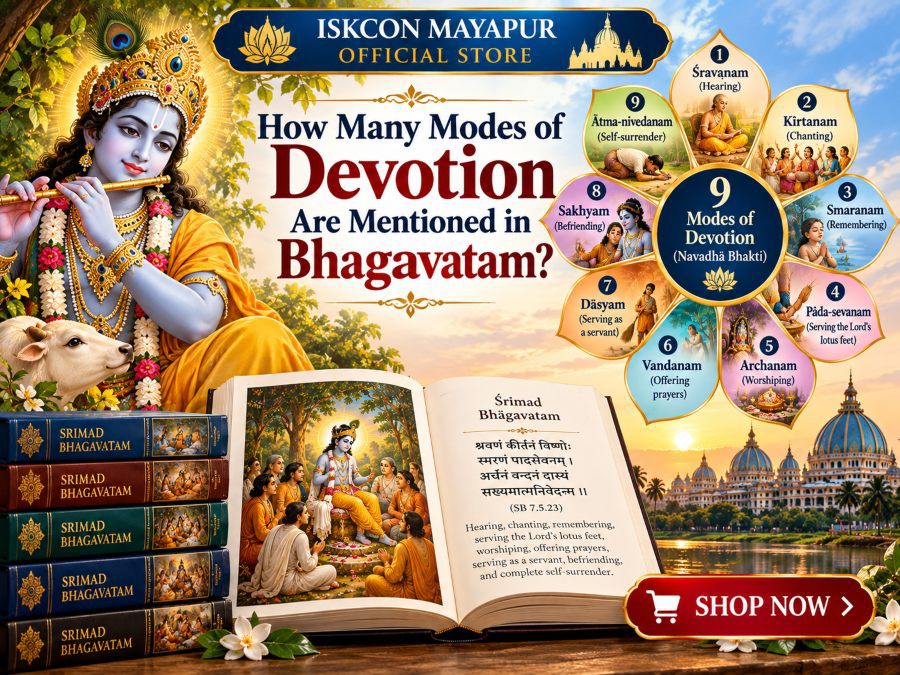 How Many Modes of Devotion Are Mentioned in Bhagavatam?Read more
A young boy named Prahlada listed nine ways to serve God, and the Bhagavatam keeps them as its answer. Learn what the...
-
 What Is Bhagavatam and Why Has It Been Read for 5,000 Years?Read more
A dying king asked one question, and the answer became the Bhagavatam. Learn what this Sanskrit scripture contains,...
-
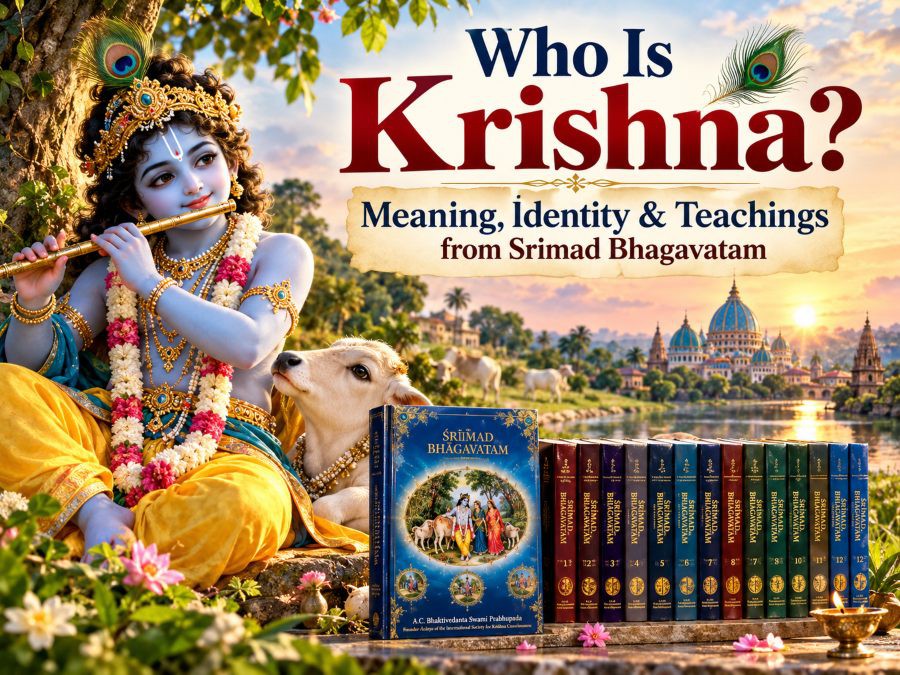 Who Is Lord Krishna? His Meaning, Teachings and Pastimes ExplainedRead more
Discover who Krishna is according to Srimad Bhagavatam, including His divine identity, childhood pastimes, teachings,...
-
 Incense in Islam: Bakhoor, Agarbatti and What Tradition SaysRead more
Is burning fragrance part of Muslim tradition? Explore incense in Islam, from the Prophetic practice of fumigating...
-
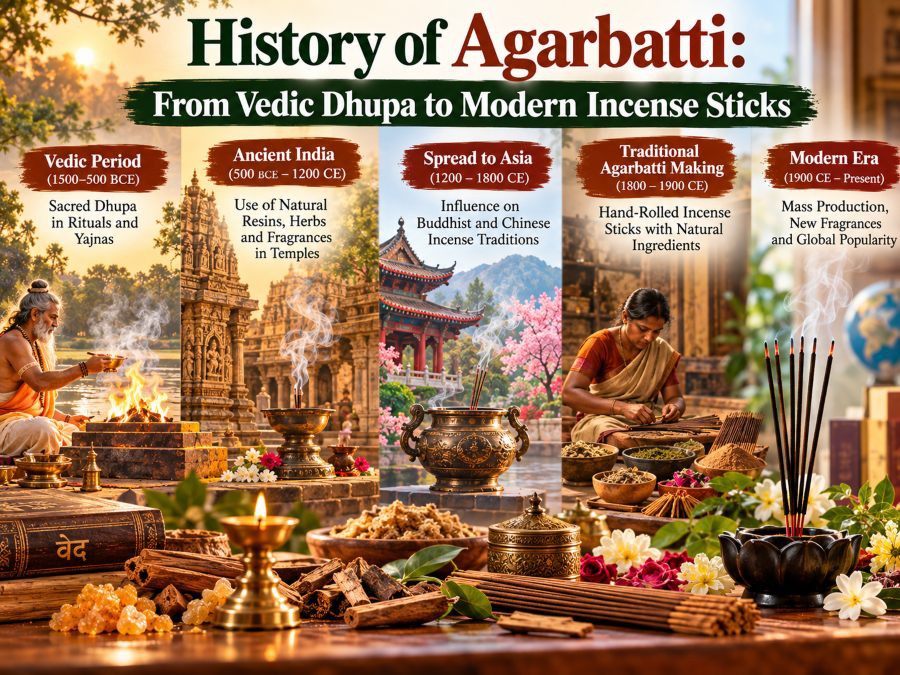 History of Agarbatti: From Vedic Dhupa to Modern Incense SticksRead more
Where did agarbatti really come from? Follow the history of agarbatti from Vedic fire rituals and temple dhupa to...
Blog categories
- Default category (0)
- MUSICAL INSTRUMENT (1)
- BOOK (5)
- DEVOTIONAL GIFT (0)
- Blog (30) click
- CHANDAN (12)
- Bhagavatam Wisdom Series (68)
- Krishna Consciousness (14)
- Mridangam Musical Instrument (6)
- Bhagavad Gita for Beginners (13)
- Bhagavad Gita As It Is (37) click
- Bhagavad Gita As It Is Telugu (0)
- Bhagavad Gita As It Is Marathi (0)
- Bhagavad Gita As It Is In Hindi (0)
- Bhagavad Gita As It Is In English (0)
- Bhagavad Gita As It Is In Bengali (8)
- Bhagavad Gita As It Is In Kannada (0)
- Bhagavad Gita As It Is In Gujarati (0)
- Bhagavad Gita As It Is In Panjabi (0)
- Bhagavad Gita As It Is In Tamil (0)
- Bhagavad Gita As It Is Odia (0)
- BHAGAVAD GITA As It Is GERMAN (0)
- Bhagavad Gita As It Is In French (0)
- Bhagavad Gita As It Is In Nepali (0)
- Bhagavad Gita As It Is In Assamese (0)
- Incense or Agarbatti (38)
- Lord Chaitanya Mahaprabhu (3)
- Vedic Temple Mayapur (14)
- kalki (15)
- Mahabharata – Dharma & Destiny (27)
- Vaishnava Scriptures (4)
- healthy product (4)
- chaitanya mahaprabhu (5)
- Tulsi Mala Guide (17)
Search in blog
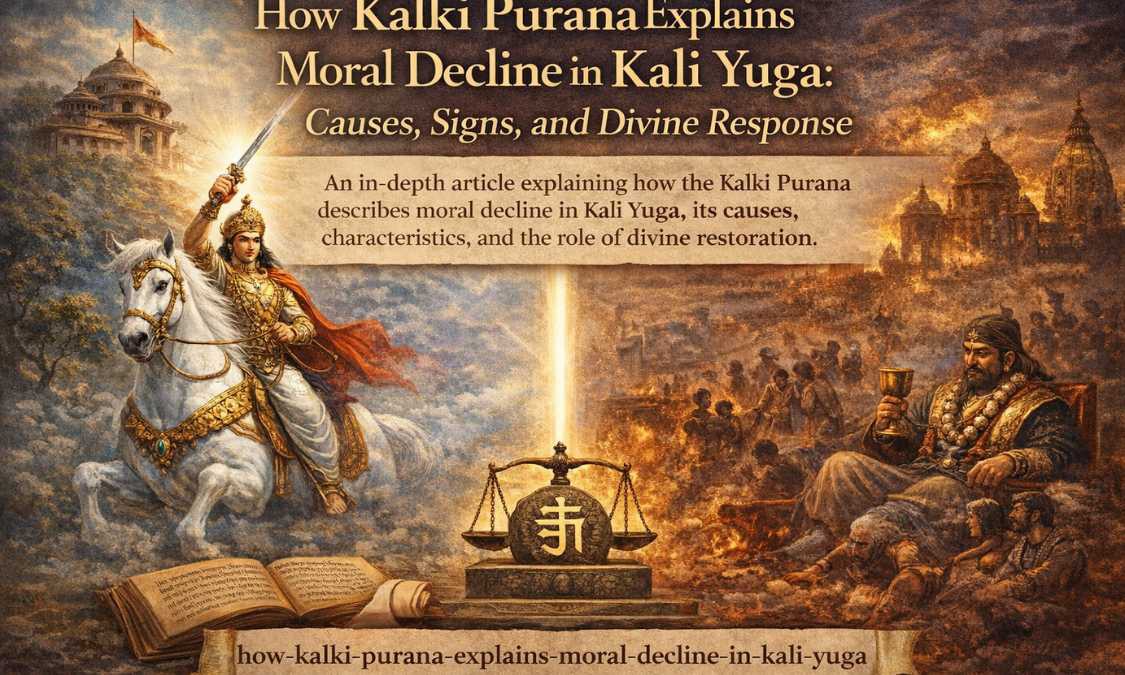
How Kalki Purana Explains Moral Decline in Kali Yuga: Causes, Signs, and Divine Response
How Sri Kalki Purana Explains Moral Decline in Kali Yuga
Introduction: Why Moral Decline Is Central to the Kalki Purana
Every civilization eventually asks the same painful question: Why are values collapsing despite progress?
The Sri Kalki Purana answers this question with remarkable clarity. Rather than blaming technology, politics, or fate alone, it identifies moral decline as the core disease of Kali Yuga, the present age of darkness and confusion.
The Kalki Purana does not describe Kali Yuga merely as a time period—it describes it as a psychological, social, and spiritual condition. Its explanation of moral decay is systematic, layered, and deeply insightful, making it strikingly relevant to the modern world.
This article offers a how the Kalki Purana explains moral decline in Kali Yuga, covering its causes, symptoms, consequences, and the inevitable restoration of dharma.
READ ALSO:- Teachings of Sri Kalki Purana: Dharma, Justice, and Divine Restoration
Kali Yuga: An Age Defined by Moral Erosion
Kali Yuga Is Not the Absence of Intelligence
According to the Sri Kalki Purana, Kali Yuga is not an age of ignorance, but an age of misdirected intelligence.
People in Kali Yuga:
- Know what is right but avoid it
- Understand truth but manipulate it
- Possess knowledge but lack wisdom
This distinction is crucial. Moral decline happens not because people are unaware, but because convenience replaces conscience.
.jpg)
The Root Cause: Loss of Dharma Consciousness
Dharma Becomes Optional
The Kalki Purana explains that moral decline begins when dharma is treated as optional, not essential.
In Kali Yuga:
- Ethics are adjusted to suit desire
- Principles are bent for profit
- Duty is replaced by entitlement
When dharma loses authority, adharma fills the vacuum.
Truth Loses Its Sacred Status
Truth, according to the Purana, is the first casualty of Kali Yuga.
Signs include:
- Lies becoming socially acceptable
- Truth being labeled “inconvenient”
- Manipulation celebrated as intelligence
Once truth is negotiable, morality collapses rapidly.
Ego and Greed: Engines of Moral Decline
The Sri Kalki Purana identifies ego (ahamkara) and greed (lobha) as the psychological engines driving moral decay.
Ego creates the belief:
“I am above consequences.”
Greed creates the belief:
“More is never enough.”
Together, they justify exploitation, dishonesty, and cruelty while silencing inner conscience.
Corruption of Leadership in Kali Yuga
Leaders Without Virtue
A major teaching of the Kalki Purana is that moral decline accelerates when leadership collapses.
In Kali Yuga:
- Power is pursued, not responsibility
- Authority lacks accountability
- Leadership becomes self-serving
When leaders abandon dharma, society follows.
Moral Weight of Authority
The Purana emphasizes that leaders carry greater karmic responsibility. Their failure multiplies suffering, making leadership corruption one of the gravest symptoms of Kali Yuga.
READ ALSO:- Message of Sri Kalki Purana for Kali Yuga Society
Collapse of Justice Systems
Justice Becomes Selective
The Kalki Purana describes how justice deteriorates in Kali Yuga:
- The powerful escape accountability
- The innocent suffer silently
- Law serves influence, not fairness
When justice loses neutrality, public faith erodes—and with it, social stability.
Fear Replaces Fairness
The text explains that fear becomes the governing force:
- Fear of authority
- Fear of poverty
- Fear of exclusion
Fear-driven societies abandon morality for survival.
Moral Decline in Family and Social Life
Breakdown of Family Values
The Sri Kalki Purana paints a clear picture of social decay:
- Relationships become transactional
- Loyalty is replaced by convenience
- Elders lose respect
When families weaken, societal ethics collapse from the inside.
Loss of Compassion
The Purana notes that Kali Yuga society:
- Normalizes cruelty
- Ignores suffering
- Justifies exploitation
Compassion is seen as weakness rather than strength.
False Religion and Spiritual Hypocrisy
Spirituality Without Transformation
One of the most striking explanations of moral decline in the Kalki Purana is false spirituality.
In Kali Yuga:
- Religion becomes performance
- Ritual replaces realization
- Faith becomes identity, not character
The Purana strongly warns that false religion accelerates moral decay more than atheism.
Teachers Without Integrity
The text criticizes spiritual leadership driven by ego, profit, or fame. Such guidance misleads society and deepens confusion rather than offering clarity.
Material Obsession and Ethical Collapse
The Kalki Purana explains that material obsession distorts values:
- Success measured by wealth alone
- Human worth tied to status
- Ethics sacrificed for competition
When survival becomes the only goal, morality becomes expendable.
Adharma Disguised as Normalcy
One of the most dangerous features of Kali Yuga described in the Kalki Purana is normalization of adharma.
Behaviors once condemned become:
- “Practical”
- “Necessary”
- “Modern”
This normalization blinds society to its own decay.
READ ALSO:- Dharma and Adharma Explained in Kalki Purana
Karma Still Operates—Silently
Despite widespread corruption, the Kalki Purana reassures that karma never stops functioning.
- Actions accumulate consequences
- Time delivers results precisely
- Escape is temporary
This teaching offers hope: moral decline is unsustainable.
Why Society Fails to Self-Correct
The Purana explains that Kali Yuga society struggles to self-correct because:
- Ego resists accountability
- Greed resists restraint
- Fear resists truth
When these dominate, only external correction can restore balance.
Divine Intervention: The Final Response to Moral Collapse
Why Lord Kalki Appears
The Sri Kalki Purana teaches that divine intervention occurs only when moral decline reaches irreversibility.
Lord Kalki appears when:
- Dharma is nearly extinguished
- Justice systems collapse completely
- Society becomes incapable of reform
This intervention is restorative, not vengeful.
Destruction as a Last Resort
The Purana clarifies that destruction is not the goal—it is a necessary cleansing process to allow renewal of dharma.
Individual Responsibility in Kali Yuga
A powerful message of the Kalki Purana is that moral decline is collective, but responsibility is individual.
Each person can:
- Choose truth over convenience
- Choose integrity over gain
- Choose discipline over desire
Even small acts of dharma weaken the influence of Kali Yuga.
Simplicity as Moral Resistance
The Kalki Purana praises:
- Simplicity
- Self-control
- Contentment
In a greedy age, simplicity becomes an act of moral courage.
Why Kali Yuga Still Offers Hope
Despite its grim analysis, the Kalki Purana delivers hope:
- Dharma never disappears completely
- Truth always survives somewhere
- Restoration is guaranteed
Kali Yuga tests humanity—but does not abandon it.
Relevance of These Teachings Today
Modern society mirrors many Kali Yuga traits:
- Ethical relativism
- Corruption fatigue
- Spiritual confusion
The Kalki Purana offers not predictions alone, but diagnosis and direction.
Practical Lessons from the Kalki Purana
From its explanation of moral decline, we learn:
- Decline begins internally
- Silence supports injustice
- Integrity is revolutionary
- Moral courage restores balance
These lessons are timeless.
Conclusion: Moral Decline Is Real—but Not Final
The Sri Kalki Purana explains moral decline in Kali Yuga with honesty, depth, and wisdom.
It teaches that:
- Decline is gradual, not sudden
- Corruption is psychological before social
- Restoration is inevitable
Kali Yuga represents humanity’s greatest moral test—but also its greatest opportunity for conscious choice.
When society forgets dharma, divine justice remembers.
When morality collapses, restoration begins.
The Kalki Purana assures us that darkness is never permanent—and that truth, though delayed, always returns.
Posted in: Kalki
Related posts
-
 When Kalki Will Be Born: The Final Avatar of Lord VishnuLord Kalki, Vishnu’s final avatar, is prophesied to appear at the end of Kali Yuga to destroy evil and restore...Read more
 -
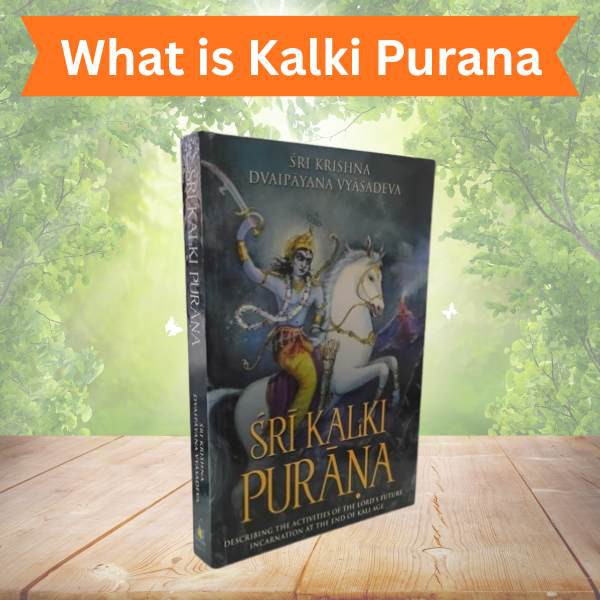 What Is the Kalki Purana? The Kalki Purana describes the prophecy of Lord Kalki, His appearance, mission, battles, and role in ending Kali...Read more
 -
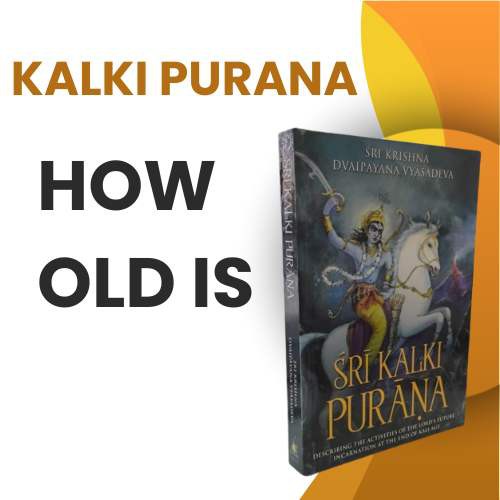 How Old Is Kalki Purana? Explore the true age of the Kalki Purana—its origins, history, and prophecy. Learn traditional beliefs, scholarly...Read more
 -
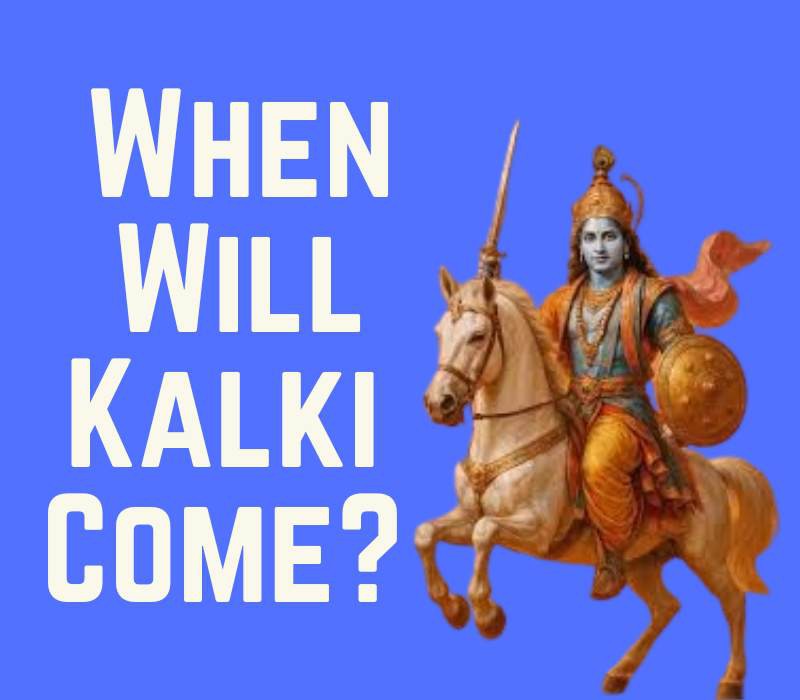 When Will Kalki Come? This article explains when Kalki Avatar will appear, what the scriptures say about His arrival, signs of Kali Yuga,...Read more
 -
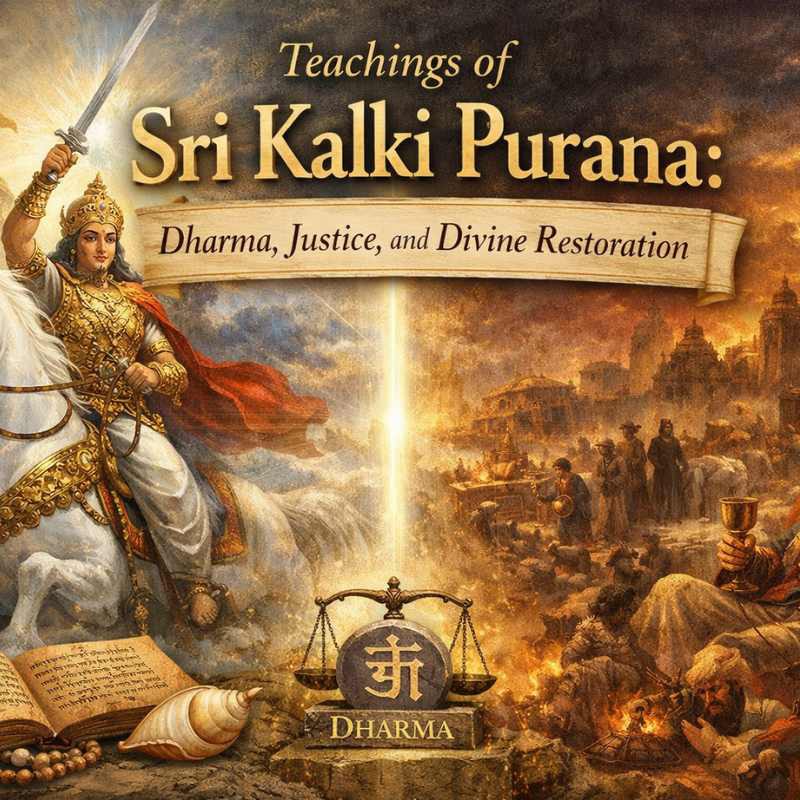 Teachings of Sri Kalki Purana: Dharma, Justice, and Divine RestorationAn in-depth article explaining the teachings of the Sri Kalki Purana, highlighting dharma, divine justice, and the...Read more
Leave a comment