
Why did Krishna run to embrace a poor brahmin in rags? Read the Sudama story from the Bhagavatam and learn how a...
Latest posts
-
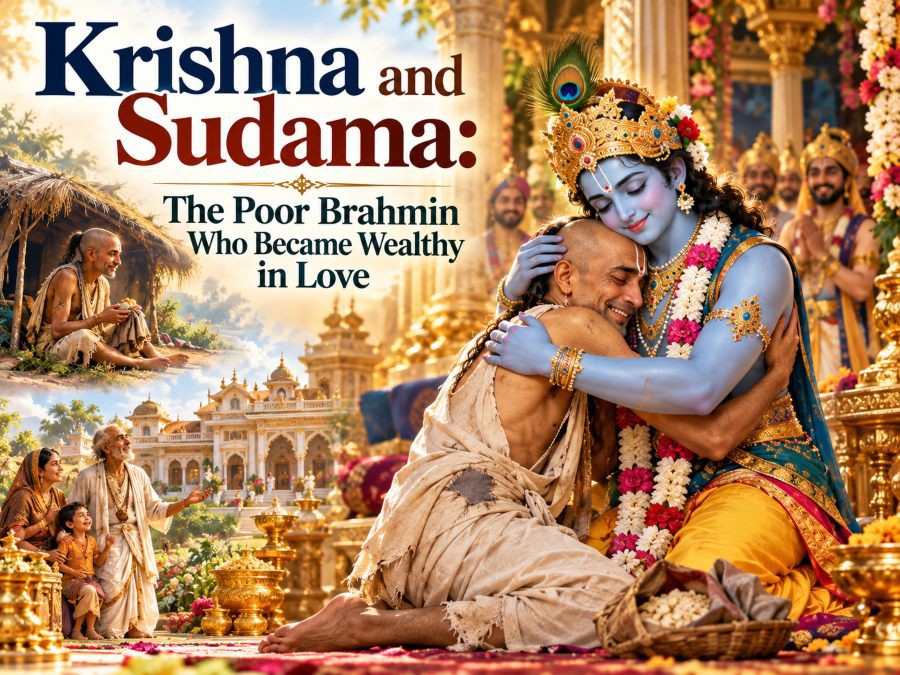 Krishna and Sudama: The Poor Brahmin Who Became Wealthy in LoveRead more
 -
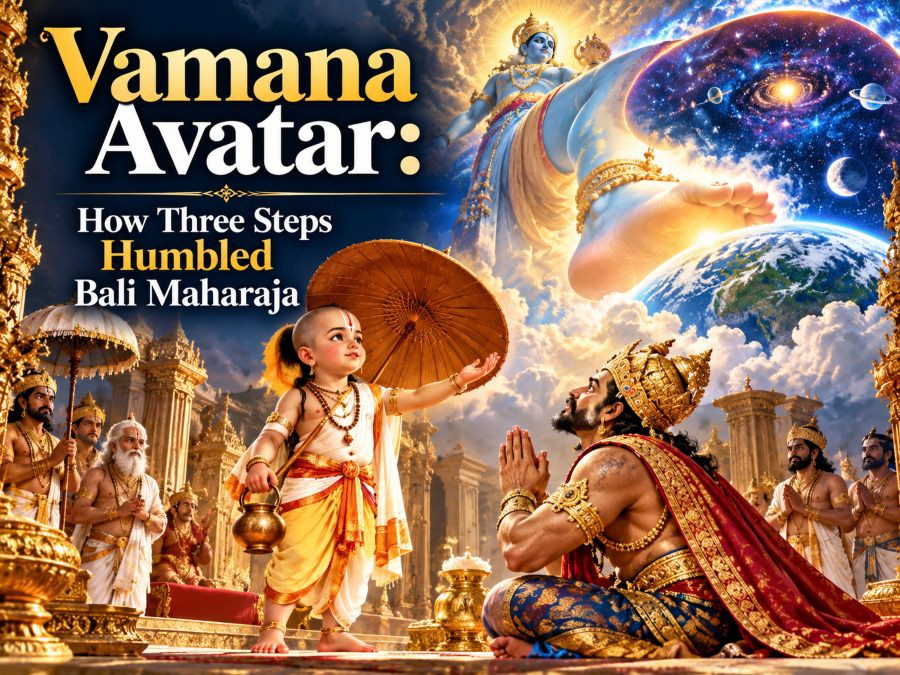 Vamana Avatar: How Three Steps Humbled Bali MaharajaRead more
Why did a powerful king give away three worlds to a boy asking for three steps? Learn the Vamana avatar story from...
-
 The Bhagavatam on Marriage: Duty, Love and Spiritual PartnershipRead more
What does the Bhagavatam say about marriage? Through the stories of Kardama and Devahuti, Rukmini's secret letter and...
-
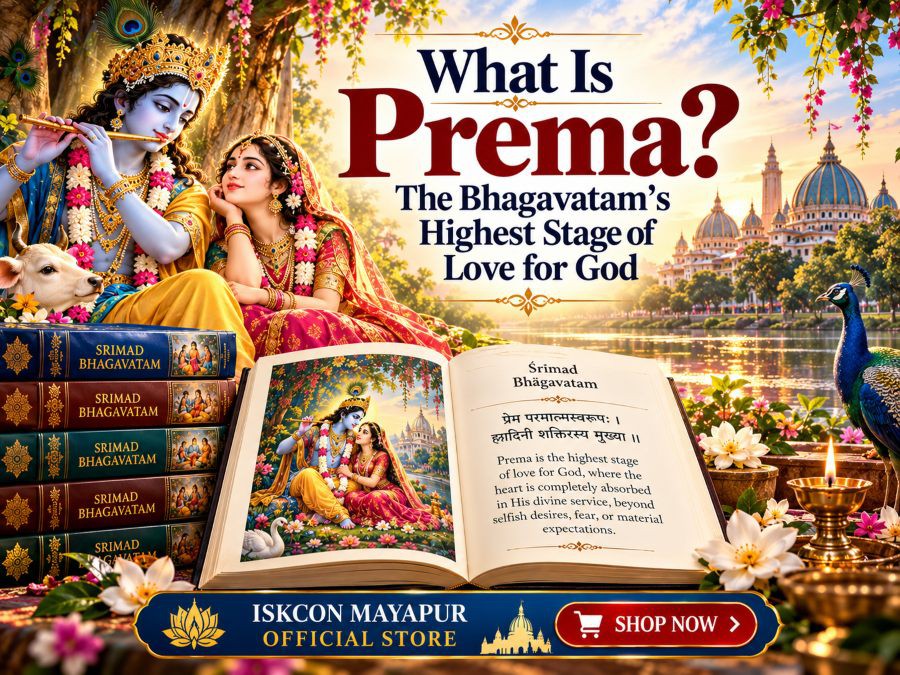 What Is Prema? The Bhagavatam's Highest Stage of Love for GodRead more
Prema is love for God with no "because" attached. Learn how the Bhagavatam describes it, the nine steps from faith to...
-
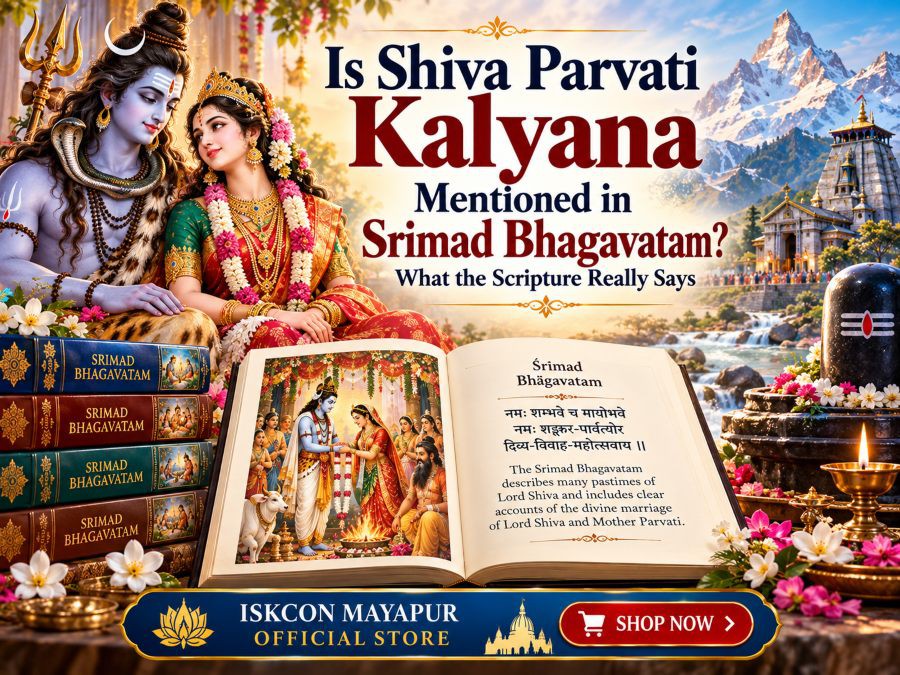 Is Shiva Parvati Kalyana Mentioned in Srimad Bhagavatam? What the Scripture Really SaysRead more
Looking for Shiva and Parvati's wedding in the Srimad Bhagavatam? Find out what the scripture actually describes,...
-
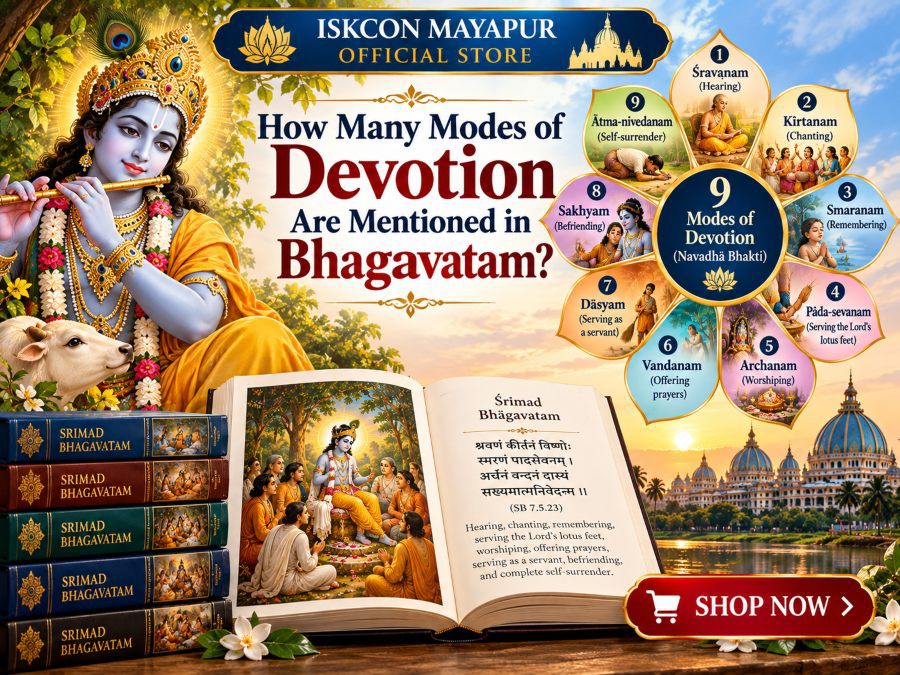 How Many Modes of Devotion Are Mentioned in Bhagavatam?Read more
A young boy named Prahlada listed nine ways to serve God, and the Bhagavatam keeps them as its answer. Learn what the...
-
 What Is Bhagavatam and Why Has It Been Read for 5,000 Years?Read more
A dying king asked one question, and the answer became the Bhagavatam. Learn what this Sanskrit scripture contains,...
-
 Who Is Lord Krishna? His Meaning, Teachings and Pastimes ExplainedRead more
Discover who Krishna is according to Srimad Bhagavatam, including His divine identity, childhood pastimes, teachings,...
-
 Incense in Islam: Bakhoor, Agarbatti and What Tradition SaysRead more
Is burning fragrance part of Muslim tradition? Explore incense in Islam, from the Prophetic practice of fumigating...
-
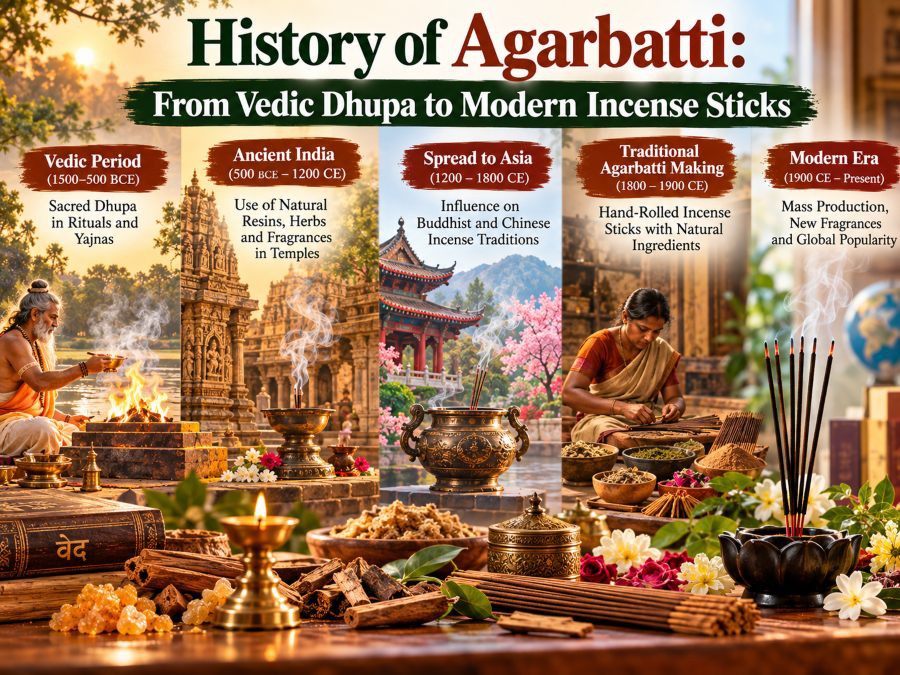 History of Agarbatti: From Vedic Dhupa to Modern Incense SticksRead more
Where did agarbatti really come from? Follow the history of agarbatti from Vedic fire rituals and temple dhupa to...
Blog categories
- Default category (0)
- MUSICAL INSTRUMENT (1)
- BOOK (5)
- DEVOTIONAL GIFT (0)
- Blog (30) click
- CHANDAN (12)
- Bhagavatam Wisdom Series (68)
- Krishna Consciousness (14)
- Mridangam Musical Instrument (6)
- Bhagavad Gita for Beginners (13)
- Bhagavad Gita As It Is (37) click
- Bhagavad Gita As It Is Telugu (0)
- Bhagavad Gita As It Is Marathi (0)
- Bhagavad Gita As It Is In Hindi (0)
- Bhagavad Gita As It Is In English (0)
- Bhagavad Gita As It Is In Bengali (8)
- Bhagavad Gita As It Is In Kannada (0)
- Bhagavad Gita As It Is In Gujarati (0)
- Bhagavad Gita As It Is In Panjabi (0)
- Bhagavad Gita As It Is In Tamil (0)
- Bhagavad Gita As It Is Odia (0)
- BHAGAVAD GITA As It Is GERMAN (0)
- Bhagavad Gita As It Is In French (0)
- Bhagavad Gita As It Is In Nepali (0)
- Bhagavad Gita As It Is In Assamese (0)
- Incense or Agarbatti (38)
- Lord Chaitanya Mahaprabhu (3)
- Vedic Temple Mayapur (14)
- kalki (15)
- Mahabharata – Dharma & Destiny (27)
- Vaishnava Scriptures (4)
- healthy product (4)
- chaitanya mahaprabhu (5)
- Tulsi Mala Guide (17)
Search in blog
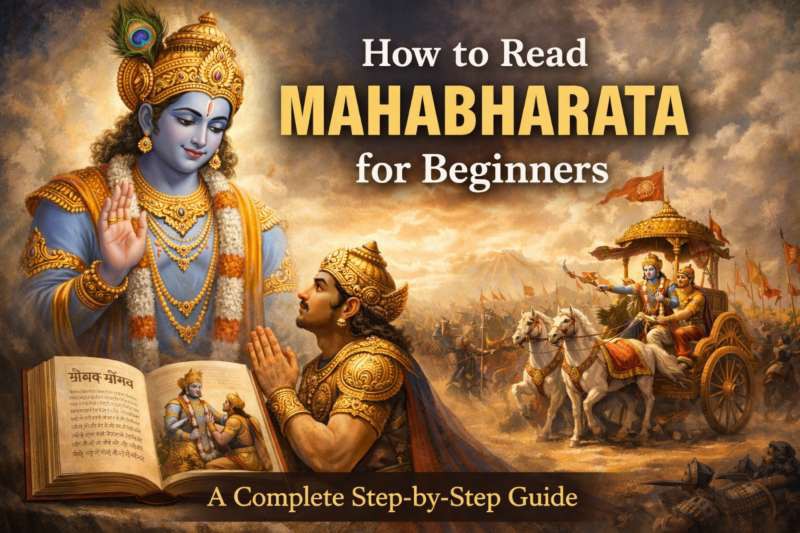
How to Read Mahabharata for Beginners – A Complete Step-by-Step Guide
How to Read Mahabharata for Beginners – A Complete Step-by-Step Guide
The Mahabharata is not just a book — it is a vast ocean of human wisdom, spiritual philosophy, ethical dilemmas, emotional depth, and life lessons. For beginners, however, this epic can feel overwhelming because of its massive size, hundreds of characters, layered storytelling, and philosophical complexity. Many readers start enthusiastically but lose momentum due to confusion or lack of structure. That is why having a proper reading strategy makes all the difference.
If you are starting your journey into this timeless epic, choosing the right edition is critical. Beginners benefit greatly from a clear, authentic translation that preserves meaning without making the language difficult. A trusted option like Authentic Mahabharat Hindi Edition allows new readers to grasp the story flow, cultural context, and spiritual depth without feeling lost. When supported with the right reading plan and mindset, Mahabharata becomes an enriching life experience rather than a difficult task.
This guide will walk you step-by-step through how beginners can confidently read, understand, and enjoy the Mahabharata while extracting meaningful life wisdom.
Understanding What the Mahabharata Really Is
The Mahabharata is the longest epic ever written, containing more than 100,000 verses and thousands of sub-stories. It narrates the conflict between the Pandavas and the Kauravas, but its true power lies far beyond battlefield drama. It explores morality, leadership, family conflict, politics, devotion, psychology, karma, destiny, and human weakness.
Unlike ordinary novels, Mahabharata operates on multiple levels. On the surface, it is a royal family saga filled with intrigue and war. On a deeper level, it examines human decision-making, ethical dilemmas, and spiritual evolution. Each character reflects a different aspect of human nature — ambition, integrity, loyalty, jealousy, compassion, courage, and sacrifice.
Beginners should approach the Mahabharata not as a textbook to memorize, but as a living conversation about life. Every chapter invites reflection and self-analysis. Understanding this purpose helps readers stay engaged rather than intimidated.
Why Beginners Often Feel Overwhelmed
Many new readers struggle because they underestimate the scale and complexity of the epic. The story spans generations, kingdoms, wars, philosophical dialogues, and moral conflicts. Characters often share similar names, multiple titles, and long genealogies. Cultural references may also feel unfamiliar to modern readers.
Another common challenge is expecting fast entertainment like a modern novel. Mahabharata unfolds gradually, allowing emotions and lessons to mature slowly. Some sections are narrative-heavy, while others are philosophical.
Without structure, readers may forget earlier characters, lose track of timelines, or feel mentally exhausted. This is completely normal. The solution is not speed — it is clarity, pacing, and method.
Choosing the Right Edition and Translation
Your reading experience depends heavily on the edition you choose. Beginners should look for:
· Clear modern language
· Accurate translation without oversimplification
· Explanations of cultural references
· Proper chapter organization
· Good printing and readability
Avoid overly academic editions initially. They can discourage beginners with complex footnotes and archaic language. Instead, start with a version designed for general readers that preserves authenticity while offering clarity.
A well-structured edition allows smooth story flow and reduces mental fatigue.
Start with an Overview Before Reading
Before diving into the chapters, spend time understanding the overall framework:
· Major families and their lineage
· Key kingdoms and geography
· Main conflict and its origins
· Important philosophical themes
· Role of Krishna and Bhagavad Gita
Reading a short introduction or watching a summary video helps build mental context. When characters appear later, your brain recognizes them easily.
Think of this as creating a roadmap before traveling.
Create a Practical Reading Plan
Mahabharata is not meant to be rushed. Beginners should aim for consistency rather than volume.
Recommended approach:
· Read 20–30 pages daily
· Finish one section or chapter per session
· Maintain a relaxed pace
· Avoid marathon reading sessions
· Review previous content weekly
Treat reading as a daily ritual rather than a task. Even slow progress builds deep understanding over time.
Understanding Characters as Psychological Archetypes
Every character in Mahabharata represents human psychology:
· Yudhishthira symbolizes righteousness and moral struggle
· Arjuna represents confusion and duty
· Bhima reflects strength and emotion
· Karna symbolizes loyalty and tragedy
· Duryodhana represents ambition and ego
· Krishna embodies wisdom and balance
Instead of memorizing names, observe behavioral patterns. Ask questions:
· Why does this character act this way?
· What emotion drives this decision?
· How would this apply to real life?
This transforms reading into self-discovery.
Read Events as Life Lessons, Not Just Stories
Every major event carries ethical meaning:
· Dice game teaches consequences of greed
· Exile teaches patience and resilience
· War teaches responsibility and sacrifice
· Gita teaches spiritual clarity
Train your mind to extract lessons rather than just following the plot. Pause after important scenes and reflect.
Give Special Attention to the Bhagavad Gita
The Bhagavad Gita is the philosophical heart of Mahabharata. It teaches:
· Duty without attachment
· Balance between action and wisdom
· Emotional discipline
· Spiritual identity
· Detachment from fear and ego
Beginners should read Gita slowly, even separately if needed. Reflect on verses rather than rushing through.
This section alone can transform personal mindset.
Use Supporting Resources Wisely
If confusion arises, use:
· Commentaries
· Maps and family trees
· Educational videos
· Online summaries
· Discussion groups
Avoid excessive dependency. Let your own understanding develop first, then cross-check.
Accept That Some Sections May Feel Slow
Certain genealogies, rituals, or ceremonial descriptions may feel heavy. Do not force excitement. These sections build cultural depth and historical context.
Skimming lightly is acceptable if necessary — but never skip core narrative or philosophical parts.
Build Emotional Connection With the Story
Mahabharata becomes powerful when you emotionally connect with the characters’ struggles:
· Feel Draupadi’s injustice
· Sense Arjuna’s confusion
· Observe Bhishma’s sacrifice
· Experience Karna’s tragedy
Emotional engagement improves memory retention and deeper understanding.
Relate the Teachings to Your Own Life
Ask yourself:
· How do I handle conflict?
· What drives my decisions?
· How do I manage ego and fear?
· Where do I compromise values?
Mahabharata becomes practical when applied to real situations.
Maintain Reading Consistency and Discipline
Consistency builds narrative continuity and emotional connection. Missing long gaps makes the story harder to resume.
Set a fixed reading time daily — morning or night works best.
Discuss and Share Insights With Others
Discussing Mahabharata strengthens memory and offers fresh perspectives. Join forums, spiritual groups, or family discussions.
Teaching what you learn reinforces understanding.
Enjoy the Journey Rather Than Chasing Completion
Mahabharata is not a race. It is a lifelong companion. Some readers take months or even years to complete it — that is perfectly fine.
The goal is growth, clarity, and wisdom — not speed.
Final Conclusion
Reading the Mahabharata as a beginner may seem intimidating at first, but with the right mindset, edition, pace, and strategy, it becomes one of the most rewarding intellectual and spiritual journeys. This epic teaches decision-making, emotional intelligence, ethical responsibility, leadership, patience, and self-awareness — lessons that remain timeless.
By approaching the Mahabharata thoughtfully and consistently, beginners gradually unlock its depth and beauty. It is not merely a story to read once — it is a lifelong guide that evolves with your understanding.
Posted in: Mahabharata – Dharma & Destiny
Related posts
-
 Who Wrote the Mahabharata? The Complete Story of Sage VyasaA clear explanation of who wrote the Mahabharata, exploring Sage Vyasa’s authorship, the Ganesha narrative, and the...Read more
 -
 How Many People Died in the Mahabharata? Complete Death Count ExplainedA detailed explanation of how many people died in the Mahabharata, including the Kurukshetra War death count, major...Read more
 -
 Why the Mahabharata Happened: The True Causes Behind the Great WarDiscover the real causes of the Mahabharata war, from jealousy and power struggles to deep karmic destiny. This...Read more
 -
 How Many Days Mahabharata War Happened?The Mahabharata war lasted for 18 intense days, each filled with major battles, turning points, and historic events....Read more
 -
 Who Is Vidura in the Mahabharata? Complete Story, Role & TeachingsDiscover who Vidura is in the Mahabharata—his origin, character, wisdom, loyalty, and unmatched adherence to dharma....Read more
Leave a comment