
Why did Krishna run to embrace a poor brahmin in rags? Read the Sudama story from the Bhagavatam and learn how a...
Latest posts
-
 Krishna and Sudama: The Poor Brahmin Who Became Wealthy in LoveRead more
 -
 Vamana Avatar: How Three Steps Humbled Bali MaharajaRead more
Why did a powerful king give away three worlds to a boy asking for three steps? Learn the Vamana avatar story from...
-
 The Bhagavatam on Marriage: Duty, Love and Spiritual PartnershipRead more
What does the Bhagavatam say about marriage? Through the stories of Kardama and Devahuti, Rukmini's secret letter and...
-
 What Is Prema? The Bhagavatam's Highest Stage of Love for GodRead more
Prema is love for God with no "because" attached. Learn how the Bhagavatam describes it, the nine steps from faith to...
-
 Is Shiva Parvati Kalyana Mentioned in Srimad Bhagavatam? What the Scripture Really SaysRead more
Looking for Shiva and Parvati's wedding in the Srimad Bhagavatam? Find out what the scripture actually describes,...
-
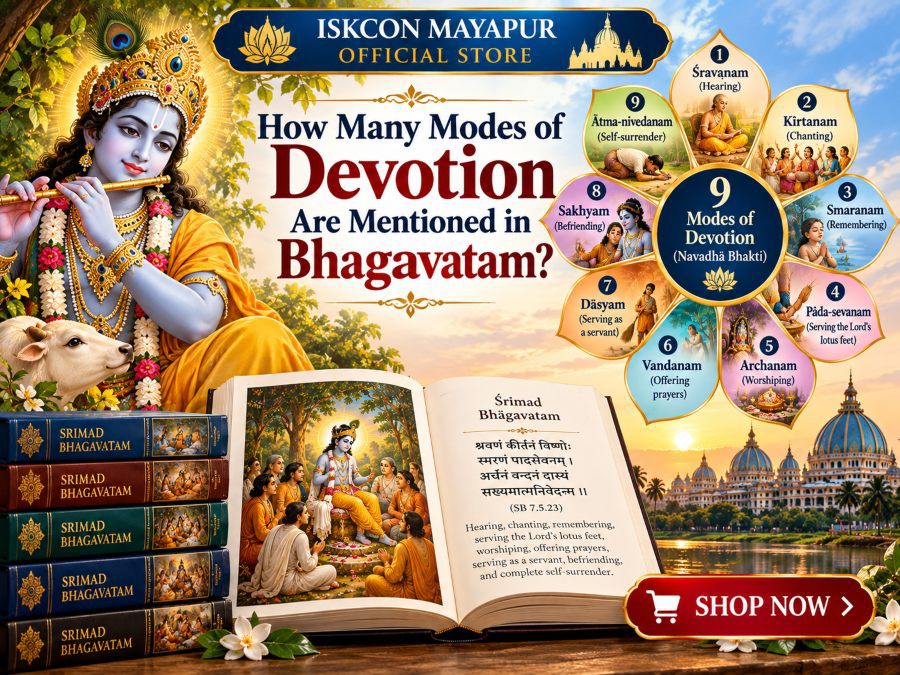 How Many Modes of Devotion Are Mentioned in Bhagavatam?Read more
A young boy named Prahlada listed nine ways to serve God, and the Bhagavatam keeps them as its answer. Learn what the...
-
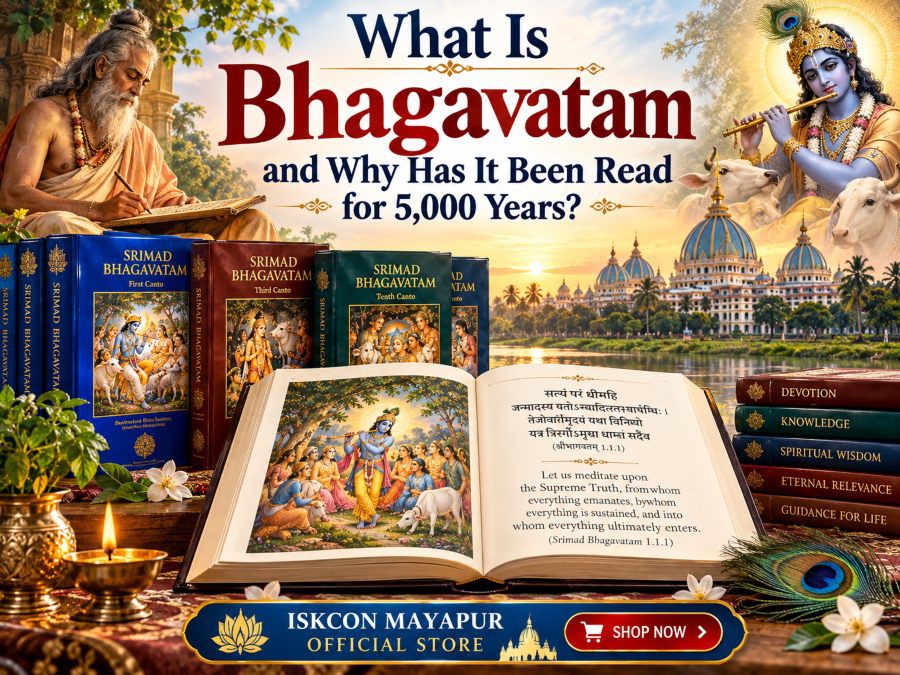 What Is Bhagavatam and Why Has It Been Read for 5,000 Years?Read more
A dying king asked one question, and the answer became the Bhagavatam. Learn what this Sanskrit scripture contains,...
-
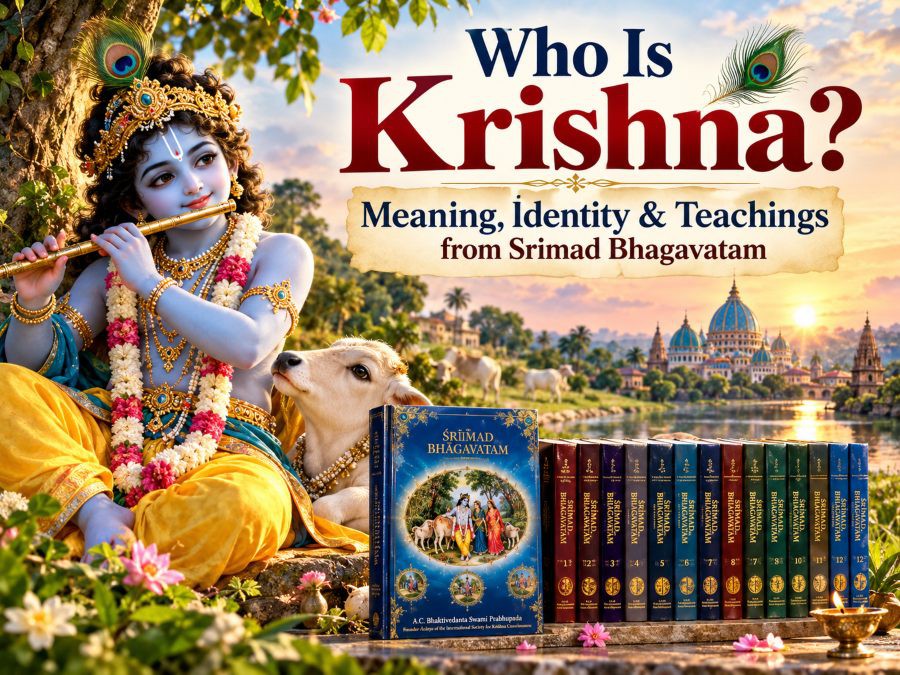 Who Is Lord Krishna? His Meaning, Teachings and Pastimes ExplainedRead more
Discover who Krishna is according to Srimad Bhagavatam, including His divine identity, childhood pastimes, teachings,...
-
 Incense in Islam: Bakhoor, Agarbatti and What Tradition SaysRead more
Is burning fragrance part of Muslim tradition? Explore incense in Islam, from the Prophetic practice of fumigating...
-
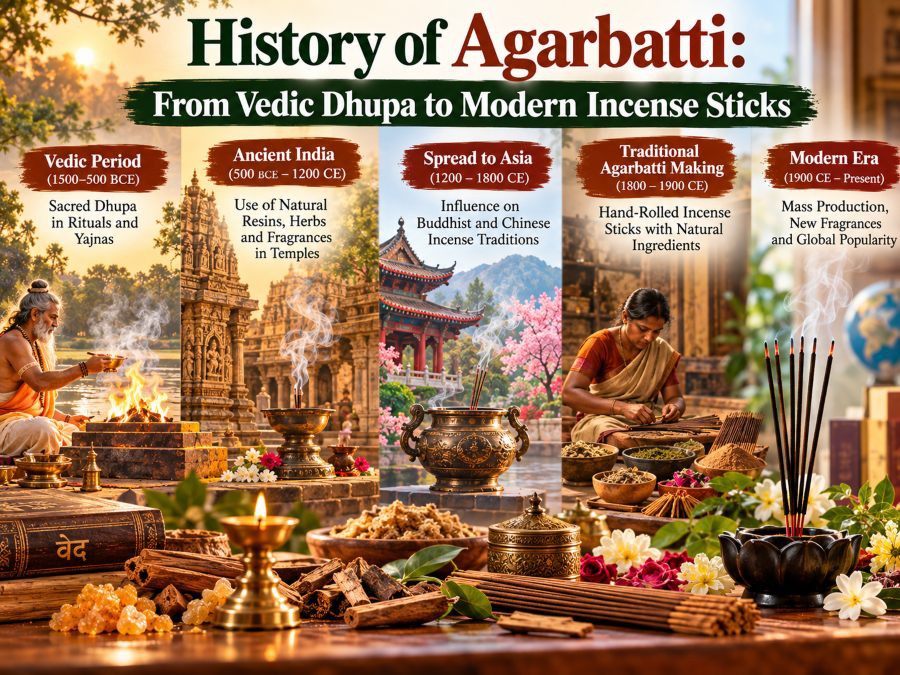 History of Agarbatti: From Vedic Dhupa to Modern Incense SticksRead more
Where did agarbatti really come from? Follow the history of agarbatti from Vedic fire rituals and temple dhupa to...
Blog categories
- Default category (0)
- MUSICAL INSTRUMENT (1)
- BOOK (5)
- DEVOTIONAL GIFT (0)
- Blog (30) click
- CHANDAN (12)
- Bhagavatam Wisdom Series (68)
- Krishna Consciousness (14)
- Mridangam Musical Instrument (6)
- Bhagavad Gita for Beginners (13)
- Bhagavad Gita As It Is (37) click
- Bhagavad Gita As It Is Telugu (0)
- Bhagavad Gita As It Is Marathi (0)
- Bhagavad Gita As It Is In Hindi (0)
- Bhagavad Gita As It Is In English (0)
- Bhagavad Gita As It Is In Bengali (8)
- Bhagavad Gita As It Is In Kannada (0)
- Bhagavad Gita As It Is In Gujarati (0)
- Bhagavad Gita As It Is In Panjabi (0)
- Bhagavad Gita As It Is In Tamil (0)
- Bhagavad Gita As It Is Odia (0)
- BHAGAVAD GITA As It Is GERMAN (0)
- Bhagavad Gita As It Is In French (0)
- Bhagavad Gita As It Is In Nepali (0)
- Bhagavad Gita As It Is In Assamese (0)
- Incense or Agarbatti (38)
- Lord Chaitanya Mahaprabhu (3)
- Vedic Temple Mayapur (14)
- kalki (15)
- Mahabharata – Dharma & Destiny (27)
- Vaishnava Scriptures (4)
- healthy product (4)
- chaitanya mahaprabhu (5)
- Tulsi Mala Guide (17)
Search in blog
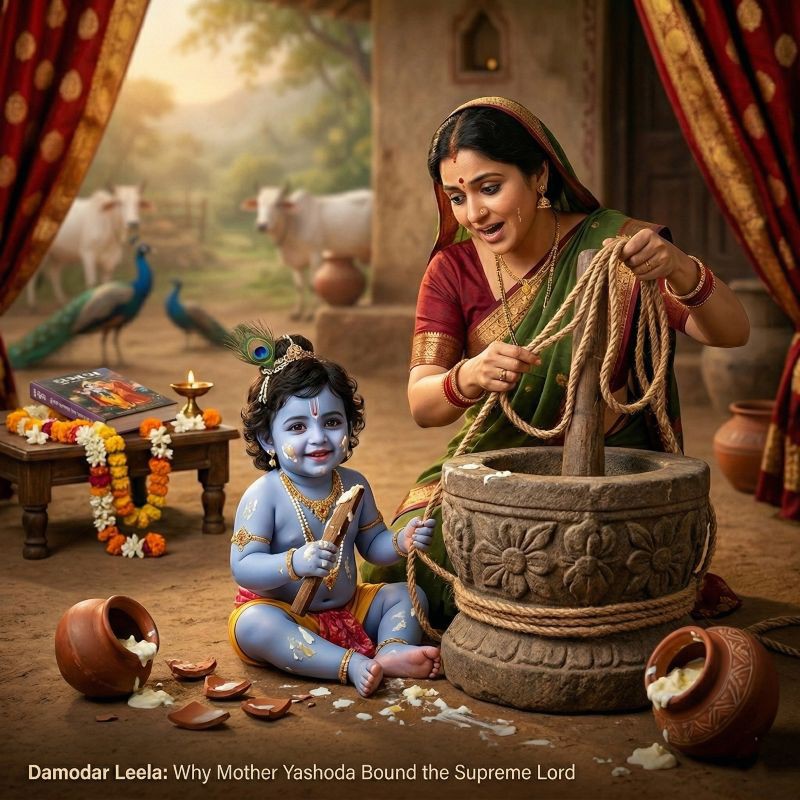
Damodar Leela: Why Mother Yashoda Bound Lord Krishna with Love
Damodar Leela: Why Mother Yashoda Bound the Supreme Lord
Damodar Leela is one of the most intimate and heart-melting pastimes of Lord Krishna, revealing a profound spiritual truth—that the Supreme Absolute Truth, who controls the entire universe, willingly becomes controlled by the pure love of His devotee. This beautiful episode from Krishna’s childhood in Vrindavan is not just a story; it is a deep meditation on devotion, humility, and divine love. For those who wish to experience the complete narration with authentic depth, you can also Read the Full Story in Krishna Book, where every detail is presented with spiritual clarity and devotional richness.
What is Damodar Leela?
The word “Damodar” comes from two Sanskrit roots: “dama” meaning rope and “udara” meaning belly. Together, they describe the form of Krishna whose belly was bound by a rope. This name itself is extraordinary because it captures a moment where the infinite becomes bound by the finite—not by force, but by love.
Damodar Leela takes place in the peaceful village of Gokul, where Krishna lives as the beloved son of Mother Yashoda and Nanda Maharaj. Unlike the majestic image of God often imagined as distant and powerful, here we see Krishna as a playful child, running around, creating mischief, and charming everyone with His innocence.
The Beginning: Krishna’s Sweet Mischief
Krishna’s childhood is filled with delightful pranks, and one of His most famous habits is stealing butter. The residents of Vrindavan lovingly call Him Makhan Chor—the butter thief. However, this is not ordinary mischief. Butter, in a spiritual sense, represents the purest essence of the heart, churned through love and devotion. Krishna’s stealing of butter symbolizes His desire to take away the hearts of His devotees.
On the day of Damodar Leela, Mother Yashoda was busy churning butter early in the morning. Krishna approached her, seeking her attention and affection. As she fed Him, milk on the stove began to boil over. Yashoda quickly put Krishna down to save the milk, but Krishna felt neglected. In His childlike frustration, He broke the butter pots and began distributing butter to monkeys.
Mother Yashoda’s Pursuit
When Mother Yashoda returned and saw the mess, she immediately understood that Krishna was behind it. Determined to discipline Him, she picked up a stick and began chasing Him. This scene is both humorous and deeply symbolic.
The Supreme Lord, whom even great sages cannot capture through meditation, is seen running in fear of His mother. His ankle bells jingling, His eyes filled with playful tears—this is a vision of divinity that is intimate and accessible.
Eventually, Yashoda caught Krishna. Seeing His fear and innocence, her heart softened. She threw away the stick and decided to bind Him to a wooden mortar as a form of gentle punishment.
The Rope That Was Always Two Inches Short
Mother Yashoda tried to tie Krishna with a rope, but every time she attempted, the rope was mysteriously two inches too short. She added more ropes, joining them together, but still, it remained insufficient.
This part of the Leela carries deep spiritual significance. The two inches represent:
1. The devotee’s sincere effort
2. The Lord’s divine mercy
No matter how much effort one makes, without divine grace, the Supreme cannot be bound. Similarly, without sincere effort, grace alone does not manifest. When both come together, the impossible becomes possible.
Seeing Yashoda’s determination and the beads of sweat on her forehead, Krishna finally allowed Himself to be bound. This moment is extraordinary—the infinite accepts limitation out of love.
The Deliverance of Nalakuvara and Manigriva
After being tied to the mortar, Krishna crawled between two large Arjuna trees in the courtyard. The mortar got stuck, and with a gentle pull, Krishna uprooted both trees. From within them emerged two celestial beings—Nalakuvara and Manigriva.
These were the sons of Kubera, the treasurer of the demigods. Due to their arrogance and indulgence, they were cursed by the sage Narada to become trees. However, the curse was also a blessing—it ensured that they would eventually be liberated by Krishna.
When Krishna pulled down the trees, He freed them from their curse. The two demigods offered prayers, acknowledging Krishna’s supreme position and expressing gratitude for His mercy.
This part of the Leela highlights that Krishna’s actions, even when appearing simple, have profound cosmic effects. His presence purifies and liberates all.
The Deeper Meaning of Damodar Leela
Damodar Leela is not just a charming childhood story; it is a philosophical revelation.
1. God is Controlled by Love
The most powerful lesson of this Leela is that God is not controlled by wealth, knowledge, or power—but by pure devotion. Mother Yashoda did not perform austerities or rituals; her love alone bound Krishna.
2. The Sweetness of Personal Relationship
In many traditions, God is seen as distant and awe-inspiring. But in Krishna Leela, He becomes a son, a friend, a beloved. This personal relationship makes spirituality deeply emotional and accessible.
3. The Balance of Justice and Mercy
Krishna breaks the butter pots and is “punished,” yet through this event, He liberates Nalakuvara and Manigriva. This shows that divine actions always carry both justice and compassion.
4. The Symbol of the Rope
The rope represents devotion. It may seem small and insignificant, but when tied with sincerity, it can bind even the Supreme.
Why Damodar Leela is Celebrated
Damodar Leela is especially remembered during the holy month of Kartik, also known as Damodar Month. Devotees offer lamps (deepa) to Lord Krishna while singing the Damodar Ashtakam, a prayer glorifying this beautiful pastime.
The offering of a small lamp symbolizes the devotee’s humble attempt to please the Lord. Just as Yashoda’s effort was accepted, even a small act of devotion, when done with sincerity, is valued by Krishna.
Relevance in Modern Life
In today’s fast-paced and often stressful world, Damodar Leela offers a refreshing perspective. It reminds us that spirituality is not about complexity but about connection.
- Love is more powerful than control
- Simplicity is more meaningful than show
- Devotion is more important than ritual
When we approach life with humility and sincerity, we begin to experience a deeper sense of peace and fulfillment.
The Emotional Beauty of the Leela
One cannot fully appreciate Damodar Leela without feeling its emotional depth. Imagine the scene—Krishna, with tears in His eyes, being tied by His loving mother. The same Lord who holds the universe within His belly allows Himself to be bound by a simple rope.
This contrast is what makes the Leela so powerful. It bridges the gap between the infinite and the intimate, showing that God is not just महान (great) but also मधुर (sweet).
Lessons for Devotees
For those walking the path of devotion, Damodar Leela provides clear guidance:
- Serve with love, not expectation
- Be consistent in spiritual effort
- Trust in divine grace
- Cultivate a personal relationship with the Divine
These principles are simple yet transformative.
Conclusion: The Power of Pure Devotion
Damodar Leela stands as a timeless reminder that the Supreme Lord is not distant or unreachable. He is present, personal, and deeply responsive to love. Mother Yashoda did not see Krishna as God—she saw Him as her child, and that pure affection allowed her to experience a form of divine intimacy that even great sages aspire for.
This Leela invites us to move beyond intellectual understanding and enter the realm of heartfelt devotion. It teaches that when love becomes pure and selfless, even the infinite can be held close.
In the end, Damodar Leela is not just about binding Krishna—it is about being bound to Him through love, forever.
Posted in: Krishna Leela
Related posts
-
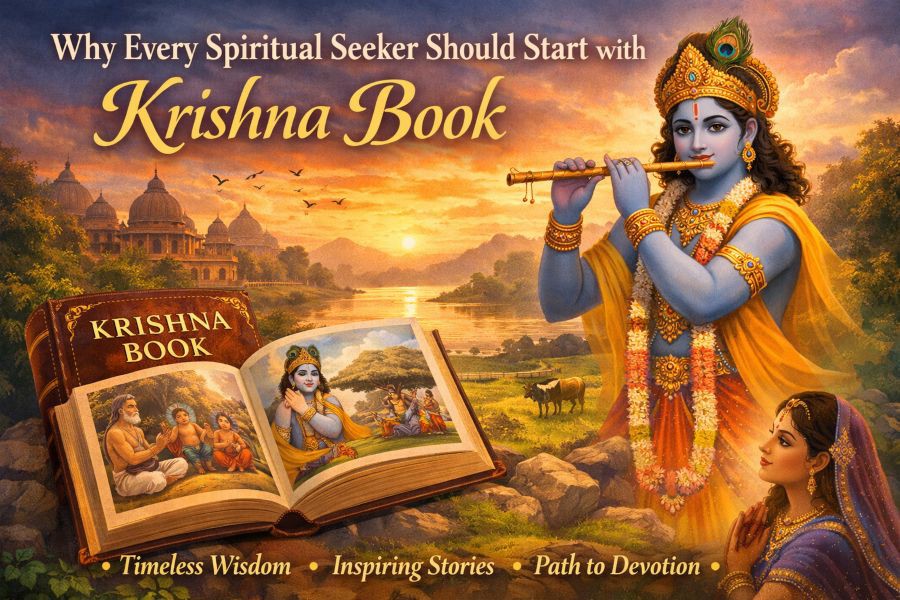 Why the Krishna Book Is a Must-Read for Every Spiritual SeekerThe Krishna Book is the perfect starting point for anyone seeking spiritual clarity. It blends storytelling,...Read more
 -
 How Daily Krishna Book Reading Brings Peace to Your HomeDaily Krishna Book reading can transform your home into a peaceful and spiritually uplifting space. It helps remove...Read more
 -
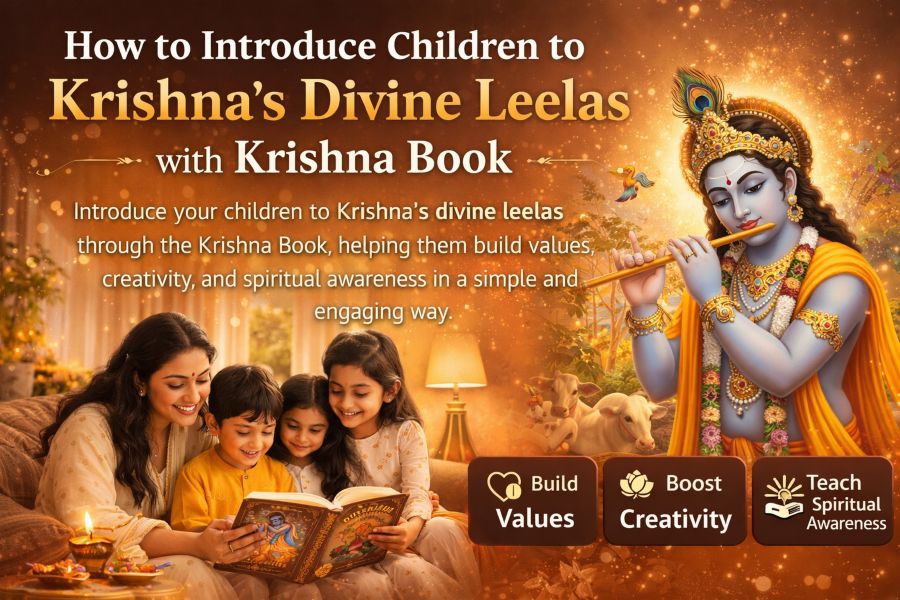 How to Teach Kids Spiritual Values with the Krishna BookIntroduce your children to Krishna’s divine leelas through the Krishna Book. An engaging and simple way to build...Read more
 -
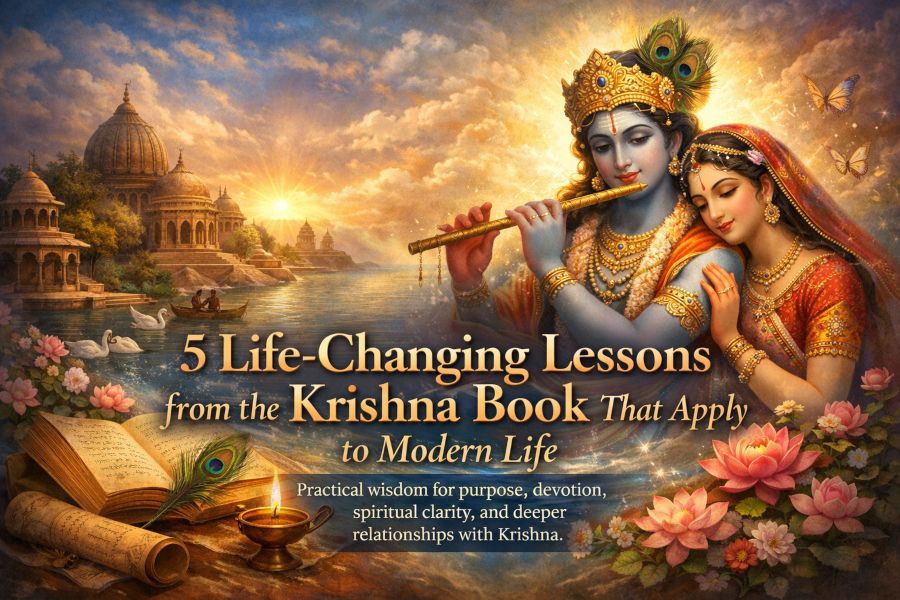 5 Life-Changing Lessons from the Krishna Book That Apply to Modern LifeExplore five powerful lessons from the Krishna Book that offer practical guidance for modern life, helping readers...Read more
 -
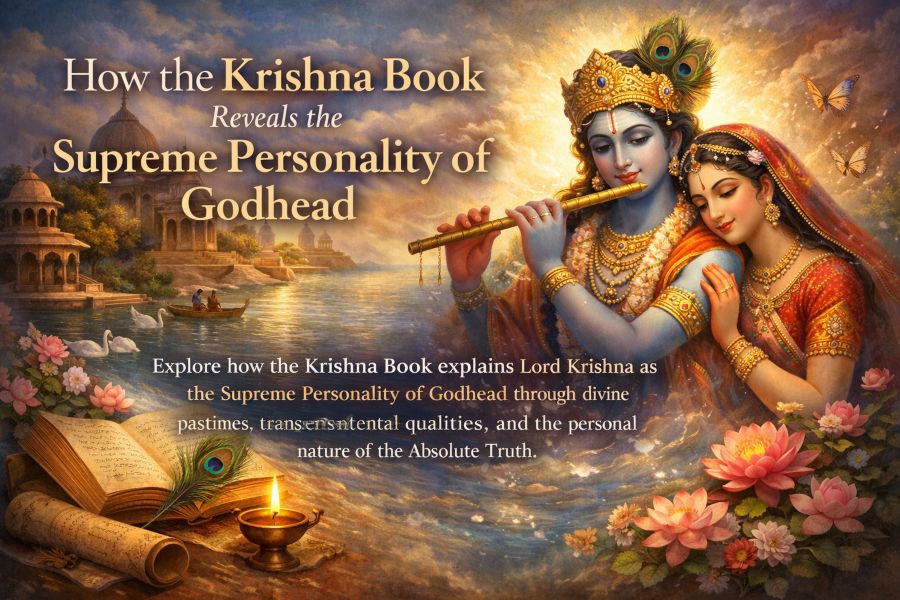 Why the Krishna Book Presents Krishna as the Supreme Personality of GodheadExplore how the Krishna Book explains Lord Krishna as the Supreme Personality of Godhead through divine pastimes,...Read more
Leave a comment