
Why did Krishna run to embrace a poor brahmin in rags? Read the Sudama story from the Bhagavatam and learn how a...
Latest posts
-
 Krishna and Sudama: The Poor Brahmin Who Became Wealthy in LoveRead more
 -
 Vamana Avatar: How Three Steps Humbled Bali MaharajaRead more
Why did a powerful king give away three worlds to a boy asking for three steps? Learn the Vamana avatar story from...
-
 The Bhagavatam on Marriage: Duty, Love and Spiritual PartnershipRead more
What does the Bhagavatam say about marriage? Through the stories of Kardama and Devahuti, Rukmini's secret letter and...
-
 What Is Prema? The Bhagavatam's Highest Stage of Love for GodRead more
Prema is love for God with no "because" attached. Learn how the Bhagavatam describes it, the nine steps from faith to...
-
 Is Shiva Parvati Kalyana Mentioned in Srimad Bhagavatam? What the Scripture Really SaysRead more
Looking for Shiva and Parvati's wedding in the Srimad Bhagavatam? Find out what the scripture actually describes,...
-
 How Many Modes of Devotion Are Mentioned in Bhagavatam?Read more
A young boy named Prahlada listed nine ways to serve God, and the Bhagavatam keeps them as its answer. Learn what the...
-
 What Is Bhagavatam and Why Has It Been Read for 5,000 Years?Read more
A dying king asked one question, and the answer became the Bhagavatam. Learn what this Sanskrit scripture contains,...
-
 Who Is Lord Krishna? His Meaning, Teachings and Pastimes ExplainedRead more
Discover who Krishna is according to Srimad Bhagavatam, including His divine identity, childhood pastimes, teachings,...
-
 Incense in Islam: Bakhoor, Agarbatti and What Tradition SaysRead more
Is burning fragrance part of Muslim tradition? Explore incense in Islam, from the Prophetic practice of fumigating...
-
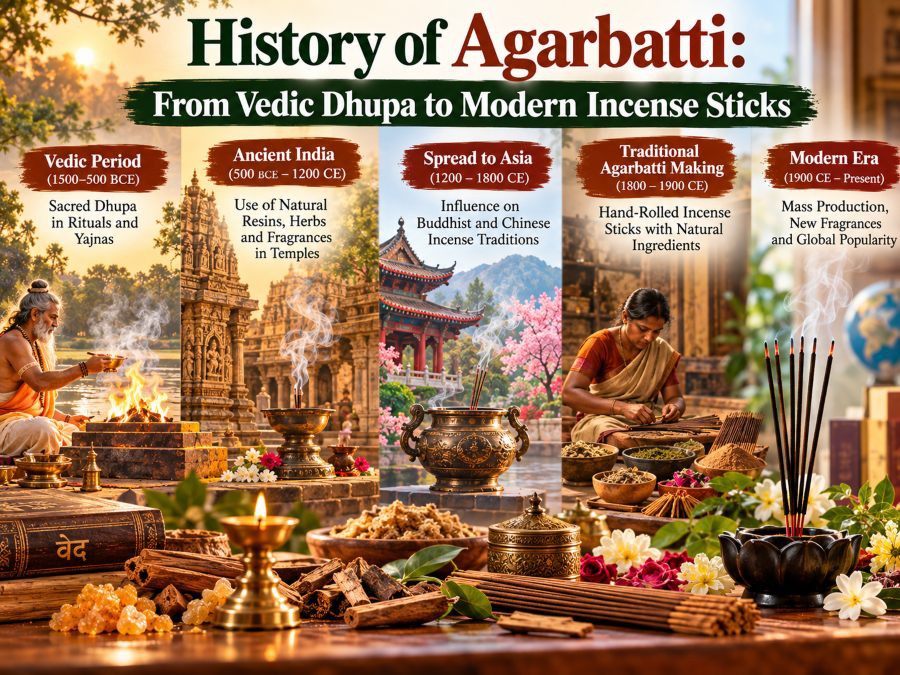 History of Agarbatti: From Vedic Dhupa to Modern Incense SticksRead more
Where did agarbatti really come from? Follow the history of agarbatti from Vedic fire rituals and temple dhupa to...
Blog categories
- Default category (0)
- MUSICAL INSTRUMENT (1)
- BOOK (5)
- DEVOTIONAL GIFT (0)
- Blog (30) click
- CHANDAN (12)
- Bhagavatam Wisdom Series (68)
- Krishna Consciousness (14)
- Mridangam Musical Instrument (6)
- Bhagavad Gita for Beginners (13)
- Bhagavad Gita As It Is (37) click
- Bhagavad Gita As It Is Telugu (0)
- Bhagavad Gita As It Is Marathi (0)
- Bhagavad Gita As It Is In Hindi (0)
- Bhagavad Gita As It Is In English (0)
- Bhagavad Gita As It Is In Bengali (8)
- Bhagavad Gita As It Is In Kannada (0)
- Bhagavad Gita As It Is In Gujarati (0)
- Bhagavad Gita As It Is In Panjabi (0)
- Bhagavad Gita As It Is In Tamil (0)
- Bhagavad Gita As It Is Odia (0)
- BHAGAVAD GITA As It Is GERMAN (0)
- Bhagavad Gita As It Is In French (0)
- Bhagavad Gita As It Is In Nepali (0)
- Bhagavad Gita As It Is In Assamese (0)
- Incense or Agarbatti (38)
- Lord Chaitanya Mahaprabhu (3)
- Vedic Temple Mayapur (14)
- kalki (15)
- Mahabharata – Dharma & Destiny (27)
- Vaishnava Scriptures (4)
- healthy product (4)
- chaitanya mahaprabhu (5)
- Tulsi Mala Guide (17)
Search in blog
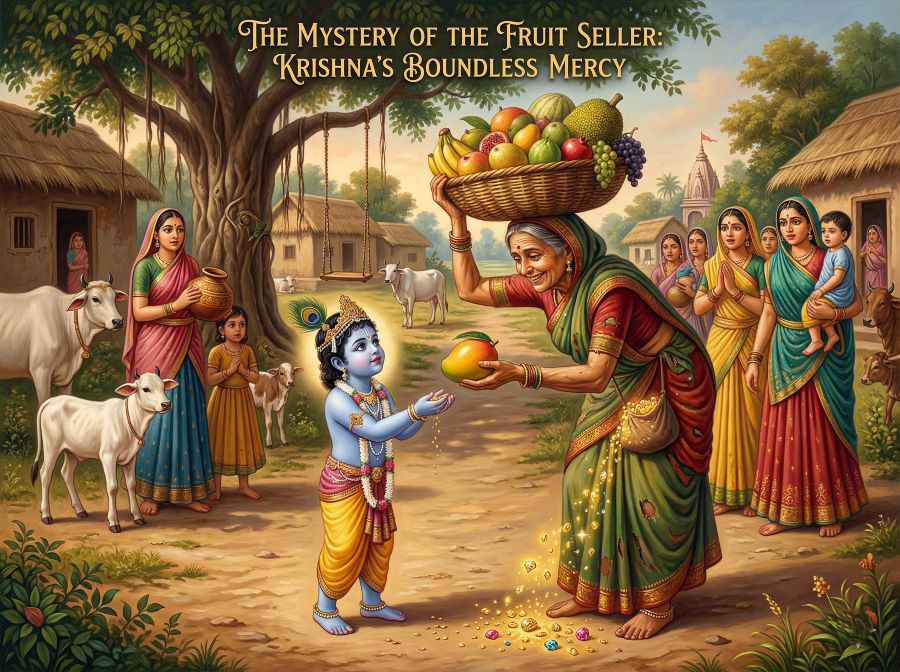
The Mystery of the Fruit Seller: How Krishna Showed Boundless Mercy Through a Simple Exchange
The Mystery of the Fruit Seller: Krishna’s Boundless Mercy
Among the many enchanting pastimes of Lord Krishna, the story of the fruit seller stands out for its simplicity, sweetness, and profound spiritual depth. Unlike grand miracles such as lifting Govardhan Hill or subduing Kaliya, this Leela unfolds in an ordinary village setting, involving a simple exchange between a child and a humble vendor. Yet within this small moment lies a vast ocean of divine mercy and philosophical insight. For readers who wish to immerse themselves in such heart-touching pastimes in vivid detail, the illustrated Krishna Book offers a beautiful and engaging way to experience these divine stories.
The Simple Setting of Vrindavan
Vrindavan is a place where the extraordinary appears ordinary and the divine blends seamlessly with daily life. The residents of Vraja live simply, tending cows, engaging in household duties, and nurturing deep relationships centered around love and devotion.
In this peaceful setting, Krishna, the Supreme Lord, appears as a young child. He plays in the courtyards, roams freely with His friends, and interacts with the villagers in ways that are both charming and spiritually significant.
It is within this environment that the fruit seller’s story unfolds—an event that might seem small on the surface but carries eternal meaning.
The Arrival of the Fruit Seller
One day, a fruit seller entered the village, calling out to attract customers. Carrying a basket filled with fresh fruits, she moved from house to house, hoping to exchange her goods for grains, which was a common practice in those times.
Her voice reached the ears of little Krishna, who was playing nearby. Curious and excited, He decided to approach her.
This moment marks the beginning of a divine interaction—one that transcends ordinary trade and becomes a spiritual exchange.
Krishna’s Innocent Offering
Krishna, being a small child, did not fully understand the concept of barter. Eager to obtain fruits, He gathered some grains from His home and ran toward the fruit seller.
However, as He carried the grains in His tiny hands, most of them slipped through His fingers and fell along the way. By the time He reached the fruit seller, only a few grains remained.
This detail is deeply symbolic. Krishna, the Supreme Lord who owns everything, approaches with what appears to be an incomplete offering. Yet His intention is pure and filled with innocence.
The Fruit Seller’s Response
When the fruit seller saw Krishna, she was captivated by His beauty. His smiling face, expressive eyes, and childlike enthusiasm melted her heart.
Despite receiving only a handful of grains, she did not hesitate. Instead, she filled Krishna’s hands with fruits, giving far more than what she received.
This act of generosity is not driven by calculation but by affection. She is not thinking in terms of profit or loss—she is responding to love.
The Miracle Unfolds
After Krishna left with the fruits, the fruit seller looked into her basket. To her amazement, it was no longer filled with fruits but with precious jewels—gold, diamonds, and other valuable gems.
What began as a simple act of kindness turned into an unimaginable reward.
This transformation is the essence of the Leela. It shows that when something is offered to Krishna with sincerity, it is returned in abundance, often in ways beyond material comprehension.
The Deeper Meaning of the Exchange
At first glance, the story appears to be about a magical reward. However, its true meaning goes far beyond material gain.
1. The Value of Intention
Krishna did not offer perfect grains, nor did the fruit seller receive a fair trade. Yet the exchange was complete because it was based on sincerity. In spiritual life, intention matters more than quantity.
2. Giving Without Expectation
The fruit seller gave without expecting anything in return. Her selfless act opened the door to divine grace.
3. Divine Reciprocity
Krishna reciprocates according to the भावना (feeling) of the devotee. A small offering made with love can attract infinite blessings.
4. Transformation Through Devotion
The fruits turning into jewels symbolize the transformation of simple actions into spiritually valuable experiences when connected to the Divine.
Symbolism in the Leela
Every element of this story carries symbolic significance:
- Grains: Represent limited human effort
- Fruits: Symbolize the results of action
- Jewels: Indicate divine reward and spiritual wealth
- Krishna’s Hands: Reflect innocence and purity
Together, they create a powerful message about the nature of devotion and divine exchange.
Lessons for Modern Life
In today’s world, where most actions are driven by gain and expectation, the fruit seller’s story offers a refreshing perspective:
1. Practice Selfless Giving
True fulfillment comes from giving without expecting returns.
2. Appreciate Small Opportunities
Even small moments can become spiritually significant when approached with the right attitude.
3. Cultivate Pure Intentions
Success is not just about results but about the sincerity behind actions.
4. Trust in Divine Timing
Rewards may not always be immediate or material, but they are always meaningful.
The Role of Simplicity
One of the most beautiful aspects of this Leela is its simplicity. There are no grand settings, no dramatic confrontations—just a child and a fruit seller.
Yet this simplicity makes the story accessible to everyone. It reminds us that spirituality does not require complexity. It can be found in everyday interactions and small acts of kindness.
Emotional Depth of the Story
The emotional power of this Leela lies in its purity. The fruit seller’s affection and Krishna’s innocence create a moment that is both tender and transformative.
This emotional connection is what makes the story memorable. It speaks not just to the mind but to the heart.
Why This Leela Matters Today
In a time when material success often overshadows spiritual values, the story of the fruit seller serves as a gentle reminder of what truly matters.
- Love over profit
- Intention over perfection
- Giving over taking
These principles are timeless and universally applicable.
The Nature of Krishna’s Mercy
Krishna’s mercy is unique because it is not limited by rules or conditions. He does not calculate worthiness; He responds to sincerity.
The fruit seller did not perform rituals or possess deep philosophical knowledge. Her simple act of kindness was enough to attract divine grace.
This shows that spiritual progress is accessible to everyone, regardless of background or status.
A Devotional Perspective
For devotees, this Leela is a source of inspiration. It encourages them to offer whatever they have—time, effort, or resources—with love and sincerity.
Even the smallest offering becomes meaningful when connected to Krishna.
Conclusion: A Story of Infinite Grace
The mystery of the fruit seller is not just about a miraculous transformation—it is about the boundless mercy of Krishna. It shows that when we give with a pure heart, we receive far more than we can imagine.
This Leela teaches us that life’s greatest rewards are not always material. Sometimes, they come in the form of peace, fulfillment, and spiritual connection.
In the end, the fruit seller did not just gain jewels—she gained a moment of divine connection that transcends time. And through this story, we are invited to experience the same grace in our own lives.
Krishna’s mercy is infinite, and it is available to all who approach Him with sincerity.
Posted in: Krishna Leela
Related posts
-
 Why the Krishna Book Is a Must-Read for Every Spiritual SeekerThe Krishna Book is the perfect starting point for anyone seeking spiritual clarity. It blends storytelling,...Read more
 -
 How Daily Krishna Book Reading Brings Peace to Your HomeDaily Krishna Book reading can transform your home into a peaceful and spiritually uplifting space. It helps remove...Read more
 -
 How to Teach Kids Spiritual Values with the Krishna BookIntroduce your children to Krishna’s divine leelas through the Krishna Book. An engaging and simple way to build...Read more
 -
 5 Life-Changing Lessons from the Krishna Book That Apply to Modern LifeExplore five powerful lessons from the Krishna Book that offer practical guidance for modern life, helping readers...Read more
 -
 Why the Krishna Book Presents Krishna as the Supreme Personality of GodheadExplore how the Krishna Book explains Lord Krishna as the Supreme Personality of Godhead through divine pastimes,...Read more
Leave a comment