
Why did Krishna run to embrace a poor brahmin in rags? Read the Sudama story from the Bhagavatam and learn how a...
Latest posts
-
 Krishna and Sudama: The Poor Brahmin Who Became Wealthy in LoveRead more
 -
 Vamana Avatar: How Three Steps Humbled Bali MaharajaRead more
Why did a powerful king give away three worlds to a boy asking for three steps? Learn the Vamana avatar story from...
-
 The Bhagavatam on Marriage: Duty, Love and Spiritual PartnershipRead more
What does the Bhagavatam say about marriage? Through the stories of Kardama and Devahuti, Rukmini's secret letter and...
-
 What Is Prema? The Bhagavatam's Highest Stage of Love for GodRead more
Prema is love for God with no "because" attached. Learn how the Bhagavatam describes it, the nine steps from faith to...
-
 Is Shiva Parvati Kalyana Mentioned in Srimad Bhagavatam? What the Scripture Really SaysRead more
Looking for Shiva and Parvati's wedding in the Srimad Bhagavatam? Find out what the scripture actually describes,...
-
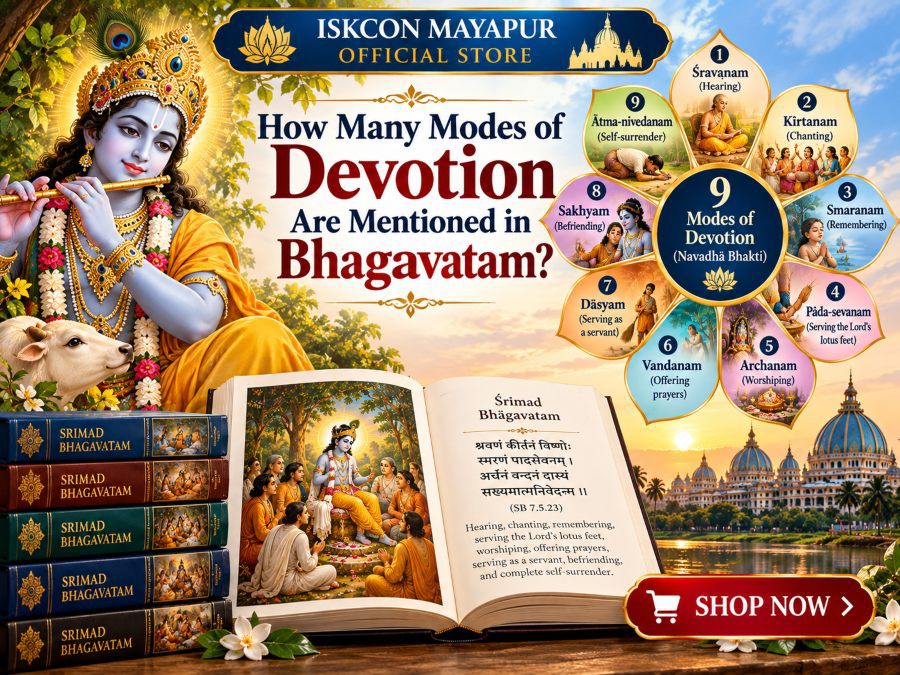 How Many Modes of Devotion Are Mentioned in Bhagavatam?Read more
A young boy named Prahlada listed nine ways to serve God, and the Bhagavatam keeps them as its answer. Learn what the...
-
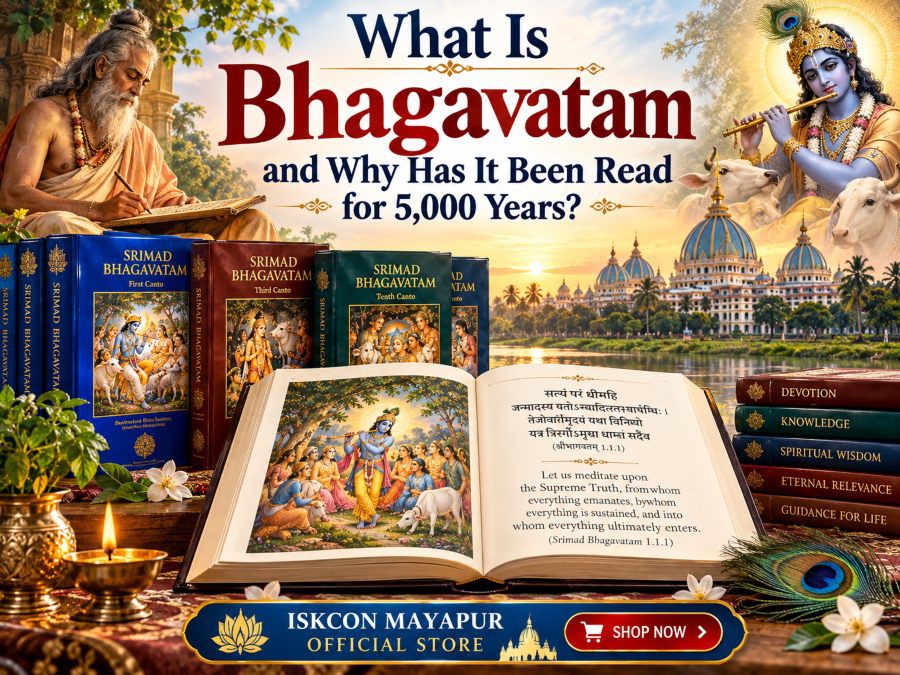 What Is Bhagavatam and Why Has It Been Read for 5,000 Years?Read more
A dying king asked one question, and the answer became the Bhagavatam. Learn what this Sanskrit scripture contains,...
-
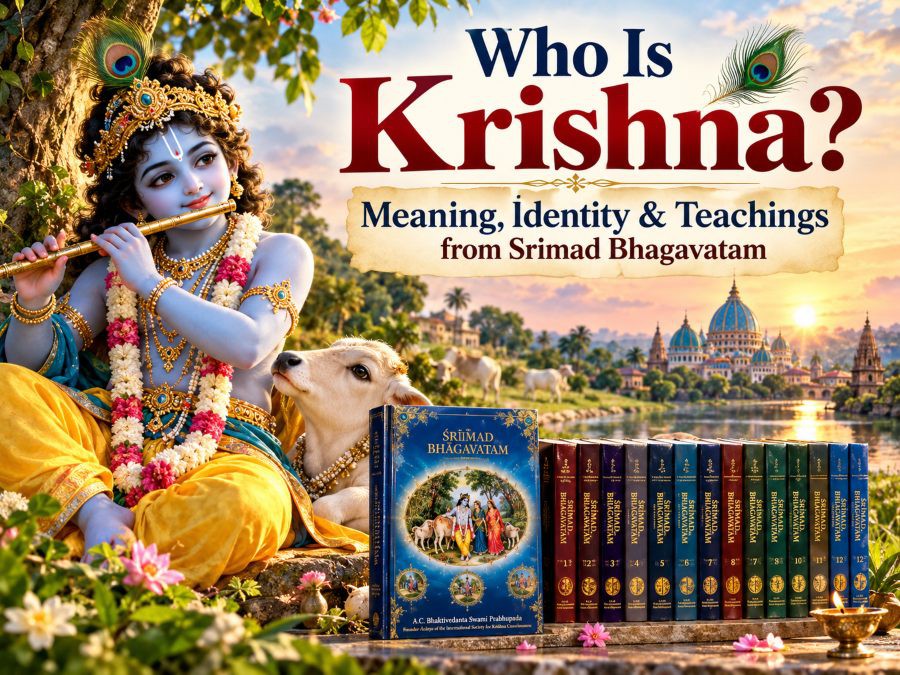 Who Is Lord Krishna? His Meaning, Teachings and Pastimes ExplainedRead more
Discover who Krishna is according to Srimad Bhagavatam, including His divine identity, childhood pastimes, teachings,...
-
 Incense in Islam: Bakhoor, Agarbatti and What Tradition SaysRead more
Is burning fragrance part of Muslim tradition? Explore incense in Islam, from the Prophetic practice of fumigating...
-
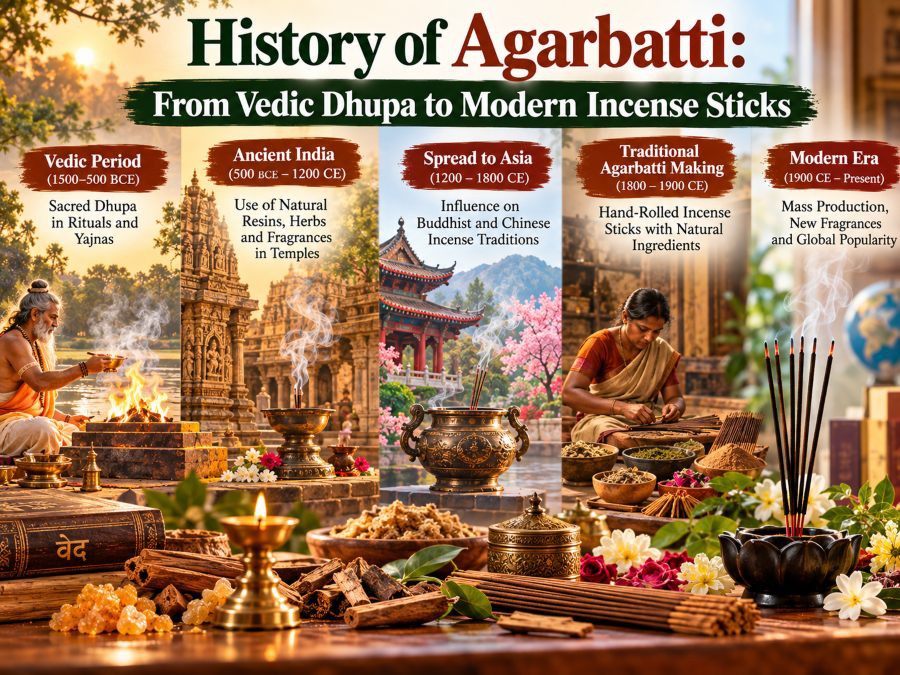 History of Agarbatti: From Vedic Dhupa to Modern Incense SticksRead more
Where did agarbatti really come from? Follow the history of agarbatti from Vedic fire rituals and temple dhupa to...
Blog categories
- Default category (0)
- MUSICAL INSTRUMENT (1)
- BOOK (5)
- DEVOTIONAL GIFT (0)
- Blog (30) click
- CHANDAN (12)
- Bhagavatam Wisdom Series (68)
- Krishna Consciousness (14)
- Mridangam Musical Instrument (6)
- Bhagavad Gita for Beginners (13)
- Bhagavad Gita As It Is (37) click
- Bhagavad Gita As It Is Telugu (0)
- Bhagavad Gita As It Is Marathi (0)
- Bhagavad Gita As It Is In Hindi (0)
- Bhagavad Gita As It Is In English (0)
- Bhagavad Gita As It Is In Bengali (8)
- Bhagavad Gita As It Is In Kannada (0)
- Bhagavad Gita As It Is In Gujarati (0)
- Bhagavad Gita As It Is In Panjabi (0)
- Bhagavad Gita As It Is In Tamil (0)
- Bhagavad Gita As It Is Odia (0)
- BHAGAVAD GITA As It Is GERMAN (0)
- Bhagavad Gita As It Is In French (0)
- Bhagavad Gita As It Is In Nepali (0)
- Bhagavad Gita As It Is In Assamese (0)
- Incense or Agarbatti (38)
- Lord Chaitanya Mahaprabhu (3)
- Vedic Temple Mayapur (14)
- kalki (15)
- Mahabharata – Dharma & Destiny (27)
- Vaishnava Scriptures (4)
- healthy product (4)
- chaitanya mahaprabhu (5)
- Tulsi Mala Guide (17)
Search in blog
Who Told Bhagavatam to Whom | The Divine Conversation of Srimad Bhagavatam
Introduction: The Sacred Flow of Divine Knowledge
The Srimad Bhagavatam is not just a book — it is a living conversation that has flowed through the hearts of realized souls for thousands of years. It is the ultimate expression of spiritual wisdom and devotion to the Supreme Lord, Krishna. But a natural question arises: Who told the Bhagavatam to whom?
The answer reveals a beautiful chain of divine transmission — from God Himself to great saints and devotees — ensuring that this timeless wisdom remains pure and powerful for every generation. The Bhagavatam www.mayapur.store was first spoken by Lord Krishna to Lord Brahma, then passed down through the line of spiritual masters, and finally revealed to humanity through the famous dialogue between Sukadeva Gosvami and King Pariksit.
This sacred lineage of transmission gives the Bhagavatam its authenticity and divinity.
The Eternal Source of the Bhagavatam
According to the Srimad Bhagavatam, the original speaker of all Vedic knowledge is none other than Lord Krishna, the Supreme Personality of Godhead.
At the dawn of creation, when the universe was dark and lifeless, Lord Krishna appeared in the heart of Lord Brahma, the first created being. He revealed to Brahma the essence of the eternal truth — the message that would later become known as the Bhagavatam.
This divine knowledge was not spoken in words but transmitted through spiritual realization — a process called śabda-brahma, or transcendental sound vibration.
Thus, the Srimad Bhagavatam is said to be non-different from Krishna Himself, a direct manifestation of divine consciousness.
Lord Brahma – The First Listener
After receiving the knowledge from Krishna, Lord Brahma, filled with devotion, began to meditate upon the Supreme Lord. From this meditation emerged the sacred verses of what would become the Bhagavatam.
Brahma then spoke this transcendental wisdom to Narada Muni, his spiritual son and disciple. Narada, a divine sage who travels between worlds, carried the message of devotion everywhere, singing the glories of Lord Krishna and inspiring countless souls.
Thus, the first human-like transmission of the Bhagavatam began between Brahma and Narada.
READ ALSO:- Who is the Author of Srimad Bhagavatam?
Narada Muni – The Traveling Sage
Narada Muni is one of the most important figures in the Vedic tradition. He is known as the eternal messenger of devotion (bhakti).
After receiving the essence of the Bhagavatam from Lord Brahma, Narada carried that message throughout the universe, awakening love for Krishna wherever he went. He instructed many great personalities, including Dhruva Maharaja, Prahlada Maharaja, and even Vyasadeva, the compiler of all Vedic scriptures.
Narada’s role was crucial because he not only spread the message but also inspired Vyasa to write down the Srimad Bhagavatam for the benefit of humanity.
Vyasadeva – The Compiler and Realizer
Vyasadeva, also known as Krishna Dvaipayana Vyasa, was the literary incarnation of Lord Krishna. He divided the original Vedas into four parts — Rig, Yajur, Sama, and Atharva — and compiled other scriptures like the Mahabharata and the Puranas.
However, even after all this work, Vyasa felt dissatisfied. His spiritual master, Narada Muni, appeared and advised him that his unhappiness was due to not directly glorifying the Supreme Personality of Godhead.
Following Narada’s instruction, Vyasa sat in meditation at his ashram in Badarikāśrama and experienced a divine vision of the Supreme Lord and His energies. Inspired by this vision, he composed the Srimad Bhagavatam — the essence of all spiritual teachings and the pure message of bhakti (devotion).
After writing it, Vyasa imparted this sacred knowledge to his enlightened son, Sukadeva Gosvami.
READ ALSO:- Who is God?
Sukadeva Gosvami – The Transcendental Speaker
Sukadeva Gosvami, the son of Vyasa, was a self-realized soul from birth. He was so pure that he had no interest in worldly pleasures or material life.
Though Vyasa had written the Bhagavatam, he desired his son to hear and understand it deeply. Initially, Sukadeva was absorbed in meditation and uninterested in worldly scriptures. But when he heard the verses of the Bhagavatam, his heart melted with spiritual love.
He realized that the Srimad Bhagavatam was not an ordinary text but the direct glorification of the Supreme Lord Krishna, filled with transcendental joy.
Thus, Sukadeva became the most perfect speaker of the Bhagavatam.
King Pariksit – The Eager Listener
On the other side of the sacred dialogue was King Pariksit, the grandson of Arjuna and the last emperor of the Kuru dynasty.
Once, while hunting in the forest, King Pariksit unknowingly offended a sage named Śamīka Ṛṣi. In reaction, the sage’s son cursed the king to die from a snake bite within seven days.
Rather than panic, King Pariksit accepted this curse as the Lord’s mercy. He renounced his royal comforts, sat on the bank of the sacred river Ganges, and decided to spend his final days hearing about the Supreme Lord.
At that divine moment, Sukadeva Gosvami appeared, surrounded by sages and devotees, ready to speak the Srimad Bhagavatam.
The Divine Dialogue – Sukadeva and Pariksit
The Srimad Bhagavatam as we know it today is the sacred conversation between Sukadeva Gosvami (the speaker) and King Pariksit (the listener).
For seven days and nights, Sukadeva narrated the glories of the Lord — His incarnations, pastimes, creation, and the path of devotion — while Pariksit listened with full attention and faith.
This conversation forms the heart of the Bhagavatam.
It is a perfect example of how spiritual knowledge is meant to be shared — through sincere hearing (śravaṇa) and speaking (kīrtana) between a pure devotee and an eager listener.
By hearing with faith, King Pariksit attained liberation at the end of the seventh day, proving that Bhagavatam hearing is the most powerful spiritual practice.
The Parampara (Disciplic Succession) of the Bhagavatam
The transmission of the Srimad Bhagavatam is part of a sacred lineage known as paramparā, or disciplic succession.
Here is the divine flow of knowledge as described in the scriptures:
1. Lord Krishna (the Supreme Speaker)
2. Lord Brahma (first listener)
3. Narada Muni (transcendental sage)
4. Vyasadeva (compiler and teacher)
5. Sukadeva Gosvami (realized speaker)
6. King Pariksit (devoted listener)
7. Suta Gosvami (the next speaker who narrated it to sages at Naimisharanya)
After Sukadeva spoke the Bhagavatam to King Pariksit, Suta Gosvami repeated it to thousands of sages at Naimisharanya forest. This repetition preserved the Bhagavatam for future generations, ensuring that the same message of love for Krishna reached the entire world.
Why the Bhagavatam Was Spoken
Each time the Bhagavatam was spoken, it served a divine purpose:
- Krishna to Brahma: To empower creation and guide the first being.
- Brahma to Narada: To spread devotion throughout the universe.
- Narada to Vyasa: To inspire Vyasa to compile the Bhagavatam.
- Vyasa to Sukadeva: To pass the message of love and devotion.
- Sukadeva to Pariksit: To deliver a dying king to liberation.
- Suta to the Sages: To bless humanity with eternal spiritual knowledge.
Each speaker and listener in this chain was chosen by divine will, showing that the Srimad Bhagavatam is a living tradition of divine wisdom, not just a historical scripture.
The Power of Hearing Bhagavatam
The Bhagavatam itself declares that sincere hearing of its message cleanses the heart of all impurities.
When King Pariksit heard it with full surrender, he was freed from fear, attachment, and death itself.
Similarly, anyone who hears or reads the Bhagavatam with faith experiences spiritual transformation. It awakens love for Krishna, removes ignorance, and brings inner peace.
Thus, the Srimad Bhagavatam is known as the “Amal Purana” — the spotless Purana, free from material contamination and full of divine nectar.
The Modern Relevance of This Divine Dialogue
Even today, the conversation between Sukadeva and Pariksit holds immense spiritual relevance.
It shows that no matter one’s situation — even facing death — hearing about Krishna can bring liberation and bliss.
In the age of confusion and materialism, the Bhagavatam stands as a guiding light, teaching that the ultimate goal of life is to develop love for the Supreme Lord.
By studying or hearing it regularly, one can awaken the same devotion that liberated King Pariksit thousands of years ago.
The Bhagavatam as the Voice of God
Because it was first spoken by God Himself and passed through pure devotees, the Srimad Bhagavatam is considered the literary incarnation of Krishna.
Reading or hearing it is equivalent to associating with the Lord directly.
Therefore, the scripture is not just historical; it is living, divine, and eternally relevant.
It connects the soul to its original source and reveals the highest truth — that God is a loving person who can be known through devotion.
Conclusion: The Eternal Dialogue of Love
So, who told the Bhagavatam to whom?
It was first revealed by Lord Krishna to Brahma, then passed to Narada, Vyasa, Sukadeva, and finally King Pariksit, before being shared with the sages by Suta Gosvami.
This sacred flow of divine sound is not just a historical event but a living tradition.
Every time we read or hear the Srimad Bhagavatam, that same conversation continues — between the Lord, His devotees, and our hearts.
Thus, the Bhagavatam remains the eternal dialogue of divine love, guiding every soul back to its true home — the loving embrace of Lord Krishna.
Posted in: Bhagavatam Wisdom Series
Related posts
-
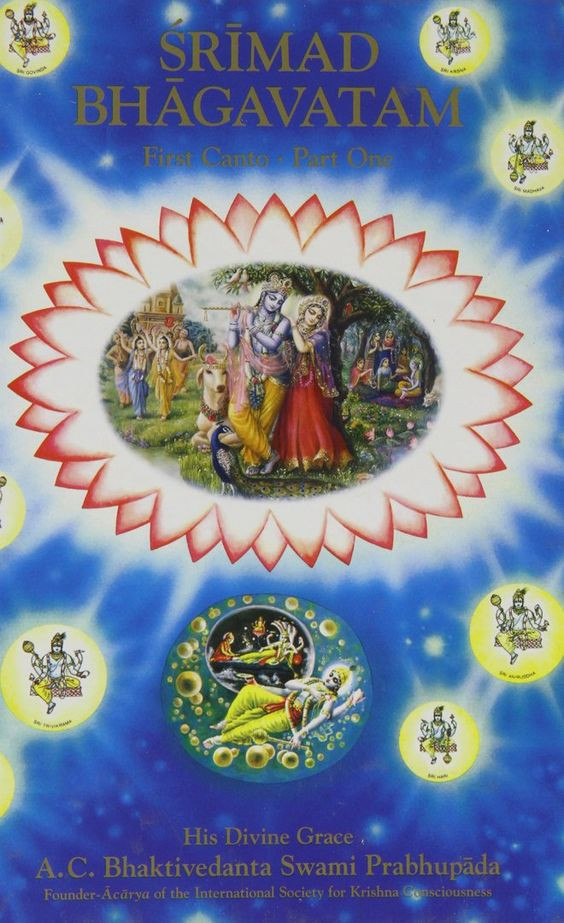 Why to read srimad bhagavatamReading the Srimad Bhagavatam fosters deep spiritual growth by narrating the life and teachings of Lord Krishna,...Read more
 -
 When was srimad bhagavatam written?The Srimad Bhagavatam is believed to have been written around 9th-10th century CE, though its oral traditions date...Read more
 -
 How many chapters are there in srimad bhagavatam?The Srimad Bhagavatam consists of 12 cantos (books) containing 335 chapters in total. Each canto covers various...Read more
 -
 How many skandhas are there in srimad bhagavatamThe Srimad Bhagavatam is divided into 12 skandhas (cantos or books). Each skandha explores different themes,...Read more
 -
 How many slokas in srimad bhagavatamThe Srimad Bhagavatam contains approximately 18,000 shlokas (verses). These verses are spread across its 12 skandhas...Read more
Leave a comment