
Explore Srimad Bhagavatam Canto 11, where Lord Krishna shares His final and most profound teachings with Uddhava on...
Latest posts
-
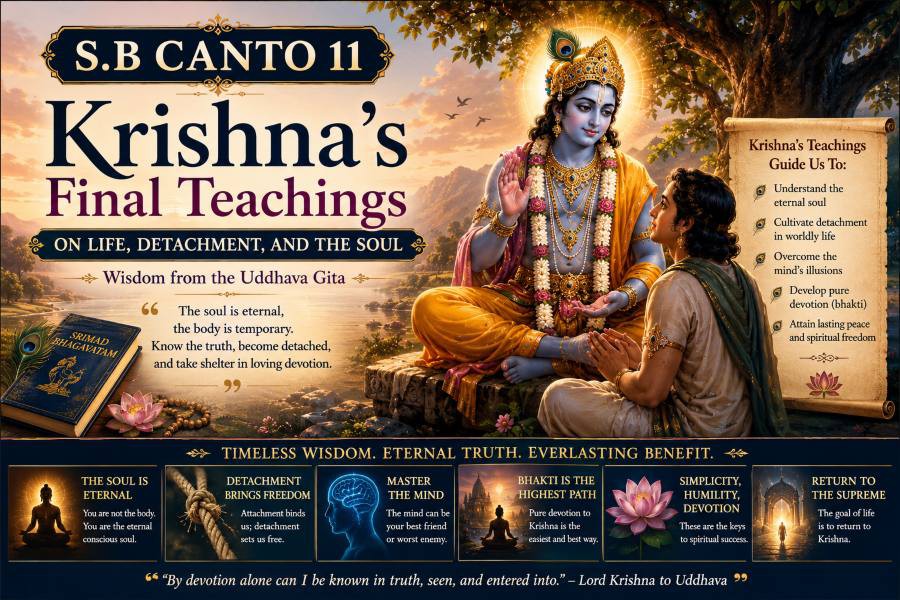 S.B Canto 11 — Krishna’s Final Teachings on Life, Detachment, and the SoulRead more
 -
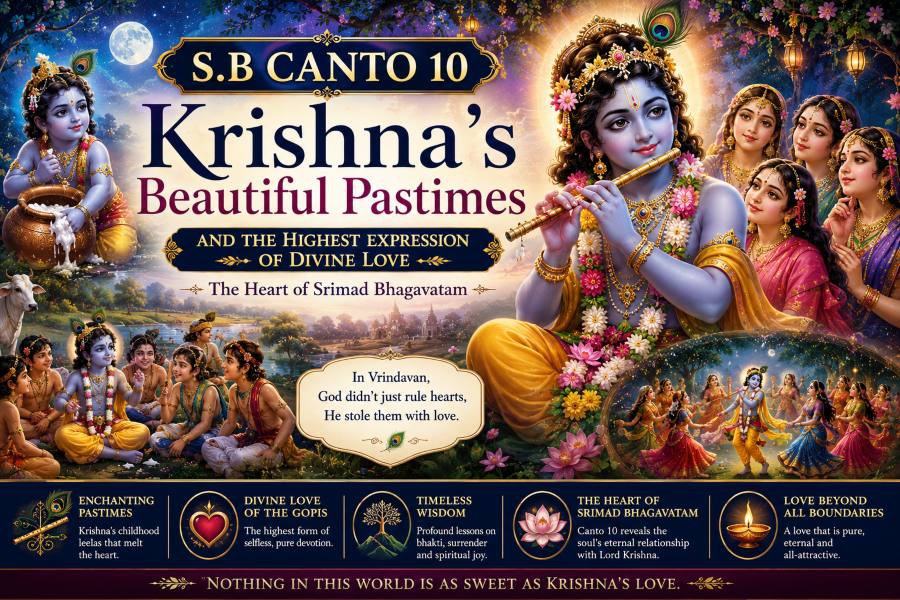 S.B Canto 10 — Krishna’s Beautiful Pastimes and the Highest Expression of Divine LoveRead more
Explore Srimad Bhagavatam Canto 10, the heart of the Bhagavatam, where Lord Krishna's enchanting childhood pastimes,...
-
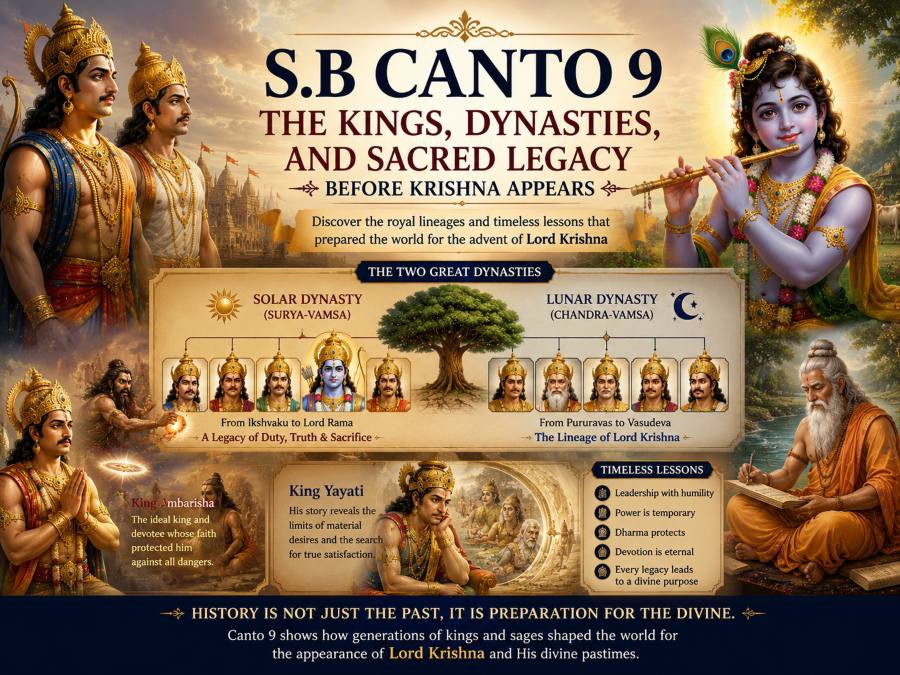 S.B Canto 9: The Kings, Dynasties, and Sacred Legacy Before Krishna AppearsRead more
Explore Srimad Bhagavatam Canto 9 and uncover the remarkable stories of ancient kings, royal dynasties, and sacred...
-
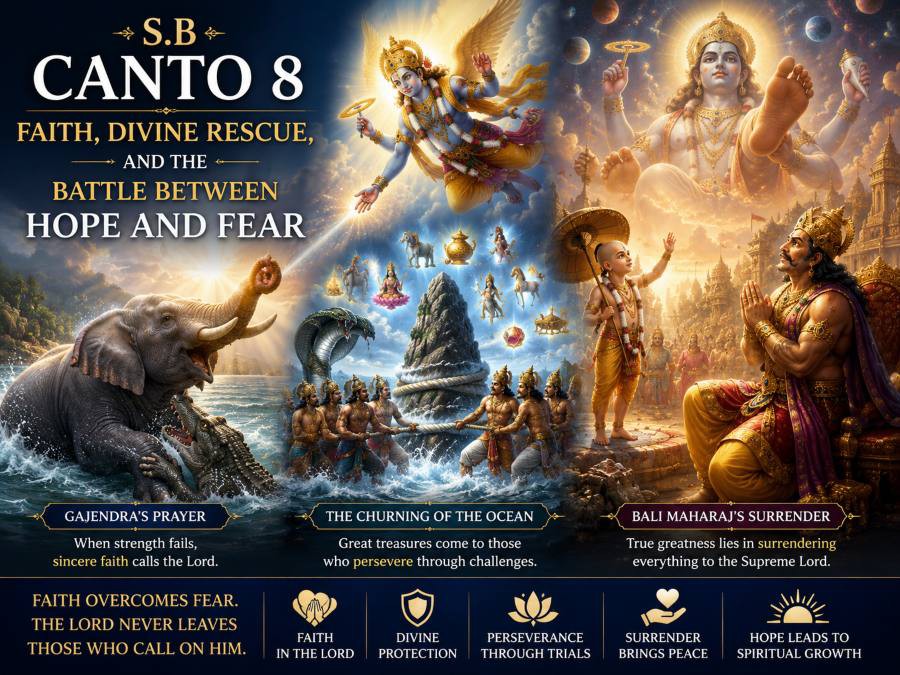 Srimad Bhagavatam Canto 8: How Faith Triumphs Over FearRead more
Explore Srimad Bhagavatam Canto 8, where the inspiring stories of Gajendra, the churning of the Milk Ocean, and Bali...
-
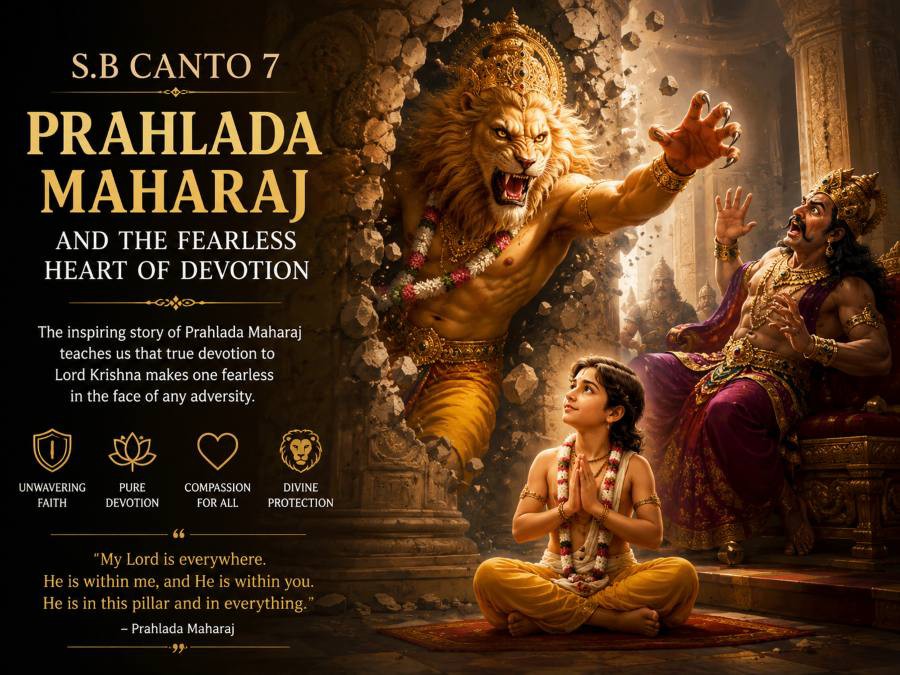 S.B Canto 7: Prahlada Maharaj and the Fearless Heart of DevotionRead more
Explore Srimad Bhagavatam Canto 7 and discover the inspiring story of Prahlada Maharaj, whose unwavering devotion to...
-
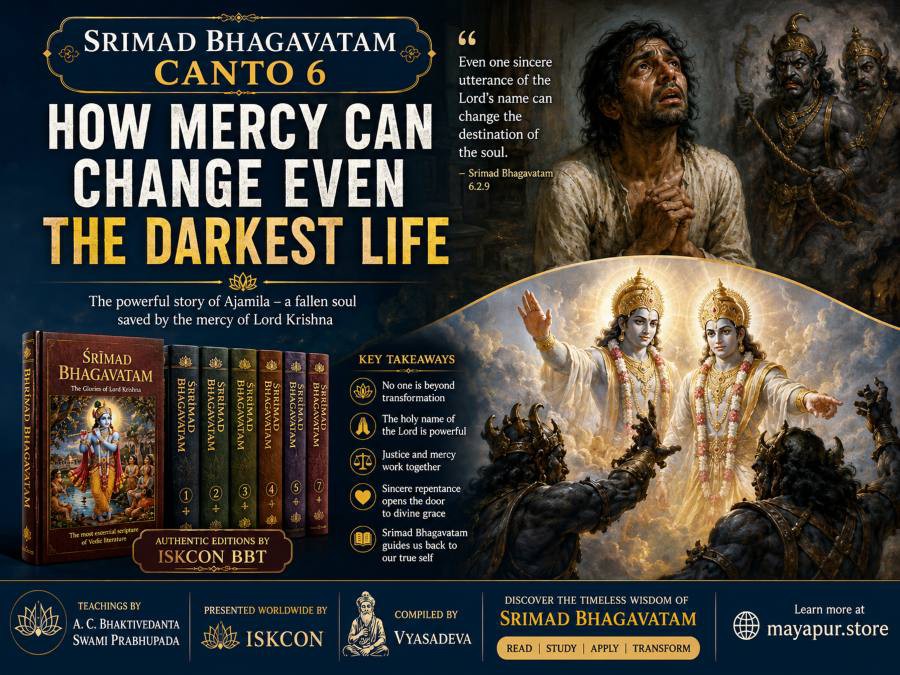 S.B Canto 6: How Mercy Can Change Even the Darkest LifeRead more
Discover the inspiring lessons of Srimad Bhagavatam Canto 6, where the story of Ajamila reveals how divine mercy,...
-
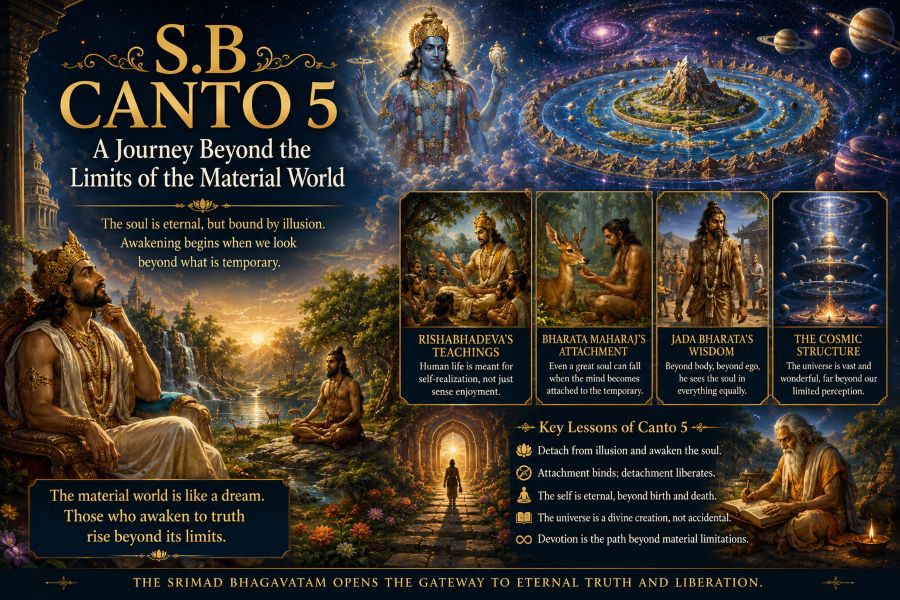 Srimad Bhagavatam Canto 5: A Journey Beyond the Limits of the Material WorldRead more
Discover how Srimad Bhagavatam Canto 5 explores cosmic creation, spiritual awakening, material illusion, and the...
-
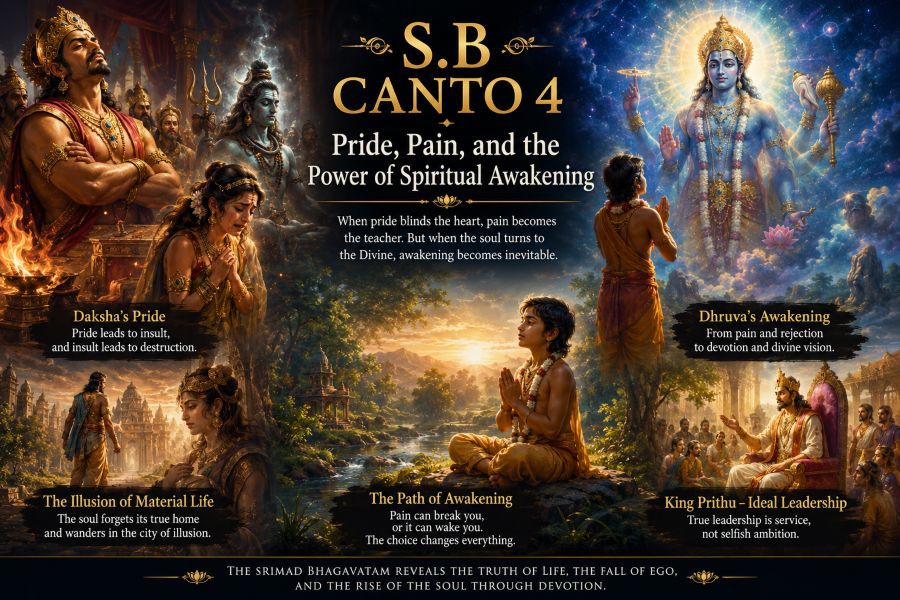 Srimad Bhagavatam Canto 4: The Pain of Pride and the Journey Back to the SoulRead more
Discover how Srimad Bhagavatam Canto 4 explores pride, rejection, devotion, spiritual awakening, and the emotional...
-
 Srimad Bhagavatam Canto 3: The Soul, Creation, and the Forgotten Truth of LifeRead more
Discover how Srimad Bhagavatam Canto 3 explains the soul, creation, consciousness, and the forgotten spiritual truth...
-
 Srimad Bhagavatam Canto 2: Seeing the Universe Through Divine EyesRead more
Discover how Srimad Bhagavatam Canto 2 explains the cosmic form of the Lord, spiritual vision, meditation, creation,...
Blog categories
- Default category (0)
- MUSICAL INSTRUMENT (1)
- BOOK (5)
- DEVOTIONAL GIFT (0)
- Blog (30) click
- CHANDAN (12)
- Bhagavatam Wisdom Series (43)
- Krishna Consciousness (5)
- Mridangam Musical Instrument (6)
- Bhagavad Gita for Beginners (13)
- Bhagavad Gita As It Is (13) click
- Bhagavad Gita As It Is Telugu (0)
- Bhagavad Gita As It Is Marathi (0)
- Bhagavad Gita As It Is In Hindi (0)
- Bhagavad Gita As It Is In English (0)
- Bhagavad Gita As It Is In Bengali (8)
- Bhagavad Gita As It Is In Kannada (0)
- Bhagavad Gita As It Is In Gujarati (0)
- Bhagavad Gita As It Is In Panjabi (0)
- Bhagavad Gita As It Is In Tamil (0)
- Bhagavad Gita As It Is Odia (0)
- BHAGAVAD GITA As It Is GERMAN (0)
- Bhagavad Gita As It Is In French (0)
- Bhagavad Gita As It Is In Nepali (0)
- Bhagavad Gita As It Is In Assamese (0)
- Incense or Agarbatti (6)
- Lord Chaitanya Mahaprabhu (3)
- Vedic Temple Mayapur (16)
- kalki (15)
- Mahabharata – Dharma & Destiny (27)
- Vaishnava Scriptures (4)
- healthy product (4)
- chaitanya mahaprabhu (5)
Search in blog
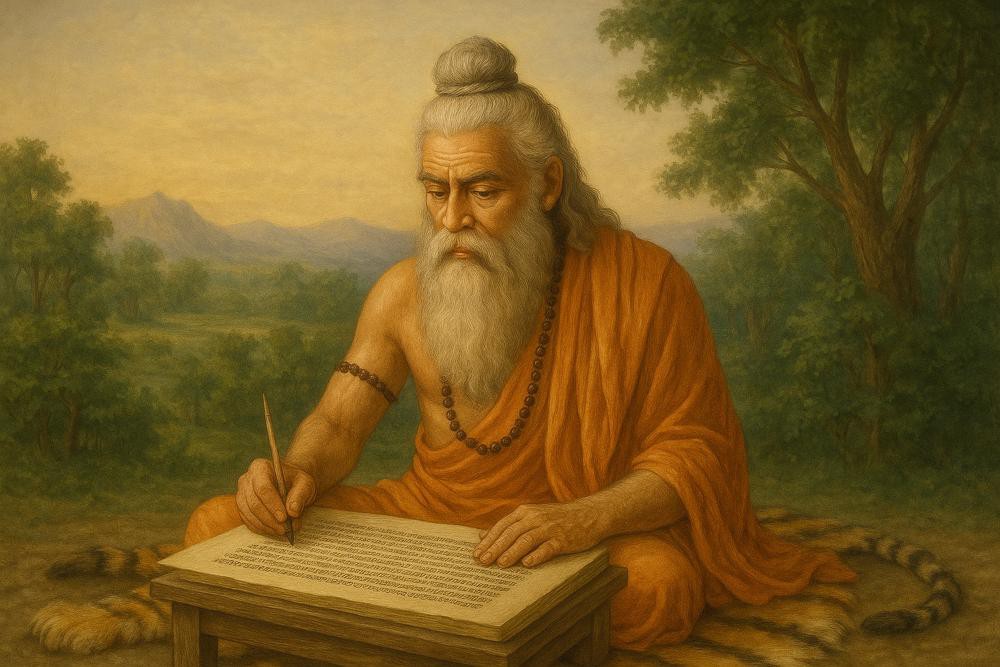
Who Wrote the Mahabharata? The Complete Story of Sage Vyasa
Who Wrote the Mahabharata? A Complete Exploration of the Epic’s Authorship, History & Legacy
Introduction
The Mahabharata is one of the grandest literary creations in world history — a text that blends mythology, philosophy, genealogy, statecraft, devotion, and the most complex human emotions. But behind this astonishing epic lies a timeless question:
Who actually wrote the Mahabharata?
Was it one person?
Was it a team of sages?
Was it composed over centuries?
Or was it divinely inspired?
This article takes you deep into the origins, authorship, historical development, and spiritual significance of the Mahabharata. You will also understand why the authorship of this epic is not merely a literary debate but a doorway into India’s spiritual and cultural consciousness.
The Traditional Answer: Sage Vyasa — The Divine Composer
Vyasa: The Adi Kavi (Original Poet)
The traditional belief across India is crystal clear:
The Mahabharata was written by Sage Ved Vyasa, also known as Krishna Dvaipayana Vyasa.
He is revered as:
- The compiler of the Vedas
- The composer of the Mahabharata
- The author of the Puranas
- A spiritual master who taught countless disciples
- A divine figure considered an incarnation of Lord Vishnu
Buy the Mahabharata Book from Mayapur Store
Why was Vyasa called “Krishna Dvaipayana”?
- Krishna – because he had a dark complexion
- Dvaipayana – because he was born on an island (“dvipa”) in the Yamuna River
From childhood, Vyasa was blessed with extraordinary wisdom and a photographic memory. Over time, he became the central literary figure of ancient India.
Vyasa’s Role in the Mahabharata
Vyasa was not just the author — he was also a witness to the events of the Mahabharata. He lived during the era of the Kurukshetra war, making him both:
- A historian of real events, and
- A spiritual visionary who interpreted those events
Thus, the traditional answer is strong and unchallenged:
Sage Ved Vyasa is the writer of the Mahabharata.
The Mythological Dimension: Why Lord Ganesha Wrote It Down
One of the most fascinating aspects of the epic is the story of how Lord Ganesha became the scribe of the Mahabharata.
The Divine Collaboration
The story goes:
1. Vyasa wanted to compose the world’s greatest epic.
2. He invited Lord Ganesha to write it down.
3. Ganesha agreed on one condition:
Vyasa must speak without pause.
4. Vyasa countered:
“You must write only after understanding each verse.”
This created a perfect balance:
- Vyasa ensured deep meaning
- Ganesha ensured uninterrupted writing
The Broken Tusk Legend
When Ganesha’s pen broke during writing, he broke off one of his own tusks and continued, symbolizing:
- Dedication
- Sacrifice
- The immortal power of knowledge
For this reason, Ganesha is also called “Ekadanta” (the one with a single tusk).
Was Vyasa the Only Author? The Historical Perspective
While the traditional view credits Vyasa alone, historians and scholars provide a more layered explanation.
The Mahabharata Is Not a Single-Time Composition
Modern scholarship suggests that:
- The Mahabharata evolved over 700–900 years
- It passed through oral tradition, then scribal tradition
- Multiple sages contributed expansions, commentaries, and stories
Estimated Timeline
Phase
| Period
| Description
|
Early core text | 900–800 BCE | The family conflict, Kuru dynasty lineage |
Middle expansion | 500–400 BCE | Inclusion of philosophical stories and dharma teachings |
Late expansion | 200 BCE – 400 CE | Full development of the Bhagavad Gita, Anushasana Parva, etc. |
But then who is Vyasa historically?
Vyasa remains:
- The original author
- The compiler
- The mastermind behind the narrative structure
Think of Vyasa as the founder and architect, while later sages worked as editors, preservers, and enhancers.
Why the Mahabharata Is Called “Itihasa” (History)
Unlike mythological stories, the Mahabharata is classified as Itihasa, meaning:
“Thus it happened.”
This implies:
- It is based on actual historical events
- It documents real political and social structures
- It reflects ancient Indian life authentically
The presence of genealogy, places, wars, and detailed descriptions strongly supports historical grounding.
Order Mahabharata Directly from ISKCON Mayapur Store
The Structure of the Mahabharata: Proof of a Mastermind at Work
The Mahabharata consists of:
- 18 Parvas (Books)
- 100,000+ verses
- 2 million words (10 times the Iliad + Odyssey combined)
Core Themes
1. Dharma (righteousness)
2. Karma (action and consequences)
3. Power and politics
4. Family conflict
5. Devotion and spirituality
The Bhagavad Gita alone is considered one of the greatest spiritual texts ever written.
Interwoven Sub-Stories
Vyasa’s genius is visible in the way hundreds of sub-stories connect back to the main narrative effortlessly.
Did the Mahabharata Come Before the Ramayana?
Scholars believe the Ramayana took its recognizable form slightly earlier.
However:
- The Mahabharata is larger
- The Mahabharata is more complex
- The Mahabharata contains deeper layers of philosophy
Oral Tradition: How the Story Survived for Millennia
Before writing existed widely, India preserved knowledge through shruti (hearing) and smriti (remembering).
Generations of griots (reciters), sages, and storytellers memorized:
- Characters
- Dialogues
- Verses
- Entire parvas
This oral tradition ensured that Vyasa’s epic never disappeared.
The Role of Ugrasrava Sauti
Ugrasrava Sauti is the narrator who recites the Mahabharata to the sages in Naimisha Forest.
He is not the author — but he is responsible for transmitting the text across generations.
Why Is the Mahabharata Important? (Cultural, Spiritual & Historical Impact)
Cultural Influence
The Mahabharata shaped:
- Indian literature
- Classical dance & theatre
- Regional storytelling traditions
- Temple art
- Folk music
Spiritual Influence
It introduced humanity to:
- The Bhagavad Gita
- The concept of Nishkama Karma
- Bhakti yoga
- Raja Dharma
- Moksha
- Justice through dharma
Historical Influence
It preserves:
- Genealogy of ancient kingdoms
- Administrative systems
- Social customs
- The political climate of the time
Why the Question “Who Wrote the Mahabharata?” Still Matters
Reason 1: Understanding Cultural Identity
Knowing the author helps us understand:
- the values of ancient India
- the spiritual evolution of society
- the philosophical maturity of Vedic culture
Reason 2: Literary Appreciation
The Mahabharata is not just a book — it is a literary universe.
Understanding the creator enhances appreciation.
Reason 3: Spiritual Significance
Vyasa is not only a writer — he is a Rishi whose words carry divine vibration.
Was the Mahabharata Written in One Sitting?
No.
Even with Ganesha as the scribe, the verses were composed over time as Vyasa:
- Observed events
- Meditated on meanings
- Added philosophical insights
How Long Is the Mahabharata Compared to Other Epics?
Epic
| Verse Count
|
Mahabharata | ~100,000 verses |
Ramayana | ~24,000 verses |
Iliad | ~15,000 lines |
Odyssey | ~12,000 lines |
|
|
This makes the Mahabharata the largest epic ever composed.
Did Vyasa Really Witness the Kurukshetra War?
Tradition says:
- Yes, Vyasa lived during that time
- He appears in the story as a guiding sage
- He advised Dhritarashtra, Pandu, and the Pandavas
- He warned about the consequences of war
Thus, Vyasa was both an observer and chronicler.
The Spiritual Interpretation of Authorship
In spiritual terms, Vyasa did not merely “write a book.”
He channeled divine truth.
Three layers of writing exist:
1. Adhyatma Level (Spiritual) – Eternal wisdom
2. Itihasa Level (Historical) – The real war
3. Kavya Level (Poetic) – The artistic narrative
No modern writer could achieve such multi-dimensional brilliance alone, which is why Vyasa is revered as “Adi Kavi.”
The Purpose of the Mahabharata According to Vyasa
Vyasa said:
“What is found in the Mahabharata may be found elsewhere.
But what is not found in it cannot be found anywhere else.”
This means the Mahabharata is a complete guide to life.
Final Answer to the Question: Who Wrote the Mahabharata?
Traditional Answer:
Sage Ved Vyasa — the divine composer and compiler.
Mythological Support:
Lord Ganesha served as the scribe.
Historical Insight:
Vyasa created the original foundation; later generations expanded it.
Spiritual Perspective:
The Mahabharata is a divine masterpiece delivered through Vyasa.
Shop Authentic Mahabharata Editions at Mayapur.store
Conclusion
The authorship of the Mahabharata is not just a scholarly question — it is part of a deep cultural heritage. Sage Vyasa stands at the heart of this monumental creation as the composer, compiler, and visionary behind one of humanity’s greatest epics.
Whether you see him as a historical sage, a divine incarnation, or a literary master, the truth remains unchanged:
Vyasa wrote the Mahabharata, and the Mahabharata wrote the destiny of India.

Posted in: Mahabharata – Dharma & Destiny
Related posts
-
 How Many People Died in the Mahabharata? Complete Death Count ExplainedA detailed explanation of how many people died in the Mahabharata, including the Kurukshetra War death count, major...Read more
 -
 Why the Mahabharata Happened: The True Causes Behind the Great WarDiscover the real causes of the Mahabharata war, from jealousy and power struggles to deep karmic destiny. This...Read more
 -
 How Many Days Mahabharata War Happened?The Mahabharata war lasted for 18 intense days, each filled with major battles, turning points, and historic events....Read more
 -
 Who Is Vidura in the Mahabharata? Complete Story, Role & TeachingsDiscover who Vidura is in the Mahabharata—his origin, character, wisdom, loyalty, and unmatched adherence to dharma....Read more
 -
 Who Is Subhadra in the Mahabharata? Complete Story, Role & ImportanceThis article explains who Subhadra is in the Mahabharata—her lineage, virtues, role as Krishna’s sister, her...Read more
Leave a comment