
Explore Srimad Bhagavatam Canto 11, where Lord Krishna shares His final and most profound teachings with Uddhava on...
Latest posts
-
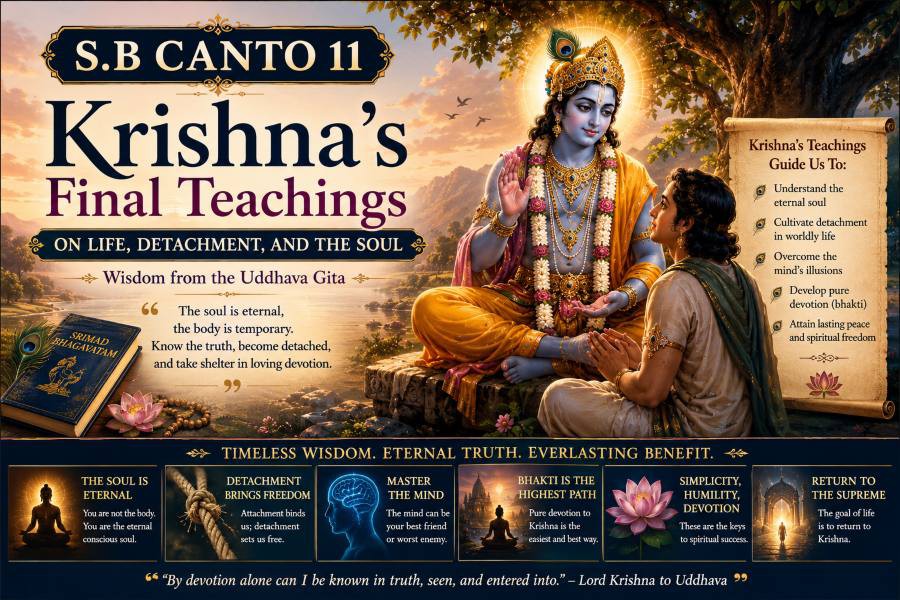 S.B Canto 11 — Krishna’s Final Teachings on Life, Detachment, and the SoulRead more
 -
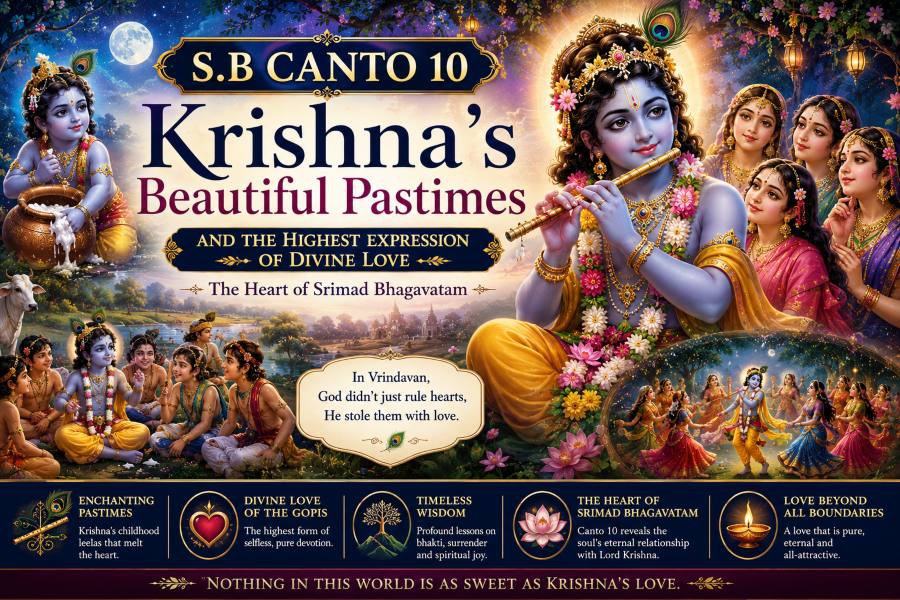 S.B Canto 10 — Krishna’s Beautiful Pastimes and the Highest Expression of Divine LoveRead more
Explore Srimad Bhagavatam Canto 10, the heart of the Bhagavatam, where Lord Krishna's enchanting childhood pastimes,...
-
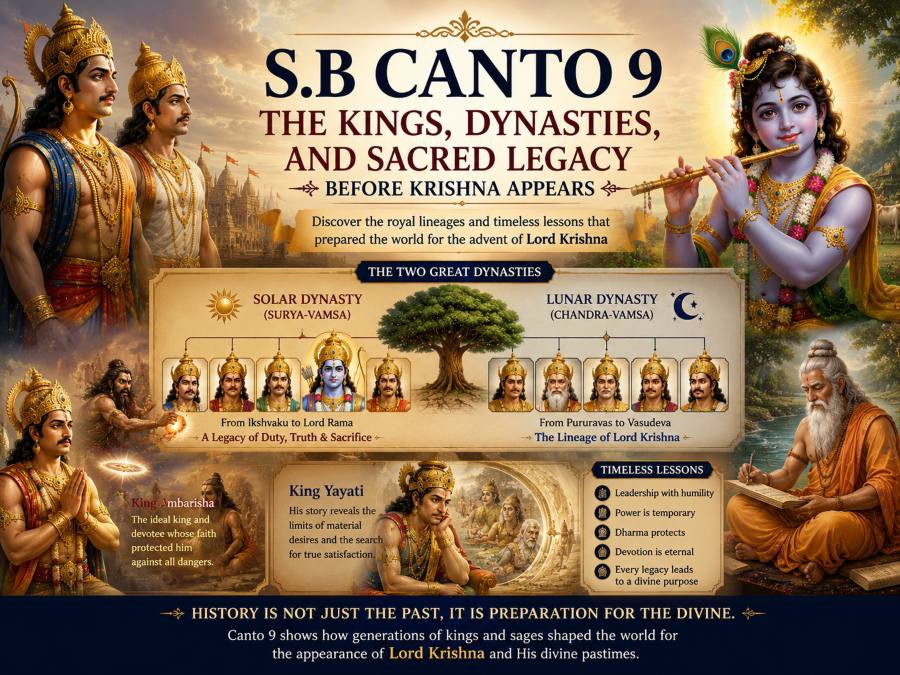 S.B Canto 9: The Kings, Dynasties, and Sacred Legacy Before Krishna AppearsRead more
Explore Srimad Bhagavatam Canto 9 and uncover the remarkable stories of ancient kings, royal dynasties, and sacred...
-
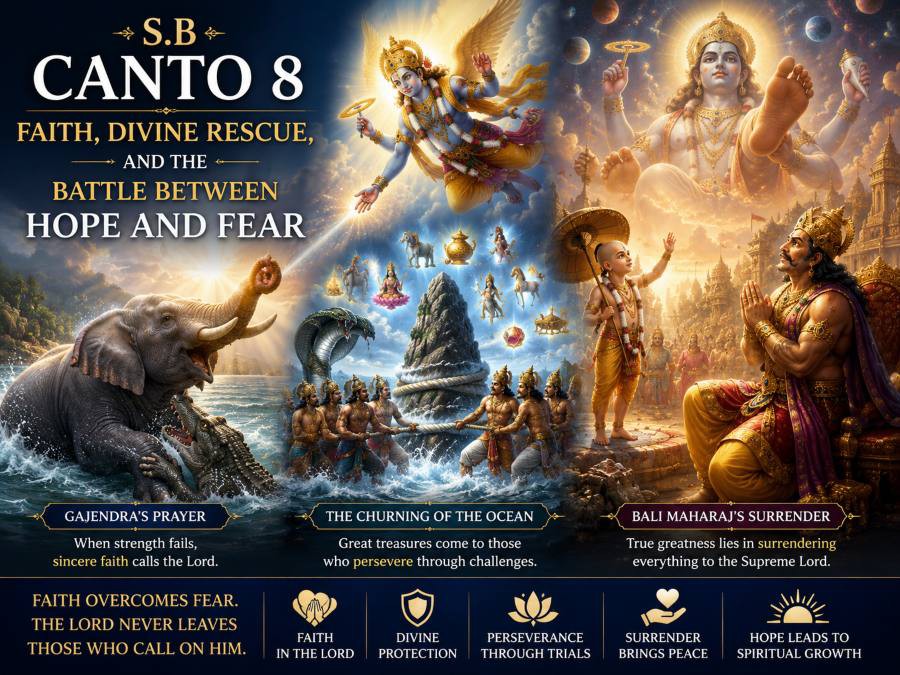 Srimad Bhagavatam Canto 8: How Faith Triumphs Over FearRead more
Explore Srimad Bhagavatam Canto 8, where the inspiring stories of Gajendra, the churning of the Milk Ocean, and Bali...
-
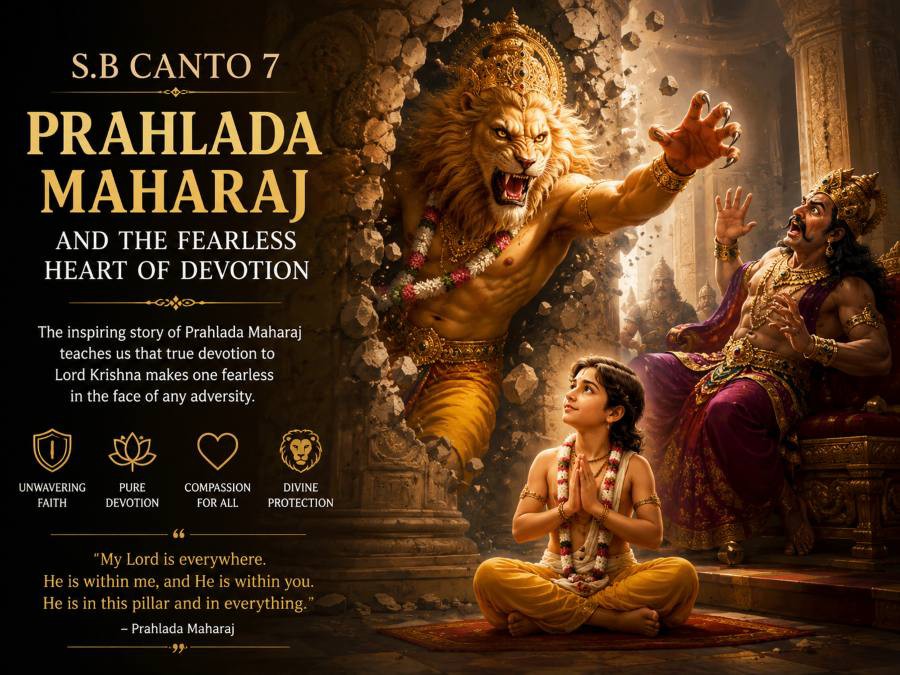 S.B Canto 7: Prahlada Maharaj and the Fearless Heart of DevotionRead more
Explore Srimad Bhagavatam Canto 7 and discover the inspiring story of Prahlada Maharaj, whose unwavering devotion to...
-
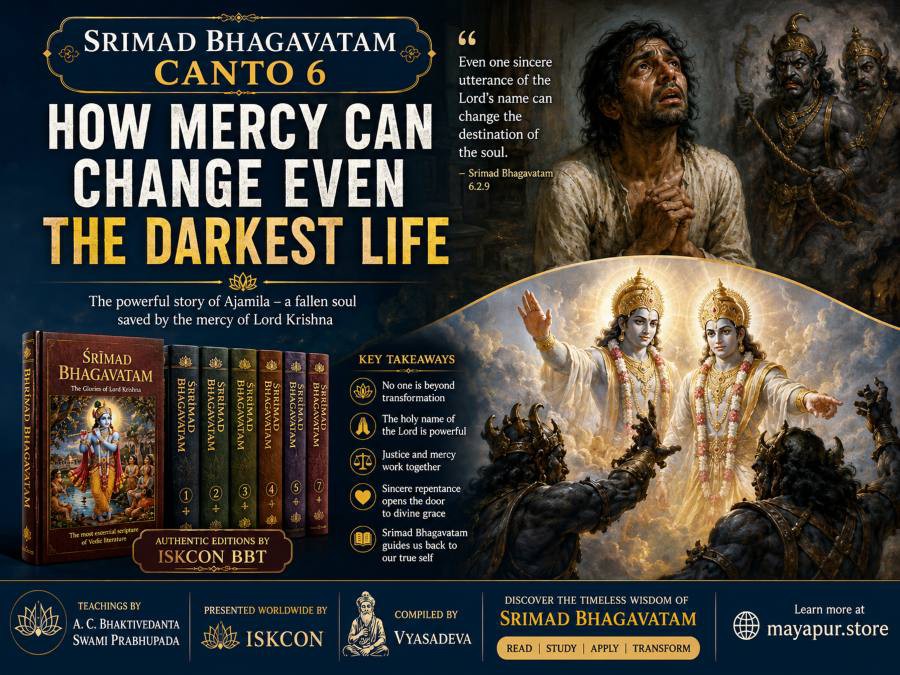 S.B Canto 6: How Mercy Can Change Even the Darkest LifeRead more
Discover the inspiring lessons of Srimad Bhagavatam Canto 6, where the story of Ajamila reveals how divine mercy,...
-
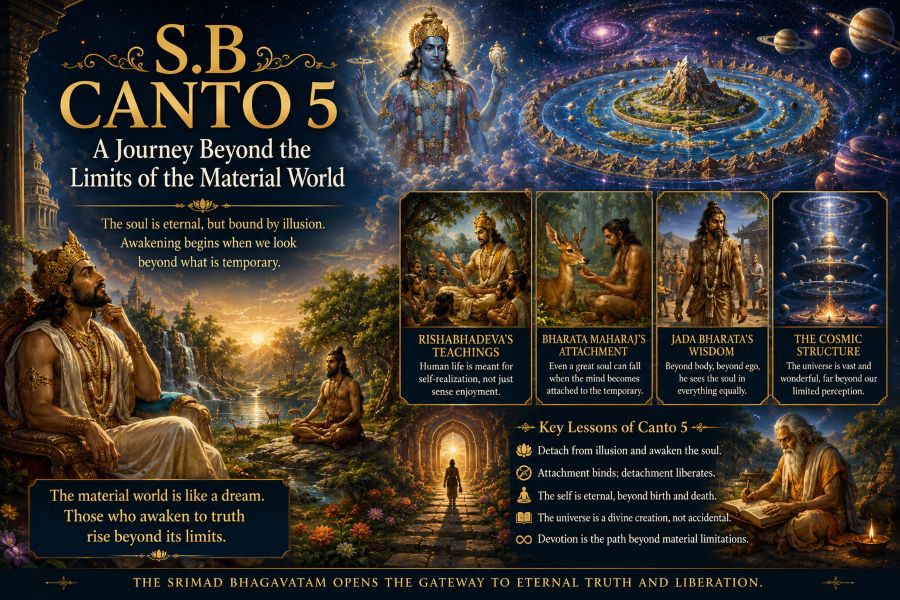 Srimad Bhagavatam Canto 5: A Journey Beyond the Limits of the Material WorldRead more
Discover how Srimad Bhagavatam Canto 5 explores cosmic creation, spiritual awakening, material illusion, and the...
-
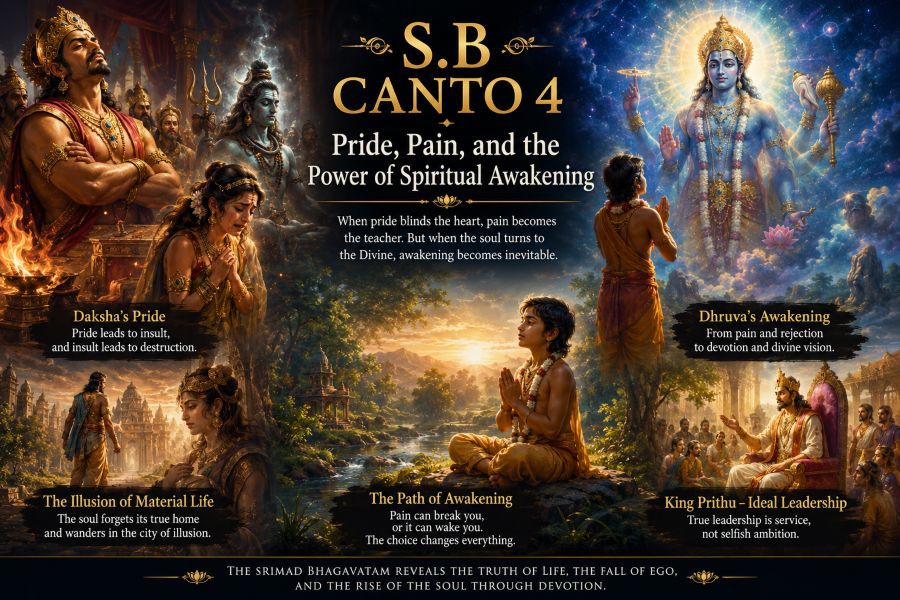 Srimad Bhagavatam Canto 4: The Pain of Pride and the Journey Back to the SoulRead more
Discover how Srimad Bhagavatam Canto 4 explores pride, rejection, devotion, spiritual awakening, and the emotional...
-
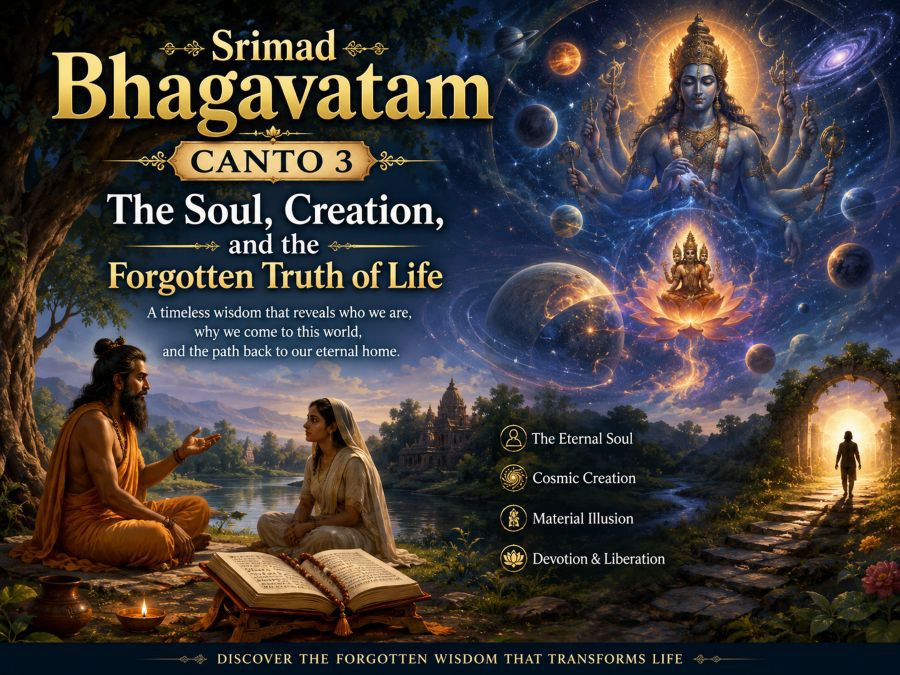 Srimad Bhagavatam Canto 3: The Soul, Creation, and the Forgotten Truth of LifeRead more
Discover how Srimad Bhagavatam Canto 3 explains the soul, creation, consciousness, and the forgotten spiritual truth...
-
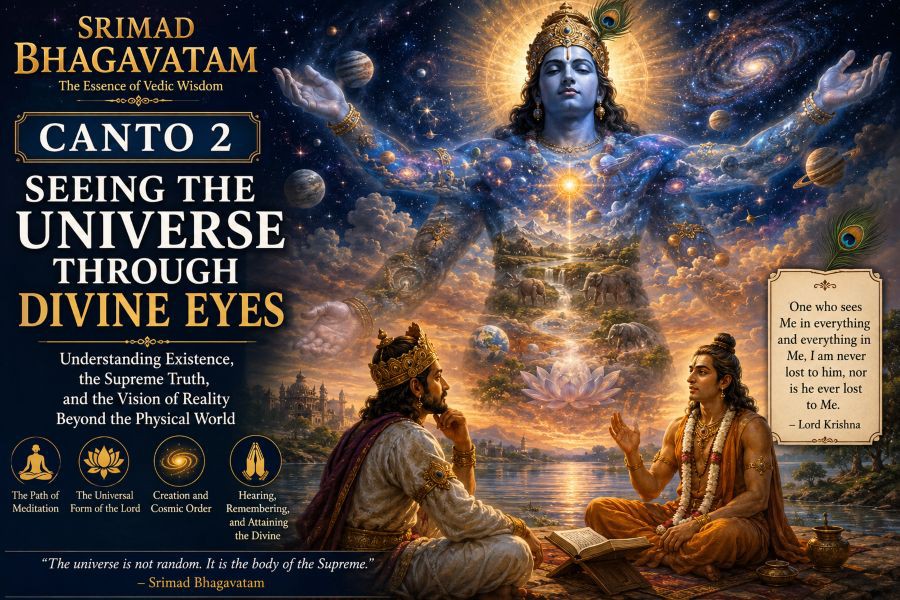 Srimad Bhagavatam Canto 2: Seeing the Universe Through Divine EyesRead more
Discover how Srimad Bhagavatam Canto 2 explains the cosmic form of the Lord, spiritual vision, meditation, creation,...
Blog categories
- Default category (0)
- MUSICAL INSTRUMENT (1)
- BOOK (5)
- DEVOTIONAL GIFT (0)
- Blog (30) click
- CHANDAN (12)
- Bhagavatam Wisdom Series (43)
- Krishna Consciousness (5)
- Mridangam Musical Instrument (6)
- Bhagavad Gita for Beginners (13)
- Bhagavad Gita As It Is (13) click
- Bhagavad Gita As It Is Telugu (0)
- Bhagavad Gita As It Is Marathi (0)
- Bhagavad Gita As It Is In Hindi (0)
- Bhagavad Gita As It Is In English (0)
- Bhagavad Gita As It Is In Bengali (8)
- Bhagavad Gita As It Is In Kannada (0)
- Bhagavad Gita As It Is In Gujarati (0)
- Bhagavad Gita As It Is In Panjabi (0)
- Bhagavad Gita As It Is In Tamil (0)
- Bhagavad Gita As It Is Odia (0)
- BHAGAVAD GITA As It Is GERMAN (0)
- Bhagavad Gita As It Is In French (0)
- Bhagavad Gita As It Is In Nepali (0)
- Bhagavad Gita As It Is In Assamese (0)
- Incense or Agarbatti (6)
- Lord Chaitanya Mahaprabhu (3)
- Vedic Temple Mayapur (16)
- kalki (15)
- Mahabharata – Dharma & Destiny (27)
- Vaishnava Scriptures (4)
- healthy product (4)
- chaitanya mahaprabhu (5)
Search in blog
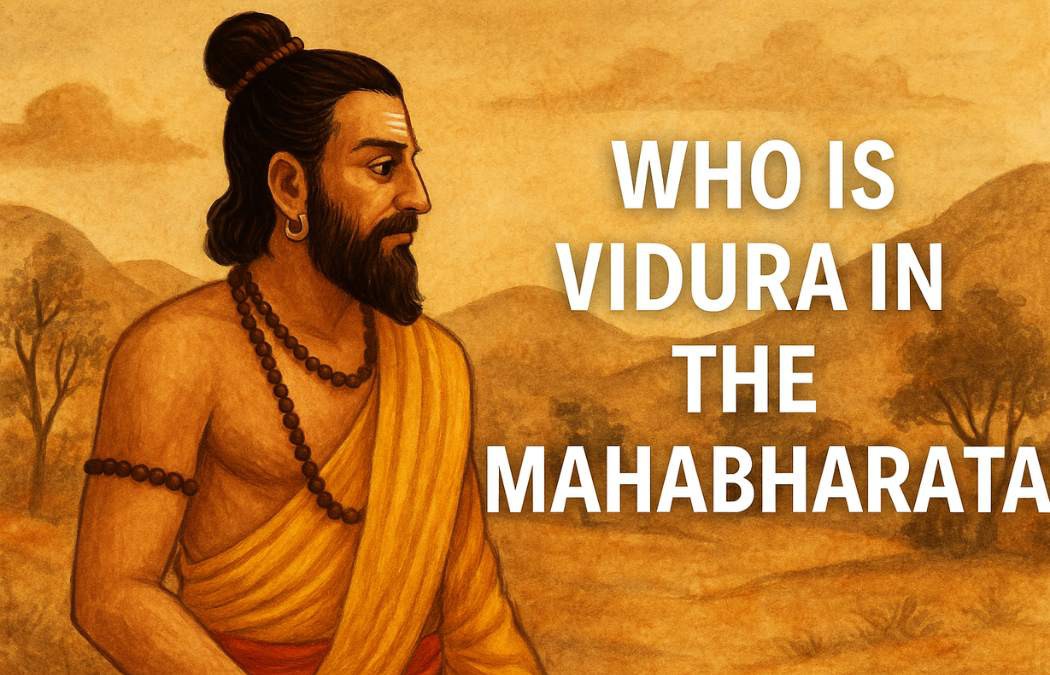
Who Is Vidura in the Mahabharata? Complete Story, Role & Teachings
Who Is Vidura in the Mahabharata?
The Mahabharata is a treasure of wisdom, character study, politics, dharma, and life lessons. Among the many towering personalities in the epic, Vidura shines as one of the most righteous, intelligent, and dharmic figures. Though not a warrior, king, or divine hero, Vidura plays a crucial role in shaping the destiny of Hastinapura and guiding the Pandavas through some of the darkest phases of their lives.
But who is Vidura in the Mahabharata, and why is his presence so important?
Vidura’s Birth: A Divine Destiny
Vidura was not an ordinary human. His birth is deeply connected to cosmic events and spiritual justice.
Vidura as the Rebirth of Dharma
According to the Mahabharata, Vidura was the incarnation of Yama, the god of justice, who is also known as Dharmaraja.
This happened because:
- In a previous incident, Yama was cursed by sage Mandavya for delivering a severe punishment unjustly.
- Due to the curse, Yama had to be born on earth as a wise human.
Thus, Vidura represents:
- Truth
- Justice
- Conscience
- Moral clarity
His entire character throughout the Mahabharata reflects these divine attributes.
The Niyoga Birth
Vidura was born through niyoga, a practice where a child is conceived through a designated sage when the royal lineage faces extinction.
Here’s what happened:
- Queen Ambika and Queen Ambalika were asked to produce heirs with the sage Vyasa.
- Ambika closed her eyes out of fear → her son, Dhritarashtra, was born blind.
- Ambalika turned pale in fear → her son, Pandu, was born with ill health.
- A maid was then sent to Vyasa → she remained calm, respectful, and stable.
Thus, Vidura was born perfect, wise, and pure.
Though he was the most qualified among the three brothers (Dhritarashtra, Pandu, and Vidura), he was not allowed to become king, simply because his mother was a maid. But destiny had a different role prepared for him.
Order Mahabharata Directly from ISKCON Mayapur Store
Vidura’s Personality: A Symbol of Dharma
Vidura is one of the most respected characters in the Mahabharata for his:
- Honesty
- Simplicity
- Fearlessness
- Intelligence
- Compassion
- Deep understanding of dharma
Even Lord Krishna praised Vidura highly and preferred staying in Vidura’s home rather than in the royal palace.
Let’s explore why his personality stands out.
The Wisest Man in Hastinapura
Vidura was the Prime Minister of the Kuru kingdom.
His clarity of mind, truthfulness, and practical judgment made him the most reliable advisor in the court.
He knew:
- The nature of the Kauravas
- The weakness of Dhritarashtra
- The righteousness of the Pandavas
- The consequences of each action
His advice often prevented immediate disaster, even if the larger destiny could not be avoided.
Vidura’s Neutrality and Fairness
He never favored anyone based on relation or emotion.
His only loyalty was to:
Dharma
Truth
Justice
Whether addressing the king, the Pandavas, Krishna, or a stranger—Vidura always spoke what was right.
READ ALSO:-who wrote mahabharata
Vidura in the Kuru Court: The Voice of Conscience
Vidura’s role in the Hastinapura court was that of moral authority.
He constantly guided Dhritarashtra, though the king often ignored his advice.
Warning Dhritarashtra About Duryodhana
Vidura repeatedly warned:
- Duryodhana’s ambition was dangerous.
- His jealousy toward the Pandavas would destroy the kingdom.
- Shakuni’s influence was poisonous.
Dhritarashtra knew Vidura was right, but his blind love for his son overpowered his judgment.
Opposing the Lac Palace (Lakshagriha) Plot
When Duryodhana and Shakuni planned to burn the Pandavas alive in a wax palace, Vidura secretly:
- Warned the Pandavas
- Sent a miner to build an escape tunnel
- Saved the lives of Kunti and her sons
This act proved his unwavering commitment to righteousness.
Vidura and the Dice Game: A Lone Voice Against Injustice
One of the most painful and dramatic moments in the Mahabharata is the dice game, where Yudhishthira lost everything—including Draupadi.
Vidura was the only man in the court who:
- Opposed the game openly
- Stood up for Draupadi
- Condemned the behavior of the Kauravas
- Challenged Dhritarashtra to act justly
Let’s look deeper.
Vidura’s Warning Before the Game
Vidura tried to stop Dhritarashtra beforehand:
“A gambling match will only bring destruction. It will shatter your kingdom.”
But the king ignored him.
Vidura’s Outrage at Draupadi’s Humiliation
During Draupadi’s disrobing attempt, the entire court remained silent—Bhishma, Drona, Kripa, Duryodhana, Karna, and even Dhritarashtra.
But Vidura stood up and said powerfully:
“This act is immoral. A woman cannot be humiliated in this court. If you do not protect her, your kingdom will turn to ashes.”
His courage and correctness made him the true moral hero of the episode.
Vidura Saves the Pandavas Again
When Dhritarashtra finally panicked, he asked Vidura for advice.
Vidura suggested:
- Return everything to the Pandavas
- Apologize to Draupadi
- Restore justice
Dhritarashtra followed his advice temporarily, but the damage was already done.
Vidura’s Relationship with the Pandavas
Vidura loved the Pandavas as his own sons because:
- They were virtuous
- They respected him
- They followed dharma
His relationship with them reflects deep affection and responsibility.
Vidura’s Advice to Yudhishthira
Vidura regularly guided Yudhishthira in:
- Righteousness
- Statecraft
- Patience
- Decision-making
He viewed Yudhishthira as the ideal king.
Vidura Protecting the Pandavas During Exile
During their forest exile, Vidura:
- Visited them privately
- Informed them of political developments
- Gave warnings and guidance
- Ensured their safety from assassination attempts
He remained their silent protector.
Vidura and Krishna: A Relationship of Deep Respect
When Krishna visited Hastinapura as a peace messenger, he refused royal hospitality and stayed in Vidura’s home instead.
Why?
Because Krishna valued:
- Vidura’s purity
- His devotion
- His righteousness
Vidura welcomed Krishna with simple vegetables and love—Krishna accepted them with joy.
This makes Vidura one of the most spiritually elevated characters in the entire epic.
READ ALSO:-how many people died in mahabharata
Vidura’s Political Wisdom: Vidura Neeti
Vidura’s teachings, popularly called Vidura Neeti, form an important part of the Mahabharata.
They are found in the Udyoga Parva.
Vidura Neeti contains lessons on:
- Leadership
- Ethics
- Society
- Behavior
- Statecraft
- Justice
Some important teachings include:
a) A king must protect his citizens above all.
b) Greed destroys families and kingdoms.
c) A wise man must avoid anger, ego, and jealousy.
d) Truth and dharma are the pillars of stability.
e) Friendship with evil people leads to downfall.
These teachings are still studied today in management, ethics, and philosophy.
Vidura During the War: The Final Act
Vidura did not fight in the war.
He refused to support:
- The injustice of the Kauravas
- The blind decisions of Dhritarashtra
- The destructive attitude of Duryodhana
Before the war began, Vidura left the palace.
He knew the war was unavoidable and did not want to witness the destruction caused by Duryodhana’s arrogance.
Vidura’s Warning to Dhritarashtra Before Leaving
He bluntly told the king:
“Your love for your son will destroy your entire lineage.”
He left with a broken heart.
Vidura After the War: A Peaceful Ending
After the war ended:
- Dhritarashtra was devastated
- Gandhari was heartbroken
- The kingdom was empty
Vidura returned briefly to counsel the grieving elders.
Vidura’s Final Years
He left worldly life and went to the forest to meditate.
There, he met Yudhishthira for the last time.
As the incarnation of Yama, Vidura merged his consciousness into Yudhishthira, ending his earthly journey.
This symbolic union represents:
- The unity of dharma
- The completion of karma
- The liberation of the soul
Vidura achieved ultimate spiritual freedom.
Why Vidura Is One of the Most Important Characters in the Mahabharata
Vidura may not have held a weapon or performed heroic battles, but his role was extremely crucial.
He is important because:
✔ He was the moral backbone of the kingdom
✔ He protected the Pandavas at key turning points
✔ He provided wise counsel and direction
✔ He boldly opposed injustice—even when alone
✔ He represented dharma, truth, and fairness
✔ His teachings remain valuable even today
Vidura shows us that wisdom and character are more powerful than weapons or status.
Lessons We Learn from Vidura
Vidura’s life teaches us:
a) Speak the truth even if you stand alone.
b) Never compromise on morality.
c) Wisdom is more valuable than power.
d) Dharma must guide every decision.
e) Jealousy and greed destroy everything.
f) Protect the righteous even at personal cost.
His life is an example of ideal leadership, clarity of thought, and unshakable righteousness.
Buy the Mahabharata Book from ISKCON Mayapur Store
Conclusion: Vidura—the Soul of Dharma in the Mahabharata
So, who is Vidura in the Mahabharata?
He is:
- The conscience of the kingdom
- The incarnation of Dharma
- The wisest man in the court
- The protector of the Pandavas
- The fearless voice against injustice
- The true guide of righteousness
Vidura’s presence ensures that, even in the darkest times, truth remains alive.
He stands in the Mahabharata not just as a character, but as a symbol of justice and moral strength that humanity still reveres today.

Posted in: Mahabharata – Dharma & Destiny
Related posts
-
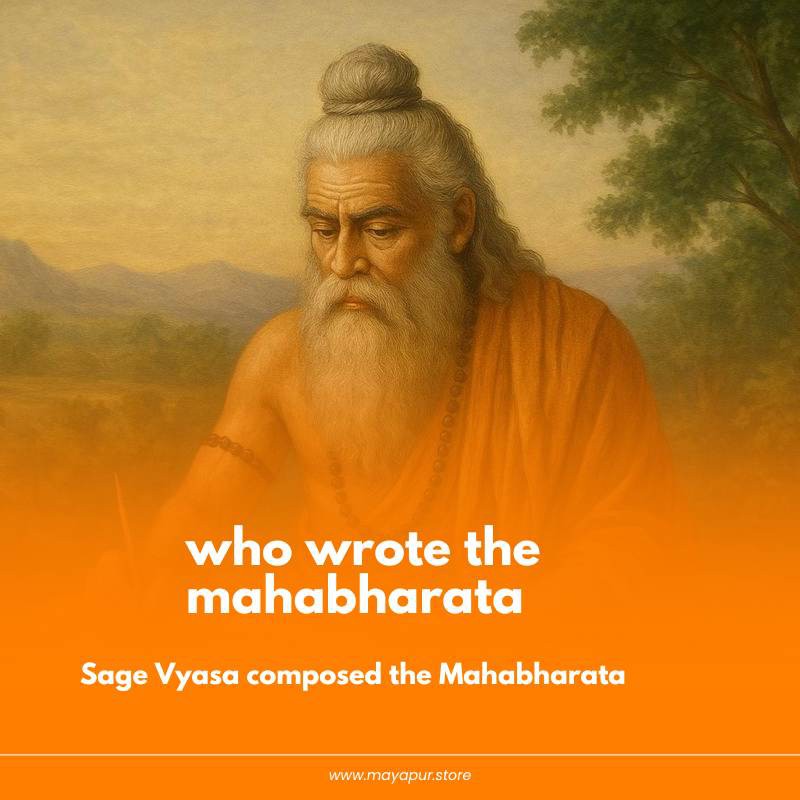 Who Wrote the Mahabharata? The Complete Story of Sage VyasaA clear explanation of who wrote the Mahabharata, exploring Sage Vyasa’s authorship, the Ganesha narrative, and the...Read more
 -
 How Many People Died in the Mahabharata? Complete Death Count ExplainedA detailed explanation of how many people died in the Mahabharata, including the Kurukshetra War death count, major...Read more
 -
 Why the Mahabharata Happened: The True Causes Behind the Great WarDiscover the real causes of the Mahabharata war, from jealousy and power struggles to deep karmic destiny. This...Read more
 -
 How Many Days Mahabharata War Happened?The Mahabharata war lasted for 18 intense days, each filled with major battles, turning points, and historic events....Read more
 -
 Who Is Subhadra in the Mahabharata? Complete Story, Role & ImportanceThis article explains who Subhadra is in the Mahabharata—her lineage, virtues, role as Krishna’s sister, her...Read more
Leave a comment