
Explore Srimad Bhagavatam Canto 11, where Lord Krishna shares His final and most profound teachings with Uddhava on...
Latest posts
-
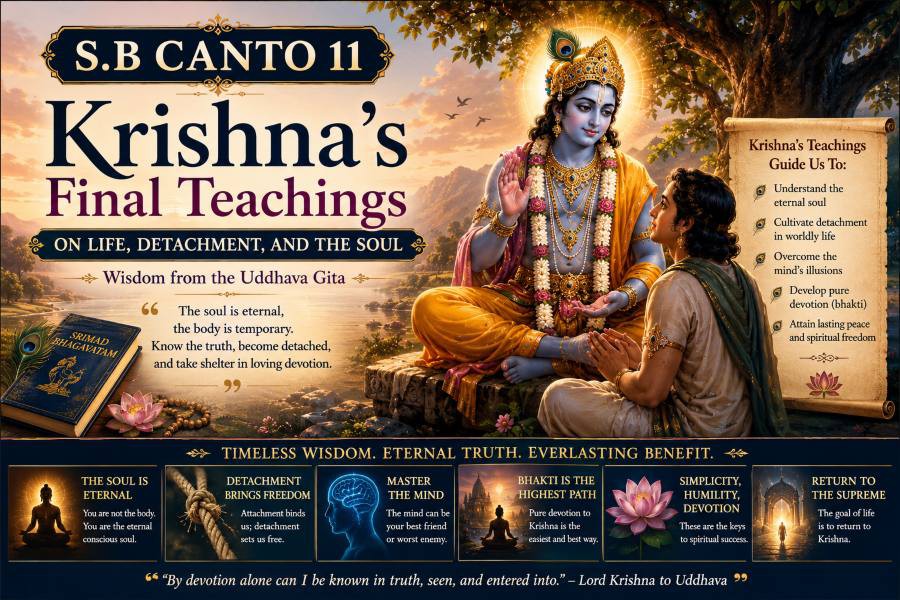 S.B Canto 11 — Krishna’s Final Teachings on Life, Detachment, and the SoulRead more
 -
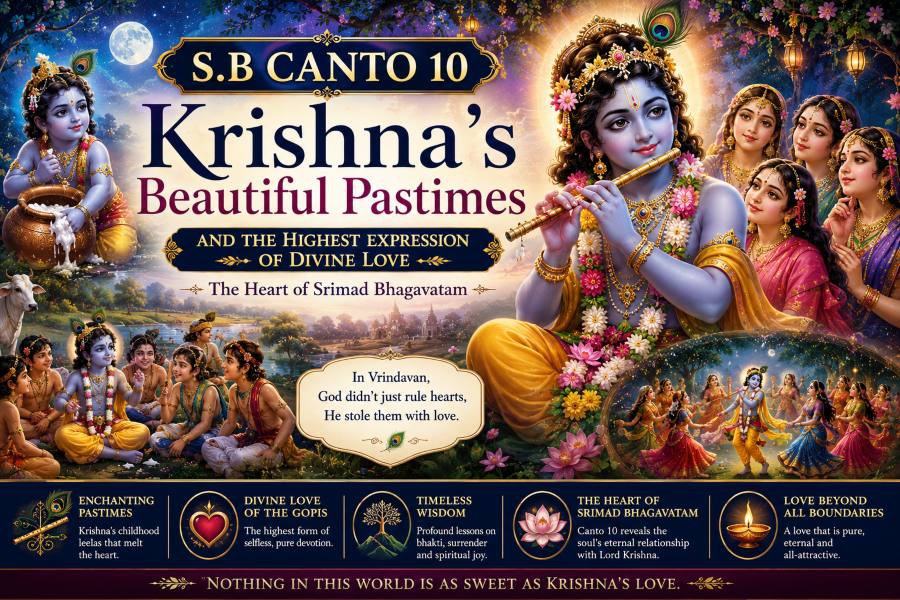 S.B Canto 10 — Krishna’s Beautiful Pastimes and the Highest Expression of Divine LoveRead more
Explore Srimad Bhagavatam Canto 10, the heart of the Bhagavatam, where Lord Krishna's enchanting childhood pastimes,...
-
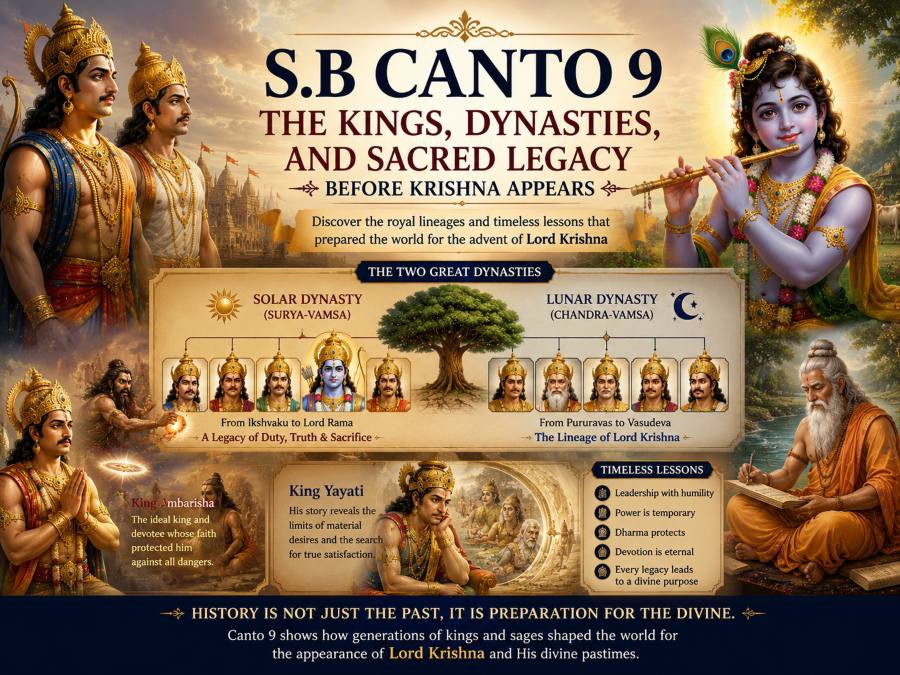 S.B Canto 9: The Kings, Dynasties, and Sacred Legacy Before Krishna AppearsRead more
Explore Srimad Bhagavatam Canto 9 and uncover the remarkable stories of ancient kings, royal dynasties, and sacred...
-
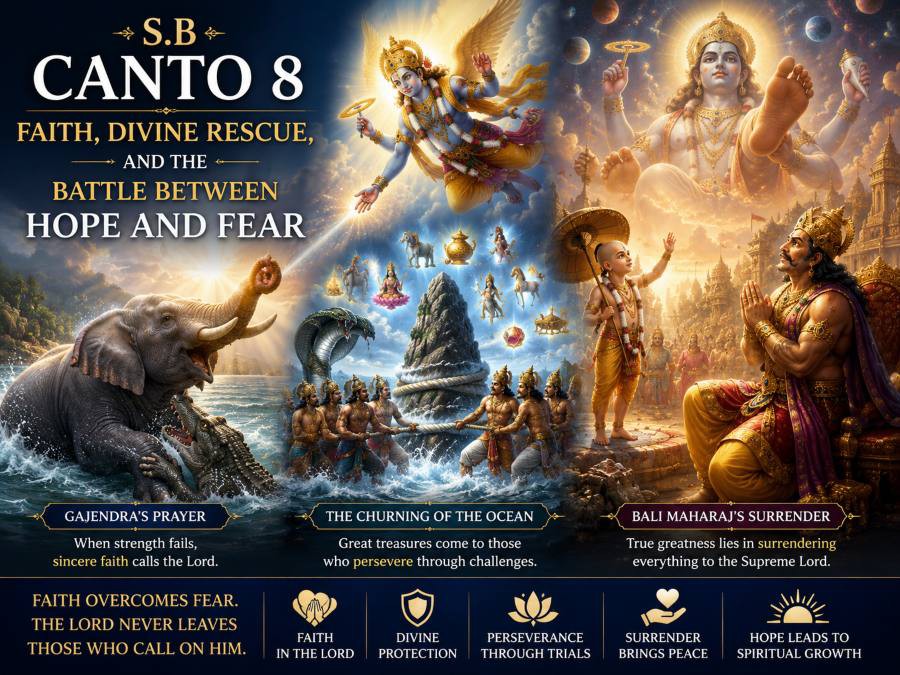 Srimad Bhagavatam Canto 8: How Faith Triumphs Over FearRead more
Explore Srimad Bhagavatam Canto 8, where the inspiring stories of Gajendra, the churning of the Milk Ocean, and Bali...
-
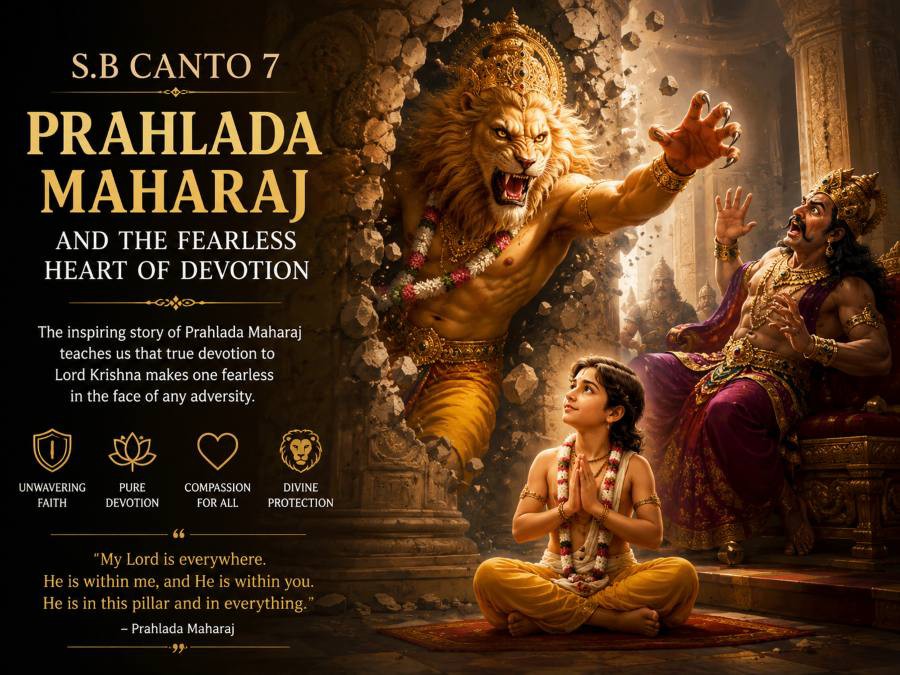 S.B Canto 7: Prahlada Maharaj and the Fearless Heart of DevotionRead more
Explore Srimad Bhagavatam Canto 7 and discover the inspiring story of Prahlada Maharaj, whose unwavering devotion to...
-
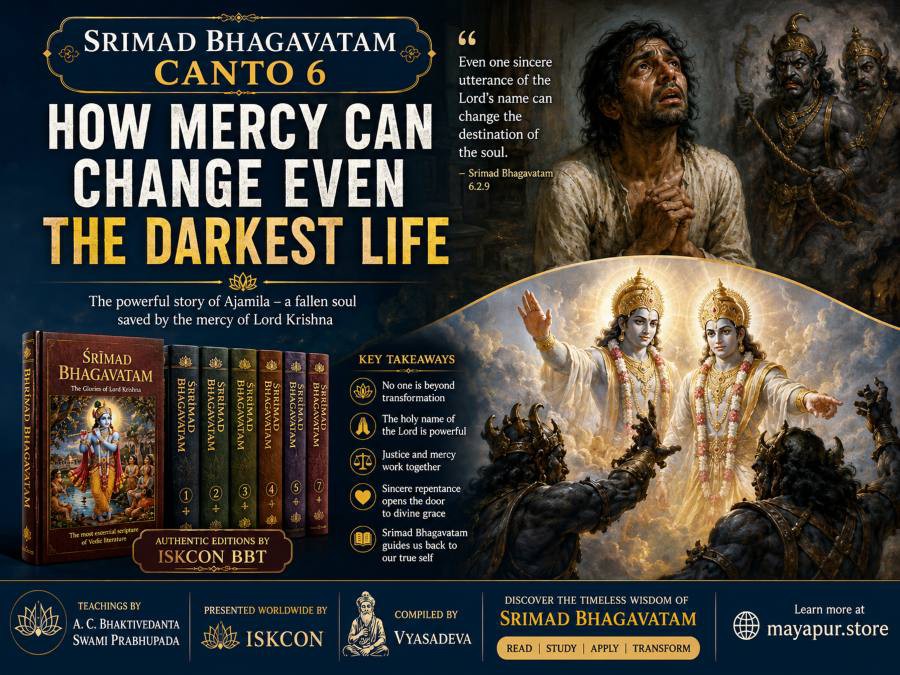 S.B Canto 6: How Mercy Can Change Even the Darkest LifeRead more
Discover the inspiring lessons of Srimad Bhagavatam Canto 6, where the story of Ajamila reveals how divine mercy,...
-
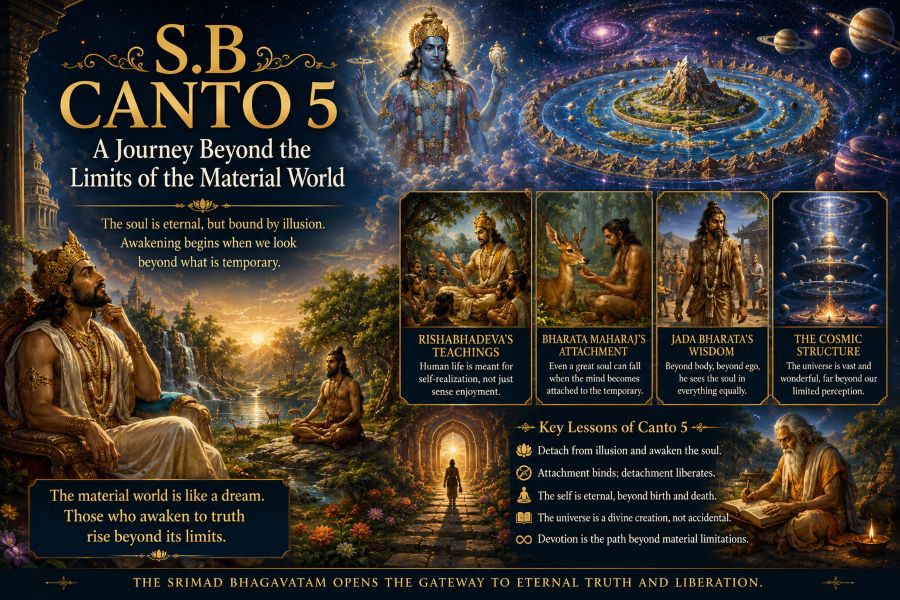 Srimad Bhagavatam Canto 5: A Journey Beyond the Limits of the Material WorldRead more
Discover how Srimad Bhagavatam Canto 5 explores cosmic creation, spiritual awakening, material illusion, and the...
-
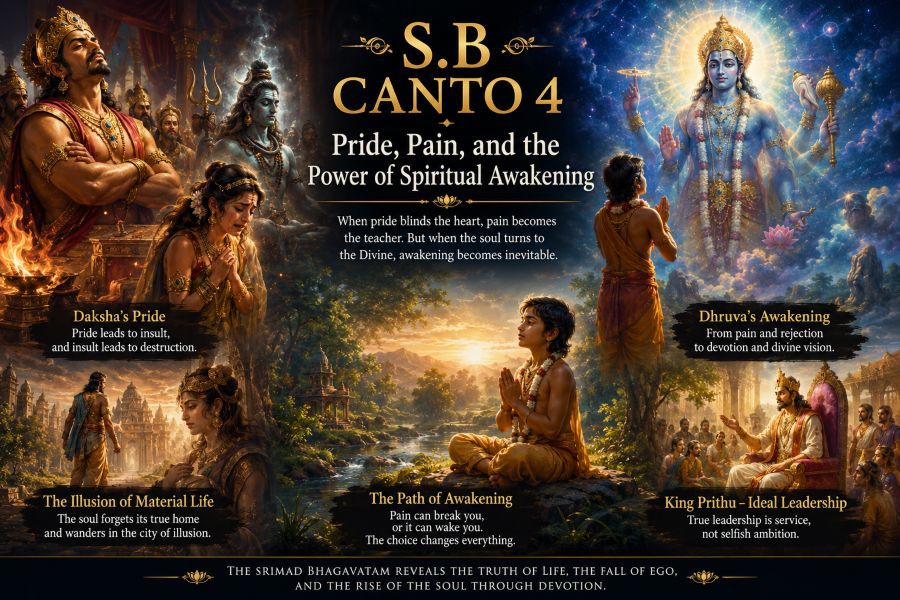 Srimad Bhagavatam Canto 4: The Pain of Pride and the Journey Back to the SoulRead more
Discover how Srimad Bhagavatam Canto 4 explores pride, rejection, devotion, spiritual awakening, and the emotional...
-
 Srimad Bhagavatam Canto 3: The Soul, Creation, and the Forgotten Truth of LifeRead more
Discover how Srimad Bhagavatam Canto 3 explains the soul, creation, consciousness, and the forgotten spiritual truth...
-
 Srimad Bhagavatam Canto 2: Seeing the Universe Through Divine EyesRead more
Discover how Srimad Bhagavatam Canto 2 explains the cosmic form of the Lord, spiritual vision, meditation, creation,...
Blog categories
- Default category (0)
- MUSICAL INSTRUMENT (1)
- BOOK (5)
- DEVOTIONAL GIFT (0)
- Blog (30) click
- CHANDAN (12)
- Bhagavatam Wisdom Series (43)
- Krishna Consciousness (5)
- Mridangam Musical Instrument (6)
- Bhagavad Gita for Beginners (13)
- Bhagavad Gita As It Is (13) click
- Bhagavad Gita As It Is Telugu (0)
- Bhagavad Gita As It Is Marathi (0)
- Bhagavad Gita As It Is In Hindi (0)
- Bhagavad Gita As It Is In English (0)
- Bhagavad Gita As It Is In Bengali (8)
- Bhagavad Gita As It Is In Kannada (0)
- Bhagavad Gita As It Is In Gujarati (0)
- Bhagavad Gita As It Is In Panjabi (0)
- Bhagavad Gita As It Is In Tamil (0)
- Bhagavad Gita As It Is Odia (0)
- BHAGAVAD GITA As It Is GERMAN (0)
- Bhagavad Gita As It Is In French (0)
- Bhagavad Gita As It Is In Nepali (0)
- Bhagavad Gita As It Is In Assamese (0)
- Incense or Agarbatti (6)
- Lord Chaitanya Mahaprabhu (3)
- Vedic Temple Mayapur (16)
- kalki (15)
- Mahabharata – Dharma & Destiny (27)
- Vaishnava Scriptures (4)
- healthy product (4)
- chaitanya mahaprabhu (5)
Search in blog
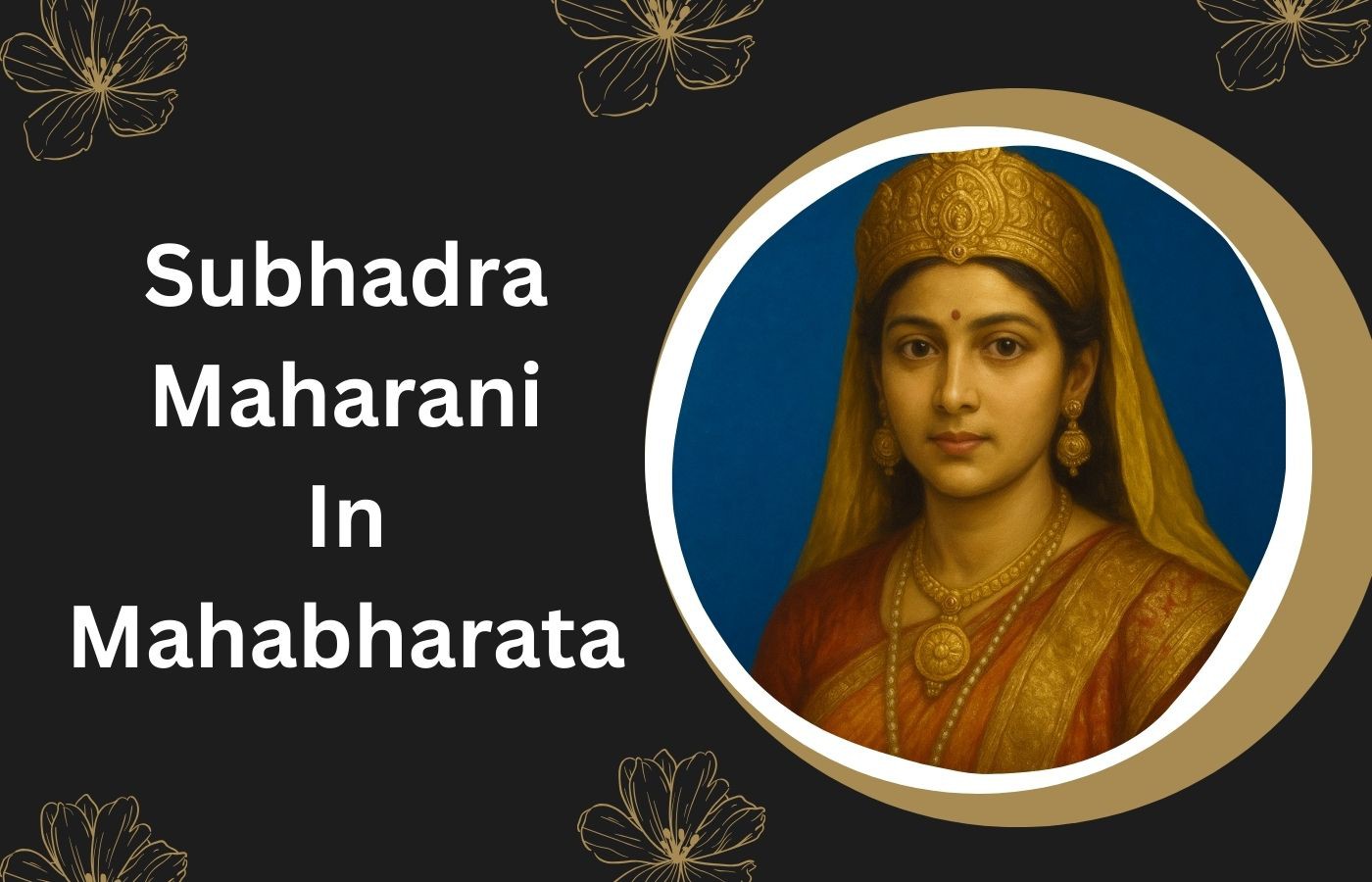
Who Is Subhadra in the Mahabharata? Complete Story, Role & Importance
Who Is Subhadra in the Mahabharata?
The Mahabharata is a vast ocean of characters—warriors, sages, kings, queens, statesmen, and divine incarnations. Among these extraordinary personalities, Subhadra stands out as one of the most culturally, spiritually, and historically significant women of the epic. She is the sister of Lord Krishna and Balarama, the daughter of the noble Vasudeva, and the mother of the legendary warrior Abhimanyu, whose courage and sacrifice became one of the defining moments of the Kurukshetra War.
Subhadra’s role goes far beyond being a royal woman. She symbolizes:
· Feminine strength
· Grace and devotion
· Emotional and cultural unity
· The continuation of the Pandava dynasty
· The bridge between the Yadavas and Kurus
This article offers a complete, deep, and accurate profile of Subhadra, exploring her birth, family lineage, character, role in the Kurukshetra War, importance in the Pandava household, her role as a mother, her place in Indian culture, and her spiritual significance — WITHOUT including any love story narrative.
Let us explore her life in detail.
READ ALSO:-who wrote mahabharata
Subhadra’s Birth and Divine Lineage
Subhadra was born into one of the most remarkable families in the ancient world—the Yadava clan. Her birth established her as an important figure in both political and spiritual spheres.
Daughter of Vasudeva
Subhadra was the daughter of:
· Vasudeva — a prominent Yadava chief known for his virtues and leadership
· Rohini — a noble and respected queen
This makes Subhadra:
· Sister of Lord Balarama, a divine and powerful figure
· Sister of Lord Krishna, the Supreme Personality in the epic
Subhadra belonged to a lineage where divine purpose, leadership, and righteousness were deeply rooted.
Spiritual Significance of Her Family Background
Her family represents:
· Dharma
· Protection of humanity
· Balance of cosmic forces
· Preservation of social order
Being born into such an environment shaped Subhadra into a woman with a calm mind, grounded nature, and spiritual orientation.
Subhadra’s Personality and Virtues
Subhadra is portrayed in the Mahabharata as a woman of:
· Grace
· Compassion
· Strength
· Intelligence
· Cultural refinement
· Quiet but powerful influence
Unlike many dramatic characters of the epic, Subhadra remains a symbol of inner balance and emotional maturity.
Her Nature and Conduct
Subhadra is described as:
· Soft-spoken
· Respectful
· Nurturing
· Emotionally steady
Her personality brought harmony wherever she went.
A Woman of Dignity and Cultural Refinement
Raised in the culturally rich kingdom of Dwarka, Subhadra was well-educated in:
· Court etiquette
· Traditions
· Music and arts
· Religious duties
· Cultural leadership
These qualities later helped her become an ideal queen in the Pandava household.
Order Mahabharata Directly from ISKCON Mayapur Store
Subhadra’s Role in the Pandava Household
Subhadra played a major role in shaping the emotional stability and cultural unity of the Pandavas.
Integration into the Kuru Family
Subhadra entered the Kuru kingdom with:
· Humility
· Maturity
· A desire to support family unity
She developed harmonious relationships with the Pandavas, their mother Kunti, and especially with Draupadi, the senior queen.
Her Bond with Draupadi
Although Draupadi had a strong personality, Subhadra maintained a respectful and sister-like relationship. She adopted a role based on:
· Understanding
· Empathy
· Emotional sensitivity
Her presence reduced tensions and strengthened the unity of the Pandava family.
Subhadra as a Queen
As a queen, Subhadra contributed to:
· Administrative stability
· Cultural harmony
· Ritual duties
· Palace organization
· Maintaining moral environment
She taught younger palace members, supported women in the kingdom, and upheld dharma.
Subhadra as the Mother of Abhimanyu
One of Subhadra’s greatest contributions to the Mahabharata is her role as the mother of Abhimanyu, one of the most beloved warriors of the epic.
Birth of Abhimanyu
Abhimanyu inherited qualities from both sides:
· Yadava courage from Krishna and Balarama’s lineage
· Pandava skill and righteousness from his father’s side
· Emotional grace and inner strength from Subhadra
This combination made him extraordinarily talented.
Raising a Hero
Subhadra raised Abhimanyu with:
· Love
· Discipline
· Cultural values
· Emotional grounding
She ensured he was brought up with dharma as his guiding principle.
Abhimanyu’s Growth as a Warrior
Though Subhadra did not train Abhimanyu in warfare, she supported his education under:
· Arjuna
· Krishna
· Balarama
Her nurturing shaped his character, giving him the confidence and clarity that defined his heroism on the battlefield.
Buy the Mahabharata Book from Mayapur Store
Subhadra’s Experience During the Kurukshetra War
Subhadra did not participate in the war directly, but her emotional journey is one of the most profound.
Concern for Abhimanyu
As a mother, Subhadra constantly worried about:
· Her 16-year-old son fighting on the battlefield
· The dangers of war
· The possibility of losing him
Her fears highlight the emotional cost of war beyond physical combat.
Abhimanyu’s Death
Abhimanyu’s tragic death in the Chakravyuha formation became one of the darkest moments of the war.
For Subhadra, it was:
· A heartbreak
· A loss beyond words
· A wound that never fully healed
· An injustice that shook her faith in humanity
Her grief symbolizes the suffering of countless mothers during times of war.
Subhadra’s Strength After the Tragedy
Even after losing her only son, Subhadra remained strong.
She supported:
· Uttara (Abhimanyu’s pregnant wife)
· The Pandavas
· The people of Hastinapura
Her endurance shows tremendous emotional power.
Subhadra and the Continuation of the Kuru Dynasty
Although Abhimanyu died young, Subhadra’s lineage played a major role in shaping the future of India.
Birth of Parikshit
After Abhimanyu’s death, Uttara gave birth to a son — Parikshit.
Subhadra:
· Protected him
· Raised him with love
· Ensured his education and cultural upbringing
· Became a guiding force in his early years
Parikshit as the Future King
Parikshit later became the ruler of Hastinapura and is famously known as:
· The listener of the Srimad Bhagavatam (Bhagavat Purana)
· A wise and dharmic king
· The restorer of peace after the war
Without Subhadra’s support, Parikshit’s survival and growth would not have been possible.
READ ALSO:-how many people died in mahabharata
Subhadra in Tradition, Scripture, and Culture
Subhadra remains deeply revered in Indian culture.
Subhadra in the Jagannath Temple
In the Jagannath Temple of Puri, Subhadra is worshipped as:
· Subhadra Devi
· The central deity between Jagannath (Krishna) and Balabhadra (Balarama)
This symbolizes:
· Protection
· Feminine divinity
· Cosmic balance
· The sacred bond of siblings
Subhadra in Festivals
During the Ratha Yatra, Subhadra’s chariot is honored with:
· Devotional songs
· Offerings
· Processions
Her presence in this festival emphasizes her spiritual importance.
Subhadra as a Symbol of Strength
She symbolizes:
· The gentle power of motherhood
· Emotional resilience
· Cultural continuity
· Protection and divine grace
Subhadra’s image inspires devotion among millions.
Subhadra’s Later Life
After the Kurukshetra War:
· Subhadra lived quietly
· Focused on Parikshit’s upbringing
· Performed spiritual duties
· Maintained familial relationships
· Stayed connected with Dwarka and the Yadavas
She lived a dignified life dedicated to dharma and family.
Why Subhadra Is Important in the Mahabharata
Even without dramatic scenes or warrior feats, Subhadra’s importance is profound.
✔ She carries Yadava and Kuru lineages
✔ She shapes the destiny of the Pandavas
✔ She mothers Abhimanyu, a legendary hero
✔ She ensures the survival of the Kuru dynasty through Parikshit
✔ She represents feminine grace and spiritual purity
✔ She stands as a cultural icon in Jagannath tradition
Her presence holds the Mahabharata together emotionally and culturally.
a) Life Lessons from Subhadra
b) Strength can be quiet and gentle.
c) Resilience comes from inner stability.
d) A mother’s love shapes future generations.
e) Cultural upbringing is powerful.
f) One person’s calm presence can unify families.
g) Grief can become the foundation for spiritual strength.
Subhadra teaches balance, dignity, and emotional endurance.
Conclusion: Subhadra — The Silent Pillar of the Mahabharata
So, who is Subhadra in the Mahabharata?
She is:
· A princess of divine lineage
· The sister of Krishna and Balarama
· A queen of the Pandavas
· The mother of Abhimanyu
· The grandmother of Parikshit
· A central figure in the continuation of the Kuru dynasty
· A spiritual and cultural symbol in Indian tradition
Subhadra’s strength is soft, yet it shapes destinies.
Her presence is gentle, yet it alters history.
Her lineage continues the spiritual heartbeat of India.
Subhadra is not just a character — she is the embodiment of divine feminine energy, resilience, motherhood, and grace.

Posted in: Mahabharata – Dharma & Destiny
Related posts
-
 Who Wrote the Mahabharata? The Complete Story of Sage VyasaA clear explanation of who wrote the Mahabharata, exploring Sage Vyasa’s authorship, the Ganesha narrative, and the...Read more
 -
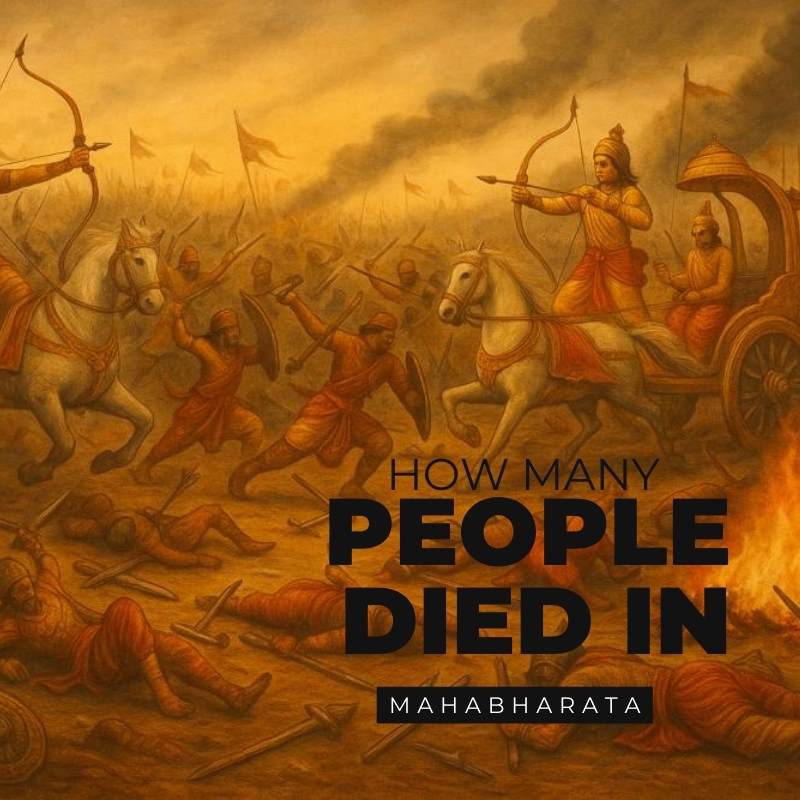 How Many People Died in the Mahabharata? Complete Death Count ExplainedA detailed explanation of how many people died in the Mahabharata, including the Kurukshetra War death count, major...Read more
 -
 Why the Mahabharata Happened: The True Causes Behind the Great WarDiscover the real causes of the Mahabharata war, from jealousy and power struggles to deep karmic destiny. This...Read more
 -
 How Many Days Mahabharata War Happened?The Mahabharata war lasted for 18 intense days, each filled with major battles, turning points, and historic events....Read more
 -
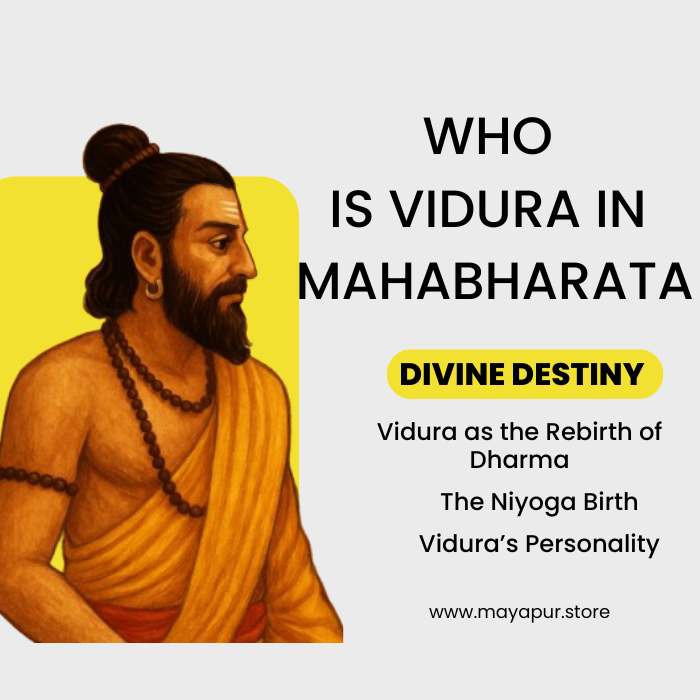 Who Is Vidura in the Mahabharata? Complete Story, Role & TeachingsDiscover who Vidura is in the Mahabharata—his origin, character, wisdom, loyalty, and unmatched adherence to dharma....Read more
Leave a comment