
Why did Krishna run to embrace a poor brahmin in rags? Read the Sudama story from the Bhagavatam and learn how a...
Latest posts
-
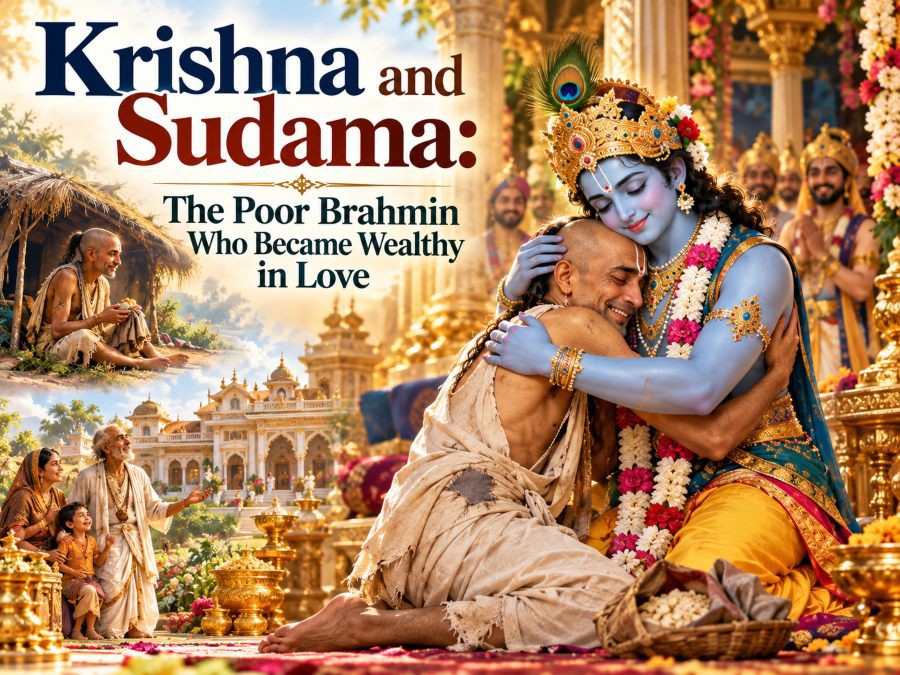 Krishna and Sudama: The Poor Brahmin Who Became Wealthy in LoveRead more
 -
 Vamana Avatar: How Three Steps Humbled Bali MaharajaRead more
Why did a powerful king give away three worlds to a boy asking for three steps? Learn the Vamana avatar story from...
-
 The Bhagavatam on Marriage: Duty, Love and Spiritual PartnershipRead more
What does the Bhagavatam say about marriage? Through the stories of Kardama and Devahuti, Rukmini's secret letter and...
-
 What Is Prema? The Bhagavatam's Highest Stage of Love for GodRead more
Prema is love for God with no "because" attached. Learn how the Bhagavatam describes it, the nine steps from faith to...
-
 Is Shiva Parvati Kalyana Mentioned in Srimad Bhagavatam? What the Scripture Really SaysRead more
Looking for Shiva and Parvati's wedding in the Srimad Bhagavatam? Find out what the scripture actually describes,...
-
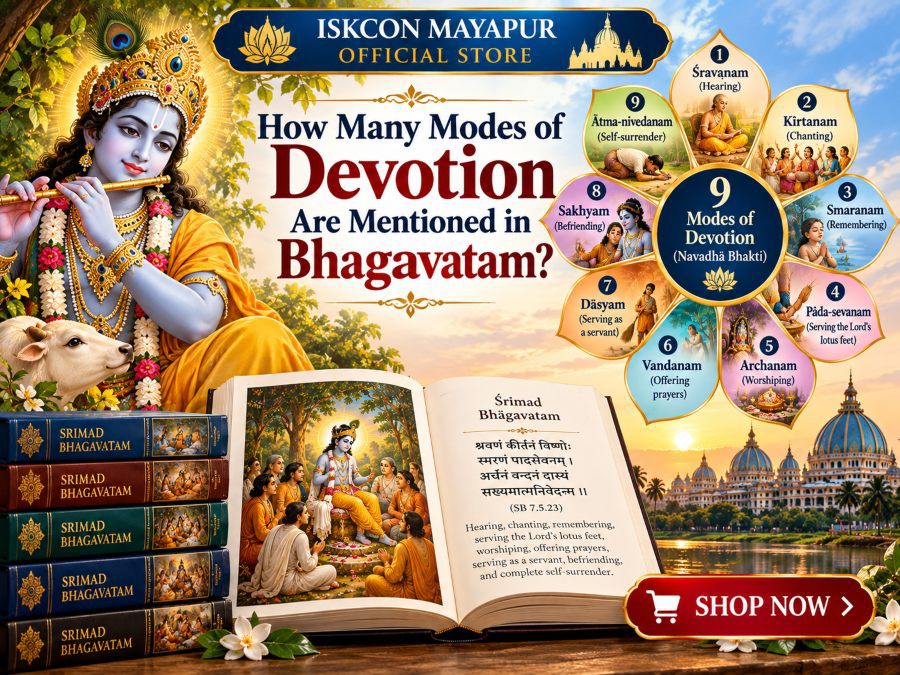 How Many Modes of Devotion Are Mentioned in Bhagavatam?Read more
A young boy named Prahlada listed nine ways to serve God, and the Bhagavatam keeps them as its answer. Learn what the...
-
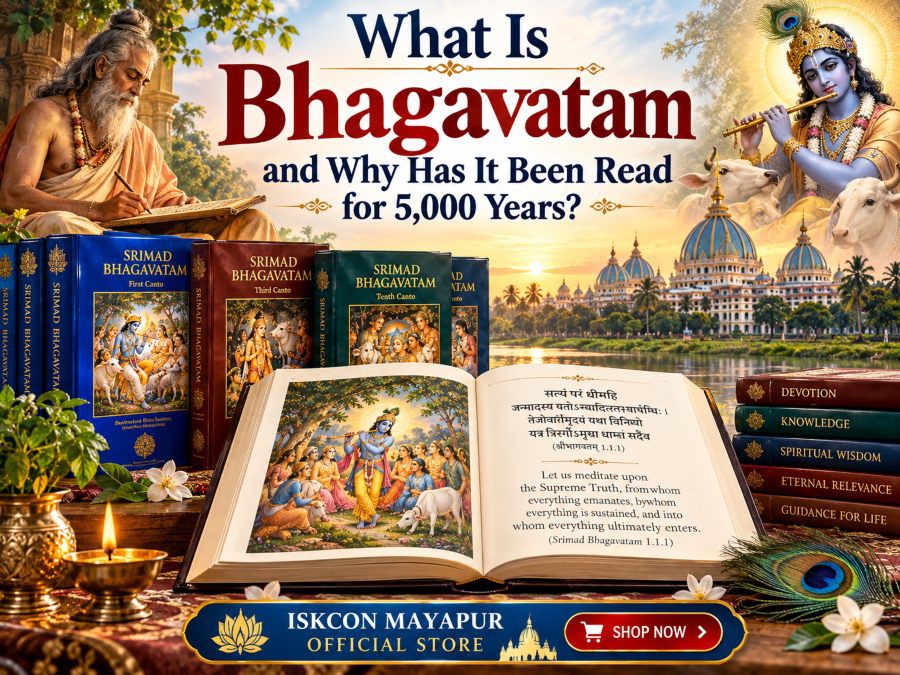 What Is Bhagavatam and Why Has It Been Read for 5,000 Years?Read more
A dying king asked one question, and the answer became the Bhagavatam. Learn what this Sanskrit scripture contains,...
-
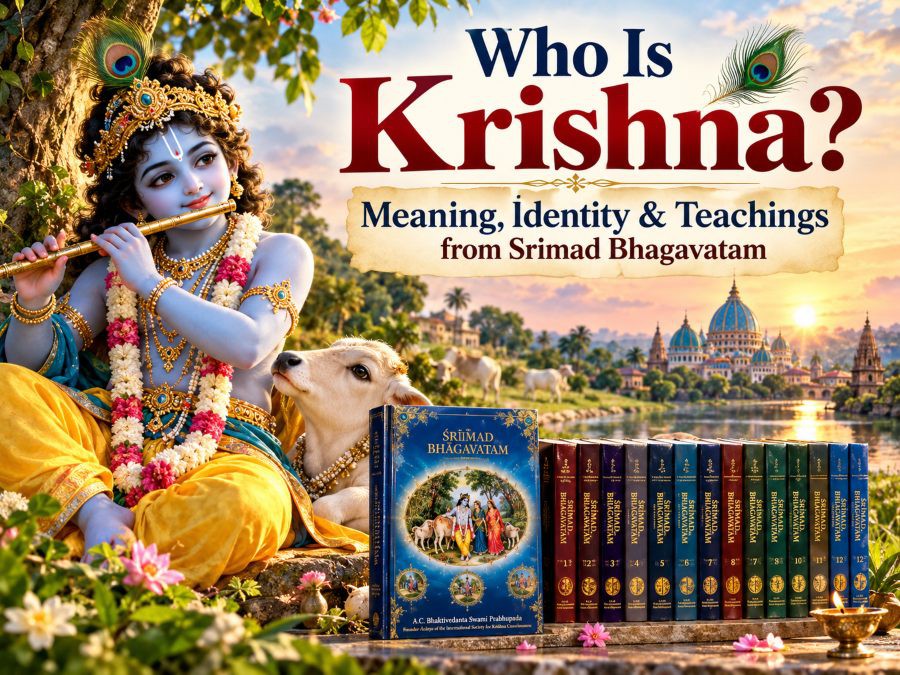 Who Is Lord Krishna? His Meaning, Teachings and Pastimes ExplainedRead more
Discover who Krishna is according to Srimad Bhagavatam, including His divine identity, childhood pastimes, teachings,...
-
 Incense in Islam: Bakhoor, Agarbatti and What Tradition SaysRead more
Is burning fragrance part of Muslim tradition? Explore incense in Islam, from the Prophetic practice of fumigating...
-
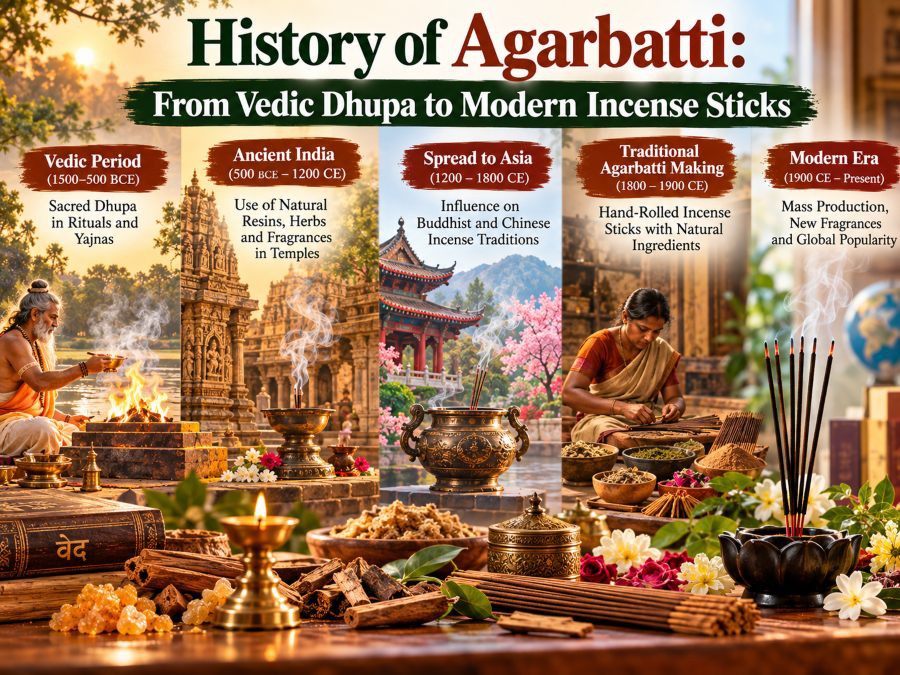 History of Agarbatti: From Vedic Dhupa to Modern Incense SticksRead more
Where did agarbatti really come from? Follow the history of agarbatti from Vedic fire rituals and temple dhupa to...
Blog categories
- Default category (0)
- MUSICAL INSTRUMENT (1)
- BOOK (5)
- DEVOTIONAL GIFT (0)
- Blog (30) click
- CHANDAN (12)
- Bhagavatam Wisdom Series (68)
- Krishna Consciousness (14)
- Mridangam Musical Instrument (6)
- Bhagavad Gita for Beginners (13)
- Bhagavad Gita As It Is (37) click
- Bhagavad Gita As It Is Telugu (0)
- Bhagavad Gita As It Is Marathi (0)
- Bhagavad Gita As It Is In Hindi (0)
- Bhagavad Gita As It Is In English (0)
- Bhagavad Gita As It Is In Bengali (8)
- Bhagavad Gita As It Is In Kannada (0)
- Bhagavad Gita As It Is In Gujarati (0)
- Bhagavad Gita As It Is In Panjabi (0)
- Bhagavad Gita As It Is In Tamil (0)
- Bhagavad Gita As It Is Odia (0)
- BHAGAVAD GITA As It Is GERMAN (0)
- Bhagavad Gita As It Is In French (0)
- Bhagavad Gita As It Is In Nepali (0)
- Bhagavad Gita As It Is In Assamese (0)
- Incense or Agarbatti (38)
- Lord Chaitanya Mahaprabhu (3)
- Vedic Temple Mayapur (14)
- kalki (15)
- Mahabharata – Dharma & Destiny (27)
- Vaishnava Scriptures (4)
- healthy product (4)
- chaitanya mahaprabhu (5)
- Tulsi Mala Guide (17)
Search in blog
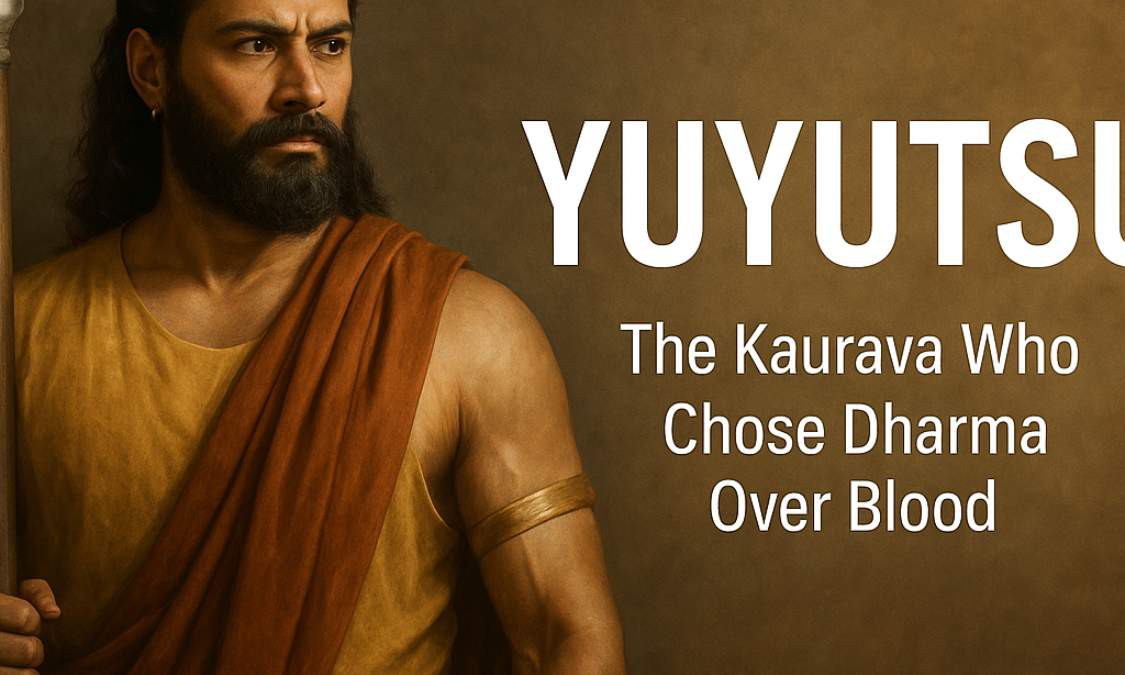
Who Is Yuyutsu in the Mahabharata? The Kaurava Who Chose Dharma Over Blood
Who Is Yuyutsu in the Mahabharata?
The Unsung Warrior Who Chose Dharma over Blood
Introduction: A Forgotten Name with a Powerful Moral Legacy
When people discuss the Mahabharata, they usually speak of mighty warriors like Arjuna, Bhishma, Karna, or Drona. Yet hidden within this grand epic is a lesser-known but deeply significant character—Yuyutsu. Though he appears only briefly in the narrative, Yuyutsu’s decision during the Kurukshetra War makes him one of the most morally courageous figures in the entire Mahabharata.
Yuyutsu was the only Kaurava who openly rejected adharma and chose righteousness over family loyalty. His story is not about battlefield glory or divine weapons but about inner strength, ethical clarity, and courage to stand alone.
This article explores who Yuyutsu was, his birth and background, his role in the Kurukshetra War, his symbolic importance, and why his life remains deeply relevant even today.
The Birth and Identity of Yuyutsu
Son of Dhritarashtra, Yet Not a Kaurava Prince
Yuyutsu was the son of King Dhritarashtra, the blind ruler of Hastinapura. However, unlike the famous hundred Kaurava brothers—Duryodhana, Dushasana, and others—Yuyutsu was not born from Queen Gandhari.
Instead, Yuyutsu was born to a Vaishya maid who served in the royal palace. This made him illegitimate by royal standards, and therefore, he was not granted the same status, respect, or power as the Kaurava princes.
Despite being Dhritarashtra’s son by blood, Yuyutsu lived in the shadows of the royal court.
READ ALSO:-who wrote mahabharata
A Life of Social Marginalization
From childhood, Yuyutsu was aware that he was different:
- He did not enjoy royal privileges
- He was not groomed for kingship
- He was often ignored or sidelined
- He bore the stigma of mixed birth
Yet, unlike many characters who allow resentment to shape their destiny, Yuyutsu developed clarity instead of bitterness.
This background played a crucial role in shaping his moral compass.

Yuyutsu’s Education and Character
Trained as a Warrior
Although not a crown prince, Yuyutsu still received martial training alongside the Kauravas and Pandavas. He was skilled in warfare, discipline, and the ethics of Kshatriya duty.
However, what set Yuyutsu apart was not his physical strength but his moral awareness.
A Quiet Observer of Injustice
Throughout the Mahabharata, Yuyutsu silently witnessed:
- The humiliation of Draupadi
- The unjust exile of the Pandavas
- Duryodhana’s arrogance and cruelty
- Shakuni’s manipulation
- The moral decline of the Kaurava court
While elders like Bhishma and Drona remained bound by vows and obligations, Yuyutsu remained inwardly free.
The Turning Point: Kurukshetra War
A Decision No One Expected
As the Kurukshetra War approached, both sides prepared for the inevitable destruction. Yuyutsu, officially counted among the Kauravas, was expected to fight for Duryodhana.
But on the very first day of the war, Yuyutsu made a shocking announcement.
He declared openly that:
He would abandon the Kaurava army and fight on the side of the Pandavas, because the Kauravas were fighting for adharma.
This was not done in secrecy. It was a public moral stand.
Why Did Yuyutsu Join the Pandavas?
Yuyutsu’s reasons were clear and uncompromising:
1. Dharma must come before blood relations
2. Duryodhana’s cause was unjust
3. Supporting adharma leads to destruction
4. Silence in the face of injustice is also sin
Unlike Karna, who acknowledged the Pandavas’ righteousness yet remained loyal to Duryodhana, Yuyutsu acted on his conscience.
READ ALSO:-when did mahabharata happen
Reaction of the Kauravas and Pandavas
Kaurava Reaction: Silence and Disdain
The Kauravas did not attempt to stop Yuyutsu. Some viewed him as insignificant; others saw him as a traitor. Duryodhana, blinded by ego, dismissed his departure.
Ironically, the Kauravas failed to realize that the only righteous voice among them was walking away.
Pandava Acceptance: Respect for Dharma
The Pandavas welcomed Yuyutsu—not as a prize but as a dharmic ally. Yudhishthira, the embodiment of righteousness, accepted him without hesitation.
This moment reinforced a central theme of the Mahabharata:
Dharma recognizes sincerity, not birth.
Yuyutsu’s Role in the Kurukshetra War
A Warrior of Integrity, Not Fame
Yuyutsu fought on the Pandava side throughout the war. He did not seek personal glory, nor did he challenge legendary warriors for fame.
His role was that of a disciplined and loyal soldier, committed to the larger cause of justice.
One of the Few Survivors
At the end of the devastating 18-day war, nearly all warriors were dead. Only a handful survived.
Yuyutsu was among the survivors.
This is symbolically important:
- Survivors represent alignment with dharma
- Those who fought for ego and injustice perished
Yuyutsu’s survival was not accidental—it reflected karmic consequence.
Yuyutsu After the War
Service Under Yudhishthira
After Yudhishthira became king of Hastinapura, Yuyutsu continued to serve the kingdom loyally. According to several interpretations, he was appointed as a protector or administrator, especially in regions formerly loyal to the Kauravas.
His presence helped:
- Heal political divisions
- Maintain stability
- Represent reconciliation rather than revenge
A Bridge Between Two Lineages
Yuyutsu became a living bridge between:
- The Kaurava bloodline
- The Pandava rule
He symbolized that righteousness does not erase the past but transforms it.
Symbolic Importance of Yuyutsu in the Mahabharata
Dharma Is a Choice, Not an Inheritance
Yuyutsu proves that dharma is not inherited through birth, caste, or family name. It is a conscious moral decision.
Moral Courage Requires Solitude
Yuyutsu stood alone. No brothers joined him. No elders supported him. Yet he chose truth.
His story teaches that doing the right thing may isolate you—but it also liberates you.
Silent Characters Can Carry the Loudest Messages
Though Yuyutsu speaks little in the epic, his one decisive act echoes louder than many long speeches.
READ ALSO:- when did mahabharata war started and ended
Yuyutsu Compared with Karna
This comparison is essential to understand Yuyutsu’s greatness.
Aspect | Karna | Yuyutsu |
Birth | Illegitimate | Illegitimate |
Loyalty | To Duryodhana | To Dharma |
Awareness | Knew Pandavas were right | Knew Kauravas were wrong |
Action | Stayed with adharma | Chose righteousness |
Fate | Died in war | Survived war |
Yuyutsu represents what Karna could have been, had he chosen conscience over gratitude.
Why Yuyutsu Is Relevant Today
In modern life, people face moral dilemmas daily:
- Workplace injustice
- Family pressure
- Social conformity
- Ethical compromise
Yuyutsu teaches us that:
- Doing the right thing may cost comfort
- Truth is often unpopular
- Integrity outlives power
His life is a reminder that history remembers moral courage, even when society ignores it.
Why Yuyutsu Is Often Ignored
Despite his importance, Yuyutsu is rarely highlighted because:
- He lacks dramatic confrontations
- He has no divine weapons
- He does not seek revenge
- His heroism is quiet
Yet the Mahabharata is not only about warriors—it is about choices.
Lessons from Yuyutsu’s Life
1. Choose dharma even if it means standing alone
2. Birth does not define worth
3. Moral clarity is greater than physical strength
4. True victory is inner alignment, not outer success
Conclusion: Yuyutsu—The Moral Conscience of the Mahabharata
Yuyutsu may not dominate chapters or battles, but he dominates the ethical heart of the Mahabharata. He reminds us that righteousness is not always loud, popular, or rewarded immediately—but it endures.
In an epic filled with divine incarnations and legendary heroes, Yuyutsu stands out as profoundly human—a man who chose what was right when it would have been easier to remain silent.
That choice makes him timeless.
Posted in: Mahabharata – Dharma & Destiny
Related posts
-
 Who Wrote the Mahabharata? The Complete Story of Sage VyasaA clear explanation of who wrote the Mahabharata, exploring Sage Vyasa’s authorship, the Ganesha narrative, and the...Read more
 -
 How Many People Died in the Mahabharata? Complete Death Count ExplainedA detailed explanation of how many people died in the Mahabharata, including the Kurukshetra War death count, major...Read more
 -
 Why the Mahabharata Happened: The True Causes Behind the Great WarDiscover the real causes of the Mahabharata war, from jealousy and power struggles to deep karmic destiny. This...Read more
 -
 How Many Days Mahabharata War Happened?The Mahabharata war lasted for 18 intense days, each filled with major battles, turning points, and historic events....Read more
 -
 Who Is Vidura in the Mahabharata? Complete Story, Role & TeachingsDiscover who Vidura is in the Mahabharata—his origin, character, wisdom, loyalty, and unmatched adherence to dharma....Read more
Leave a comment