
Why did Krishna run to embrace a poor brahmin in rags? Read the Sudama story from the Bhagavatam and learn how a...
Latest posts
-
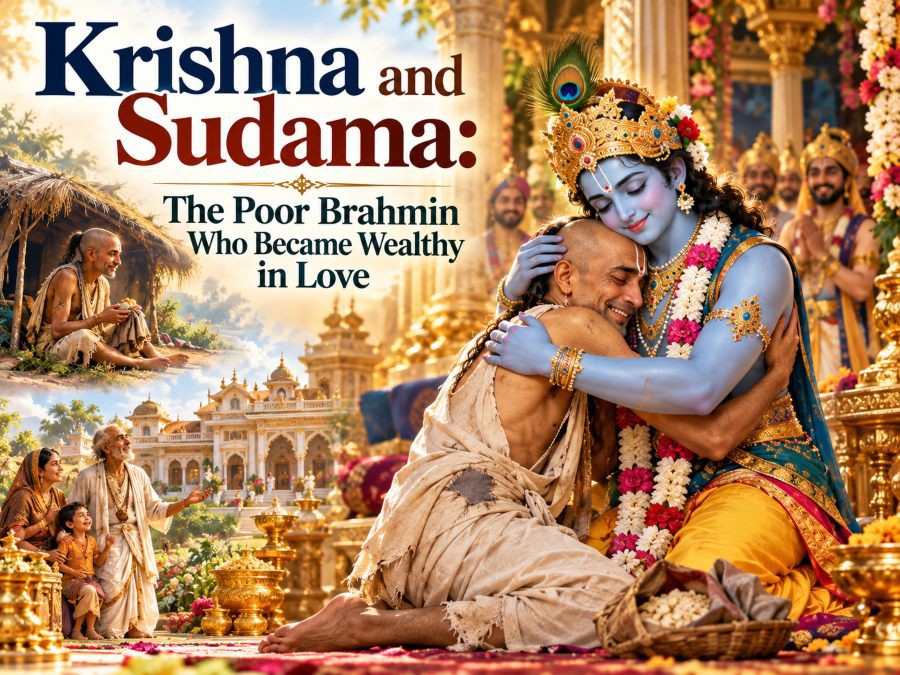 Krishna and Sudama: The Poor Brahmin Who Became Wealthy in LoveRead more
 -
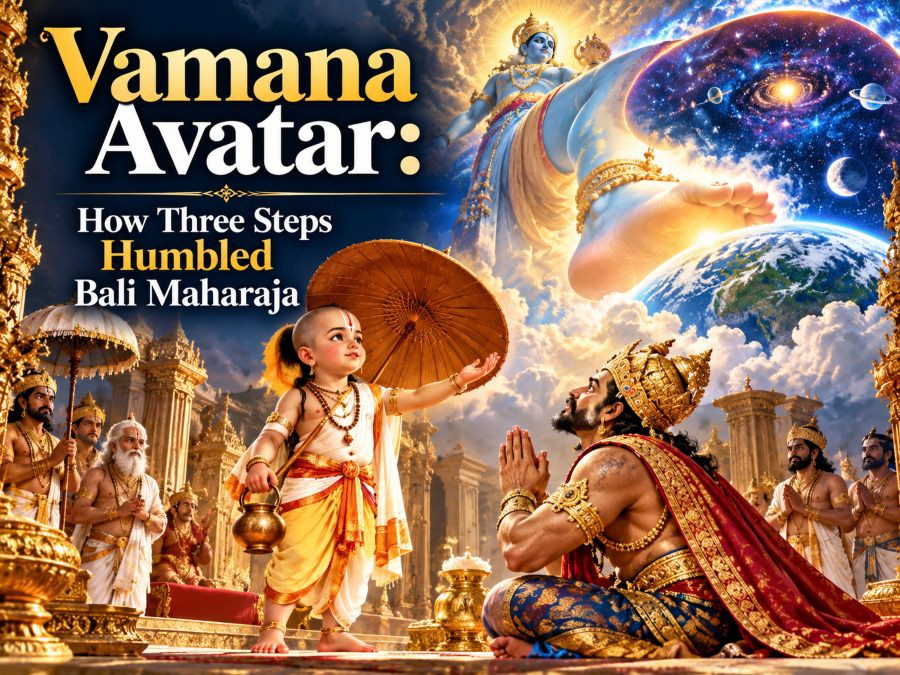 Vamana Avatar: How Three Steps Humbled Bali MaharajaRead more
Why did a powerful king give away three worlds to a boy asking for three steps? Learn the Vamana avatar story from...
-
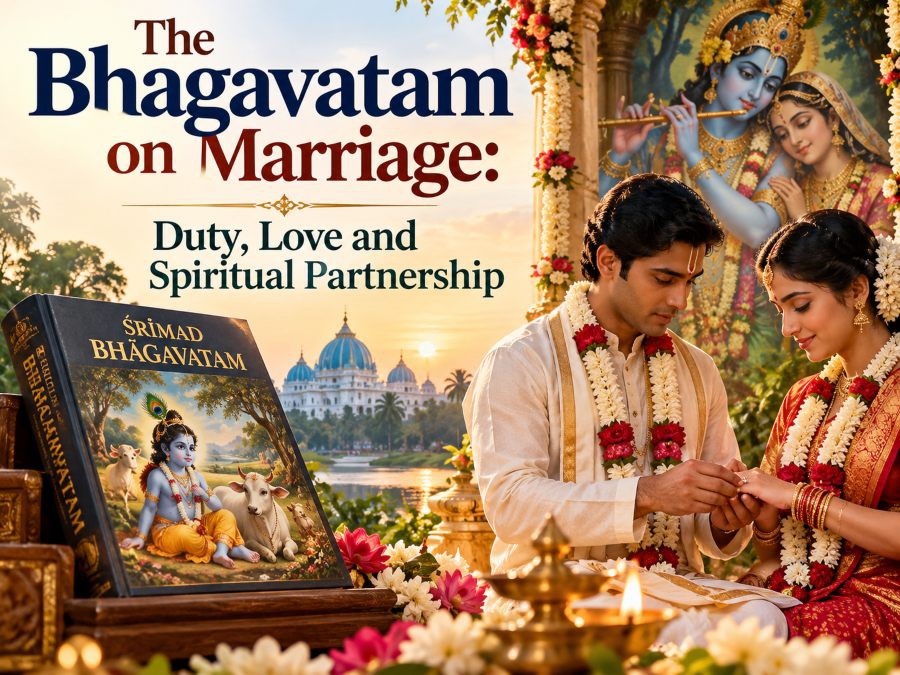 The Bhagavatam on Marriage: Duty, Love and Spiritual PartnershipRead more
What does the Bhagavatam say about marriage? Through the stories of Kardama and Devahuti, Rukmini's secret letter and...
-
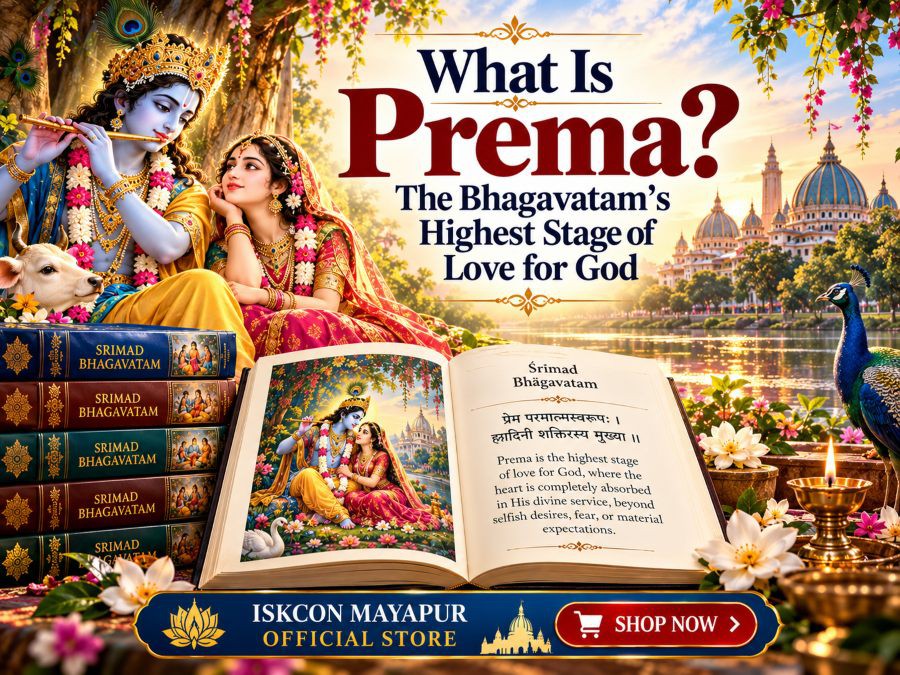 What Is Prema? The Bhagavatam's Highest Stage of Love for GodRead more
Prema is love for God with no "because" attached. Learn how the Bhagavatam describes it, the nine steps from faith to...
-
 Is Shiva Parvati Kalyana Mentioned in Srimad Bhagavatam? What the Scripture Really SaysRead more
Looking for Shiva and Parvati's wedding in the Srimad Bhagavatam? Find out what the scripture actually describes,...
-
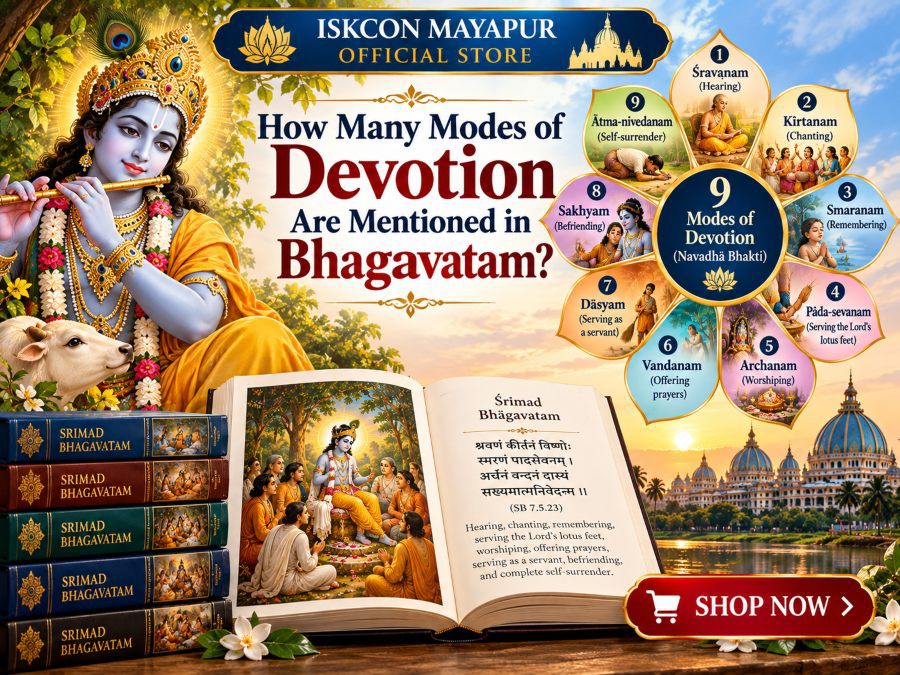 How Many Modes of Devotion Are Mentioned in Bhagavatam?Read more
A young boy named Prahlada listed nine ways to serve God, and the Bhagavatam keeps them as its answer. Learn what the...
-
 What Is Bhagavatam and Why Has It Been Read for 5,000 Years?Read more
A dying king asked one question, and the answer became the Bhagavatam. Learn what this Sanskrit scripture contains,...
-
 Who Is Lord Krishna? His Meaning, Teachings and Pastimes ExplainedRead more
Discover who Krishna is according to Srimad Bhagavatam, including His divine identity, childhood pastimes, teachings,...
-
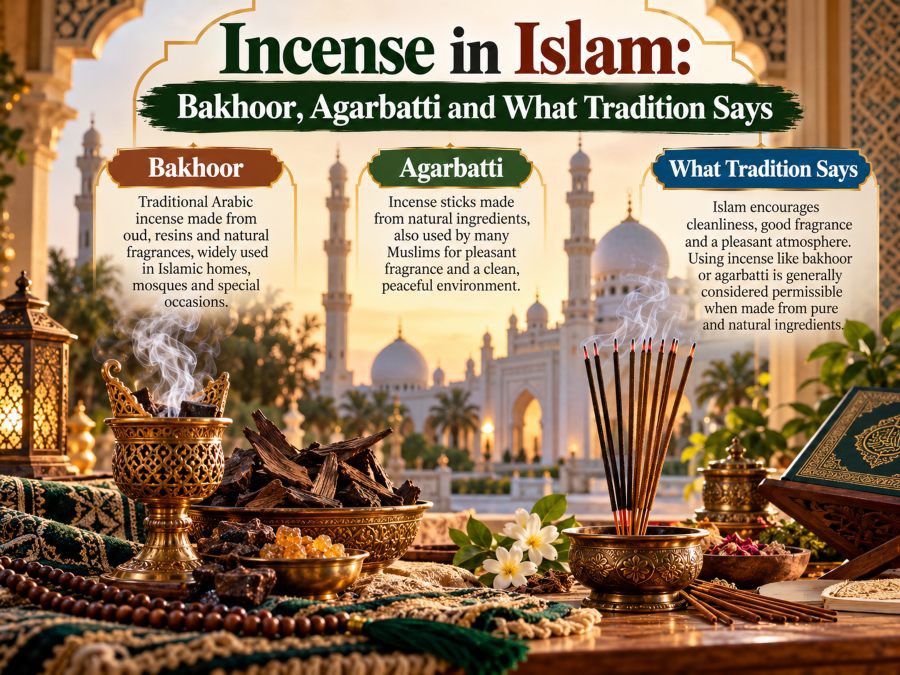 Incense in Islam: Bakhoor, Agarbatti and What Tradition SaysRead more
Is burning fragrance part of Muslim tradition? Explore incense in Islam, from the Prophetic practice of fumigating...
-
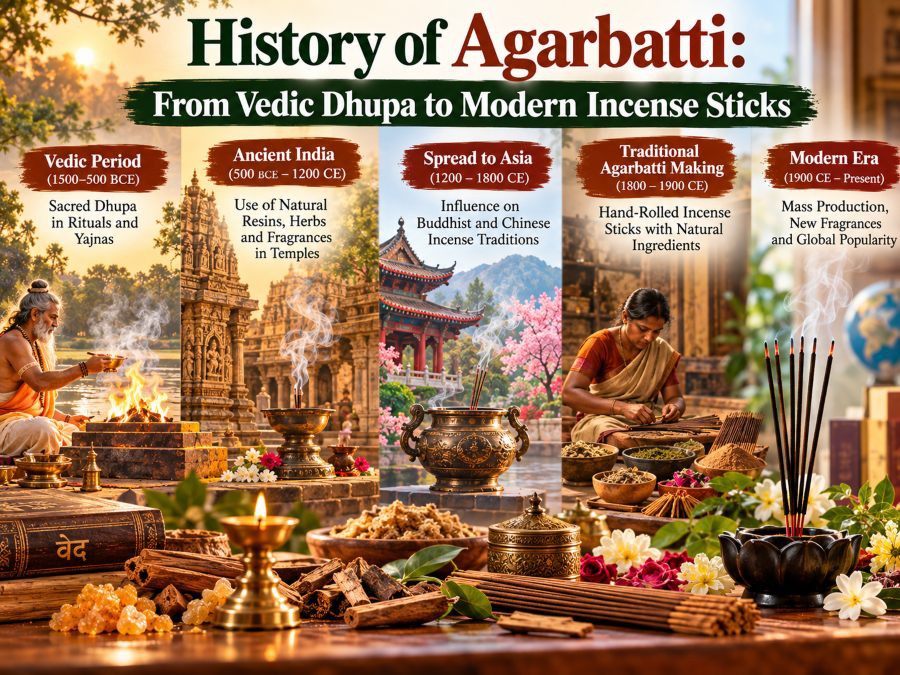 History of Agarbatti: From Vedic Dhupa to Modern Incense SticksRead more
Where did agarbatti really come from? Follow the history of agarbatti from Vedic fire rituals and temple dhupa to...
Blog categories
- Default category (0)
- MUSICAL INSTRUMENT (1)
- BOOK (5)
- DEVOTIONAL GIFT (0)
- Blog (30) click
- CHANDAN (12)
- Bhagavatam Wisdom Series (68)
- Krishna Consciousness (14)
- Mridangam Musical Instrument (6)
- Bhagavad Gita for Beginners (13)
- Bhagavad Gita As It Is (37) click
- Bhagavad Gita As It Is Telugu (0)
- Bhagavad Gita As It Is Marathi (0)
- Bhagavad Gita As It Is In Hindi (0)
- Bhagavad Gita As It Is In English (0)
- Bhagavad Gita As It Is In Bengali (8)
- Bhagavad Gita As It Is In Kannada (0)
- Bhagavad Gita As It Is In Gujarati (0)
- Bhagavad Gita As It Is In Panjabi (0)
- Bhagavad Gita As It Is In Tamil (0)
- Bhagavad Gita As It Is Odia (0)
- BHAGAVAD GITA As It Is GERMAN (0)
- Bhagavad Gita As It Is In French (0)
- Bhagavad Gita As It Is In Nepali (0)
- Bhagavad Gita As It Is In Assamese (0)
- Incense or Agarbatti (38)
- Lord Chaitanya Mahaprabhu (3)
- Vedic Temple Mayapur (14)
- kalki (15)
- Mahabharata – Dharma & Destiny (27)
- Vaishnava Scriptures (4)
- healthy product (4)
- chaitanya mahaprabhu (5)
- Tulsi Mala Guide (17)
Search in blog
Liberation (Moksha) in Srimad Bhagavatam: Meaning, Types, and the Higher Path of Bhakti
Liberation (Moksha) in Srimad Bhagavatam
Introduction: Rethinking Moksha Through the Srimad Bhagavatam
In Indian spiritual philosophy, moksha (liberation) is often described as the ultimate goal of life—the final release from suffering, rebirth, and material bondage. Most scriptures portray moksha as freedom from the cycle of birth and death (samsara).
.jpg)
However, the Srimad Bhagavatam presents a radically deeper and more personal understanding of liberation. Instead of treating moksha as the highest achievement, the Bhagavatam places it below pure devotional service (bhakti) and redefines liberation as a by-product of divine love, not the destination itself.
This article offers a exploration of liberation (moksha) according to the Srimad Bhagavatam, explaining its meaning, types, limitations, and its ultimate transcendence through bhakti.
READ ALSO:- Teachings of Srimad Bhagavatam Explained: Soul, Karma, God & Bhakti
What Is Moksha? A General Definition
The Sanskrit word moksha means release or freedom. Traditionally, it refers to:
- Freedom from material bondage
- Release from karma
- Escape from repeated birth and death
In many philosophies, moksha is described as:
- Merging into impersonal Brahman
- Complete cessation of material identity
- Eternal peace without activity
The Srimad Bhagavatam acknowledges these ideas—but then goes far beyond them.
The Bhagavatam’s Revolutionary View of Liberation
From its opening verses, the Srimad Bhagavatam establishes that religion aimed merely at liberation is incomplete. The text boldly declares that even moksha is insignificant if it does not lead to loving devotion to God.
In the Bhagavatam:
- Liberation without devotion is considered spiritually unsafe
- Liberation without service is considered incomplete
- Liberation without love is considered empty
Thus, moksha is redefined.
The Soul’s Bondage: Why Liberation Is Needed
According to the Bhagavatam, bondage arises not because the soul exists, but because it forgets its relationship with God.
The soul becomes bound when:
- It identifies with the body and mind
- It seeks enjoyment separate from God
- It acts under ignorance and desire
This bondage results in:
- Karma (action and reaction)
- Rebirth (samsara)
- Suffering, fear, and dissatisfaction
Liberation, therefore, begins not with escape—but with remembrance.
Types of Liberation (Mukti) Described in the Bhagavatam
The Srimad Bhagavatam recognizes five kinds of liberation, all of which are still considered inferior to pure bhakti.
1. Sayujya Mukti – Merging Into Brahman
Loss of individual identity by merging into impersonal spiritual existence. The Bhagavatam warns that devotees reject this because it destroys loving exchange.
2. Salokya Mukti – Living on the Same Planet as God
The soul resides in the same spiritual realm as the Lord but without intimacy.
3. Sarupya Mukti – Having a Similar Form
The liberated soul attains a spiritual form resembling God’s.
4. Samipya Mukti – Close Association
The soul remains near God in eternal service.
5. Sarshti Mukti – Sharing Divine Opulence
The soul shares powers and opulences similar to God’s.
The Bhagavatam emphasizes that pure devotees do not desire any of these liberations, even though they are easily available through devotion.
Liberation Is Not the Final Goal in the Srimad Bhagavatam
One of the most striking teachings of the Bhagavatam is this:
A devotee does not seek liberation—liberation follows the devotee.
In this scripture:
- Moksha is seen as a side effect of bhakti
- Bhakti is eternal; moksha is transitional
- Love outshines freedom
Liberation without devotion is described as fallible, because the soul’s need to love and serve remains unfulfilled.
Why the Bhagavatam Rejects Dry Liberation
The Srimad Bhagavatam repeatedly explains that those who attain liberation through impersonal knowledge alone often fall back into material existence.
Why?
- Because the soul is active by nature
- Because love cannot be suppressed
- Because service is eternal
Without a personal object of love, the liberated soul eventually seeks engagement again—often returning to the material world.
Bhakti: Liberation’s Superior Alternative
In the Bhagavatam, bhakti is not a means to liberation—it is liberation itself.
Bhakti:
- Destroys karma at the root
- Purifies desire, not suppresses it
- Engages the soul eternally
A devotee practicing bhakti is described as:
- Liberated even while living in the body
- Free from fear, envy, and bondage
- Situated beyond material duality
This state is called jivan-mukti—liberation while alive.
Jivan-Mukta: Liberated While Living
The Srimad Bhagavatam presents the idea that a devotee does not need to wait for death to be liberated.
A jivan-mukta:
- Sees the body as an instrument, not identity
- Acts in the world without attachment
- Experiences inner freedom and joy
Such a soul is untouched by success or failure, pleasure or pain.
Moksha vs Prema: Freedom vs Love
The Bhagavatam draws a clear line between:
- Moksha (freedom from suffering)
- Prema (love of God)
Freedom removes pain.
Love gives meaning.
The Bhagavatam declares that love is higher than freedom, because:
- Freedom is static
- Love is dynamic
- Freedom ends suffering; love fulfills existence
Thus, prema-bhakti becomes the ultimate attainment.
Liberation of the Devotee: A Unique State
A devotee’s liberation is different:
- They keep individuality
- They retain emotions
- They engage eternally in service
Unlike impersonal liberation, this liberation is full of activity, joy, variety, and relationship.
The Bhagavatam describes this as eternal life in loving service, not dissolution into oneness.
The Role of Knowledge in Liberation
The Srimad Bhagavatam does not reject knowledge—it repositions it.
True knowledge:
- Leads to humility
- Supports devotion
- Reveals dependence on God
Knowledge without bhakti leads to pride.
Knowledge with bhakti leads to liberation.
Stories That Redefine Liberation
Throughout the Bhagavatam, many characters illustrate this higher vision of liberation:
- Kings who renounced everything yet remained attached to devotion
- Sages who rejected liberation for service
- Devotees who considered heaven and moksha insignificant
These narratives reinforce one message: liberation without love is incomplete.
Liberation in Kali Yuga: The Bhagavatam’s Solution
For the present age of confusion and distraction, the Srimad Bhagavatam prescribes simple bhakti as the fastest path beyond bondage.
This includes:
- Hearing divine teachings
- Chanting God’s names
- Remembering God in daily life
Through this, liberation arises naturally—without strain.
Liberation and the Personal God
The Bhagavatam insists that true liberation requires a personal relationship with the Supreme.
Why?
- Love requires personality
- Service requires relationship
- Fulfillment requires reciprocation
Thus, the liberated soul does not dissolve—it awakens.
The Highest Liberation According to the Srimad Bhagavatam
The Bhagavatam’s final conclusion is profound:
The highest liberation is eternal loving service to God, free from fear, karma, and material desire.
This liberation:
- Has no end
- Has no boredom
- Has no fall-down
It is not freedom from something—but freedom to love.
Conclusion: Moksha Reimagined Through Bhakti
According to the Srimad Bhagavatam:
- Moksha is real but incomplete
- Moksha is valuable but secondary
- Moksha is surpassed by bhakti
True liberation is not silence—it is divine relationship.
Not emptiness—but eternal meaning.
Not escape—but homecoming.
The Srimad Bhagavatam invites every soul to go beyond the idea of liberation and enter the realm of pure devotion, where freedom and love unite forever.
Posted in: Bhagavatam Wisdom Series
Related posts
-
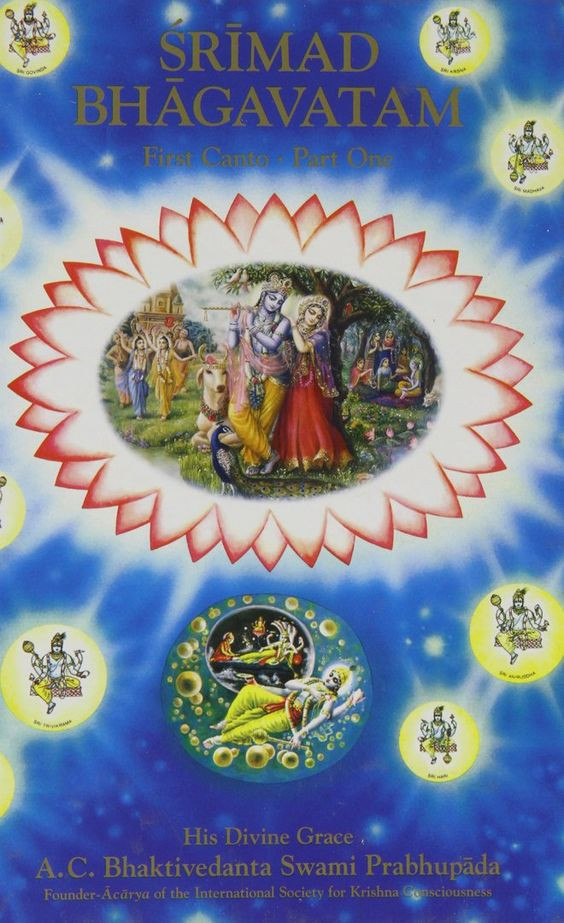 Why to read srimad bhagavatamReading the Srimad Bhagavatam fosters deep spiritual growth by narrating the life and teachings of Lord Krishna,...Read more
 -
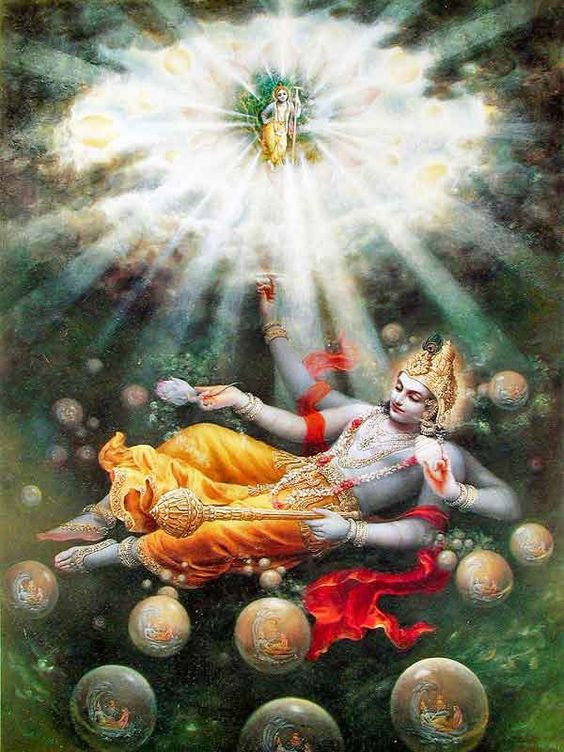 When was srimad bhagavatam written?The Srimad Bhagavatam is believed to have been written around 9th-10th century CE, though its oral traditions date...Read more
 -
 How many chapters are there in srimad bhagavatam?The Srimad Bhagavatam consists of 12 cantos (books) containing 335 chapters in total. Each canto covers various...Read more
 -
 How many skandhas are there in srimad bhagavatamThe Srimad Bhagavatam is divided into 12 skandhas (cantos or books). Each skandha explores different themes,...Read more
 -
 How many slokas in srimad bhagavatamThe Srimad Bhagavatam contains approximately 18,000 shlokas (verses). These verses are spread across its 12 skandhas...Read more
Leave a comment