
Explore Srimad Bhagavatam Canto 11, where Lord Krishna shares His final and most profound teachings with Uddhava on...
Latest posts
-
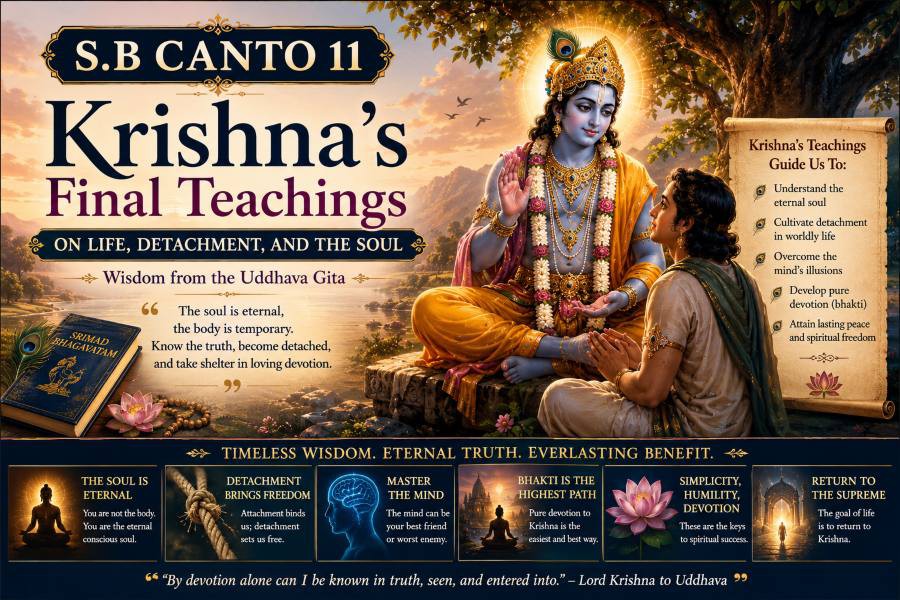 S.B Canto 11 — Krishna’s Final Teachings on Life, Detachment, and the SoulRead more
 -
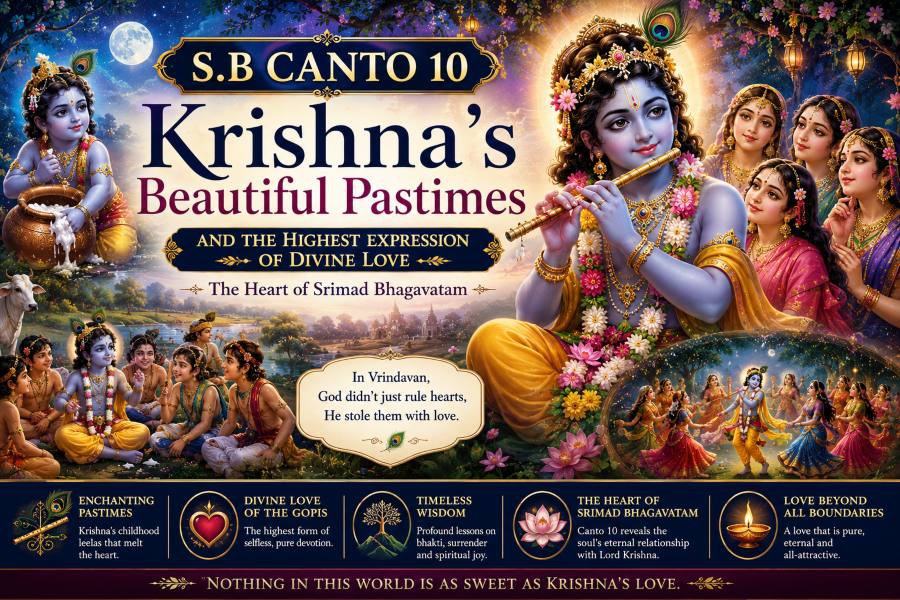 S.B Canto 10 — Krishna’s Beautiful Pastimes and the Highest Expression of Divine LoveRead more
Explore Srimad Bhagavatam Canto 10, the heart of the Bhagavatam, where Lord Krishna's enchanting childhood pastimes,...
-
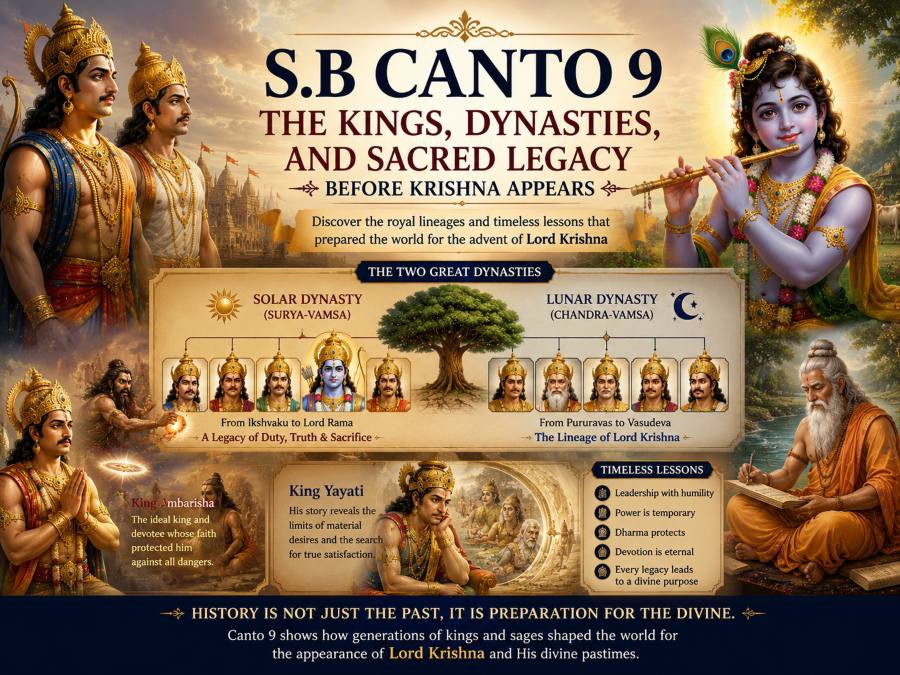 S.B Canto 9: The Kings, Dynasties, and Sacred Legacy Before Krishna AppearsRead more
Explore Srimad Bhagavatam Canto 9 and uncover the remarkable stories of ancient kings, royal dynasties, and sacred...
-
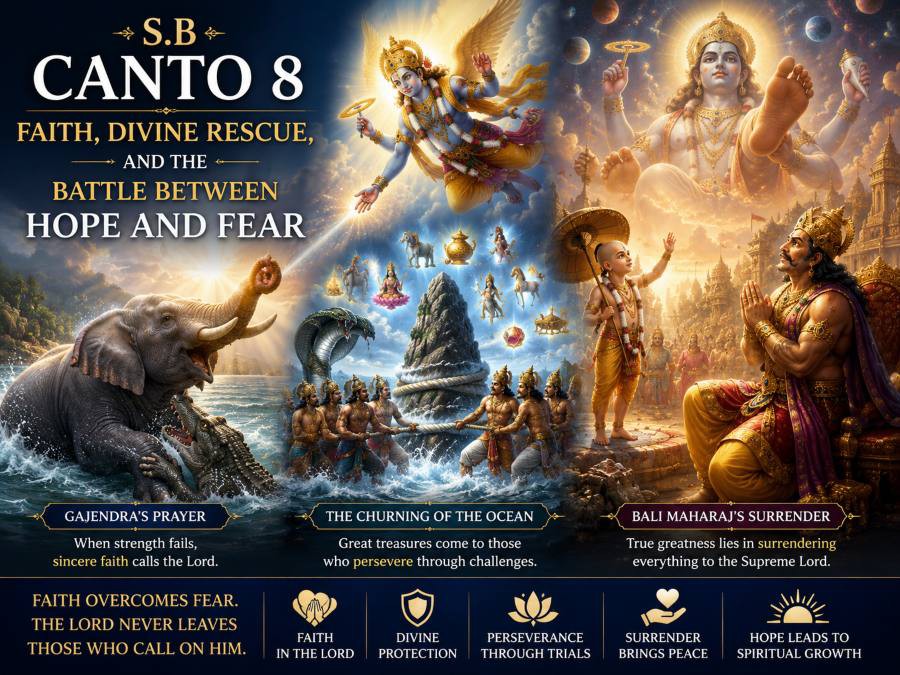 Srimad Bhagavatam Canto 8: How Faith Triumphs Over FearRead more
Explore Srimad Bhagavatam Canto 8, where the inspiring stories of Gajendra, the churning of the Milk Ocean, and Bali...
-
 S.B Canto 7: Prahlada Maharaj and the Fearless Heart of DevotionRead more
Explore Srimad Bhagavatam Canto 7 and discover the inspiring story of Prahlada Maharaj, whose unwavering devotion to...
-
 S.B Canto 6: How Mercy Can Change Even the Darkest LifeRead more
Discover the inspiring lessons of Srimad Bhagavatam Canto 6, where the story of Ajamila reveals how divine mercy,...
-
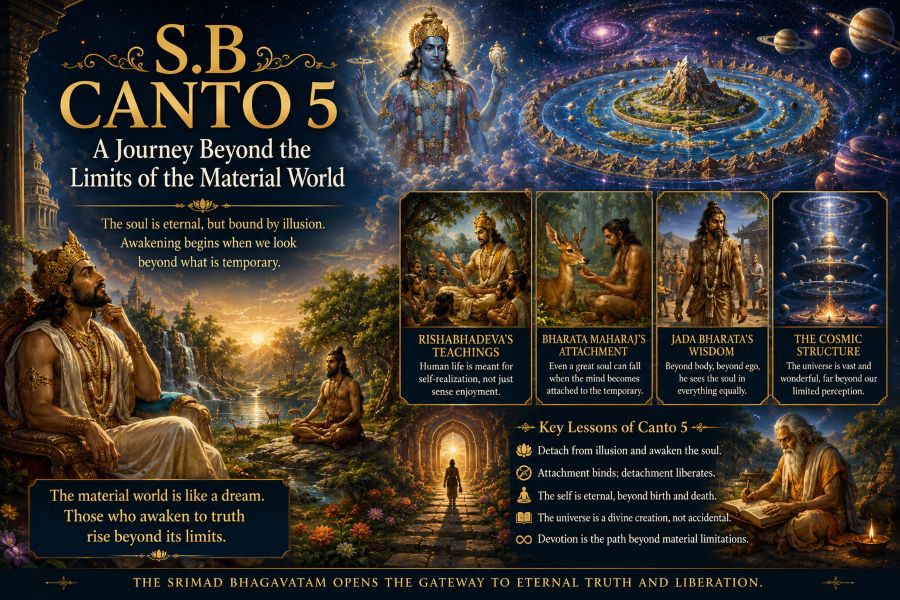 Srimad Bhagavatam Canto 5: A Journey Beyond the Limits of the Material WorldRead more
Discover how Srimad Bhagavatam Canto 5 explores cosmic creation, spiritual awakening, material illusion, and the...
-
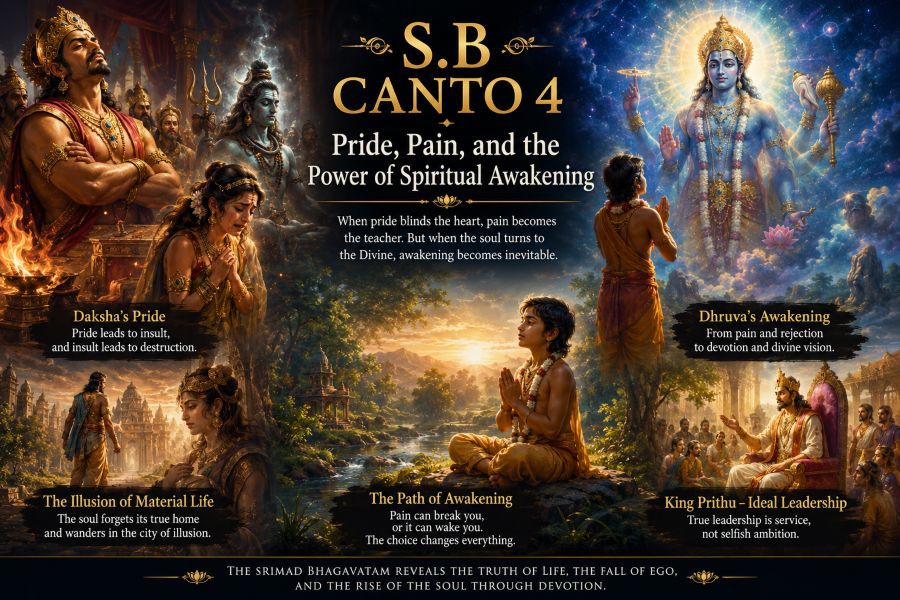 Srimad Bhagavatam Canto 4: The Pain of Pride and the Journey Back to the SoulRead more
Discover how Srimad Bhagavatam Canto 4 explores pride, rejection, devotion, spiritual awakening, and the emotional...
-
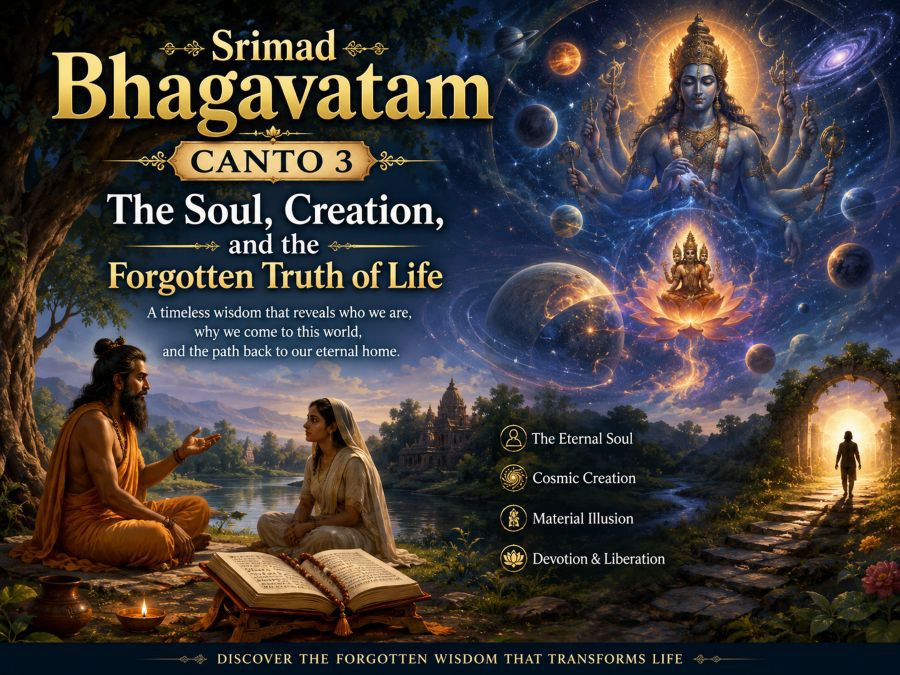 Srimad Bhagavatam Canto 3: The Soul, Creation, and the Forgotten Truth of LifeRead more
Discover how Srimad Bhagavatam Canto 3 explains the soul, creation, consciousness, and the forgotten spiritual truth...
-
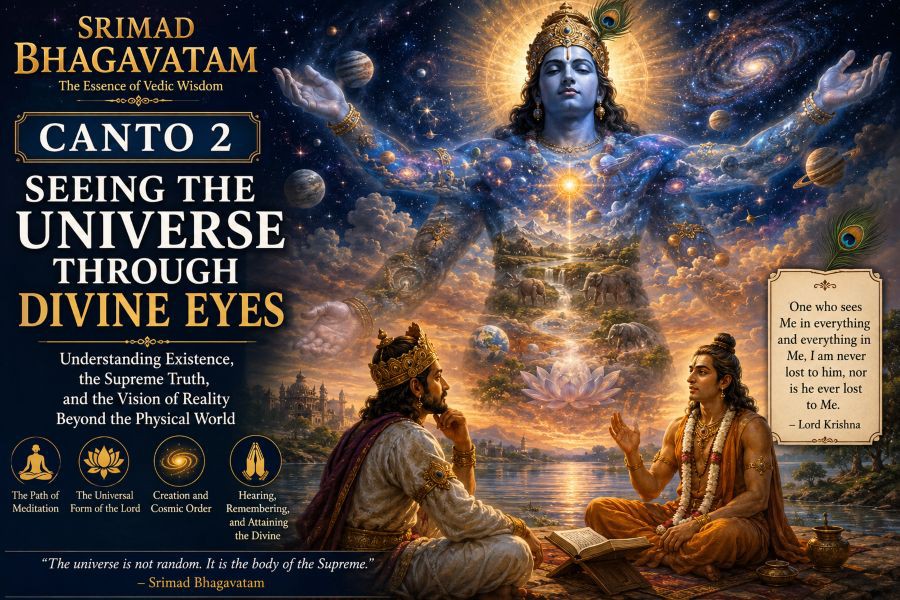 Srimad Bhagavatam Canto 2: Seeing the Universe Through Divine EyesRead more
Discover how Srimad Bhagavatam Canto 2 explains the cosmic form of the Lord, spiritual vision, meditation, creation,...
Blog categories
- Default category (0)
- MUSICAL INSTRUMENT (1)
- BOOK (5)
- DEVOTIONAL GIFT (0)
- Blog (30) click
- CHANDAN (12)
- Bhagavatam Wisdom Series (43)
- Krishna Consciousness (5)
- Mridangam Musical Instrument (6)
- Bhagavad Gita for Beginners (13)
- Bhagavad Gita As It Is (13) click
- Bhagavad Gita As It Is Telugu (0)
- Bhagavad Gita As It Is Marathi (0)
- Bhagavad Gita As It Is In Hindi (0)
- Bhagavad Gita As It Is In English (0)
- Bhagavad Gita As It Is In Bengali (8)
- Bhagavad Gita As It Is In Kannada (0)
- Bhagavad Gita As It Is In Gujarati (0)
- Bhagavad Gita As It Is In Panjabi (0)
- Bhagavad Gita As It Is In Tamil (0)
- Bhagavad Gita As It Is Odia (0)
- BHAGAVAD GITA As It Is GERMAN (0)
- Bhagavad Gita As It Is In French (0)
- Bhagavad Gita As It Is In Nepali (0)
- Bhagavad Gita As It Is In Assamese (0)
- Incense or Agarbatti (6)
- Lord Chaitanya Mahaprabhu (3)
- Vedic Temple Mayapur (16)
- kalki (15)
- Mahabharata – Dharma & Destiny (27)
- Vaishnava Scriptures (4)
- healthy product (4)
- chaitanya mahaprabhu (5)
Search in blog
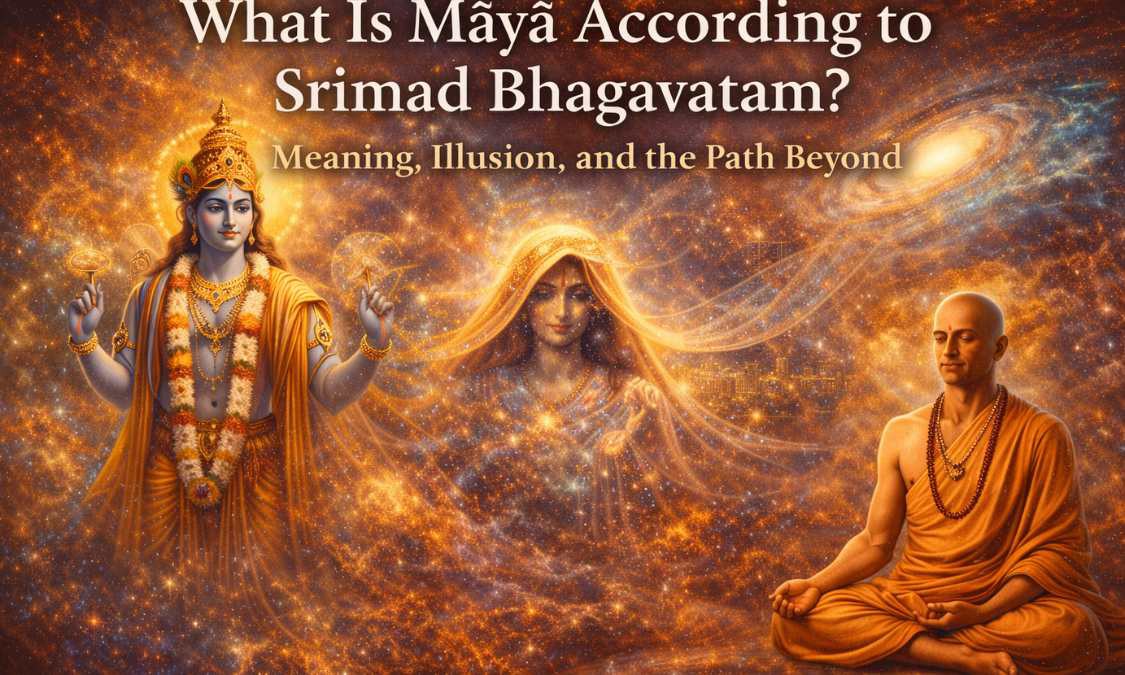
What Is Maya According to Srimad Bhagavatam? Meaning, Illusion, and the Path Beyond
What Is Maya According to Srimad Bhagavatam
Introduction: Why the Concept of Maya Is Central to the Srimad Bhagavatam
Human beings constantly ask profound questions:
Why do we suffer despite trying to be happy?
Why does the world feel temporary yet so binding?
Why do we forget spiritual truth so easily?
The Srimad Bhagavatam answers all these questions through one powerful concept—Maya.
In the Bhagavatam, Maya is not a myth, metaphor, or philosophical imagination. It is a real cosmic energy that shapes perception, binds the soul, and creates the illusion of material existence. Understanding Maya is essential because without recognizing illusion, truth cannot be realized.
This article presents a explanation of what Maya is according to the Srimad Bhagavatam, how it works, why it binds the soul, and how one can transcend it through bhakti.
READ ALSO:- Teachings of Srimad Bhagavatam Explained: Soul, Karma, God & Bhakti
Meaning of Maya: More Than Illusion
The Sanskrit word Maya comes from the root mā, meaning to measure, limit, or form. In common usage, Maya is often translated as illusion, but the Srimad Bhagavatam gives it a far deeper meaning.
According to the Bhagavatam, Maya is:
- The external energy of God
- The power that makes the temporary appear permanent
- The force that hides spiritual truth and reveals material reality
Maya does not mean that the world is false. Rather, it means that our understanding of the world is distorted.
.jpg)
Maya as the Energy of the Supreme Lord
One of the most important teachings of the Srimad Bhagavatam is that Maya is not independent.
- Maya works under divine control
- Maya cannot act against God
- Maya serves a cosmic purpose
The Bhagavatam explains that God has multiple energies:
- Internal (spiritual) energy
- Marginal (living beings) energy
- External (material) energy — Maya
Thus, Maya is not evil; it is a servant of divine will.
The Purpose of Maya: Why Illusion Exists
A natural question arises: If God is compassionate, why does Maya exist at all?
The Srimad Bhagavatam explains that Maya exists to:
- Provide a field for free will
- Allow souls to experience independence
- Educate souls through consequence
When the soul desires enjoyment separate from God, Maya provides a stage where that desire can play out. In this sense, Maya is corrective, not cruel.
How Maya Binds the Soul
Maya binds the soul primarily through misidentification.
Instead of identifying as an eternal soul, the living being begins to think:
- “I am this body”
- “This world belongs to me”
- “Enjoyment will make me complete”
This false identity creates:
- Attachment
- Desire
- Fear
- Karma
Thus, bondage does not come from the world itself, but from forgetfulness of spiritual identity.
The Two Powers of Maya
The Srimad Bhagavatam explains that Maya works through two main forces:
1. Covering Power (Avarana Shakti)
This power covers true knowledge. The soul forgets:
- Its eternal nature
- Its relationship with God
- The temporary nature of matter
2. Throwing Power (Vikshepa Shakti)
This power propels the soul into action—desires, ambitions, pleasures, and struggles.
Together, these two forces keep the soul busy, distracted, and bound.
Maya and the Three Modes of Nature
Maya operates through the three gunas (modes):
- Goodness (Sattva) – clarity, morality, knowledge
- Passion (Rajas) – ambition, attachment, restlessness
- Ignorance (Tamas) – laziness, delusion, darkness
Even goodness, though uplifting, still belongs to Maya because it binds through false pride and subtle attachment.
True freedom lies beyond all three modes.
Maya and Karma: The Cycle of Bondage
Maya and karma work together.
- Maya creates desire
- Desire creates action
- Action creates reaction
- Reaction creates rebirth
This endless cycle is known as samsara.
The Bhagavatam explains that as long as one acts under Maya, even good actions produce binding results.
Maya Is Powerful—But Not Absolute
One of the Bhagavatam’s most hopeful teachings is this:
Maya is extremely powerful, but it cannot touch a surrendered soul.
For those without spiritual awareness, Maya is inescapable.
For devotees, Maya becomes ineffective.
This shows that Maya is conditional, not absolute.
Maya vs Reality: What Is Truly Real?
The Srimad Bhagavatam defines reality as that which is:
- Eternal
- Unchanging
- Independent
By this definition:
- The soul is real
- God is real
- The spiritual world is real
The material world is temporarily real—it exists, but it does not last. Maya makes the temporary appear permanent and the permanent appear distant.
Stories That Reveal the Power of Maya
Throughout the Bhagavatam, stories repeatedly demonstrate how even:
- Kings
- Sages
- Celestial beings
Can fall under Maya when pride or forgetfulness arises.
These narratives are not meant to criticize but to educate the reader about the subtlety of illusion.
Maya and Ego: The Root of Illusion
The Bhagavatam identifies false ego as Maya’s strongest weapon.
False ego whispers:
- “I am the controller”
- “I am the enjoyer”
- “I am independent”
This false sense of self blocks humility, surrender, and devotion.
When ego dissolves, Maya loses its grip.
Transcending Maya Through Bhakti
The Srimad Bhagavatam gives a clear solution to Maya: bhakti (devotional service).
Why bhakti works:
- Bhakti reconnects the soul with God
- Bhakti awakens true identity
- Bhakti replaces illusion with love
Unlike knowledge or renunciation, bhakti does not fight Maya—it outgrows it.
Knowledge Alone Cannot Destroy Maya
The Bhagavatam repeatedly warns that:
- Intellectual knowledge may expose Maya
- But it cannot fully destroy it
Without devotion, knowledge often leads to pride, which is another form of illusion.
True knowledge must be softened by devotion.
Maya Becomes a Servant of the Devotee
A profound teaching of the Bhagavatam is that for a devotee:
- Maya stops binding
- Maya starts teaching
Difficulties become lessons. Loss becomes detachment. Suffering becomes purification.
Thus, Maya transforms from jailer to guide.
Maya in Daily Life: Practical Understanding
According to the Bhagavatam, recognizing Maya does not mean rejecting the world. It means:
- Acting without attachment
- Enjoying without ownership
- Living without illusion
A devotee lives in the world but is not owned by it.
Maya and Compassion
Understanding Maya creates compassion:
- One stops blaming others
- One recognizes shared illusion
- One develops patience and humility
The Bhagavatam teaches that everyone struggling in the world is under Maya’s influence, not inherently evil.
Maya and Liberation
Liberation in the Bhagavatam is defined as:
Freedom from false identity, not freedom from existence.
When Maya is removed:
- The soul regains awareness
- Love becomes natural
- Service becomes joyful
This liberation is positive, dynamic, and eternal.
Final Purpose of Maya: Awakening the Soul
The Srimad Bhagavatam concludes that Maya’s ultimate purpose is not to trap but to awaken.
When the soul becomes frustrated with illusion, it begins to seek truth. That search leads to devotion, and devotion dissolves Maya completely.
Conclusion: Maya as the Great Teacher
According to the Srimad Bhagavatam:
- Maya is real
- Maya is powerful
- Maya is purposeful
It binds the forgetful and frees the surrendered.
For the ignorant, Maya is a prison.
For the wise, Maya is a classroom.
For the devotee, Maya is powerless.
Understanding Maya is not pessimism—it is the first step toward eternal clarity, freedom, and love.
Posted in: Bhagavatam Wisdom Series
Related posts
-
 Why to read srimad bhagavatamReading the Srimad Bhagavatam fosters deep spiritual growth by narrating the life and teachings of Lord Krishna,...Read more
 -
 When was srimad bhagavatam written?The Srimad Bhagavatam is believed to have been written around 9th-10th century CE, though its oral traditions date...Read more
 -
 How many chapters are there in srimad bhagavatam?The Srimad Bhagavatam consists of 12 cantos (books) containing 335 chapters in total. Each canto covers various...Read more
 -
 How many skandhas are there in srimad bhagavatamThe Srimad Bhagavatam is divided into 12 skandhas (cantos or books). Each skandha explores different themes,...Read more
 -
 How many slokas in srimad bhagavatamThe Srimad Bhagavatam contains approximately 18,000 shlokas (verses). These verses are spread across its 12 skandhas...Read more
Leave a comment