
Why did Krishna run to embrace a poor brahmin in rags? Read the Sudama story from the Bhagavatam and learn how a...
Latest posts
-
 Krishna and Sudama: The Poor Brahmin Who Became Wealthy in LoveRead more
 -
 Vamana Avatar: How Three Steps Humbled Bali MaharajaRead more
Why did a powerful king give away three worlds to a boy asking for three steps? Learn the Vamana avatar story from...
-
 The Bhagavatam on Marriage: Duty, Love and Spiritual PartnershipRead more
What does the Bhagavatam say about marriage? Through the stories of Kardama and Devahuti, Rukmini's secret letter and...
-
 What Is Prema? The Bhagavatam's Highest Stage of Love for GodRead more
Prema is love for God with no "because" attached. Learn how the Bhagavatam describes it, the nine steps from faith to...
-
 Is Shiva Parvati Kalyana Mentioned in Srimad Bhagavatam? What the Scripture Really SaysRead more
Looking for Shiva and Parvati's wedding in the Srimad Bhagavatam? Find out what the scripture actually describes,...
-
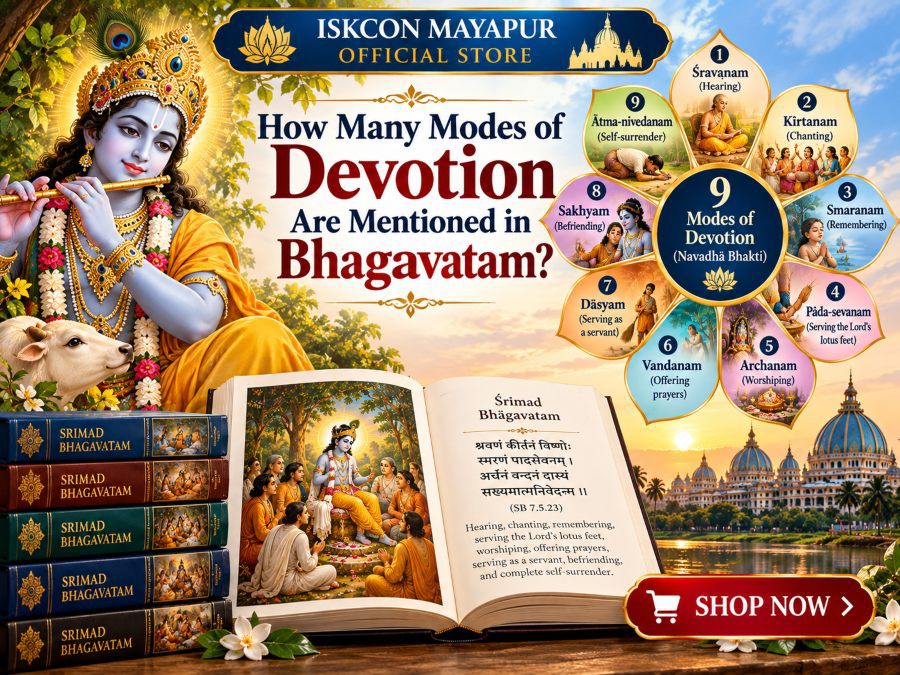 How Many Modes of Devotion Are Mentioned in Bhagavatam?Read more
A young boy named Prahlada listed nine ways to serve God, and the Bhagavatam keeps them as its answer. Learn what the...
-
 What Is Bhagavatam and Why Has It Been Read for 5,000 Years?Read more
A dying king asked one question, and the answer became the Bhagavatam. Learn what this Sanskrit scripture contains,...
-
 Who Is Lord Krishna? His Meaning, Teachings and Pastimes ExplainedRead more
Discover who Krishna is according to Srimad Bhagavatam, including His divine identity, childhood pastimes, teachings,...
-
 Incense in Islam: Bakhoor, Agarbatti and What Tradition SaysRead more
Is burning fragrance part of Muslim tradition? Explore incense in Islam, from the Prophetic practice of fumigating...
-
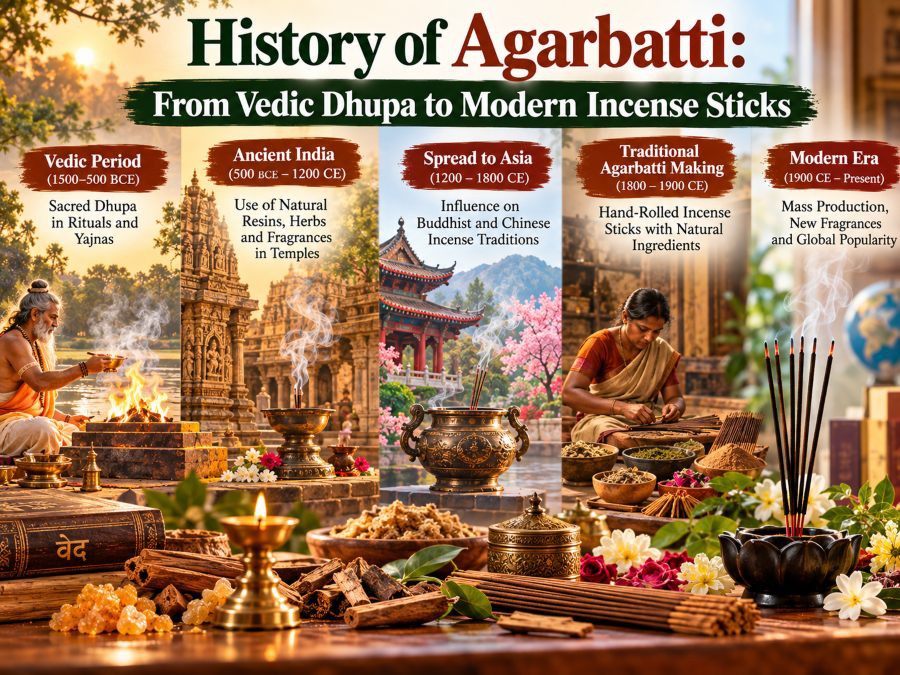 History of Agarbatti: From Vedic Dhupa to Modern Incense SticksRead more
Where did agarbatti really come from? Follow the history of agarbatti from Vedic fire rituals and temple dhupa to...
Blog categories
- Default category (0)
- MUSICAL INSTRUMENT (1)
- BOOK (5)
- DEVOTIONAL GIFT (0)
- Blog (30) click
- CHANDAN (12)
- Bhagavatam Wisdom Series (68)
- Krishna Consciousness (14)
- Mridangam Musical Instrument (6)
- Bhagavad Gita for Beginners (13)
- Bhagavad Gita As It Is (37) click
- Bhagavad Gita As It Is Telugu (0)
- Bhagavad Gita As It Is Marathi (0)
- Bhagavad Gita As It Is In Hindi (0)
- Bhagavad Gita As It Is In English (0)
- Bhagavad Gita As It Is In Bengali (8)
- Bhagavad Gita As It Is In Kannada (0)
- Bhagavad Gita As It Is In Gujarati (0)
- Bhagavad Gita As It Is In Panjabi (0)
- Bhagavad Gita As It Is In Tamil (0)
- Bhagavad Gita As It Is Odia (0)
- BHAGAVAD GITA As It Is GERMAN (0)
- Bhagavad Gita As It Is In French (0)
- Bhagavad Gita As It Is In Nepali (0)
- Bhagavad Gita As It Is In Assamese (0)
- Incense or Agarbatti (38)
- Lord Chaitanya Mahaprabhu (3)
- Vedic Temple Mayapur (14)
- kalki (15)
- Mahabharata – Dharma & Destiny (27)
- Vaishnava Scriptures (4)
- healthy product (4)
- chaitanya mahaprabhu (5)
- Tulsi Mala Guide (17)
Search in blog
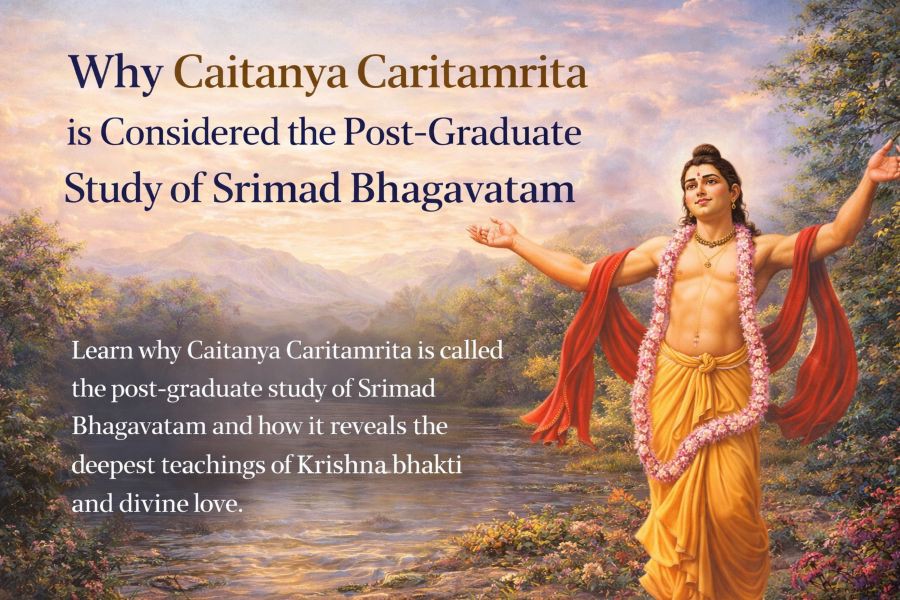
Why Caitanya Caritamrita is Considered the Post-Graduate Study of Srimad Bhagavatam
Why Caitanya Caritamrita is Considered the “Post-Graduate” Study of Srimad Bhagavatam
The Vedic tradition contains an immense treasury of spiritual literature, each scripture revealing different dimensions of divine knowledge. Among these sacred works, the Srimad Bhagavatam is often celebrated as the crown jewel of devotional philosophy because it explains the nature of the Supreme Personality of Godhead and the path of pure devotion. Yet within the Gaudiya Vaishnava tradition, another text is often described as the advanced continuation of this spiritual wisdom. That scripture is the Caitanya Caritamrita, widely regarded as the “post-graduate study” of the Srimad Bhagavatam.
This description does not diminish the greatness of the Bhagavatam. Instead, it highlights how the Caitanya Caritamrita expands and clarifies its deepest teachings. Written by Krishnadasa Kaviraja Goswami in the sixteenth century, the text records the life, philosophy, and spiritual mission of Sri Caitanya Mahaprabhu, who is revered by devotees as the combined form of Radha and Krishna.
While the Srimad Bhagavatam presents the philosophical foundation of bhakti and narrates the divine pastimes of Lord Krishna, the Caitanya Caritamrita reveals how those teachings are fully realized through the devotional movement inaugurated by Lord Caitanya. It explains the inner meaning of Krishna’s pastimes, the highest goal of spiritual life, and the path of pure devotional service in the present age.
For students of Vedic philosophy, understanding the relationship between these two texts provides a deeper appreciation of the spiritual tradition of Krishna bhakti. The Caitanya Caritamrita does not replace the Bhagavatam; rather, it illuminates its most profound conclusions and demonstrates how those teachings can be lived and experienced.
The Central Role of Srimad Bhagavatam in Vedic Literature
To understand why the Caitanya Caritamrita is called a post-graduate study, it is important to first recognize the significance of the Srimad Bhagavatam. Composed by the sage Vyasa, the Bhagavatam is considered the culmination of Vedic knowledge.
Unlike other scriptures that focus on ritual practices or philosophical speculation, the Bhagavatam emphasizes pure devotion to the Supreme Personality of Godhead, Krishna. Through its twelve cantos, it describes the nature of God, the creation of the universe, and the lives of great devotees who exemplify spiritual realization.

The most celebrated portion of the text is the Tenth Canto, which narrates the divine pastimes of Lord Krishna in Vrindavan. These stories reveal the intimate relationship between Krishna and His devotees, especially the residents of Vrindavan who embody the highest forms of love for God.
For centuries, the Srimad Bhagavatam has served as the foundational scripture for those who seek to understand the philosophy of bhakti.
The Appearance of Sri Caitanya Mahaprabhu
The Caitanya Caritamrita introduces readers to Sri Caitanya Mahaprabhu, who appeared in Navadvipa, Bengal, in the late fifteenth century. According to the Gaudiya Vaishnava tradition, Lord Caitanya is Krishna Himself who descended to experience the love of His devotee Srimati Radharani and to teach the path of pure devotion.
His life represents the living embodiment of the teachings found in the Srimad Bhagavatam. Through His example, Lord Caitanya demonstrated how the highest spiritual truths can be practiced in everyday life.
He emphasized the chanting of the holy names of Krishna as the most effective spiritual practice in the present age. This practice, known as sankirtana, became the central element of His spiritual movement.
By spreading the chanting of the holy names, Lord Caitanya made the path of devotion accessible to people from all backgrounds.
Expanding the Philosophical Conclusions of the Bhagavatam
One of the main reasons the Caitanya Caritamrita is considered a post-graduate study is that it expands the philosophical conclusions presented in the Srimad Bhagavatam.
The Bhagavatam introduces many deep theological concepts, such as the nature of Krishna as the Supreme Personality of Godhead and the various relationships between the soul and the divine.
However, these ideas are sometimes presented in poetic or narrative form. The Caitanya Caritamrita provides systematic explanations that clarify these teachings.
For example, it explains the philosophy of Achintya Bheda Abheda, which describes the simultaneous oneness and difference between the individual soul and the Supreme.
This philosophical framework helps reconcile different interpretations of Vedantic thought and provides a coherent understanding of devotional theology.
Revealing the Inner Meaning of Krishna’s Pastimes
Another reason the Caitanya Caritamrita is considered an advanced study of the Bhagavatam is that it reveals the inner spiritual significance of Krishna’s pastimes.
The Srimad Bhagavatam beautifully narrates Krishna’s childhood activities in Vrindavan, His playful interactions with the gopis, and His loving relationships with His devotees.
Yet the deeper emotional and theological meanings behind these pastimes are not always fully explained.
The Caitanya Caritamrita explores these meanings through the teachings of Lord Caitanya and His associates. It describes how the love of the residents of Vrindavan represents the highest stage of devotion, known as prema.
This divine love becomes the central theme of the Gaudiya Vaishnava tradition.
The Role of the Goswamis of Vrindavan
The Caitanya Caritamrita also documents the contributions of the Six Goswamis of Vrindavan, who were among the most prominent disciples of Lord Caitanya.
These scholars and saints dedicated their lives to studying and writing about the teachings of the Srimad Bhagavatam and the devotional principles taught by Lord Caitanya.
Their works systematically explained the philosophy of bhakti and established the theological foundation of the Gaudiya Vaishnava tradition.
Through their writings, the spiritual insights of the Bhagavatam were expanded and clarified for future generations.
Demonstrating the Living Practice of Bhakti
While the Srimad Bhagavatam provides philosophical guidance and inspirational narratives, the Caitanya Caritamrita demonstrates how those teachings can be practiced in real life.
The text describes the daily activities, spiritual discussions, and devotional experiences of Lord Caitanya and His followers.
Readers witness how the principles of humility, compassion, and devotion manifest in the lives of genuine spiritual practitioners.
This practical dimension helps bridge the gap between theoretical knowledge and lived spirituality.
The Path of Sankirtana for the Modern Age
One of the most significant contributions of Lord Caitanya’s teachings is the emphasis on sankirtana, or congregational chanting of the holy names of Krishna.
According to the Caitanya Caritamrita, this practice represents the most effective spiritual method for the present age, known as Kali-yuga.
Through chanting, individuals can purify their hearts, awaken their spiritual consciousness, and develop love for Krishna.
This teaching reflects the essence of the Srimad Bhagavatam, which also glorifies the power of hearing and chanting the names of the Lord.
However, the Caitanya Caritamrita explains this practice with greater emphasis and practical application.
Understanding the Highest Goal of Spiritual Life
Both the Srimad Bhagavatam and the Caitanya Caritamrita identify pure love for Krishna as the ultimate goal of spiritual life.
Yet the Caitanya Caritamrita provides a deeper exploration of this concept by describing the stages through which devotion develops.
From initial faith to the awakening of divine love, the text outlines a clear path for spiritual growth.
It also explains the highest expressions of devotional emotion, particularly the love of the gopis of Vrindavan, which is considered the most exalted form of devotion.
Through these teachings, readers gain a deeper appreciation for the spiritual ideals presented in the Bhagavatam.
Why Scholars and Devotees Value Caitanya Caritamrita
For scholars of Vedic philosophy, the Caitanya Caritamrita represents an extraordinary synthesis of theology, philosophy, and devotional literature.
It draws extensively from earlier scriptures while presenting a unique perspective centered on the teachings of Lord Caitanya.
For devotees, the text serves as a guide for spiritual practice and an inspiration for cultivating deeper devotion.
Its narratives and philosophical discussions continue to influence spiritual communities around the world.
Conclusion: Completing the Journey of Bhakti
The relationship between the Srimad Bhagavatam and the Caitanya Caritamrita can be compared to different stages of spiritual education.
The Bhagavatam provides the foundational knowledge of devotion, revealing the nature of Krishna and the path of bhakti. The Caitanya Caritamrita then expands upon that knowledge, illuminating its deepest meanings and demonstrating how those teachings can be practiced in daily life.
For this reason, the Caitanya Caritamrita is often described as the “post-graduate study” of the Srimad Bhagavatam.
Together, these two scriptures form a complete guide to understanding the philosophy of Krishna bhakti and the ultimate goal of divine love.
For readers seeking deeper spiritual insight, studying both texts offers a transformative journey—one that leads from philosophical understanding to the living experience of devotion.
Posted in: Chaitanya mahaprabhu
Related posts
-
 How Caitanya Caritamrita Explains the True Meaning of Krishna BhaktiExplore how Caitanya Caritamrita explains the true meaning of Krishna bhakti, revealing the path of pure devotion,...Read more
 -
 7 Life-Changing Lessons from Caitanya Caritamrita for Spiritual GrowthDiscover seven powerful lessons from Caitanya Caritamrita that guide modern spiritual seekers toward humility,...Read more
 -
 The Spiritual Science of Love: What Caitanya Caritamrita Teaches About PremaExplore how Caitanya Caritamrita reveals the spiritual science of divine love (prema) and explains the highest goal...Read more
 -
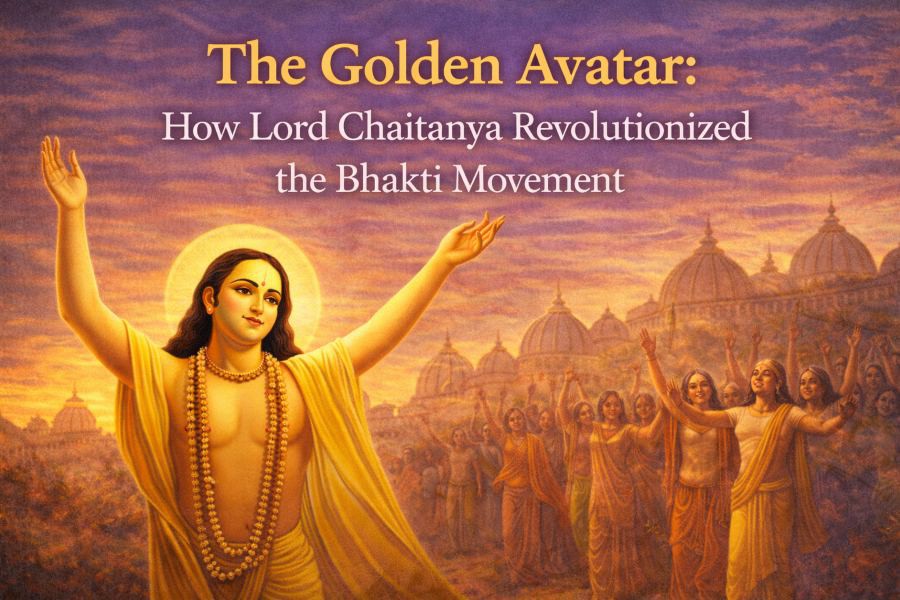 The Golden Avatar: How Lord Chaitanya Revolutionized the Bhakti MovementLearn how Lord Chaitanya Mahaprabhu, known as the Golden Avatar, transformed the Bhakti movement through sankirtan,...Read more
Leave a comment