
Why did Krishna run to embrace a poor brahmin in rags? Read the Sudama story from the Bhagavatam and learn how a...
Latest posts
-
 Krishna and Sudama: The Poor Brahmin Who Became Wealthy in LoveRead more
 -
 Vamana Avatar: How Three Steps Humbled Bali MaharajaRead more
Why did a powerful king give away three worlds to a boy asking for three steps? Learn the Vamana avatar story from...
-
 The Bhagavatam on Marriage: Duty, Love and Spiritual PartnershipRead more
What does the Bhagavatam say about marriage? Through the stories of Kardama and Devahuti, Rukmini's secret letter and...
-
 What Is Prema? The Bhagavatam's Highest Stage of Love for GodRead more
Prema is love for God with no "because" attached. Learn how the Bhagavatam describes it, the nine steps from faith to...
-
 Is Shiva Parvati Kalyana Mentioned in Srimad Bhagavatam? What the Scripture Really SaysRead more
Looking for Shiva and Parvati's wedding in the Srimad Bhagavatam? Find out what the scripture actually describes,...
-
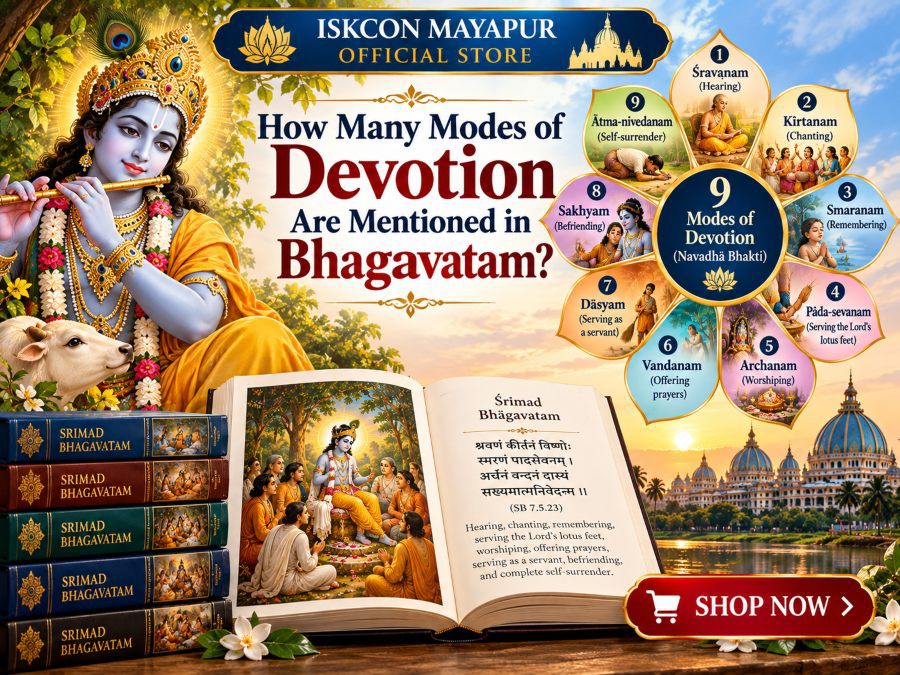 How Many Modes of Devotion Are Mentioned in Bhagavatam?Read more
A young boy named Prahlada listed nine ways to serve God, and the Bhagavatam keeps them as its answer. Learn what the...
-
 What Is Bhagavatam and Why Has It Been Read for 5,000 Years?Read more
A dying king asked one question, and the answer became the Bhagavatam. Learn what this Sanskrit scripture contains,...
-
 Who Is Lord Krishna? His Meaning, Teachings and Pastimes ExplainedRead more
Discover who Krishna is according to Srimad Bhagavatam, including His divine identity, childhood pastimes, teachings,...
-
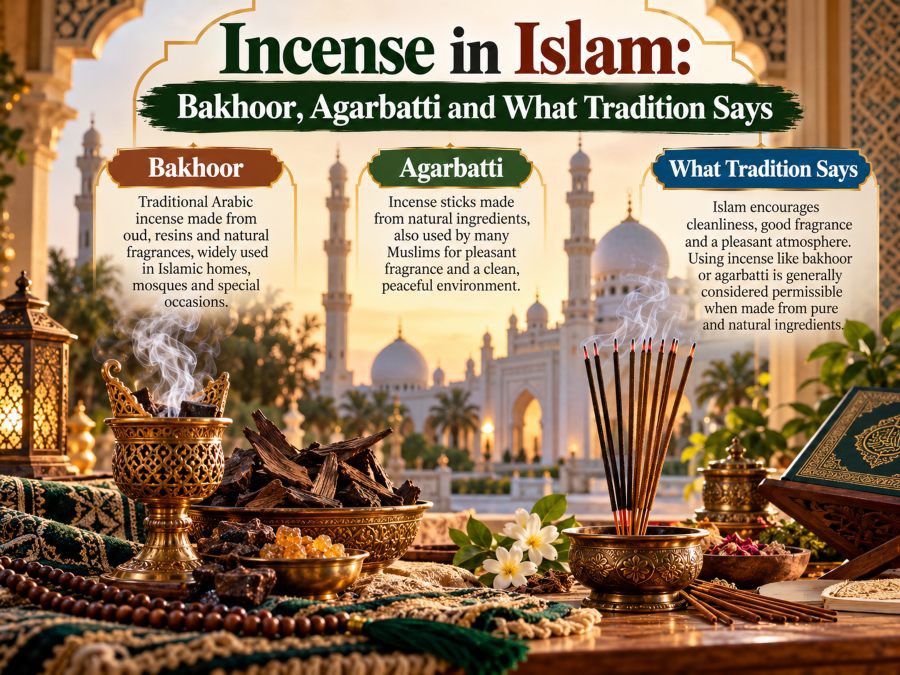 Incense in Islam: Bakhoor, Agarbatti and What Tradition SaysRead more
Is burning fragrance part of Muslim tradition? Explore incense in Islam, from the Prophetic practice of fumigating...
-
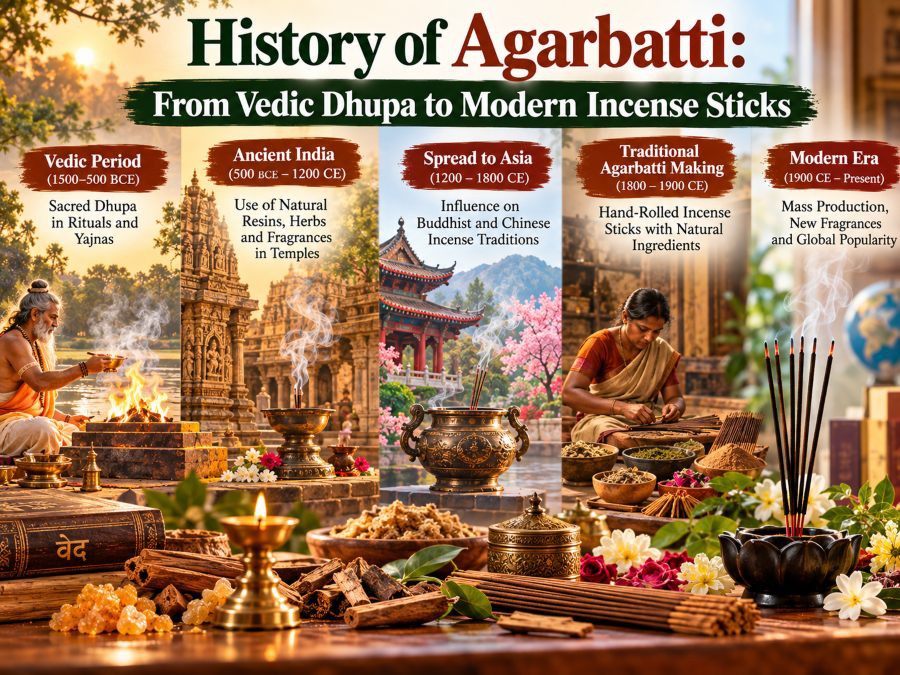 History of Agarbatti: From Vedic Dhupa to Modern Incense SticksRead more
Where did agarbatti really come from? Follow the history of agarbatti from Vedic fire rituals and temple dhupa to...
Blog categories
- Default category (0)
- MUSICAL INSTRUMENT (1)
- BOOK (5)
- DEVOTIONAL GIFT (0)
- Blog (30) click
- CHANDAN (12)
- Bhagavatam Wisdom Series (68)
- Krishna Consciousness (14)
- Mridangam Musical Instrument (6)
- Bhagavad Gita for Beginners (13)
- Bhagavad Gita As It Is (37) click
- Bhagavad Gita As It Is Telugu (0)
- Bhagavad Gita As It Is Marathi (0)
- Bhagavad Gita As It Is In Hindi (0)
- Bhagavad Gita As It Is In English (0)
- Bhagavad Gita As It Is In Bengali (8)
- Bhagavad Gita As It Is In Kannada (0)
- Bhagavad Gita As It Is In Gujarati (0)
- Bhagavad Gita As It Is In Panjabi (0)
- Bhagavad Gita As It Is In Tamil (0)
- Bhagavad Gita As It Is Odia (0)
- BHAGAVAD GITA As It Is GERMAN (0)
- Bhagavad Gita As It Is In French (0)
- Bhagavad Gita As It Is In Nepali (0)
- Bhagavad Gita As It Is In Assamese (0)
- Incense or Agarbatti (38)
- Lord Chaitanya Mahaprabhu (3)
- Vedic Temple Mayapur (14)
- kalki (15)
- Mahabharata – Dharma & Destiny (27)
- Vaishnava Scriptures (4)
- healthy product (4)
- chaitanya mahaprabhu (5)
- Tulsi Mala Guide (17)
Search in blog
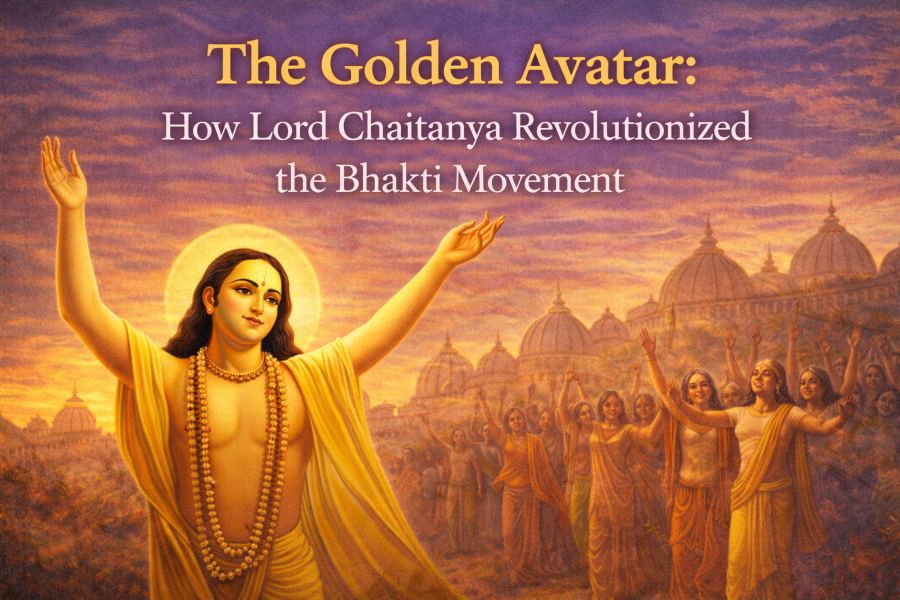
The Golden Avatar: How Lord Chaitanya Revolutionized the Bhakti Movement
The Golden Avatar: How Lord Chaitanya Revolutionized the Bhakti Movement
Throughout the long history of spiritual traditions in India, certain personalities have emerged whose teachings transformed the way people approach devotion and spirituality. Among these luminous figures stands Lord Chaitanya Mahaprabhu, often described by devotees as the “Golden Avatar.” Appearing in the late fifteenth century in the sacred land of Mayapur in Bengal, he brought a wave of spiritual awakening that reshaped the Bhakti movement and inspired millions of devotees across the world.
Today, the life and teachings of this extraordinary spiritual leader are preserved in sacred texts that continue to guide seekers on the path of devotion. Readers who wish to explore these teachings deeply often study the Sri Caitanya Caritamrita Books, which beautifully describe the divine life, philosophy, and devotional mission of Lord Chaitanya. These writings remain among the most influential spiritual works in the Gaudiya Vaishnava tradition and continue to inspire people seeking a deeper connection with the divine.
Lord Chaitanya’s revolution was not political or social in the conventional sense. Instead, it was a revolution of the heart—a movement centered on love, humility, compassion, and the chanting of the holy names of God. His message transcended social barriers and offered a simple yet powerful path to spiritual realization.
To understand the profound impact of Lord Chaitanya’s life and teachings, it is important to explore the historical context of his appearance and the spiritual transformation he inspired.
The Historical Context of the Bhakti Movement
Before the appearance of Lord Chaitanya, India already possessed a rich heritage of devotional spirituality. The Bhakti movement had been gradually developing for centuries, emphasizing devotion to God rather than ritualistic practices or intellectual speculation alone.
Saints and poets from different regions of India taught that sincere love for God was more important than social status or scholarly knowledge. However, spiritual life during certain periods had also become dominated by rigid social hierarchies and complex ritual systems that often limited access to spiritual practices.
Many people felt disconnected from formal religious institutions and longed for a more direct and personal relationship with the divine. It was during this time that Lord Chaitanya appeared and revitalized the Bhakti tradition with extraordinary enthusiasm and spiritual energy.
His teachings brought new life to devotional practice by emphasizing the power of chanting the holy names of God as the most accessible path to spiritual awakening.
The Birth of the Golden Avatar
Lord Chaitanya Mahaprabhu was born in 1486 in the sacred town of Mayapur, located in present-day West Bengal. His birth occurred during a lunar eclipse, a moment when many people were chanting the holy names of God while bathing in the Ganges River.
From his earliest years, the child who would later become known as Chaitanya Mahaprabhu displayed remarkable intelligence and charisma. His given name was Vishvambhar Mishra, though he was affectionately called Nimai because he was born beneath a neem tree.
During his youth, he became famous as a brilliant scholar of Sanskrit grammar and logic. Students and scholars admired his sharp intellect and debating skills.
Yet despite his academic success, his life took a profound spiritual turn that would ultimately change the course of devotional history.
A Transformation into Devotional Ecstasy
As a young adult, Lord Chaitanya experienced a deep spiritual awakening that transformed his priorities and mission in life. His intense devotion to Lord Krishna became the center of his existence.
Rather than focusing on academic debate, he began promoting devotional chanting as the most effective spiritual practice. His spiritual transformation was so powerful that it attracted countless followers who were inspired by his sincerity and emotional devotion.
His teachings emphasized the chanting of the Hare Krishna maha-mantra:
Hare Krishna Hare Krishna
Krishna Krishna Hare Hare
Hare Rama Hare Rama
Rama Rama Hare Hare
According to Lord Chaitanya, this sacred mantra possesses the power to awaken pure love of God within the heart.
The Sankirtan Revolution
Perhaps the most revolutionary aspect of Lord Chaitanya’s mission was the introduction of sankirtan, the congregational chanting of the holy names of God.
Rather than restricting spiritual practices to temples or private meditation, he encouraged people to gather together in joyful public chanting. This practice transformed streets, marketplaces, and homes into spaces of spiritual celebration.
During sankirtan gatherings, devotees sang the names of Krishna accompanied by drums and cymbals, often dancing in ecstatic devotion. These gatherings created a powerful spiritual atmosphere that attracted people from all backgrounds.
The beauty of sankirtan was its simplicity. Anyone could participate, regardless of education, wealth, or social status.
Through this practice, Lord Chaitanya demonstrated that spiritual realization was accessible to everyone.
Breaking Social Barriers
Another revolutionary aspect of Lord Chaitanya’s teachings was his rejection of rigid social divisions that often limited spiritual participation.
In medieval Indian society, strict caste hierarchies sometimes prevented people from certain communities from engaging fully in religious practices.
Lord Chaitanya challenged these limitations by welcoming devotees from diverse social backgrounds into the devotional community.
He emphasized that the true qualification for spiritual life was not birth or social status but sincerity and devotion.
This inclusive message resonated deeply with people who longed for a more compassionate and accessible form of spirituality.
The Philosophy of Divine Love
At the heart of Lord Chaitanya’s teachings was the concept of prema, or divine love for God.
While many philosophical traditions emphasize knowledge or discipline as the primary path to spiritual realization, Lord Chaitanya highlighted the transformative power of love and devotion.
According to his teachings, the ultimate goal of life is to awaken pure love for Krishna. This love is not merely emotional sentiment but a profound spiritual relationship with the divine.
Through chanting, prayer, and service, devotees gradually purify their hearts and develop deeper spiritual awareness.
This philosophy of divine love became one of the defining features of the Gaudiya Vaishnava tradition.
Literary Contributions of His Followers
Although Lord Chaitanya himself wrote very little, his teachings were preserved and expanded by a remarkable group of followers known as the Six Goswamis of Vrindavan.
These scholars and saints produced extensive spiritual literature that explained the philosophical foundations of Lord Chaitanya’s teachings.
Their writings established a rich theological tradition that continues to influence devotional communities today.
Among the most important works describing Lord Chaitanya’s life and mission is the Caitanya Caritamrita, written by Krishnadasa Kaviraja Goswami.
This text remains one of the most authoritative sources for understanding the spiritual significance of the Golden Avatar.
Global Influence of Lord Chaitanya’s Teachings
Although Lord Chaitanya lived in the sixteenth century, his influence continues to expand in the modern world.
In the twentieth century, the teachings of Lord Chaitanya reached global audiences through the efforts of A. C. Bhaktivedanta Swami Prabhupada, the founder of the International Society for Krishna Consciousness (ISKCON).
Through his translations of sacred scriptures and his establishment of spiritual communities around the world, the message of Lord Chaitanya spread far beyond India.
Today, the chanting of the Hare Krishna mantra can be heard in cities across Europe, America, Africa, and Asia.
This global movement reflects the universal appeal of Lord Chaitanya’s message of love, devotion, and spiritual unity.
The Timeless Relevance of the Bhakti Revolution
The spiritual revolution initiated by Lord Chaitanya continues to hold deep relevance in the modern world.
In an era often characterized by stress, material ambition, and social division, his teachings offer a refreshing perspective centered on compassion and spiritual connection.
The practice of chanting, the cultivation of humility, and the emphasis on loving relationships with the divine provide meaningful guidance for individuals seeking deeper fulfillment.
His teachings remind humanity that genuine happiness arises not from external achievements but from the awakening of the heart.
Conclusion: The Eternal Legacy of the Golden Avatar
Lord Chaitanya Mahaprabhu’s appearance marked one of the most profound moments in the history of devotional spirituality. By transforming the Bhakti movement into a vibrant and inclusive spiritual tradition, he created a path accessible to people from all walks of life.
Through the simple yet powerful practice of chanting the holy names of God, he demonstrated that divine love can awaken in any heart willing to approach the divine with sincerity.
Centuries after his appearance, the spiritual revolution he began continues to inspire devotees, scholars, and seekers around the world.
The Golden Avatar’s message remains timeless: through devotion, humility, and the chanting of God’s names, humanity can rediscover its deepest spiritual nature and reconnect with the eternal source of divine love.
Posted in: Chaitanya mahaprabhu
Related posts
-
 How Caitanya Caritamrita Explains the True Meaning of Krishna BhaktiExplore how Caitanya Caritamrita explains the true meaning of Krishna bhakti, revealing the path of pure devotion,...Read more
 -
 7 Life-Changing Lessons from Caitanya Caritamrita for Spiritual GrowthDiscover seven powerful lessons from Caitanya Caritamrita that guide modern spiritual seekers toward humility,...Read more
 -
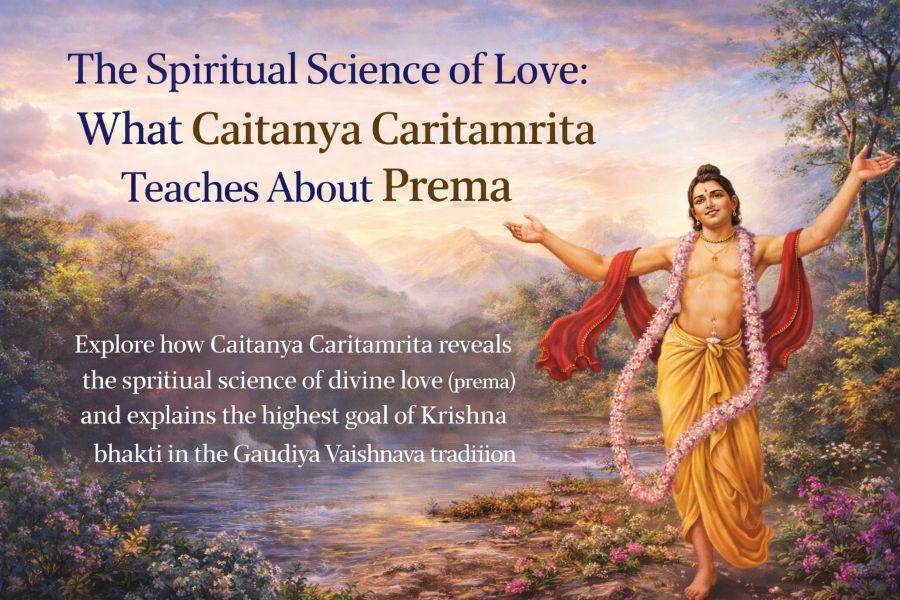 The Spiritual Science of Love: What Caitanya Caritamrita Teaches About PremaExplore how Caitanya Caritamrita reveals the spiritual science of divine love (prema) and explains the highest goal...Read more
 -
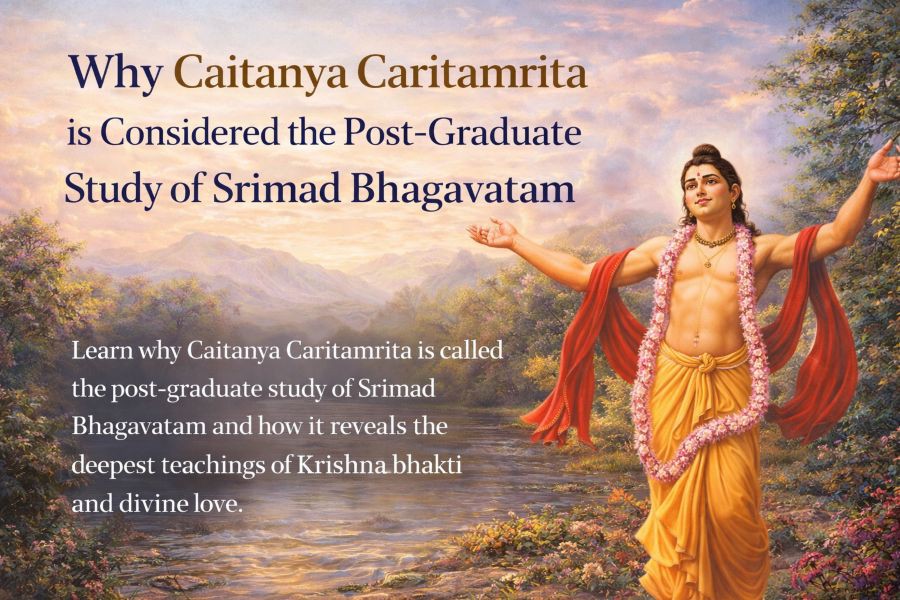 Why Caitanya Caritamrita is Considered the Post-Graduate Study of Srimad BhagavatamLearn why Caitanya Caritamrita is called the post-graduate study of Srimad Bhagavatam and how it reveals the deepest...Read more
Leave a comment