
Why did Krishna run to embrace a poor brahmin in rags? Read the Sudama story from the Bhagavatam and learn how a...
Latest posts
-
 Krishna and Sudama: The Poor Brahmin Who Became Wealthy in LoveRead more
 -
 Vamana Avatar: How Three Steps Humbled Bali MaharajaRead more
Why did a powerful king give away three worlds to a boy asking for three steps? Learn the Vamana avatar story from...
-
 The Bhagavatam on Marriage: Duty, Love and Spiritual PartnershipRead more
What does the Bhagavatam say about marriage? Through the stories of Kardama and Devahuti, Rukmini's secret letter and...
-
 What Is Prema? The Bhagavatam's Highest Stage of Love for GodRead more
Prema is love for God with no "because" attached. Learn how the Bhagavatam describes it, the nine steps from faith to...
-
 Is Shiva Parvati Kalyana Mentioned in Srimad Bhagavatam? What the Scripture Really SaysRead more
Looking for Shiva and Parvati's wedding in the Srimad Bhagavatam? Find out what the scripture actually describes,...
-
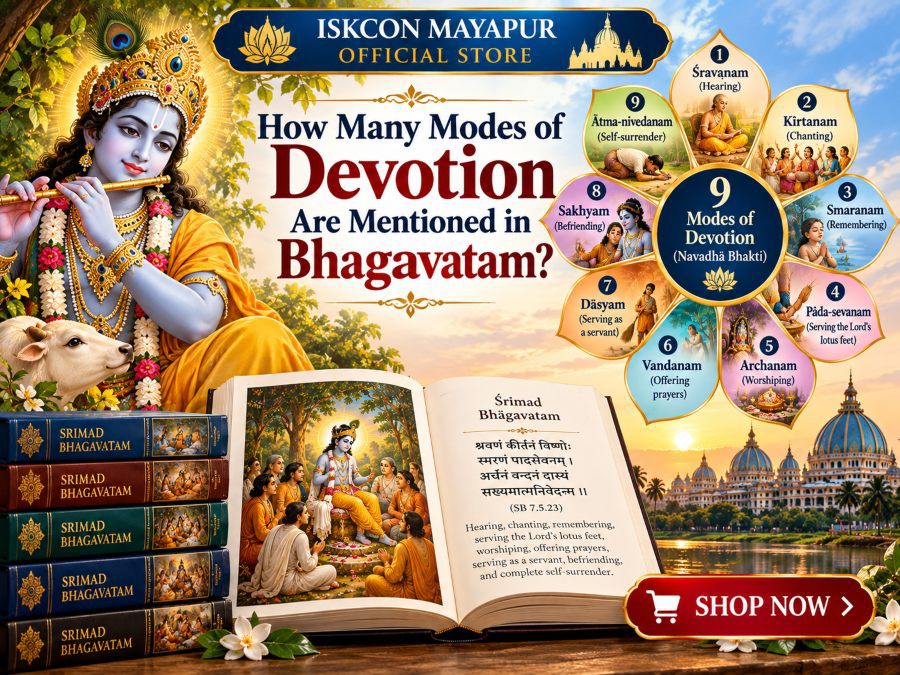 How Many Modes of Devotion Are Mentioned in Bhagavatam?Read more
A young boy named Prahlada listed nine ways to serve God, and the Bhagavatam keeps them as its answer. Learn what the...
-
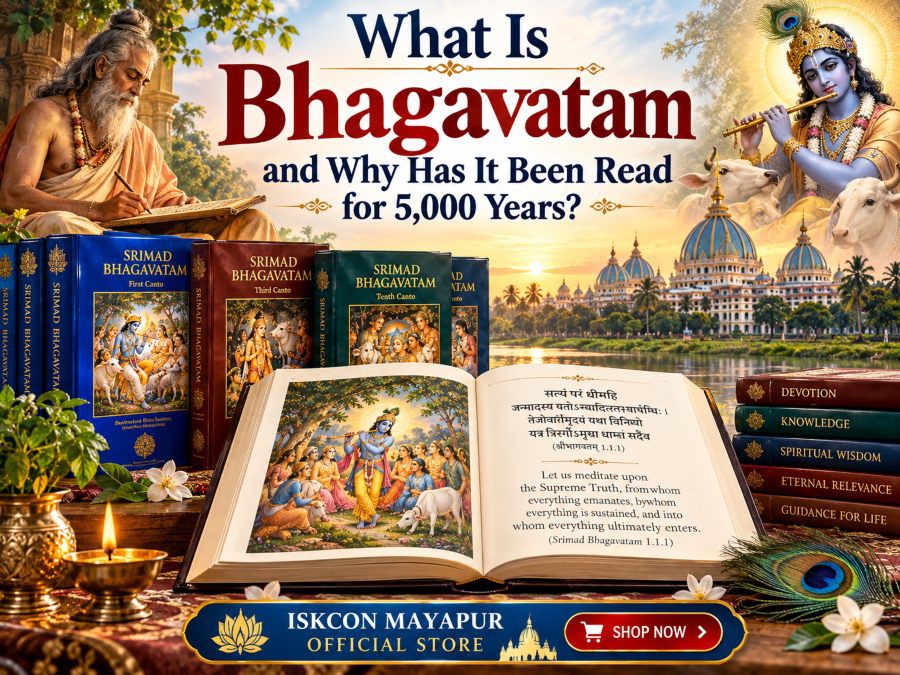 What Is Bhagavatam and Why Has It Been Read for 5,000 Years?Read more
A dying king asked one question, and the answer became the Bhagavatam. Learn what this Sanskrit scripture contains,...
-
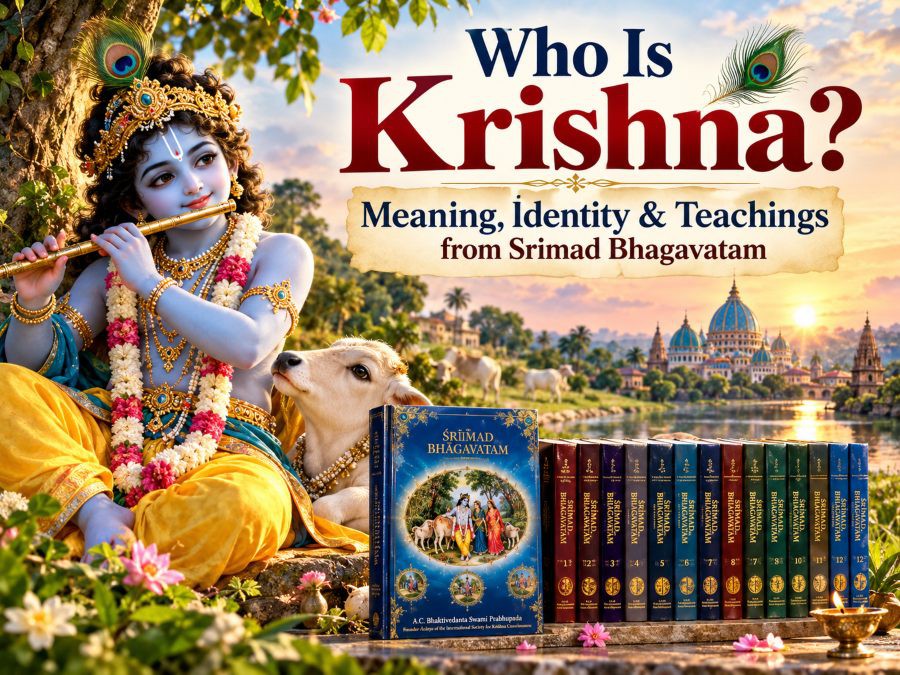 Who Is Lord Krishna? His Meaning, Teachings and Pastimes ExplainedRead more
Discover who Krishna is according to Srimad Bhagavatam, including His divine identity, childhood pastimes, teachings,...
-
 Incense in Islam: Bakhoor, Agarbatti and What Tradition SaysRead more
Is burning fragrance part of Muslim tradition? Explore incense in Islam, from the Prophetic practice of fumigating...
-
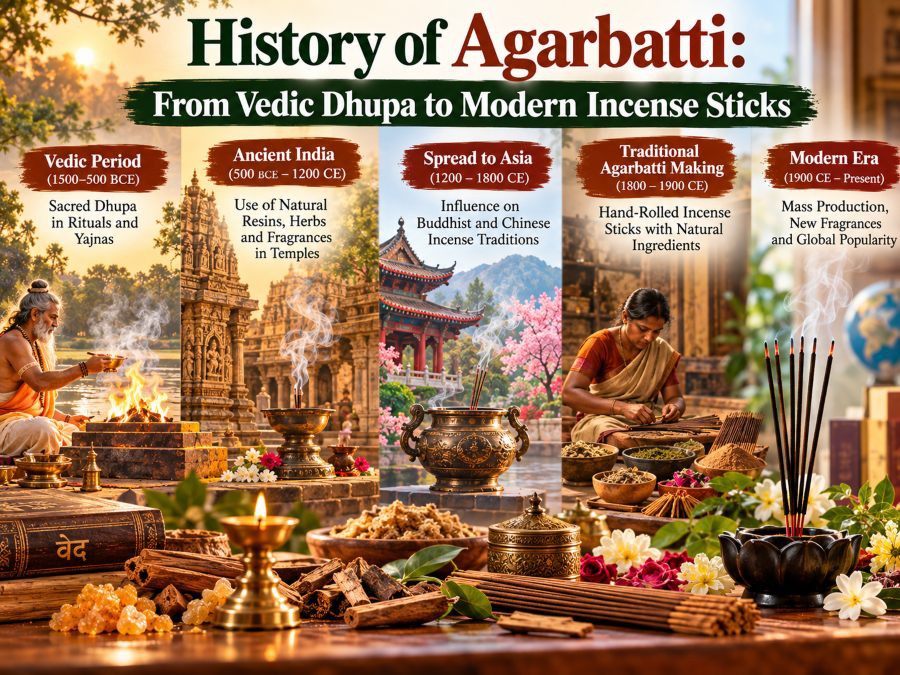 History of Agarbatti: From Vedic Dhupa to Modern Incense SticksRead more
Where did agarbatti really come from? Follow the history of agarbatti from Vedic fire rituals and temple dhupa to...
Blog categories
- Default category (0)
- MUSICAL INSTRUMENT (1)
- BOOK (5)
- DEVOTIONAL GIFT (0)
- Blog (30) click
- CHANDAN (12)
- Bhagavatam Wisdom Series (68)
- Krishna Consciousness (14)
- Mridangam Musical Instrument (6)
- Bhagavad Gita for Beginners (13)
- Bhagavad Gita As It Is (37) click
- Bhagavad Gita As It Is Telugu (0)
- Bhagavad Gita As It Is Marathi (0)
- Bhagavad Gita As It Is In Hindi (0)
- Bhagavad Gita As It Is In English (0)
- Bhagavad Gita As It Is In Bengali (8)
- Bhagavad Gita As It Is In Kannada (0)
- Bhagavad Gita As It Is In Gujarati (0)
- Bhagavad Gita As It Is In Panjabi (0)
- Bhagavad Gita As It Is In Tamil (0)
- Bhagavad Gita As It Is Odia (0)
- BHAGAVAD GITA As It Is GERMAN (0)
- Bhagavad Gita As It Is In French (0)
- Bhagavad Gita As It Is In Nepali (0)
- Bhagavad Gita As It Is In Assamese (0)
- Incense or Agarbatti (38)
- Lord Chaitanya Mahaprabhu (3)
- Vedic Temple Mayapur (14)
- kalki (15)
- Mahabharata – Dharma & Destiny (27)
- Vaishnava Scriptures (4)
- healthy product (4)
- chaitanya mahaprabhu (5)
- Tulsi Mala Guide (17)
Search in blog
Concept of Time (Kala) in Srimad Bhagavatam: Meaning, Cosmic Cycles, and Spiritual Significance
Concept of Time (Kala) in Srimad Bhagavatam
Introduction: Why Time (Kala) Is So Important in the Srimad Bhagavatam
Time governs everything we experience—birth and death, growth and decay, happiness and loss. In modern thinking, time is often reduced to clocks, calendars, and deadlines. But the Srimad Bhagavatam presents time (kala) as something far deeper, more powerful, and profoundly spiritual.
In this sacred text, Time is not just a measurement—it is a divine force. Kala is described as the energy of the Supreme Lord that activates creation, maintains cosmic order, and ultimately dissolves everything back into its source. Nothing in the universe can escape its influence.
This article presents a of the concept of Time (Kala) according to the Srimad Bhagavatam, covering its definition, cosmic role, relationship with God, connection to karma and death, and its relevance in daily life.
READ ALSO:- Teachings of Srimad Bhagavatam Explained: Soul, Karma, God & Bhakti
Meaning of Kala: Time as a Divine Principle
The Sanskrit word kala means time, but it also carries meanings such as:
- Death
- Destiny
- Eternal controller
- Transforming force
In the Srimad Bhagavatam, kala is not independent. It is described as an aspect of the Supreme Personality of Godhead, functioning as His invisible authority within the material world.
Time is what:
- Makes things appear
- Allows them to exist
- Forces them to change
- Ultimately destroys them
Thus, time is both creative and destructive.
Time as the Power That Moves the Universe
According to the Bhagavatam, matter by itself is inactive. The universe does not function randomly or mechanically. It begins to move only when time enters it.
Before creation:
- Elements exist in a dormant state
- Nature is inactive
- No transformation occurs
When kala acts:
- Creation begins
- Elements interact
- Life manifests
In this way, time is the activating energy of cosmic existence.
Kala and the Supreme Controller
One of the Bhagavatam’s most striking teachings is that time is controlled by God, not the other way around.
- God exists beyond time
- Time works under divine command
- The Lord remains unchanged while time changes everything else
This establishes a clear hierarchy:
God → Time → Nature → Living beings
While living beings fear time, the Supreme Lord uses time as His instrument.
Time as the Destroyer of All Things
.jpg)
The Srimad Bhagavatam repeatedly reminds readers of a sobering truth: nothing material is permanent.
Time:
- Destroys youth
- Destroys beauty
- Destroys power
- Destroys civilizations
Even the greatest kings, empires, and worlds are swallowed by kala. This teaching is not meant to cause fear, but detachment and wisdom.
Time teaches humility by proving that no one controls material existence.
Kala and Death: The Final Authority
In the Bhagavatam, death is described as the most visible form of time.
- Time matures the body
- Time weakens it
- Time ends it
Death is not accidental; it is time arriving at its destined moment. This understanding removes randomness from life and places everything under divine order.
For the wise, this awareness leads to:
- Reduced attachment
- Increased urgency for spiritual life
- Focus on eternal values
Time and Karma: The Law of Reaction
The Srimad Bhagavatam connects time with karma in a very precise way.
- Karma stores reactions
- Time delivers those reactions
- No reaction is immediate or lost
A person may forget their actions, but time never forgets. It ensures that every deed produces its result at the correct moment.
Thus, kala is the administrator of justice in the universe.
Cyclical Time: The Bhagavatam’s Vision of History
Unlike modern linear concepts of time, the Srimad Bhagavatam describes cyclical time.
The Yuga System
Time moves through repeating ages:
- Satya Yuga
- Treta Yuga
- Dvapara Yuga
- Kali Yuga
Each age reflects a gradual decline in:
- Truthfulness
- Compassion
- Spiritual awareness
This cycle repeats endlessly, showing that history is patterned, not chaotic.
Larger Time Cycles: Beyond Human Imagination
The Bhagavatam expands time to a cosmic scale:
- Thousands of yuga cycles form one day of the creator
- Creation and destruction happen repeatedly
- Universes appear and disappear
This perspective makes human lifespan appear insignificant, encouraging humility and spiritual focus.
Time as the Cause of Fear for the Materialist
For those attached to material enjoyment, time is an enemy:
- It takes away possessions
- It ends relationships
- It brings old age and death
The Bhagavatam explains that fear arises because people:
- Identify with the temporary body
- Seek permanence in impermanent things
Thus, fear of time is actually fear of loss of illusion.
Time as a Friend of the Devotee
For devotees, time has a completely different role.
- Time brings them closer to God
- Time purifies their attachments
- Time reminds them of the eternal
A devotee sees time as God’s mercy, guiding them away from illusion and toward truth.
Thus, kala is not feared but respected.
Transcending Time Through Bhakti
One of the Bhagavatam’s most beautiful teachings is that devotion allows one to transcend time.
Through bhakti:
- One becomes detached from material identity
- One connects with the eternal
- One experiences inner freedom
Although the body remains under time, the consciousness rises above it.
This state is described as liberation while living.
Time and the Eternal Soul
The Srimad Bhagavatam makes a clear distinction:
- The body is temporary
- Time destroys the body
- The soul is eternal
Time has no power over the soul. It can only affect matter.
Realizing this truth frees a person from anxiety and despair.
The Ultimate Role of Time: Bringing Souls Back to God
According to the Bhagavatam, the ultimate purpose of time is not punishment but correction.
Time:
- Breaks false pride
- Ends false attachments
- Pushes the soul toward surrender
In this sense, kala is a divine teacher, not a cruel force.
Time in Kali Yuga: A Special Emphasis
In the present age, time moves quickly and destructively:
- Short lifespans
- Weak bodies
- Constant anxiety
The Bhagavatam warns that Kali Yuga intensifies the power of time—but also provides the easiest spiritual solution: devotion through remembrance and chanting.
Practical Lessons from the Bhagavatam’s Concept of Time
Understanding kala leads to:
- Wise use of time
- Reduced procrastination
- Focus on lasting values
- Spiritual urgency
Time should be invested, not wasted—especially in pursuits that outlive death.
Time, Eternity, and Divine Pastimes
Although time governs the material world, the Bhagavatam explains that divine pastimes exist beyond time.
In the spiritual realm:
- There is no decay
- No death
- No fear
This shows that time is situational, not absolute.
Conclusion: Kala as the Silent Messenger of Truth
According to the Srimad Bhagavatam, time is the most powerful teacher in the universe.
It teaches that:
- Everything material is temporary
- Only the soul is eternal
- God alone stands beyond time
For the ignorant, time destroys.
For the wise, time instructs.
For the devotee, time liberates.
Understanding kala transforms fear into wisdom and anxiety into purpose. The Srimad Bhagavatam invites us not to fight time—but to use it to awaken eternal consciousness.
Posted in: Bhagavatam Wisdom Series
Related posts
-
 Why to read srimad bhagavatamReading the Srimad Bhagavatam fosters deep spiritual growth by narrating the life and teachings of Lord Krishna,...Read more
 -
 When was srimad bhagavatam written?The Srimad Bhagavatam is believed to have been written around 9th-10th century CE, though its oral traditions date...Read more
 -
 How many chapters are there in srimad bhagavatam?The Srimad Bhagavatam consists of 12 cantos (books) containing 335 chapters in total. Each canto covers various...Read more
 -
 How many skandhas are there in srimad bhagavatamThe Srimad Bhagavatam is divided into 12 skandhas (cantos or books). Each skandha explores different themes,...Read more
 -
 How many slokas in srimad bhagavatamThe Srimad Bhagavatam contains approximately 18,000 shlokas (verses). These verses are spread across its 12 skandhas...Read more
Leave a comment