
Why did Krishna run to embrace a poor brahmin in rags? Read the Sudama story from the Bhagavatam and learn how a...
Latest posts
-
 Krishna and Sudama: The Poor Brahmin Who Became Wealthy in LoveRead more
 -
 Vamana Avatar: How Three Steps Humbled Bali MaharajaRead more
Why did a powerful king give away three worlds to a boy asking for three steps? Learn the Vamana avatar story from...
-
 The Bhagavatam on Marriage: Duty, Love and Spiritual PartnershipRead more
What does the Bhagavatam say about marriage? Through the stories of Kardama and Devahuti, Rukmini's secret letter and...
-
 What Is Prema? The Bhagavatam's Highest Stage of Love for GodRead more
Prema is love for God with no "because" attached. Learn how the Bhagavatam describes it, the nine steps from faith to...
-
 Is Shiva Parvati Kalyana Mentioned in Srimad Bhagavatam? What the Scripture Really SaysRead more
Looking for Shiva and Parvati's wedding in the Srimad Bhagavatam? Find out what the scripture actually describes,...
-
 How Many Modes of Devotion Are Mentioned in Bhagavatam?Read more
A young boy named Prahlada listed nine ways to serve God, and the Bhagavatam keeps them as its answer. Learn what the...
-
 What Is Bhagavatam and Why Has It Been Read for 5,000 Years?Read more
A dying king asked one question, and the answer became the Bhagavatam. Learn what this Sanskrit scripture contains,...
-
 Who Is Lord Krishna? His Meaning, Teachings and Pastimes ExplainedRead more
Discover who Krishna is according to Srimad Bhagavatam, including His divine identity, childhood pastimes, teachings,...
-
 Incense in Islam: Bakhoor, Agarbatti and What Tradition SaysRead more
Is burning fragrance part of Muslim tradition? Explore incense in Islam, from the Prophetic practice of fumigating...
-
 History of Agarbatti: From Vedic Dhupa to Modern Incense SticksRead more
Where did agarbatti really come from? Follow the history of agarbatti from Vedic fire rituals and temple dhupa to...
Blog categories
- Default category (0)
- MUSICAL INSTRUMENT (1)
- BOOK (5)
- DEVOTIONAL GIFT (0)
- Blog (30) click
- CHANDAN (12)
- Bhagavatam Wisdom Series (68)
- Krishna Consciousness (14)
- Mridangam Musical Instrument (6)
- Bhagavad Gita for Beginners (13)
- Bhagavad Gita As It Is (37) click
- Bhagavad Gita As It Is Telugu (0)
- Bhagavad Gita As It Is Marathi (0)
- Bhagavad Gita As It Is In Hindi (0)
- Bhagavad Gita As It Is In English (0)
- Bhagavad Gita As It Is In Bengali (8)
- Bhagavad Gita As It Is In Kannada (0)
- Bhagavad Gita As It Is In Gujarati (0)
- Bhagavad Gita As It Is In Panjabi (0)
- Bhagavad Gita As It Is In Tamil (0)
- Bhagavad Gita As It Is Odia (0)
- BHAGAVAD GITA As It Is GERMAN (0)
- Bhagavad Gita As It Is In French (0)
- Bhagavad Gita As It Is In Nepali (0)
- Bhagavad Gita As It Is In Assamese (0)
- Incense or Agarbatti (38)
- Lord Chaitanya Mahaprabhu (3)
- Vedic Temple Mayapur (14)
- kalki (15)
- Mahabharata – Dharma & Destiny (27)
- Vaishnava Scriptures (4)
- healthy product (4)
- chaitanya mahaprabhu (5)
- Tulsi Mala Guide (17)
Search in blog
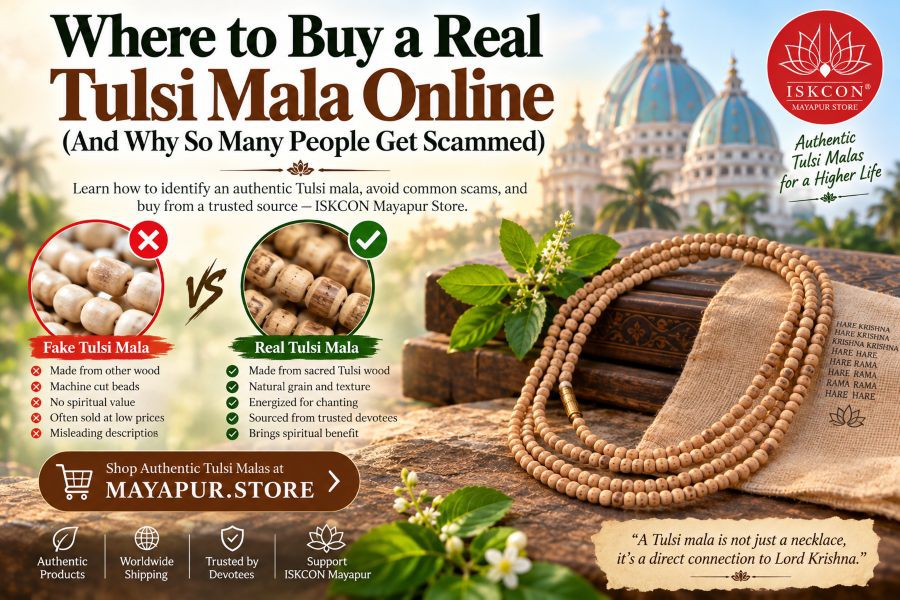
Where to Buy a Real Tulsi Mala Online
Where to Buy a Real Tulsi Mala Online (And Why So Many People Get Scammed)
Walk into almost any tourist market in India and you'll find a stall selling "tulsi beads" for twenty rupees a string. Half the time, they're dyed rudraksha offcuts or, worse, plastic dressed up to look like wood. The person selling them probably doesn't even know the difference. You certainly won't, not until the beads start peeling or the colour rubs off on your palm after the first rain.
This is the actual problem with buying a Tulsi Mala online or offline: it's one of the few religious items where the seller's honesty matters more than their marketing. A mala isn't jewellery you wear for looks. For a devotee, it's worn against the skin every day, sometimes for decades, and it's meant to carry a specific spiritual weight. Buying a fake one doesn't just waste your money — it hollows out the entire point of wearing it.
So where do you actually find genuine tulsi wood, and how do you avoid the twenty-rupee plastic trap? That's what this guide is for. If you'd rather skip the explanation and go straight to the source, ISKCON Mayapur's collection of genuine tulsi wood malas is sold directly by the temple community that uses them every day. But if you want to understand why sourcing matters this much, keep reading.
Why "Tulsi Mala" Has Become Such a Messy Search Term
Type "tulsi mala" into any shopping site and you'll get results ranging from ₹15 to ₹1,500 for what looks, on screen, like the exact same product. That price spread alone should tell you something is off. Wood doesn't cost that differently unless the raw material, the labour, or the honesty involved is wildly different between sellers.
Part of the confusion comes from how loosely the term gets used. Some sellers slap "tulsi" on anything pale and wooden. Others genuinely don't know their supply chain — they buy in bulk from a wholesaler who may or may not be telling the truth. And a small number are outright counterfeiting, because tulsi wood beads have become popular enough that faking them is profitable.
None of this is really the buyer's fault. Most people have never held real tulsi wood in their hands, so they have no baseline to compare against. That's exactly what makes online buying risky — you can't smell the bead, can't feel its weight, can't rub a damp cloth on it to see if colour comes off. You're trusting a photo and a product description, and both can lie.
What Actually Separates a Real Tulsi Mala From a Fake One
Before you even think about where to shop, it helps to know what you're supposed to be getting. A genuine tulsi bead comes from the stem of the tulsi plant — not the leaves, not a seed, the actual woody stem, dried and cut. Here's what that means practically:
- The colour should be pale and uneven. Cream, sand, sometimes a grey-brown patch here and there. If every bead on the strand is a uniform, glossy brown, that's usually dye, not wood.
- It should feel almost weightless. Tulsi wood is light. If a mala feels heavy in your palm, you're probably holding something else entirely.
- The grain should be visible. Faint natural lines, the odd fleck of darker wood. A perfectly smooth, plastic-looking surface is a red flag.
- No two beads should be identical. Hand-cut wood has natural variation. Rows of beads that look machine-stamped identical usually are — and tulsi wood isn't typically machine-turned at that scale.
None of these checks are foolproof on their own. But together, they're a decent filter, and they matter even more when you're buying from a photo rather than in person.
The Real Problem: You Can't Verify a Stranger's Word
Here's the uncomfortable truth about buying online. Almost every marketplace listing says "100% genuine tulsi wood." That claim costs nothing to type and means nothing on its own. A seller with zero accountability has no reason to be honest, because by the time you notice the beads are wrong, they've already got your money and moved on to the next listing.
What actually protects you isn't a badge or a five-star rating that can be bought. It's traceability — knowing exactly who made the mala, and whether that person or organisation has any reason to care about getting it right.
This is where buying from a devotional source, rather than a general marketplace, changes the equation. A temple-run store isn't selling tulsi malas as a side hustle among a thousand unrelated products. The people packing your order likely wear the same malas themselves. Their reputation in a fairly tight community is on the line every time a mala goes out the door. That's a very different incentive structure than an anonymous seller account with no name attached.
Where to Actually Buy One
Let's get specific, because "buy from somewhere trustworthy" isn't useful advice on its own.
Temple-affiliated stores. This is the safest bet by a wide margin. ISKCON temples, and Gaudiya Vaishnava institutions more broadly, have been sourcing and distributing tulsi malas for decades as part of their regular devotional activity — not as an afterthought. If you're new to this world, it's worth knowing that ISKCON's foundational teachings, including works like the ISKCON Bhagavad Gita, come from the same tradition and the same community that has quietly maintained tulsi-growing and bead-making practices for generations. Buying from a source connected to that lineage isn't just about the wood — it's about buying from people who understand what the mala is actually for.
Local Vaishnava or Krishna-conscious communities. If there's an ISKCON centre or a Gaudiya Vaishnava temple near you, many keep a small stock of malas, or can point you to a trusted local craftsperson. This won't work for everyone, but it's worth checking before defaulting to an anonymous online listing.
Vrindavan and Mayapur, if you're travelling. These two places are, historically, where most authentic tulsi cultivation and bead-cutting happens at scale. If you're on pilgrimage, buying directly there — ideally from a temple shop rather than a street stall outside the gates — is about as close to the source as you can get.
What to avoid, specifically:
- Marketplace listings with no seller information beyond a shop name
- Sellers who can't answer a basic question about where the wood comes from
- Suspiciously uniform, glossy, dark-brown beads at rock-bottom prices
- Any listing that doesn't mention tulsi wood specifically, just "wooden beads" or "spiritual mala"
A Quick Gut-Check Before You Click "Buy"
If you're staring at a listing right now trying to decide, run through this in your head:
1. Does the seller name a specific origin? Vague "handmade in India" claims are weaker than a seller who's clearly connected to a temple or a known devotional source.
2. Are the photos close-up and varied? One blurry stock photo is a bad sign. Multiple angles, ideally with some visible bead irregularity, are a good one.
3. Is the price suspiciously low? Genuine, hand-cut tulsi wood takes time and skilled labour to produce. If it's priced like a factory keychain, it probably was made like one.
4. Can you find any independent trace of the seller? A temple with a physical address and a known community is verifiable in a way an anonymous storefront isn't.
None of this guarantees perfection, but it stacks the odds heavily in your favour.
What Happens After You Buy — Don't Skip This Part
Even a genuine mala needs a bit of common sense once it arrives. Rinse it gently if it needs cleaning — plain water is fine, soap and perfume are not, since both dull the wood and weaken the thread over time. Keep it away from the floor when you take it off. If a bead cracks or the string frays, that's not a sign of a fake mala; cotton thread and soft wood both wear with use, and a five-minute restring solves it.
What you shouldn't do is panic the first time the colour deepens slightly after a few months of wear. That's tulsi wood absorbing skin oils and handling, which is exactly what it's supposed to do. A mala that looks identical five years in is usually the one that was never actually worn.
The Honest Bottom Line
You can't fully verify a Tulsi Mala from a photo, and anyone who tells you otherwise is oversimplifying. What you can do is stack the odds in your favour: buy from a source with a real, traceable connection to the tradition, check the basic physical signs of genuine wood, and be suspicious of anything priced like a novelty item.
A mala from a source with nothing to lose by lying to you is a gamble. A mala from a community that's been doing this for generations, and has its own reputation riding on getting it right, is about as close to a sure thing as this category gets.
Posted in: Tulsi Mala Guide
Related posts
-
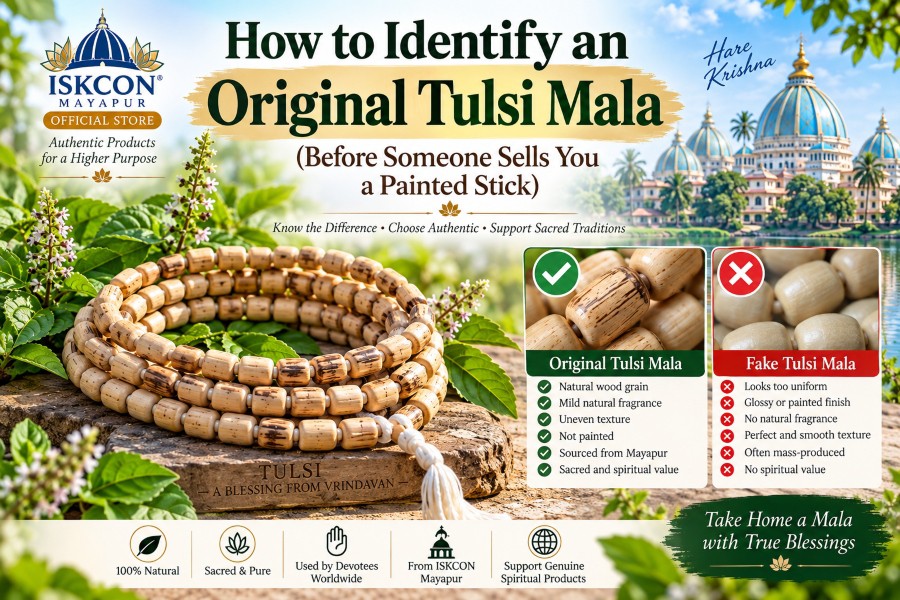 How to Identify an Original Tulsi Mala (Before Someone Sells You a Painted Stick)Most fake tulsi beads look convincing in a photo but fail the moment you hold them. Here are the weight, smell,...Read more
 -
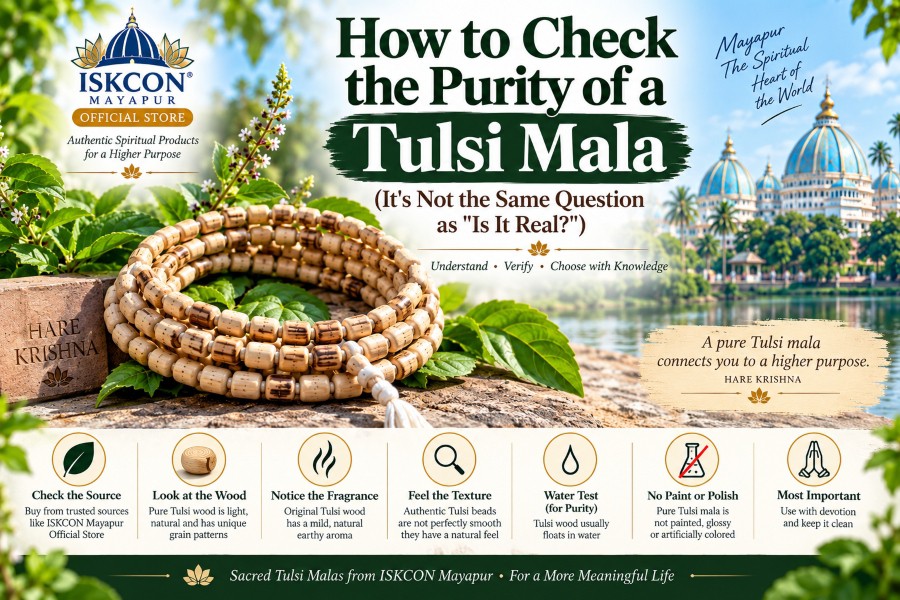 How to Check the Purity of a Tulsi Mala (It's Not the Same Question as "Is It Real?")Purity isn't the same as authenticity. Here's how to check both — whether the beads are genuinely tulsi wood, and...Read more
 -
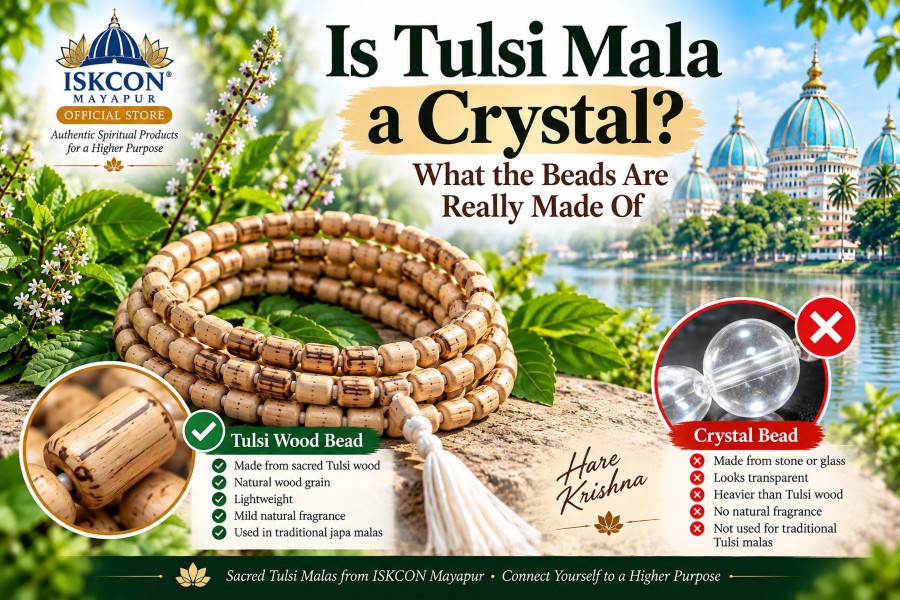 Is Tulsi Mala a Crystal? What the Beads Are Really Made OfTulsi malas often get mistaken for crystal jewellery online. Here's what tulsi beads are actually made of, why the...Read more
 -
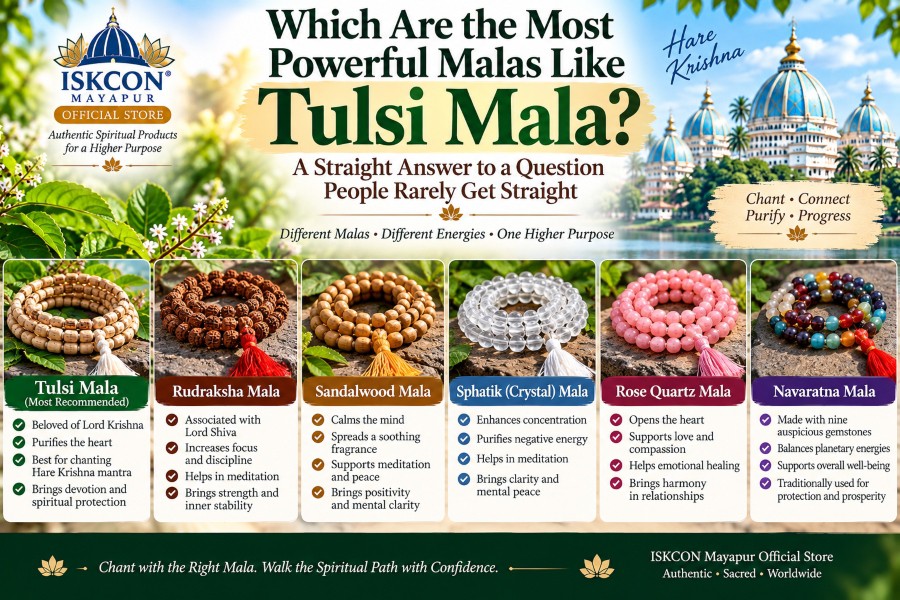 Which Are the Most Powerful Malas Like Tulsi Mala? A Straight Answer to a Question People Rarely Get StraightTulsi, rudraksha, sphatik, sandalwood, and navratna are all called "powerful" — but each belongs to a different...Read more
 -
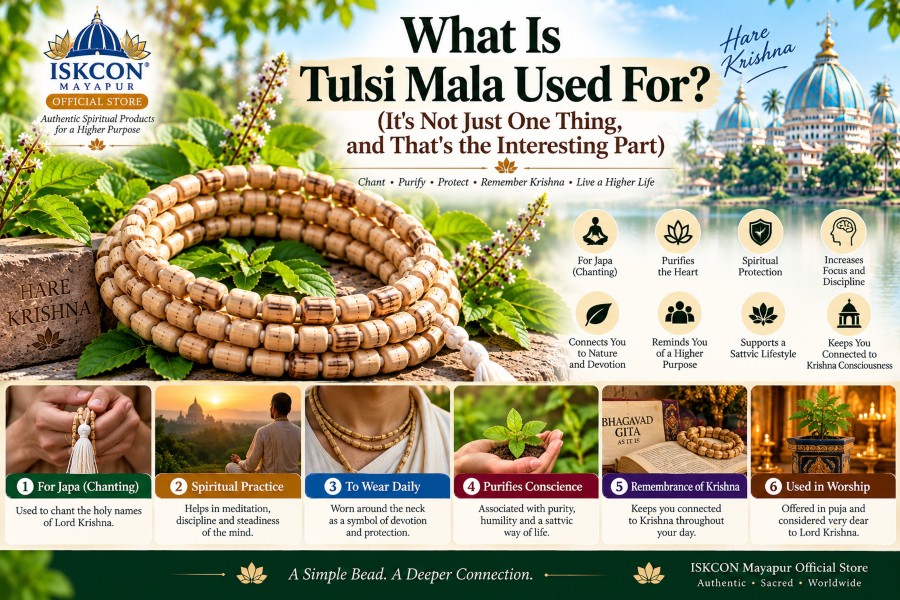 What Is Tulsi Mala Used For? (It's Not Just One Thing, and That's the Interesting Part)A Tulsi Mala isn't just one thing — it's worn daily, used to count mantras, given as a spiritual milestone gift, and...Read more
Leave a comment