
Why did Krishna run to embrace a poor brahmin in rags? Read the Sudama story from the Bhagavatam and learn how a...
Latest posts
-
 Krishna and Sudama: The Poor Brahmin Who Became Wealthy in LoveRead more
 -
 Vamana Avatar: How Three Steps Humbled Bali MaharajaRead more
Why did a powerful king give away three worlds to a boy asking for three steps? Learn the Vamana avatar story from...
-
 The Bhagavatam on Marriage: Duty, Love and Spiritual PartnershipRead more
What does the Bhagavatam say about marriage? Through the stories of Kardama and Devahuti, Rukmini's secret letter and...
-
 What Is Prema? The Bhagavatam's Highest Stage of Love for GodRead more
Prema is love for God with no "because" attached. Learn how the Bhagavatam describes it, the nine steps from faith to...
-
 Is Shiva Parvati Kalyana Mentioned in Srimad Bhagavatam? What the Scripture Really SaysRead more
Looking for Shiva and Parvati's wedding in the Srimad Bhagavatam? Find out what the scripture actually describes,...
-
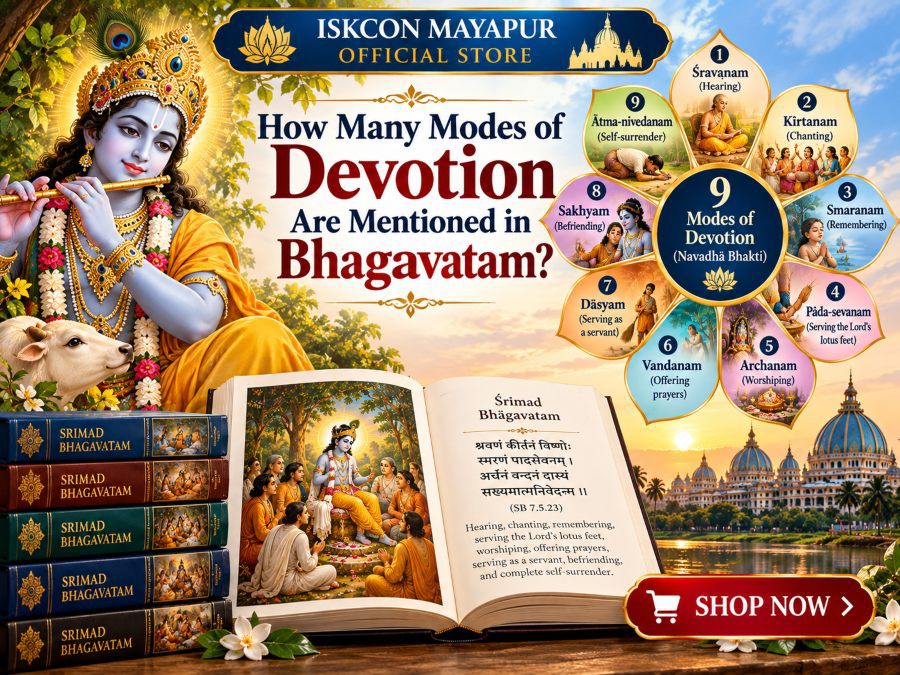 How Many Modes of Devotion Are Mentioned in Bhagavatam?Read more
A young boy named Prahlada listed nine ways to serve God, and the Bhagavatam keeps them as its answer. Learn what the...
-
 What Is Bhagavatam and Why Has It Been Read for 5,000 Years?Read more
A dying king asked one question, and the answer became the Bhagavatam. Learn what this Sanskrit scripture contains,...
-
 Who Is Lord Krishna? His Meaning, Teachings and Pastimes ExplainedRead more
Discover who Krishna is according to Srimad Bhagavatam, including His divine identity, childhood pastimes, teachings,...
-
 Incense in Islam: Bakhoor, Agarbatti and What Tradition SaysRead more
Is burning fragrance part of Muslim tradition? Explore incense in Islam, from the Prophetic practice of fumigating...
-
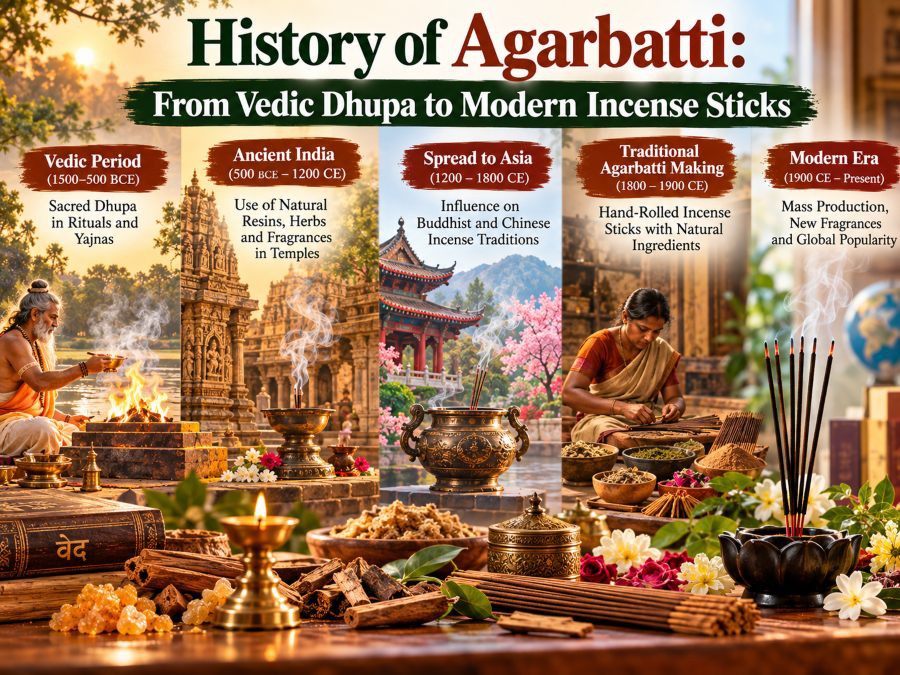 History of Agarbatti: From Vedic Dhupa to Modern Incense SticksRead more
Where did agarbatti really come from? Follow the history of agarbatti from Vedic fire rituals and temple dhupa to...
Blog categories
- Default category (0)
- MUSICAL INSTRUMENT (1)
- BOOK (5)
- DEVOTIONAL GIFT (0)
- Blog (30) click
- CHANDAN (12)
- Bhagavatam Wisdom Series (68)
- Krishna Consciousness (14)
- Mridangam Musical Instrument (6)
- Bhagavad Gita for Beginners (13)
- Bhagavad Gita As It Is (37) click
- Bhagavad Gita As It Is Telugu (0)
- Bhagavad Gita As It Is Marathi (0)
- Bhagavad Gita As It Is In Hindi (0)
- Bhagavad Gita As It Is In English (0)
- Bhagavad Gita As It Is In Bengali (8)
- Bhagavad Gita As It Is In Kannada (0)
- Bhagavad Gita As It Is In Gujarati (0)
- Bhagavad Gita As It Is In Panjabi (0)
- Bhagavad Gita As It Is In Tamil (0)
- Bhagavad Gita As It Is Odia (0)
- BHAGAVAD GITA As It Is GERMAN (0)
- Bhagavad Gita As It Is In French (0)
- Bhagavad Gita As It Is In Nepali (0)
- Bhagavad Gita As It Is In Assamese (0)
- Incense or Agarbatti (38)
- Lord Chaitanya Mahaprabhu (3)
- Vedic Temple Mayapur (14)
- kalki (15)
- Mahabharata – Dharma & Destiny (27)
- Vaishnava Scriptures (4)
- healthy product (4)
- chaitanya mahaprabhu (5)
- Tulsi Mala Guide (17)
Search in blog
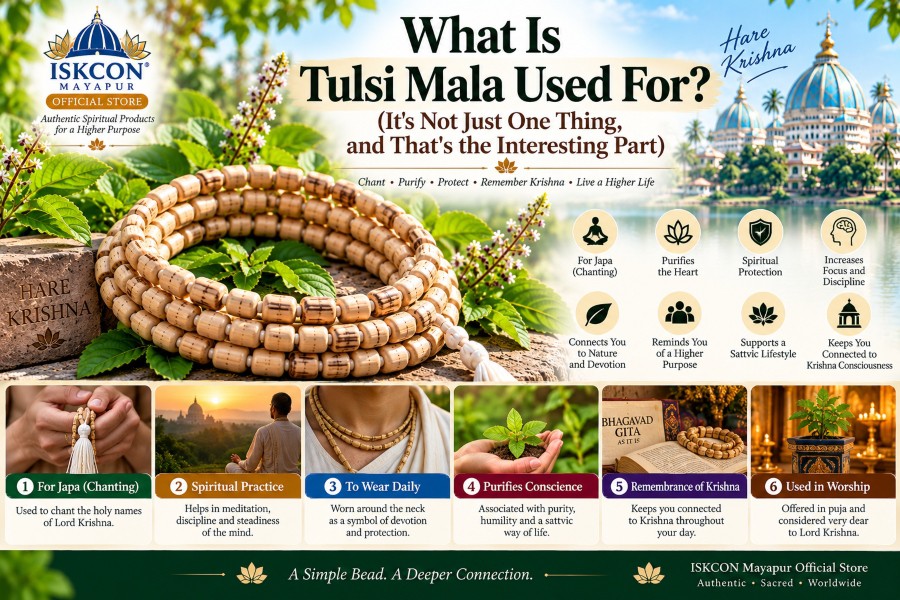
What Is Tulsi Mala Used For? (It's Not Just One Thing, and That's the Interesting Part)
The Real Uses of a Tulsi Mala, Explained
Ask someone who's never encountered one what a string of wooden beads is "for," and you'll usually get a vague guess about meditation. Close, but not really the full picture. A Tulsi Mala actually does several distinct jobs depending on how it's used, worn, and who's wearing it — and most people who buy one only ever discover one of those uses, never realizing the others exist.
That's a shame, because understanding the full range of what a tulsi mala is actually for changes how you think about the object entirely. It stops being "a religious accessory" and starts making sense as a genuinely functional tool that's been refined over centuries for very specific purposes.
This article breaks down every real use case — from daily devotional wear to active mantra counting to symbolic identity — so you know exactly what you're looking at, and which style of Kanthi Tulsi Mala actually fits what you're trying to do.
Use #1: Wearing It Continuously as a Kanthi Mala
The most common use, and the one most people encounter first, is simply wearing tulsi beads around the neck, all day, every day. This is called a kanthi mala — kantha meaning throat — and it's worn continuously rather than used for any active practice during the day.
The purpose here isn't ritual action. It's presence. A kanthi mala functions as a constant, physical reminder of a devotional commitment, worn the same way someone might wear a wedding ring — not because they're actively doing anything with it moment to moment, but because its presence on the body carries meaning throughout the day, whether at work, at home, or anywhere else.
What this use case actually looks like in practice:
- Put on after morning bathing, as part of a daily routine
- Worn under clothing during regular activities — work, travel, errands
- Never removed casually, treated with the same consistency as any daily devotional practice
- Often received at initiation in ISKCON and broader Gaudiya Vaishnava communities, marking a personal commitment to specific standards of living
This is genuinely different from most religious jewellery in other traditions, where symbolic items are often worn occasionally or for special occasions. A kanthi mala's entire function depends on it being there constantly, not pulled out for specific moments.
Use #2: Counting Mantras With a Japa Mala
The second major use is completely different in mechanics, even though it involves what looks like a similar object. A japa mala — specifically strung with 108 beads plus one larger head bead — exists for one active purpose: counting repetitions of a mantra during chanting practice.
Here's how it actually works. You hold the mala in your right hand, resting it over your middle finger, and roll one bead forward with your thumb after completing each mantra. In Gaudiya Vaishnava practice specifically, this usually means chanting the Hare Krishna maha-mantra once per bead. Complete all 108 beads, and you've finished one "round." Practitioners in ISKCON typically commit to sixteen rounds daily — 1,728 individual mantra repetitions, which for most people takes somewhere around two hours.
Why the bead-counting method matters, practically:
- It frees your mind from having to track numbers mentally, letting attention stay on the mantra itself rather than counting
- The physical, repetitive motion creates a rhythm that many practitioners find genuinely supports focus over long chanting sessions
- It provides a concrete, verifiable measure of practice — you know exactly how much you've completed, rather than estimating
This use case treats the mala as active equipment, not passive symbolism. It's handled, moved, and worked with constantly during use, which is part of why japa malas are typically kept in a small protective cloth bag between sessions rather than worn on the body like a kanthi mala.
Use #3: A Visible Marker of Spiritual Identity and Commitment
Beyond the mechanical functions of wearing and counting, tulsi beads serve a third, less discussed purpose: signaling identity, both to others and to the wearer themselves.
Within a devotional community, seeing someone wearing a kanthi mala communicates something immediately, without a word being spoken. It says: this person has made a specific commitment, follows particular standards, and identifies actively with this tradition. That's not a small thing in a community context. It creates instant, wordless recognition between practitioners, the way any shared symbol does within a tradition.
For the wearer, there's a subtler version of this same function pointed inward. Wearing something visible and constant tends to reinforce the commitment it represents, simply through repeated physical awareness of it. Anyone who's worn a fitness tracker, a sobriety token, or any other constant physical reminder knows this effect — the object itself becomes a quiet, ongoing accountability mechanism, separate from whatever symbolic meaning it also carries.
Use #4: Traditional Protection and Purification
Older Vaishnava texts, including references found in the Padma Purana, describe tulsi beads as offering a kind of spiritual protection to the wearer — traditionally framed as warding off negative influences, including specific references to protection related to Yamaraja, the lord of death, in certain passages.
Whether a given reader takes this literally or symbolically, the practical function within the tradition is consistent: tulsi is treated as spiritually purifying, both for the plant itself in temple worship (offered on Deity plates, watered daily in ritual circumambulation) and for the beads made from it worn on the body. This isn't a separate use case exactly, more an underlying layer of meaning present across the other uses — it's part of why wearing tulsi continuously or counting mantras on it is considered meaningful in the first place, rather than an isolated, standalone function.
Use #5: A Practical Gift for Marking Spiritual Milestones
Less discussed, but genuinely common in practice, is tulsi mala's role as a specific kind of gift — one tied to spiritual milestones rather than general occasions. Unlike most gifts, which mark birthdays or holidays, tulsi malas are frequently given to mark:
- Initiation into Krishna consciousness or formal discipleship
- The beginning of a serious chanting practice, when someone commits to daily japa
- Pilgrimage, particularly visits to Vrindavan or Mayapur, where malas are often purchased or received as remembrances
- A significant personal turning point in someone's spiritual life, even outside formal tradition milestones
This use case matters because it means a tulsi mala isn't a generic gift the way, say, a scarf or a book might be. Giving one specifically communicates recognition of a spiritual step someone is taking, which is part of why experienced devotees are often careful about giving one casually or without understanding the recipient's actual practice and preferences around bead count and style.
Which Style Actually Suits Which Use?
Since the uses above are genuinely different, the physical mala that suits each one differs too:
For continuous daily wear (kanthi):
- Two or three loops, worn permanently
- No fixed bead count required
- Typically chosen based on comfort and visual preference rather than any counting function
For active chanting (japa):
- Exactly 108 beads plus one head bead, no exceptions
- Usually a single strand, held rather than worn
- Kept in a cloth bag between sessions to protect it from dirt and casual handling
For gifting at a spiritual milestone:
- Depends entirely on what the recipient needs — a beginner starting chanting practice needs a japa mala, while someone marking initiation more commonly receives a kanthi mala
- Worth asking directly rather than guessing, since bead count and strand preferences genuinely vary by lineage and personal practice
Getting this distinction wrong is a common beginner mistake — buying a beautiful barrel-bead kanthi mala for someone who actually needs a 108-bead japa mala for chanting, or vice versa. The two aren't interchangeable, even though they're made from the same material.
A Use Case People Rarely Mention: Restringing and Repurposing
One practical use that rarely comes up in spiritual discussions but matters in daily life: tulsi malas are meant to be maintained, not discarded, when the thread wears out. Cotton thread eventually frays with regular use, particularly on kanthi malas worn continuously for years. Rather than treating this as the mala's end, most devotees simply restring the same beads onto new thread, sometimes repeatedly over a mala's lifespan.
This matters because it reframes what "using" a tulsi mala actually involves over time. It's not a static object you wear until it eventually breaks and gets replaced. It's something you maintain, much like any tool or possession genuinely integrated into daily life over years rather than treated as disposable.
Putting It All Together
A Tulsi Mala isn't one thing wearing several different hats. It's genuinely several distinct functions — constant devotional presence, active mantra-counting equipment, visible community identity, traditional spiritual protection, and milestone gift — that happen to share the same material and, in many cases, overlapping physical form.
Understanding which function you actually need is the difference between buying something that sits unused in a drawer and buying something that becomes a genuinely integrated part of daily practice. If you're chanting daily, you need a japa mala built for that specific job. If you're marking a personal or spiritual commitment you want to carry with you constantly, a kanthi mala serves that entirely different purpose. Both are real, both are traditional, and knowing the difference before you buy saves you from ending up with the wrong tool for what you're actually trying to do.
Posted in: Tulsi Mala Guide
Related posts
-
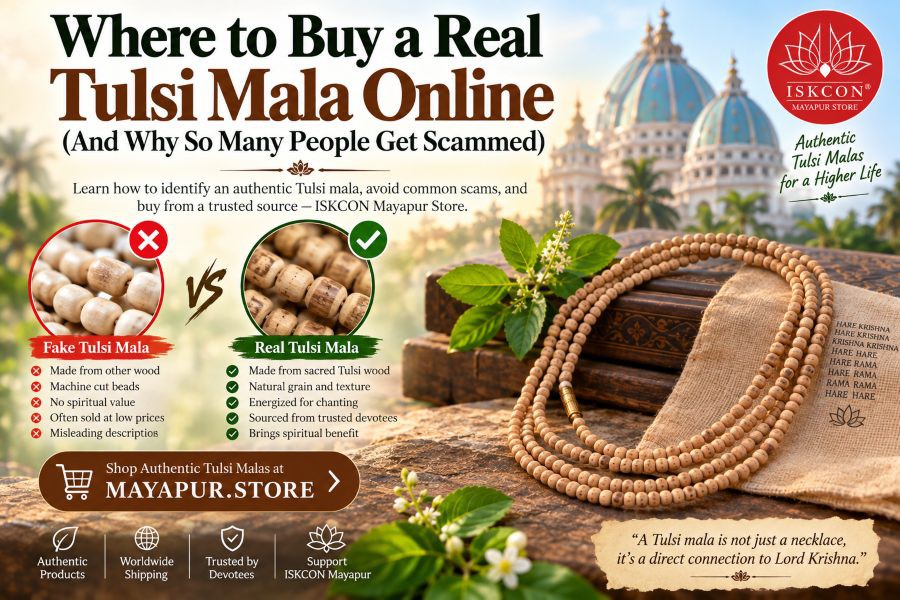 Where to Buy a Real Tulsi Mala Online Most tulsi malas sold online are fake, dyed, or mislabeled. Here's how to spot genuine tulsi wood, why traceability...Read more
 -
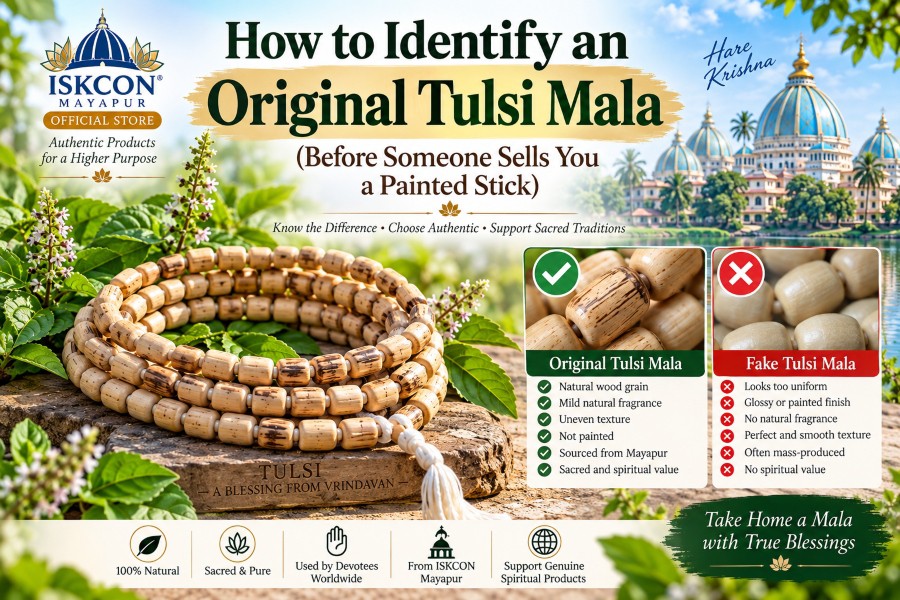 How to Identify an Original Tulsi Mala (Before Someone Sells You a Painted Stick)Most fake tulsi beads look convincing in a photo but fail the moment you hold them. Here are the weight, smell,...Read more
 -
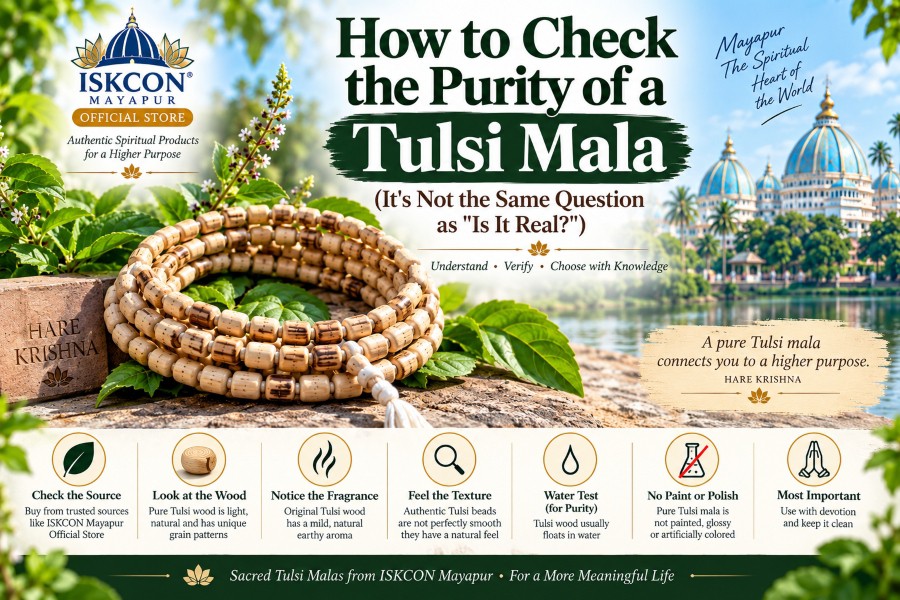 How to Check the Purity of a Tulsi Mala (It's Not the Same Question as "Is It Real?")Purity isn't the same as authenticity. Here's how to check both — whether the beads are genuinely tulsi wood, and...Read more
 -
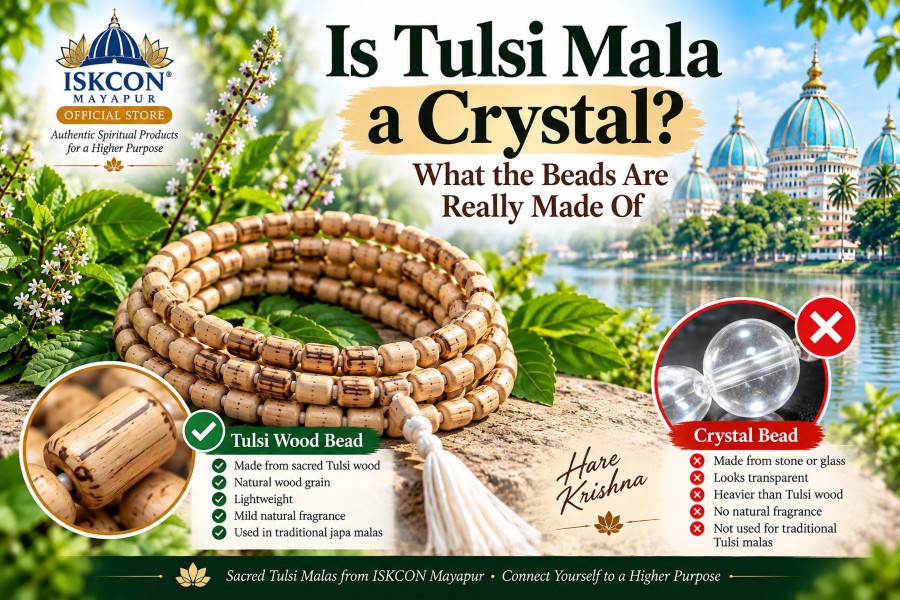 Is Tulsi Mala a Crystal? What the Beads Are Really Made OfTulsi malas often get mistaken for crystal jewellery online. Here's what tulsi beads are actually made of, why the...Read more
 -
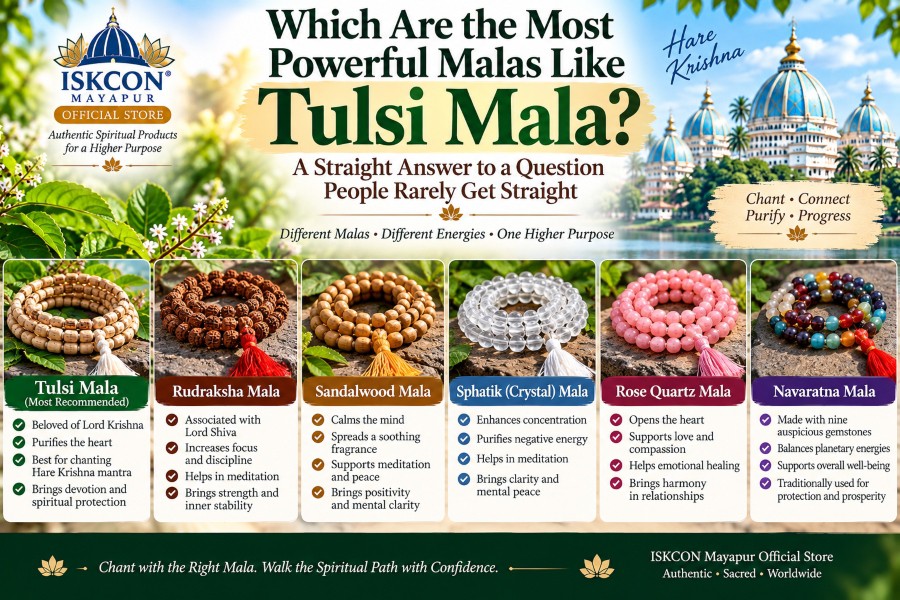 Which Are the Most Powerful Malas Like Tulsi Mala? A Straight Answer to a Question People Rarely Get StraightTulsi, rudraksha, sphatik, sandalwood, and navratna are all called "powerful" — but each belongs to a different...Read more
Leave a comment