
Why did Krishna run to embrace a poor brahmin in rags? Read the Sudama story from the Bhagavatam and learn how a...
Latest posts
-
 Krishna and Sudama: The Poor Brahmin Who Became Wealthy in LoveRead more
 -
 Vamana Avatar: How Three Steps Humbled Bali MaharajaRead more
Why did a powerful king give away three worlds to a boy asking for three steps? Learn the Vamana avatar story from...
-
 The Bhagavatam on Marriage: Duty, Love and Spiritual PartnershipRead more
What does the Bhagavatam say about marriage? Through the stories of Kardama and Devahuti, Rukmini's secret letter and...
-
 What Is Prema? The Bhagavatam's Highest Stage of Love for GodRead more
Prema is love for God with no "because" attached. Learn how the Bhagavatam describes it, the nine steps from faith to...
-
 Is Shiva Parvati Kalyana Mentioned in Srimad Bhagavatam? What the Scripture Really SaysRead more
Looking for Shiva and Parvati's wedding in the Srimad Bhagavatam? Find out what the scripture actually describes,...
-
 How Many Modes of Devotion Are Mentioned in Bhagavatam?Read more
A young boy named Prahlada listed nine ways to serve God, and the Bhagavatam keeps them as its answer. Learn what the...
-
 What Is Bhagavatam and Why Has It Been Read for 5,000 Years?Read more
A dying king asked one question, and the answer became the Bhagavatam. Learn what this Sanskrit scripture contains,...
-
 Who Is Lord Krishna? His Meaning, Teachings and Pastimes ExplainedRead more
Discover who Krishna is according to Srimad Bhagavatam, including His divine identity, childhood pastimes, teachings,...
-
 Incense in Islam: Bakhoor, Agarbatti and What Tradition SaysRead more
Is burning fragrance part of Muslim tradition? Explore incense in Islam, from the Prophetic practice of fumigating...
-
 History of Agarbatti: From Vedic Dhupa to Modern Incense SticksRead more
Where did agarbatti really come from? Follow the history of agarbatti from Vedic fire rituals and temple dhupa to...
Blog categories
- Default category (0)
- MUSICAL INSTRUMENT (1)
- BOOK (5)
- DEVOTIONAL GIFT (0)
- Blog (30) click
- CHANDAN (12)
- Bhagavatam Wisdom Series (68)
- Krishna Consciousness (14)
- Mridangam Musical Instrument (6)
- Bhagavad Gita for Beginners (13)
- Bhagavad Gita As It Is (37) click
- Bhagavad Gita As It Is Telugu (0)
- Bhagavad Gita As It Is Marathi (0)
- Bhagavad Gita As It Is In Hindi (0)
- Bhagavad Gita As It Is In English (0)
- Bhagavad Gita As It Is In Bengali (8)
- Bhagavad Gita As It Is In Kannada (0)
- Bhagavad Gita As It Is In Gujarati (0)
- Bhagavad Gita As It Is In Panjabi (0)
- Bhagavad Gita As It Is In Tamil (0)
- Bhagavad Gita As It Is Odia (0)
- BHAGAVAD GITA As It Is GERMAN (0)
- Bhagavad Gita As It Is In French (0)
- Bhagavad Gita As It Is In Nepali (0)
- Bhagavad Gita As It Is In Assamese (0)
- Incense or Agarbatti (38)
- Lord Chaitanya Mahaprabhu (3)
- Vedic Temple Mayapur (14)
- kalki (15)
- Mahabharata – Dharma & Destiny (27)
- Vaishnava Scriptures (4)
- healthy product (4)
- chaitanya mahaprabhu (5)
- Tulsi Mala Guide (17)
Search in blog
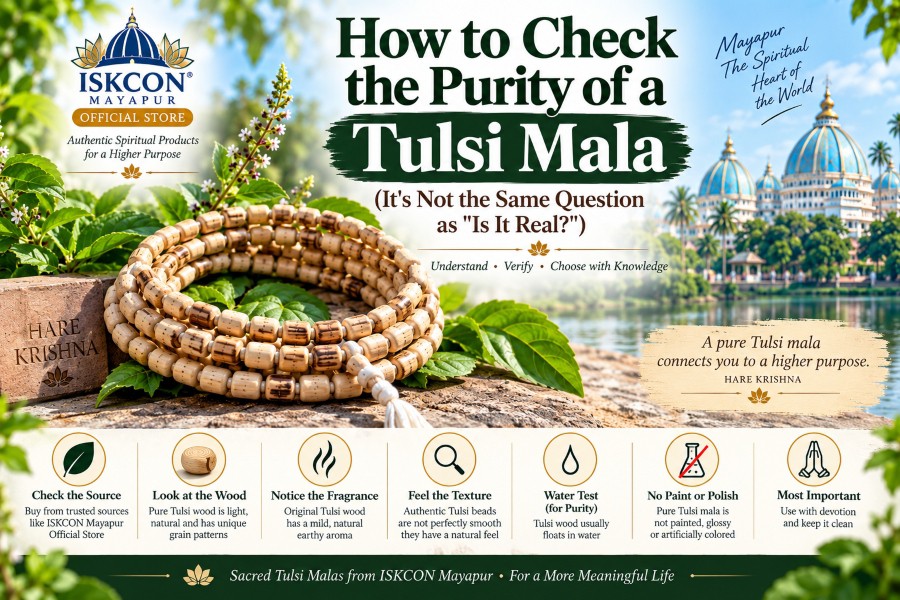
How to Check the Purity of a Tulsi Mala (It's Not the Same Question as "Is It Real?")
Is Your Tulsi Mala Actually Pure? Here's How to Check
Here's something that trips up almost every new buyer: they assume "purity" and "authenticity" mean the same thing. They don't. A mala can be 100% real tulsi wood and still fail a purity check, because purity, in the devotional sense, is about more than what the bead is made of. It's about what's happened to it along the way.
Think about it like food. A genuine, unadulterated grain of rice is still "impure" for certain rituals if it's been handled carelessly, mixed with something it shouldn't touch, or processed in a way that breaks tradition. Tulsi beads work on a similar logic within Vaishnava practice. The wood itself matters, yes—but so does the chain of hands and processes it passed through before reaching you.
This article covers both sides of that question: how to verify the material is genuinely tulsi and how to think about purity in the fuller sense that matters to devotees. If you're shopping and want a source that takes both seriously, ISKCON Mayapur's collection of authentic tulsi wood beads is a reasonable place to start. But the checks below apply no matter where you end up buying.
Two Different Kinds of "Purity" You're Actually Asking About
Before running any tests, it helps to separate what you're actually trying to verify:
Material purity— is this actually tulsi wood, unmixed with other substances, undyed, and undiluted with resin fillers or bonding agents?
Process purity— was it made, handled, and sold in a way consistent with devotional standards? Did it pass through hands or contexts that a practicing devotee would consider inappropriate?
Most articles online only address the first question, probably because it's easier to test with your senses. The second one requires trusting a source's practices, which is harder to verify from a distance but arguably matters more to the people who actually wear these malas as part of daily worship.
Testing Material Purity: What You Can Actually Check Yourself
The Weight Doesn't Lie
Pure tulsi wood, unmixed with any denser filler material, is remarkably light—almost hollow-feeling in the hand. If a mala has any noticeable heft to it, something has likely been added, whether that's a resin binder, a dense core, or an entirely different wood mixed into the batch.
This matters more than people realize. Some manufacturers blend genuine tulsi dust or shavings with a binding resin to stretch limited raw material further, then mold the mixture into bead shapes. The result looks convincingly wood-like in photos but weighs noticeably more than a hand-cut solid bead would.
Burn a Spare Bead (Carefully, and Only If You Have One to Sacrifice)
This test isn't for a mala you're wearing, but if you have a spare bead or a small offcut, it's genuinely useful. Hold it briefly near a flame—a lit matchstick works fine—for two or three seconds, not long enough to fully ignite it.
- Pure tulsi wood chars slowly and gives off a mild, plant-like smell, similar to burning dry leaves or incense base material.
- Resin or synthetic mixtures tend to melt slightly at the edges before burning, sometimes releasing a chemical or plastic-like odor, and may leave a slightly shiny or warped mark rather than a clean char.
This isn't something you'd do casually with your own worn mala, obviously, but it's a decisive test if you're trying to settle a genuine doubt about a batch.
The Cross-Section Check
If you're buying loose beads rather than a strung mala, or if a bead has already broken, look at the interior. Genuine tulsi wood shows consistent grain running through the whole bead, the same color and texture inside as on the surface. A resin-filled or composite bead often shows a different, more uniform texture at its core, sometimes even a visible seam or a slightly different color than the outer surface—evidence that what you're looking at isn't a single continuous piece of wood.
Color Consistency Under Different Light
Take the mala outside, into direct daylight, away from any artificial lighting a seller's photos might have used. Genuine tulsi shows natural, slightly uneven color variation—you'll see it shift subtly across the strand. Dyed beads often look suspiciously uniform in daylight, sometimes even revealing a slightly artificial undertone (a touch too orange, too grey, or too dark) that indoor lighting or a filtered product photo conveniently hides.
The Purity Question Most Buyers Never Think to Ask
Here's where this gets less about physical testing and more about sourcing. In traditional Vaishnava practice, there's long-standing concern about tulsi being handled respectfully throughout its processing—grown, cut, and strung with a degree of care and cleanliness, ideally by people who understand and respect what the finished mala is for.
This isn't something you can test with a flame or a damp cloth. It's something you verify by asking:
- Who actually processes the beads? A temple-affiliated workshop, where the people cutting and stringing beads are themselves practicing devotees, operates under a different standard than an anonymous factory floor where tulsi is just another raw material on a production line.
- What's the supply chain like? Short and traceable is better than long and opaque. A seller who can tell you roughly where their tulsi comes from is offering more accountability than one who says "our supplier" and stops there.
- Is the strand handled with any devotional care during production, or is it treated purely as merchandise? This sounds intangible, and it is, to a degree—but it's exactly the distinction that matters to someone buying a mala for daily worship rather than as jewelry.
None of this shows up in a product photo. It only becomes visible when you look at who's actually behind the listing.
A Test Most People Skip: Ask the Seller a Hard Question
This sounds too simple to be useful, but it works surprisingly well. Message the seller and ask something specific — not "is this genuine tulsi?" (everyone says yes to that), but something that requires actual knowledge to answer:
- "Where does your tulsi wood come from—which region or supplier?"
- "How are the beads processed—hand-cut or machine-turned?"
- "Do the people who make these malas practice Vaishnava tradition themselves?"
A seller connected to a genuine source will usually answer specifically and quickly, often with more detail than you asked for, because they're proud of the process. A reseller with no real knowledge will either go vague, stall, or copy-paste the same marketing line they used in the listing. That hesitation tells you almost everything.
Signs the Purity Has Been Compromised
Putting the tests above together, here's a shortlist of red flags that suggest a mala isn't as pure as claimed, either materially or in how it was made:
- Unusual heaviness for the bead size
- A chemical or sweet smell, rather than a faint herbal one
- Perfectly uniform beads with no natural size or color variation
- A seller who can't or won't describe their sourcing beyond generic claims
- Suspiciously low pricing for what's described as hand-processed, small-batch material
- No connection to any known devotional community or tradition—just a generic online storefront
Any one of these alone isn't damning. Several together are a pattern worth taking seriously.
Why Purity Actually Matters Here, Practically Speaking
It would be easy to treat all of this as overthinking a piece of wood. But step back for a second. A kanthi mala is worn continuously, against the skin, as a daily marker of spiritual commitment. A japa mala is handled thousands of times a day during chanting. These aren't decorative objects that sit in a drawer—they're tools of active, repeated practice.
For someone taking that practice seriously, the difference between "close enough" and "genuinely pure" isn't pedantic. It's the whole point of choosing tulsi in the first place, instead of any other pale wood that would look identical in a photo. If material and process didn't matter, there'd be no reason to insist on tulsi at all—any comparable bead would do.
Putting It Together: A Simple Two-Part Check
For material purity, before buying:
1. Check the described weight against what you know tulsi should feel like.
2. Look for natural color variation in daylight photos, not studio-lit ones.
3. Ask about processing method—hand-cut versus machine-turned
For process purity, before buying:
1. Ask a direct, specific question about sourcing.
2. Look for any connection to a temple, ashram, or known devotional community.
3. Trust specificity over reassurance—vague answers are the real warning sign.
Neither checklist guarantees perfection. But together, they get you much closer to a mala you can actually trust, rather than one you're simply hoping is what it claims to be.
The Bottom Line
Purity isn't a single yes-or-no question you can answer by squinting at a bead. It's really two separate questions stacked on top of each other—what the material actually is and how it got from a tulsi plant into your hands. Testing the first is straightforward once you know what to look for. Verifying the second requires asking better questions and paying attention to who actually answers them honestly.
Get both right, and you're not just buying a piece of wood that looks the part. You're buying something that can genuinely carry the weight—spiritual and otherwise—that a Tulsi Mala is supposed to carry.
Posted in: Tulsi Mala Guide
Related posts
-
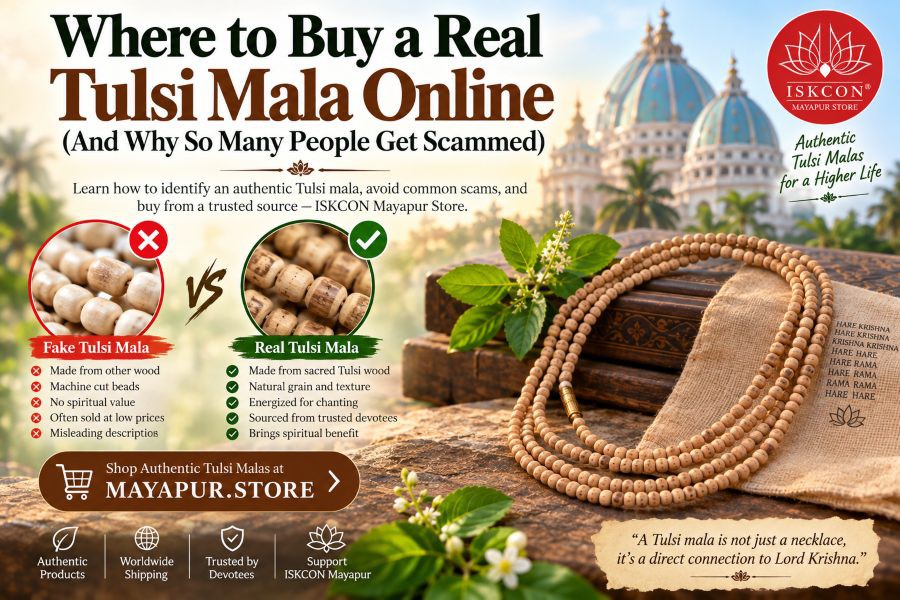 Where to Buy a Real Tulsi Mala Online Most tulsi malas sold online are fake, dyed, or mislabeled. Here's how to spot genuine tulsi wood, why traceability...Read more
 -
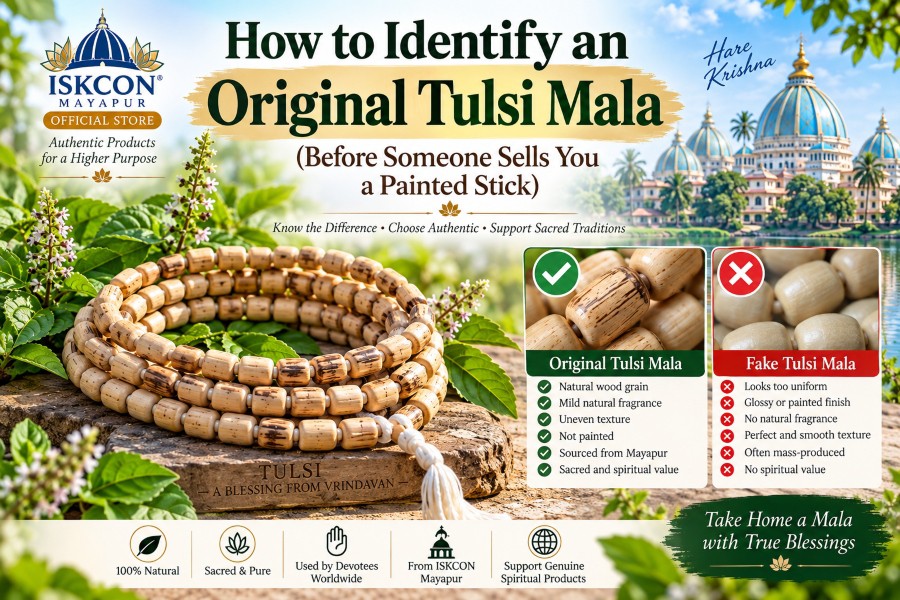 How to Identify an Original Tulsi Mala (Before Someone Sells You a Painted Stick)Most fake tulsi beads look convincing in a photo but fail the moment you hold them. Here are the weight, smell,...Read more
 -
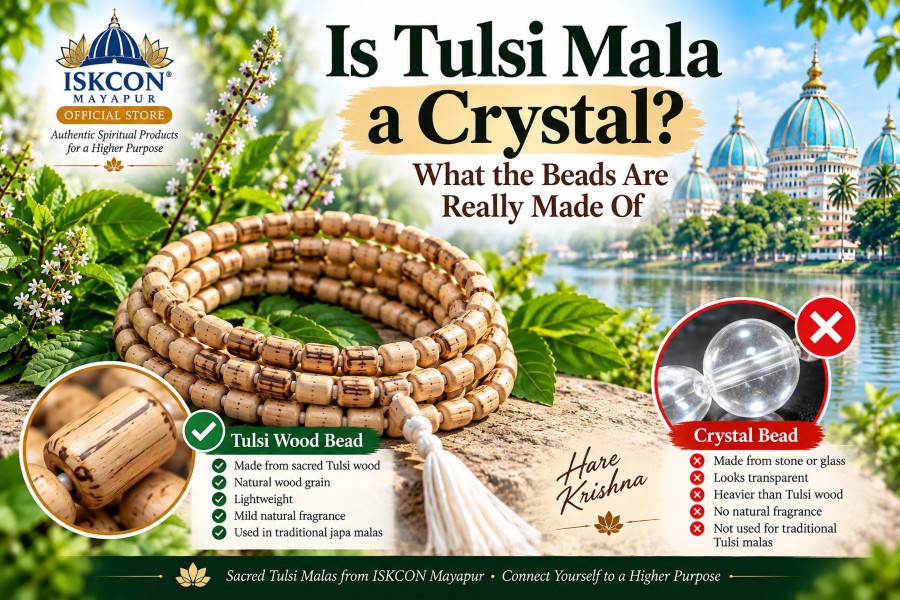 Is Tulsi Mala a Crystal? What the Beads Are Really Made OfTulsi malas often get mistaken for crystal jewellery online. Here's what tulsi beads are actually made of, why the...Read more
 -
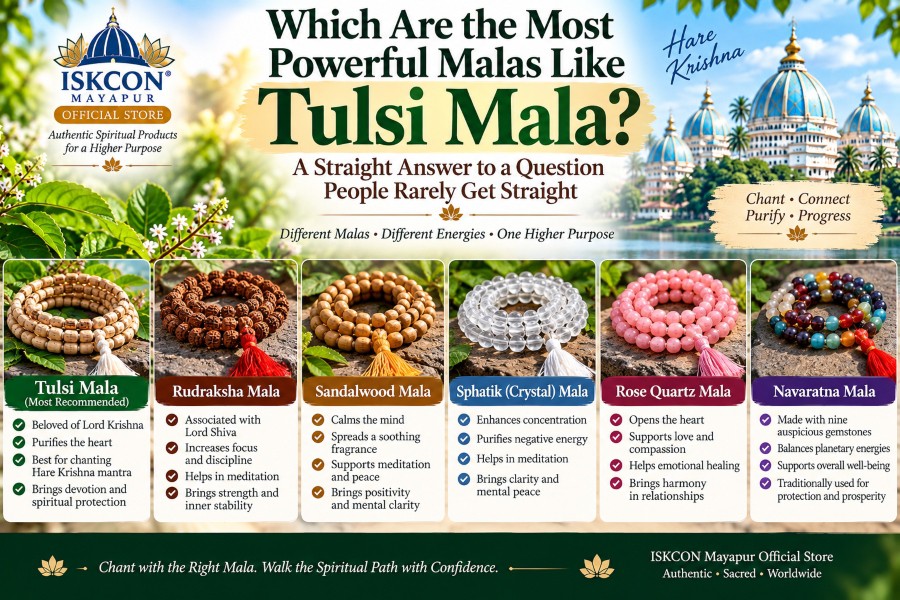 Which Are the Most Powerful Malas Like Tulsi Mala? A Straight Answer to a Question People Rarely Get StraightTulsi, rudraksha, sphatik, sandalwood, and navratna are all called "powerful" — but each belongs to a different...Read more
 -
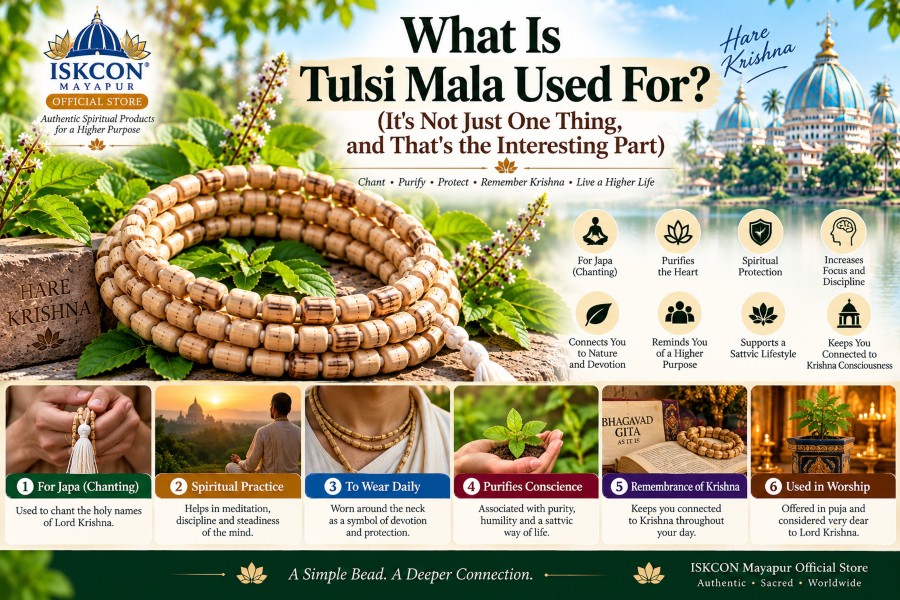 What Is Tulsi Mala Used For? (It's Not Just One Thing, and That's the Interesting Part)A Tulsi Mala isn't just one thing — it's worn daily, used to count mantras, given as a spiritual milestone gift, and...Read more
Leave a comment