
Why did Krishna run to embrace a poor brahmin in rags? Read the Sudama story from the Bhagavatam and learn how a...
Latest posts
-
 Krishna and Sudama: The Poor Brahmin Who Became Wealthy in LoveRead more
 -
 Vamana Avatar: How Three Steps Humbled Bali MaharajaRead more
Why did a powerful king give away three worlds to a boy asking for three steps? Learn the Vamana avatar story from...
-
 The Bhagavatam on Marriage: Duty, Love and Spiritual PartnershipRead more
What does the Bhagavatam say about marriage? Through the stories of Kardama and Devahuti, Rukmini's secret letter and...
-
 What Is Prema? The Bhagavatam's Highest Stage of Love for GodRead more
Prema is love for God with no "because" attached. Learn how the Bhagavatam describes it, the nine steps from faith to...
-
 Is Shiva Parvati Kalyana Mentioned in Srimad Bhagavatam? What the Scripture Really SaysRead more
Looking for Shiva and Parvati's wedding in the Srimad Bhagavatam? Find out what the scripture actually describes,...
-
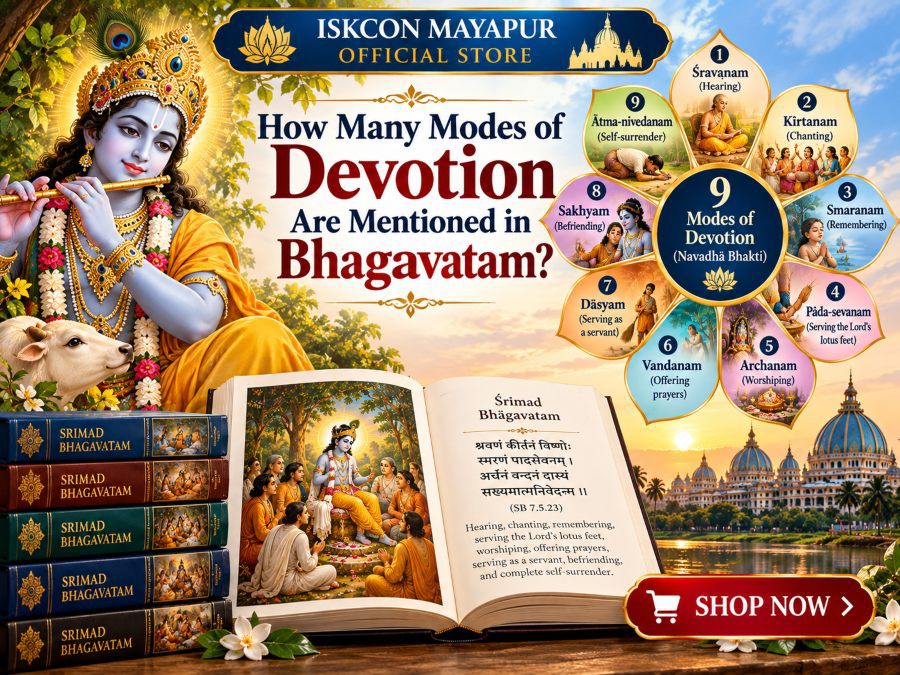 How Many Modes of Devotion Are Mentioned in Bhagavatam?Read more
A young boy named Prahlada listed nine ways to serve God, and the Bhagavatam keeps them as its answer. Learn what the...
-
 What Is Bhagavatam and Why Has It Been Read for 5,000 Years?Read more
A dying king asked one question, and the answer became the Bhagavatam. Learn what this Sanskrit scripture contains,...
-
 Who Is Lord Krishna? His Meaning, Teachings and Pastimes ExplainedRead more
Discover who Krishna is according to Srimad Bhagavatam, including His divine identity, childhood pastimes, teachings,...
-
 Incense in Islam: Bakhoor, Agarbatti and What Tradition SaysRead more
Is burning fragrance part of Muslim tradition? Explore incense in Islam, from the Prophetic practice of fumigating...
-
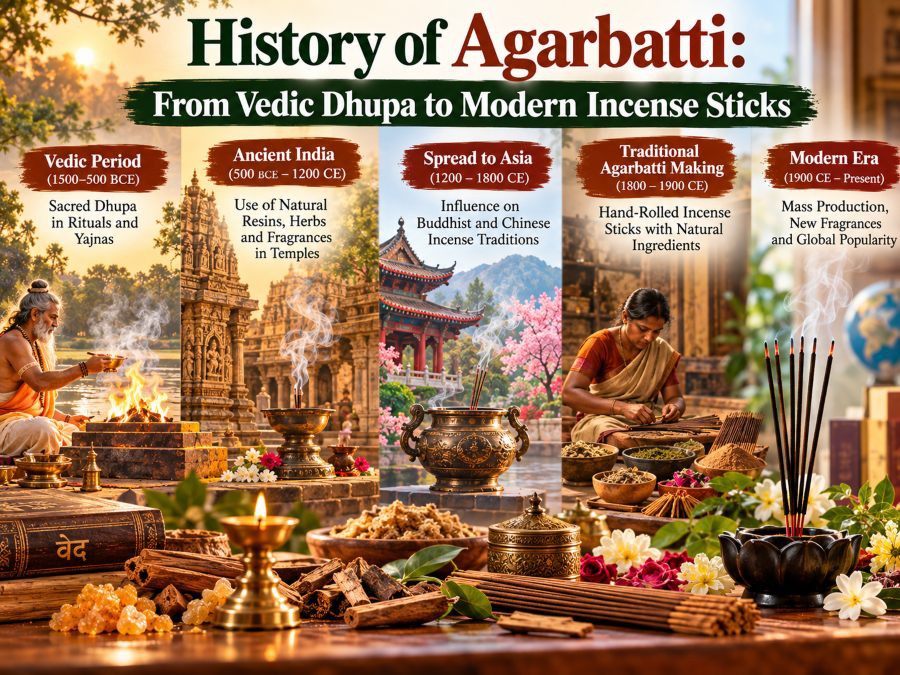 History of Agarbatti: From Vedic Dhupa to Modern Incense SticksRead more
Where did agarbatti really come from? Follow the history of agarbatti from Vedic fire rituals and temple dhupa to...
Blog categories
- Default category (0)
- MUSICAL INSTRUMENT (1)
- BOOK (5)
- DEVOTIONAL GIFT (0)
- Blog (30) click
- CHANDAN (12)
- Bhagavatam Wisdom Series (68)
- Krishna Consciousness (14)
- Mridangam Musical Instrument (6)
- Bhagavad Gita for Beginners (13)
- Bhagavad Gita As It Is (37) click
- Bhagavad Gita As It Is Telugu (0)
- Bhagavad Gita As It Is Marathi (0)
- Bhagavad Gita As It Is In Hindi (0)
- Bhagavad Gita As It Is In English (0)
- Bhagavad Gita As It Is In Bengali (8)
- Bhagavad Gita As It Is In Kannada (0)
- Bhagavad Gita As It Is In Gujarati (0)
- Bhagavad Gita As It Is In Panjabi (0)
- Bhagavad Gita As It Is In Tamil (0)
- Bhagavad Gita As It Is Odia (0)
- BHAGAVAD GITA As It Is GERMAN (0)
- Bhagavad Gita As It Is In French (0)
- Bhagavad Gita As It Is In Nepali (0)
- Bhagavad Gita As It Is In Assamese (0)
- Incense or Agarbatti (38)
- Lord Chaitanya Mahaprabhu (3)
- Vedic Temple Mayapur (14)
- kalki (15)
- Mahabharata – Dharma & Destiny (27)
- Vaishnava Scriptures (4)
- healthy product (4)
- chaitanya mahaprabhu (5)
- Tulsi Mala Guide (17)
Search in blog
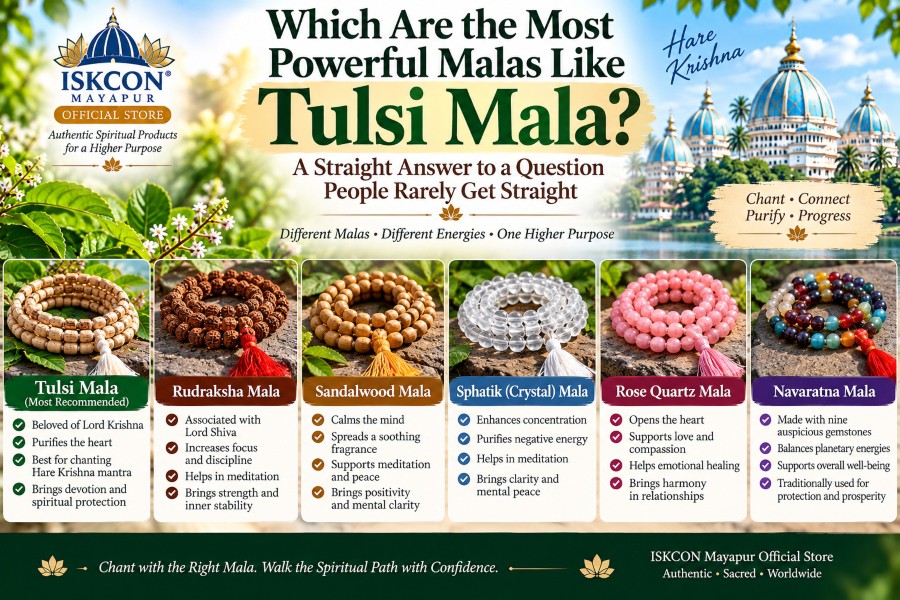
Which Are the Most Powerful Malas Like Tulsi Mala? A Straight Answer to a Question People Rarely Get Straight
Tulsi Mala vs Rudraksha vs Sphatik: Which Mala Is Right for You?
"Powerful" is a word that gets thrown around a lot in the mala world, usually by sellers who want you to buy the most expensive one on the shelf. Ask five different vendors which mala is the most powerful, and you'll get five confident, completely contradictory answers — each one, coincidentally, pointing at whatever they happen to be selling.
The honest answer is messier, and more interesting, than any single sales pitch. Different malas are considered powerful for different reasons, tied to different traditions, different deities, and different intentions behind wearing them. A Tulsi Mala isn't "more powerful" than a rudraksha mala in some universal ranking — they're not even answering the same question. Comparing them head-to-head without understanding that is like asking whether a hammer is more powerful than a screwdriver.
This article walks through the malas most commonly described as powerful, what that claim actually means in each tradition, and where tulsi fits into that picture. If you already know tulsi is where you're headed, our Tulsi Mala range covers several traditional styles. If you're still weighing your options, keep reading — this comparison should make the decision a lot clearer.
First, What Does "Powerful" Even Mean Here?
Before ranking anything, it helps to define terms, because "powerful" gets used to mean at least three different things depending on who's talking:
- Devotionally significant — tied to a specific deity or tradition, worn as an expression of that connection
- Protective — believed, within a given tradition, to guard the wearer from negative influences
- Spiritually purifying — associated with supporting meditation, chanting, or inner discipline
A mala can be "powerful" in one of these senses without being particularly relevant in another. Tulsi, for instance, is overwhelmingly valued in the first and third categories within Vaishnava tradition, and less commonly discussed in protective terms the way rudraksha often is. Keeping these categories separate makes the rest of this comparison make a lot more sense.
Tulsi Mala: The Devotional Heavyweight
Within Gaudiya Vaishnavism specifically, tulsi holds a position that's arguably unmatched by any other bead material, precisely because it isn't treated as a neutral object at all. Tulsi is regarded as Vrinda Devi — a pure devotee who appears in plant form specifically so that ordinary people can maintain daily devotional contact with something considered dear to Krishna.
That's a fundamentally different kind of "power" than a mineral believed to emit protective energy. Wearing tulsi isn't primarily about warding something off. It's about maintaining constant, physical proximity to something the tradition holds as inherently connected to the divine. Traditional texts, including references in the Padma Purana, describe tulsi beads as offering protection from negative influence — but within the broader context of devotion, not as a standalone charm.
Where tulsi is unmatched specifically:
- Constant, daily devotional reminder (worn continuously as a kanthi mala)
- Deep integration into a specific, living spiritual practice (chanting, temple worship, daily ritual)
- A material considered a devotee herself, not simply a sacred object
Where tulsi is not typically the go-to choice: general-purpose protective folklore, the kind you'll find much more heavily associated with rudraksha across broader Hindu tradition.
Rudraksha: The One Everyone's Heard Of
Rudraksha seeds are probably the most widely recognized "powerful" beads across Hindu tradition generally, associated specifically with Lord Shiva. Unlike tulsi, which is wood from a plant stem, rudraksha are actual seeds — from the Elaeocarpus ganitrus tree — and they come with a whole classification system based on "mukhi," the natural ridge lines running down each seed.
- Ek Mukhi (one-faced) rudraksha are considered exceptionally rare and significant, associated directly with Shiva
- Panch Mukhi (five-faced) are the most common and widely worn, used broadly for general spiritual practice
- Higher mukhi counts are traditionally associated with more specific, sometimes more intense effects, according to those who follow this classification closely
Rudraksha's reputation for power leans heavily protective and disciplinary — associated with focus, willpower, and shielding from negative energy, particularly within Shaivite practice. It's a different devotional lane entirely from tulsi's Vaishnava context, even though both get lumped into general "spiritual beads" conversations online.
Worth knowing: rudraksha and tulsi are traditionally not worn mixed together on the same strand in most lineages, since they belong to distinct devotional traditions with different underlying philosophies.
Sphatik (Clear Quartz Crystal): The "Cooling" Choice
Sphatik malas — made from clear quartz crystal — occupy a different niche entirely. Within various Hindu traditions, sphatik is associated with mental clarity, calmness, and what's often described as a "cooling" energetic quality, making it a popular choice for meditation practice broadly, without being tied to one specific deity the way rudraksha and tulsi are.
Because sphatik is mineral, not organic material, it behaves completely differently in the hand — noticeably heavier, cool to the touch, with a glassy transparency tulsi and rudraksha simply don't have. Some practitioners specifically prefer sphatik during summer months or in hot climates, based on traditional beliefs about its cooling nature.
This is a genuinely different category of "power" than either tulsi or rudraksha — less about devotional connection to a specific figure, more about supporting a particular mental or energetic state during practice.
Sandalwood: The Fragrant, Calming Middle Ground
Sandalwood malas sit somewhere between tulsi and sphatik in how they're typically discussed. Made from the fragrant heartwood of the sandalwood tree, they're valued partly for genuine devotional use and partly for their calming, aromatic quality during meditation. The scent itself is considered by many practitioners to support a focused, peaceful mental state, which is a subtler kind of "power" than protective folklore.
Sandalwood is broadly used across multiple traditions rather than being tied exclusively to one deity or lineage, which makes it a somewhat more flexible, general-purpose choice than tulsi's specifically Vaishnava association.
Navratna: The "All Bases Covered" Option
Navratna malas combine nine different gemstones, each traditionally associated with one of the nine celestial bodies in Vedic astrology (Surya, Chandra, Mangal, Budh, Guru, Shukra, Shani, Rahu, Ketu). The logic here is fundamentally different from every other mala on this list — it's not about one deity or one plant's devotional significance, but about balancing planetary influences believed to affect a person's life across multiple domains simultaneously.
This makes navratna malas popular specifically among people consulting Vedic astrology for guidance on remedying specific planetary weaknesses in their birth chart, rather than as a general devotional item. It's a genuinely different use case from tulsi, aimed at a very different problem.
So Which One Is Actually "Most Powerful"?
Here's the honest answer, without hedging: it depends entirely on what you're trying to accomplish and which tradition you're operating within.
- If your practice is rooted in Gaudiya Vaishnavism, or Krishna bhakti more broadly, tulsi isn't just "a good choice" — it's close to the definitive one, given the plant's specific devotional status within that lineage.
- If you're drawn to Shaivite tradition or general protective and disciplinary practice, rudraksha carries centuries of specific association that tulsi simply doesn't claim.
- If your priority is meditative clarity over deity-specific devotion, sphatik might genuinely suit your practice better.
- If you're working with Vedic astrology remedies, navratna addresses a completely different problem than any single-material mala can.
Ranking these against each other on a single scale of "power" misunderstands what each one is actually for. Asking "which is more powerful, tulsi or rudraksha" is a bit like asking which is more useful, a wedding ring or a stethoscope. Both matter enormously — in completely different contexts.
A Few Signs You're in Tulsi Territory, Specifically
If you're still unsure which direction fits you, a few things tend to point clearly toward tulsi over the alternatives:
- You practice, or are drawn to, Krishna consciousness or Gaudiya Vaishnavism specifically, rather than a general or Shaivite-leaning practice
- You want something worn continuously, as a daily devotional marker, rather than used only during meditation sessions
- You're drawn to the idea of the mala itself being considered a devotee, not just a sacred material
- You chant the Hare Krishna maha-mantra, or plan to, and want a japa mala aligned specifically with that practice
If several of these resonate, the comparison shopping mostly ends here. Tulsi isn't competing with rudraksha or sphatik for you — it's simply the material your specific tradition already points to.
The Honest Bottom Line
There isn't a single "most powerful" mala across all traditions, and anyone claiming otherwise is usually selling something. What exists instead is a set of materials, each carrying centuries of specific meaning within a specific lineage — tulsi within Vaishnava devotion, rudraksha within Shaivite practice, sphatik for meditative clarity, sandalwood as a calming middle ground, navratna for astrological balance.
Power, in this context, isn't a competition between materials. It's a question of alignment — between what a mala represents and what your own practice is actually built around. Get that alignment right, and the mala you choose stops being a comparison shopping decision and starts being an obvious one.
Posted in: Tulsi Mala Guide
Related posts
-
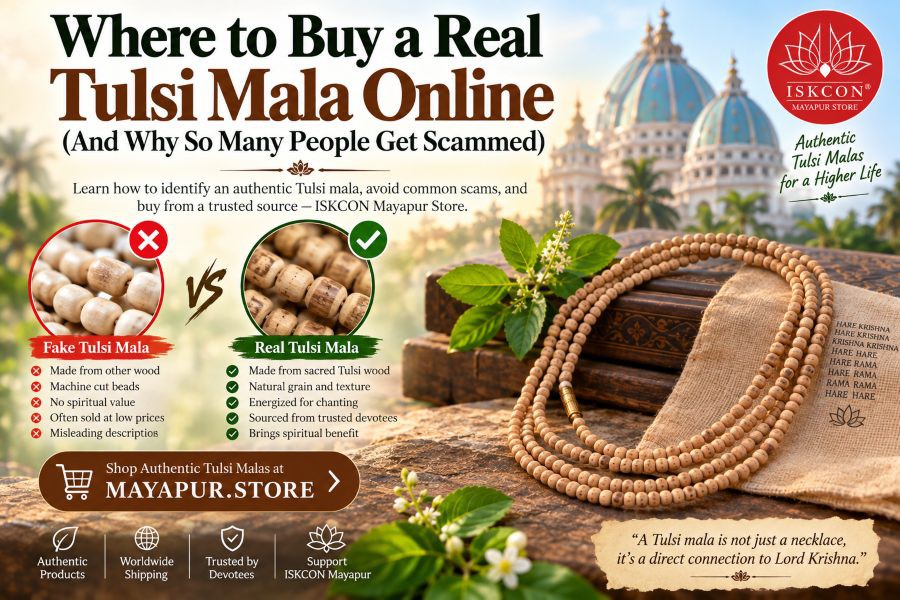 Where to Buy a Real Tulsi Mala Online Most tulsi malas sold online are fake, dyed, or mislabeled. Here's how to spot genuine tulsi wood, why traceability...Read more
 -
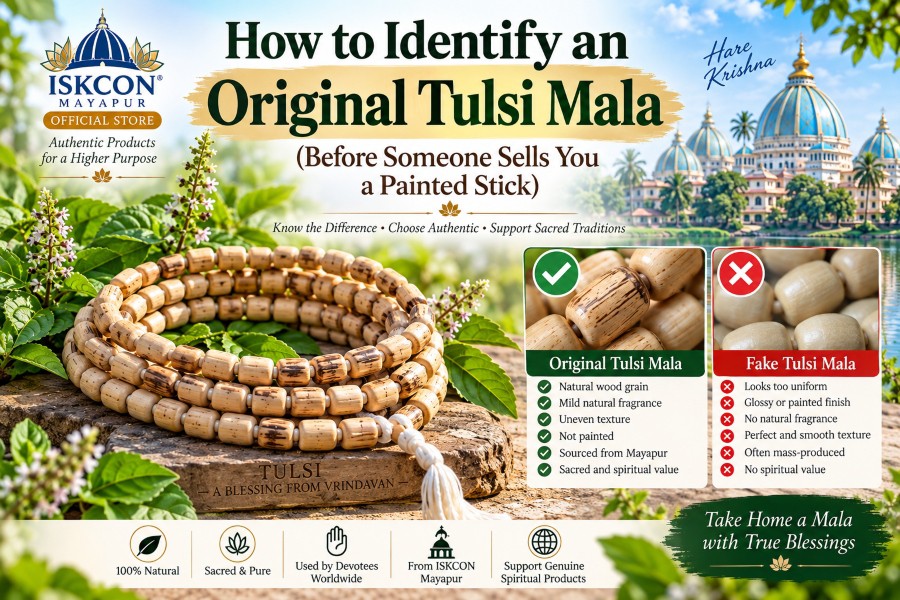 How to Identify an Original Tulsi Mala (Before Someone Sells You a Painted Stick)Most fake tulsi beads look convincing in a photo but fail the moment you hold them. Here are the weight, smell,...Read more
 -
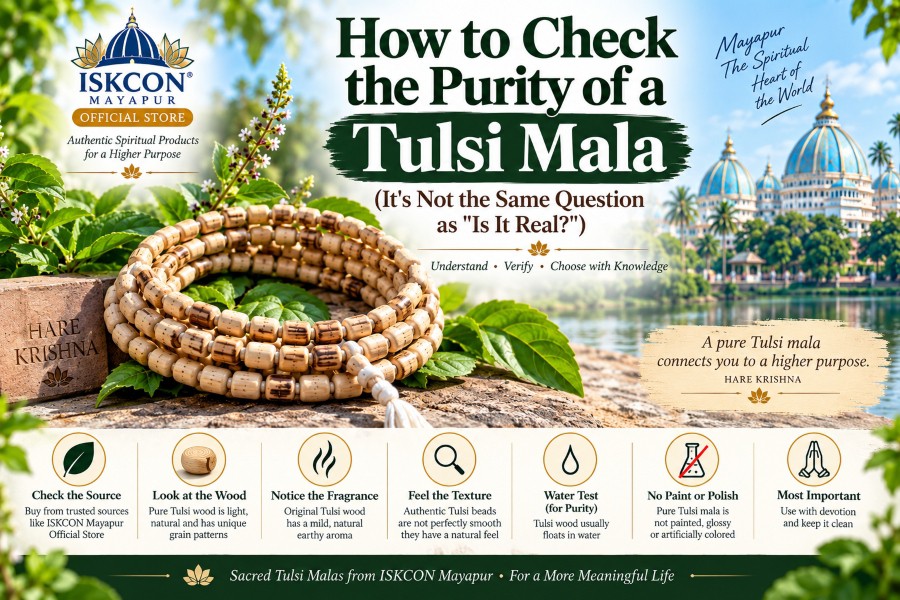 How to Check the Purity of a Tulsi Mala (It's Not the Same Question as "Is It Real?")Purity isn't the same as authenticity. Here's how to check both — whether the beads are genuinely tulsi wood, and...Read more
 -
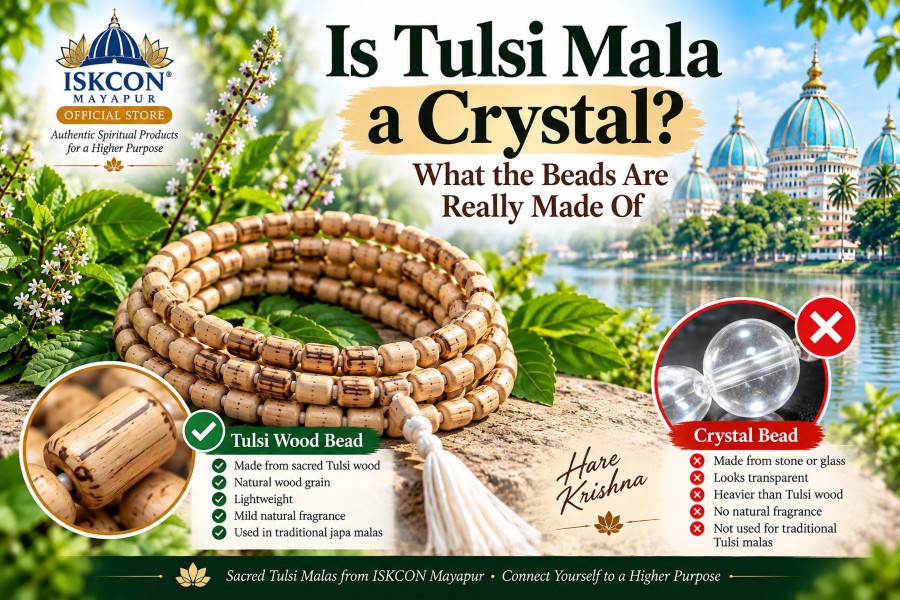 Is Tulsi Mala a Crystal? What the Beads Are Really Made OfTulsi malas often get mistaken for crystal jewellery online. Here's what tulsi beads are actually made of, why the...Read more
 -
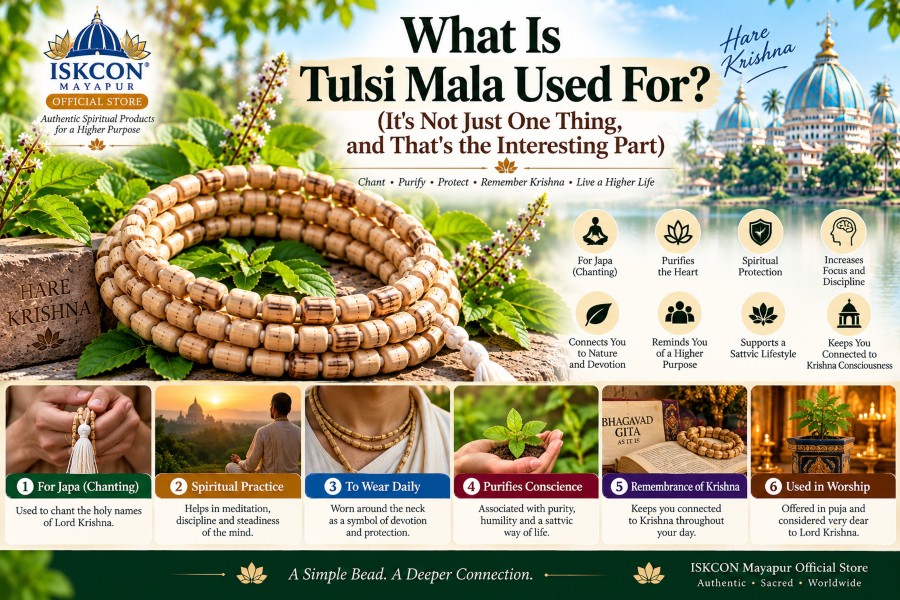 What Is Tulsi Mala Used For? (It's Not Just One Thing, and That's the Interesting Part)A Tulsi Mala isn't just one thing — it's worn daily, used to count mantras, given as a spiritual milestone gift, and...Read more
Leave a comment