
Why did Krishna run to embrace a poor brahmin in rags? Read the Sudama story from the Bhagavatam and learn how a...
Latest posts
-
 Krishna and Sudama: The Poor Brahmin Who Became Wealthy in LoveRead more
 -
 Vamana Avatar: How Three Steps Humbled Bali MaharajaRead more
Why did a powerful king give away three worlds to a boy asking for three steps? Learn the Vamana avatar story from...
-
 The Bhagavatam on Marriage: Duty, Love and Spiritual PartnershipRead more
What does the Bhagavatam say about marriage? Through the stories of Kardama and Devahuti, Rukmini's secret letter and...
-
 What Is Prema? The Bhagavatam's Highest Stage of Love for GodRead more
Prema is love for God with no "because" attached. Learn how the Bhagavatam describes it, the nine steps from faith to...
-
 Is Shiva Parvati Kalyana Mentioned in Srimad Bhagavatam? What the Scripture Really SaysRead more
Looking for Shiva and Parvati's wedding in the Srimad Bhagavatam? Find out what the scripture actually describes,...
-
 How Many Modes of Devotion Are Mentioned in Bhagavatam?Read more
A young boy named Prahlada listed nine ways to serve God, and the Bhagavatam keeps them as its answer. Learn what the...
-
 What Is Bhagavatam and Why Has It Been Read for 5,000 Years?Read more
A dying king asked one question, and the answer became the Bhagavatam. Learn what this Sanskrit scripture contains,...
-
 Who Is Lord Krishna? His Meaning, Teachings and Pastimes ExplainedRead more
Discover who Krishna is according to Srimad Bhagavatam, including His divine identity, childhood pastimes, teachings,...
-
 Incense in Islam: Bakhoor, Agarbatti and What Tradition SaysRead more
Is burning fragrance part of Muslim tradition? Explore incense in Islam, from the Prophetic practice of fumigating...
-
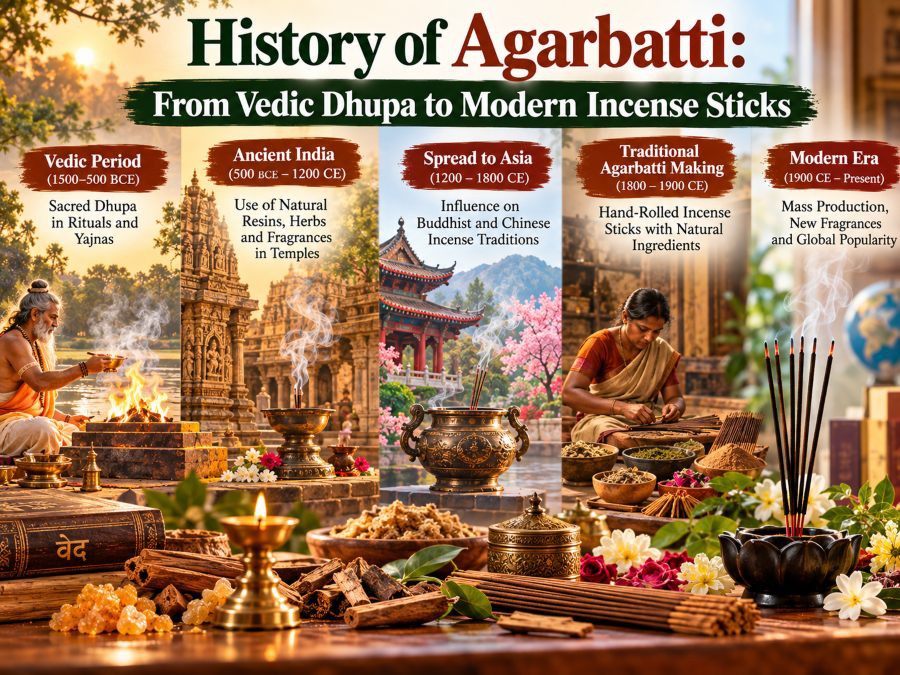 History of Agarbatti: From Vedic Dhupa to Modern Incense SticksRead more
Where did agarbatti really come from? Follow the history of agarbatti from Vedic fire rituals and temple dhupa to...
Blog categories
- Default category (0)
- MUSICAL INSTRUMENT (1)
- BOOK (5)
- DEVOTIONAL GIFT (0)
- Blog (30) click
- CHANDAN (12)
- Bhagavatam Wisdom Series (68)
- Krishna Consciousness (14)
- Mridangam Musical Instrument (6)
- Bhagavad Gita for Beginners (13)
- Bhagavad Gita As It Is (37) click
- Bhagavad Gita As It Is Telugu (0)
- Bhagavad Gita As It Is Marathi (0)
- Bhagavad Gita As It Is In Hindi (0)
- Bhagavad Gita As It Is In English (0)
- Bhagavad Gita As It Is In Bengali (8)
- Bhagavad Gita As It Is In Kannada (0)
- Bhagavad Gita As It Is In Gujarati (0)
- Bhagavad Gita As It Is In Panjabi (0)
- Bhagavad Gita As It Is In Tamil (0)
- Bhagavad Gita As It Is Odia (0)
- BHAGAVAD GITA As It Is GERMAN (0)
- Bhagavad Gita As It Is In French (0)
- Bhagavad Gita As It Is In Nepali (0)
- Bhagavad Gita As It Is In Assamese (0)
- Incense or Agarbatti (38)
- Lord Chaitanya Mahaprabhu (3)
- Vedic Temple Mayapur (14)
- kalki (15)
- Mahabharata – Dharma & Destiny (27)
- Vaishnava Scriptures (4)
- healthy product (4)
- chaitanya mahaprabhu (5)
- Tulsi Mala Guide (17)
Search in blog
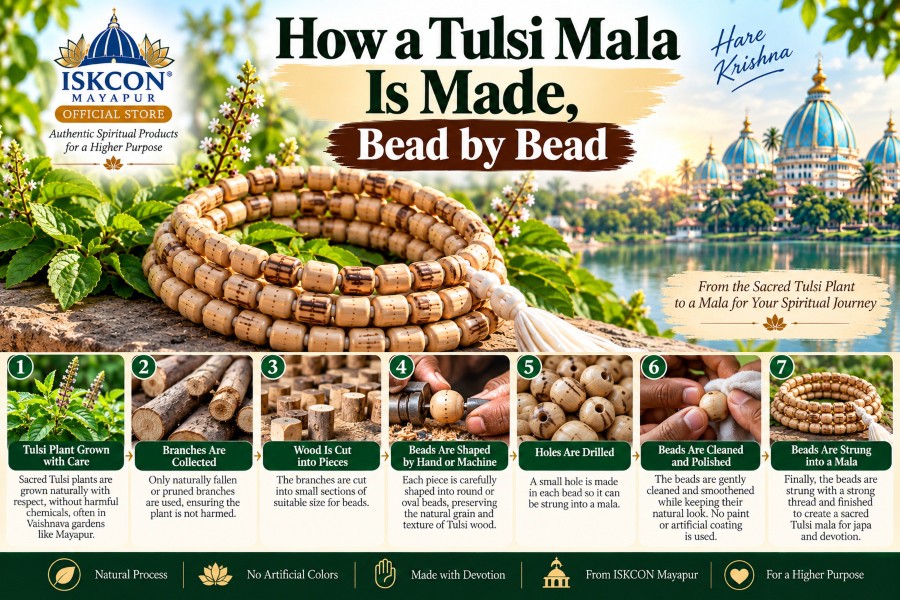
How a Tulsi Mala Is Made, Bead by Bead
The Complete Process Behind a Handmade Tulsi Mala
Somewhere in West Bengal or Vrindavan, right now, someone is sitting with a small pile of dried tulsi stems and a hand tool, turning plant matter into something that will end up around a stranger's neck on the other side of the world. Nobody's filming it for a viral video. It's slow, repetitive, unglamorous work—and it's also the entire reason a genuine mala feels different from a factory-stamped substitute the moment you hold it.
Most people who wear a Tulsi Mala have no idea what actually happened before it reached them. They see a finished product, price it against alternatives, and move on. That's fair—you don't need to know how a violin is built to enjoy the music. But understanding the actual process changes how you think about the object, and honestly, it makes it a lot easier to spot a fake once you know what real craftsmanship looks like.
This is a walk through that entire process, start to finish—from a living plant to a finished strand of hand-cut tulsi wood malas ready to wear or chant on.
Step One: It Starts With a Plant, Not a Warehouse
Every tulsi bead begins as a living Ocimum tenuiflorum plant—the same species revered in temple worship, grown in courtyards, watered daily as part of devotional ritual. But the plants specifically grown for bead-making aren't the same ones being tended for their leaves in a kitchen garden. Bead production requires plants allowed to grow older and develop thicker, woodier stems, which takes considerably longer than harvesting for culinary or medicinal leaf use.
This is the first thing that surprises people: tulsi isn't a fast-turnaround crop for this purpose. A plant needs real time to develop stem material thick enough to actually cut into beads, and even then, the yield per plant is modest. You're not clearing a field of trees. You're harvesting from individual shrubs, plant by plant, for a comparatively small amount of usable wood each time.
Step Two: Selecting and Cutting the Right Stems
Not every part of a mature tulsi plant is suitable for beads. The stems and thicker branches—not the leaves, not the roots—are what get harvested, and even among those, thickness and straightness matter. A curved or overly thin stem is harder to work with and yields fewer usable beads per length.
Experienced growers and processors learn to judge this by eye and touch, selecting branches that have reached sufficient maturity without waiting so long that the wood becomes too dense or difficult to cut cleanly. This selection step is entirely manual—nobody's running tulsi stems through an automated sorting machine, because the variation between individual plants is too significant for that kind of standardization to work well.
Step Three: Drying—The Step Nobody Talks About, But Everyone Should
A freshly cut tulsi stem is nowhere near ready to become a bead. It needs to dry, and this drying period matters more than most people realize.
Wood that's cut and worked too green tends to warp, crack, or shrink unevenly as it loses moisture over time—which means beads made from it can develop problems weeks or months after they've already been strung and sold. Properly dried wood, by contrast, has already gone through its major moisture loss before shaping begins, so the finished bead is dimensionally stable.
Why this step gets skipped by lower-quality producers:
- Drying takes time, and time costs money in a production cycle
- Rushed drying lets a manufacturer turn inventory faster, at the cost of long-term bead quality
- The difference between properly dried and rushed wood isn't always visible immediately—it shows up later, as cracking or warping, by which point the sale has already happened
This is one of several reasons why sourcing matters as much as the raw material itself. Two batches of genuinely authentic tulsi wood can produce very different final products depending on how carefully this stage was handled.
Step Four: Cutting the Beads—Where the Hand Actually Meets the Wood
This is the stage most people picture when they think about mala-making, and it's genuinely where individual craftsmanship shows up most clearly.
Dried tulsi stem gets cut into small segments, then shaped into the bead style being produced—round, oval, barrel, disc, or one of several other traditional cuts. Traditionally, and still commonly today for authentic production, this shaping is done by hand using simple cutting tools, not industrial lathes.
What hand-cutting actually produces, physically:
- Slight size variation from bead to bead—no two beads end up perfectly identical
- Natural, sometimes irregular grain patterns visible on each bead's surface
- Occasional small imperfections—a slightly rough edge, a minor chip—that don't affect function but do mark the bead as genuinely hand-processed
This is worth sitting with for a second, because it directly explains something buyers often misunderstand: a mala with slightly irregular beads isn't lower quality than one with perfectly uniform beads. It's often the opposite. Perfect uniformity, at this material and this scale, usually signals machine processing or a completely different, non-tulsi material altogether.
Step Five: Drilling—The Step That Breaks the Most Beads
Once shaped, each bead needs a hole through its center so it can be strung. This sounds simple. It isn't, particularly with a material as light and somewhat brittle as dried tulsi wood.
Drilling too fast, at the wrong angle, or with a dull tool commonly cracks or splits the bead entirely, wasting material that took considerable time and limited resources to reach this stage. Skilled processors learn to control speed and pressure carefully, understanding exactly how much a given batch of wood can tolerate based on how it dried and how it was cut.
This is genuinely one of the highest-loss stages in the entire process. A meaningful percentage of beads that make it successfully through cutting won't survive drilling intact, which is part of why authentic hand-processed tulsi wood carries a real production cost that a resin-cast substitute simply doesn't.
Step Six: Sorting and Matching
Before stringing begins, beads typically get sorted—not to eliminate natural variation entirely, since that variation is expected and accepted, but to group beads of roughly similar size together for a given strand, so the finished mala doesn't look randomly assembled from wildly mismatched pieces.
This sorting is judgment-based, done by eye, comparing beads against each other directly rather than measuring each one against a rigid mechanical standard. It's a subtler skill than it sounds—experienced processors develop a genuine eye for what belongs together on a single strand.
Step Seven: Stringing—Turning Individual Beads Into a Mala
The final assembly stage is where individual beads become an actual mala, threaded onto cord in the specific configuration the intended use calls for.
For a japa mala (counting mala):
- Exactly 108 beads strung in sequence
- One additional, often slightly larger bead added as the "head bead" or "meru," marking where a round of chanting begins and ends
- Usually finished as a single, unbroken loop of beads with the head bead as the sole distinguishing point
For a kanthi mala (neck mala):
- Multiple loops—typically two or three—strung to a length that fits comfortably around the neck
- Closed with a small clasp, often a brass screw-lock mechanism, since the mala is meant to stay on continuously rather than being tied and untied
- No fixed bead count requirement, since the goal here is comfortable, continuous wear rather than mantra counting
The thread itself matters more than people assume. Cotton cord is standard and traditional, chosen partly because it's gentle against the skin during continuous wear and partly because it can be replaced relatively easily when it eventually wears— which it will, given enough years of daily use.
What Happens to the Wood That Doesn't Make the Cut
Given how much loss happens throughout this process—stems that don't dry properly, beads that crack during drilling, pieces too irregular for stringing—a fair question is what becomes of all that unused material. In many traditional processing contexts, offcuts and unusable pieces are treated with the same respect given to the finished product, often composted back into the earth near tulsi plants rather than discarded as ordinary waste, in keeping with the broader reverence tulsi holds in the tradition.
This detail matters for understanding the full picture: even the parts of the process that don't result in a sellable bead are handled with some degree of care in traditional, devotionally rooted production, which is genuinely different from how a purely commercial manufacturing operation would treat the same waste material.
Why Understanding This Process Changes How You Shop
Once you know what actually goes into producing a single strand—the growing time, the selective harvesting, the careful drying, the hand-cutting, the high-loss drilling stage, the careful sorting, and finally the stringing—a few things about pricing and quality start making a lot more sense.
A mala priced like a mass-produced trinket almost certainly skipped several of these steps or substituted a different, cheaper material somewhere along the way. Genuine hand-cut tulsi wood carries real labor and material cost baked into every stage, from a plant that took real time to mature down to a craftsperson controlling drill pressure bead by bead to avoid cracking irreplaceable material.
This isn't an argument that expensive automatically means genuine—plenty of overpriced items are still fake. But it does mean that suspiciously cheap, perfectly uniform beads sold at scale should raise real questions about which of these steps, if any, were actually followed.
The Bottom Line
A finished tulsi mala looks simple. What it actually represents is a multi-stage process spanning months, from a growing plant through careful drying, hand-shaping, high-risk drilling, thoughtful sorting, and final stringing—most of it still done by hand, the way it has been for generations, because the material itself doesn't really tolerate shortcuts well.
Next time you hold one, that slight irregularity in the beads, that faint variation in color from one to the next, isn't a flaw to overlook. It's a record of exactly the process described above—evidence that a real person, working with real plant material, made the decisions that turned a tulsi stem into something meant to be worn close to the body for years.
Posted in: Tulsi Mala Guide
Related posts
-
 Where to Buy a Real Tulsi Mala Online Most tulsi malas sold online are fake, dyed, or mislabeled. Here's how to spot genuine tulsi wood, why traceability...Read more
 -
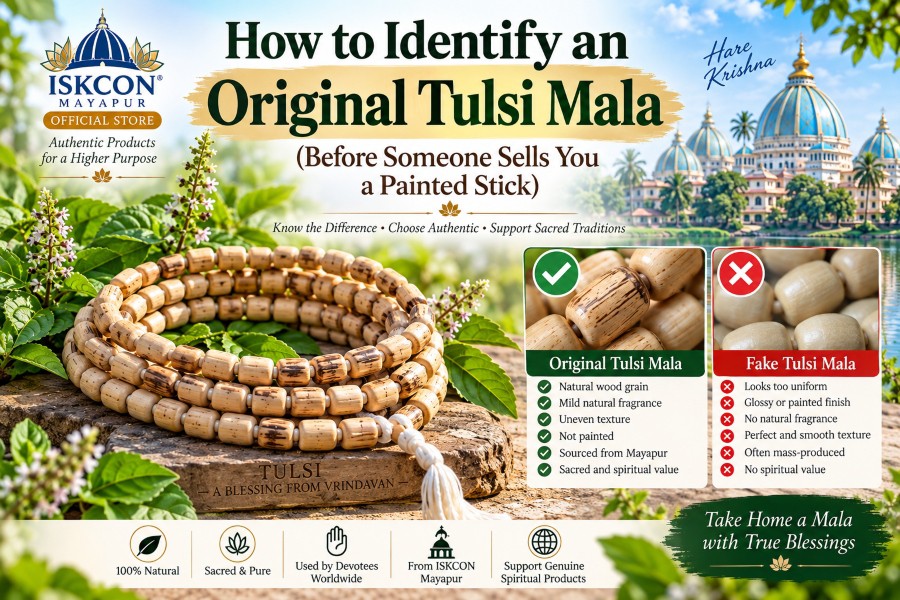 How to Identify an Original Tulsi Mala (Before Someone Sells You a Painted Stick)Most fake tulsi beads look convincing in a photo but fail the moment you hold them. Here are the weight, smell,...Read more
 -
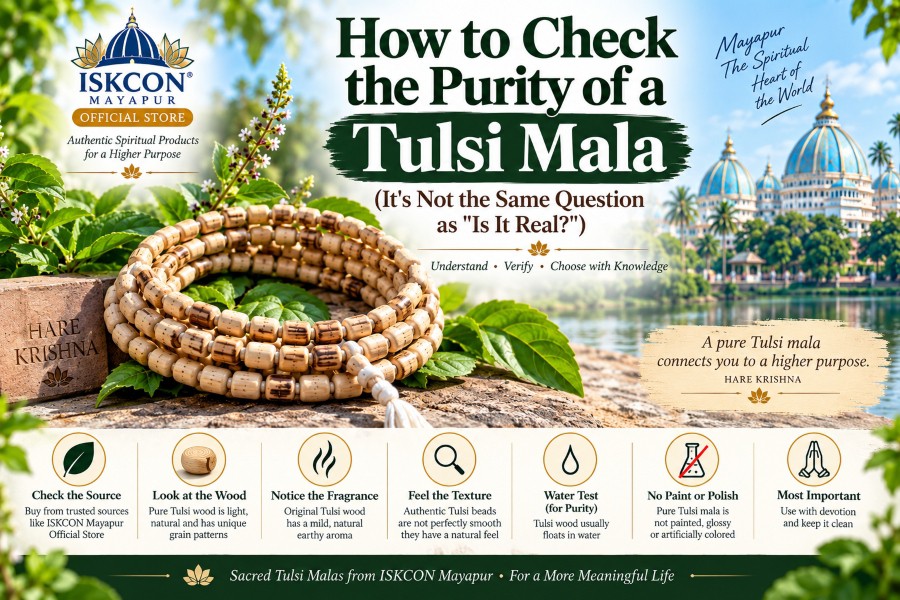 How to Check the Purity of a Tulsi Mala (It's Not the Same Question as "Is It Real?")Purity isn't the same as authenticity. Here's how to check both — whether the beads are genuinely tulsi wood, and...Read more
 -
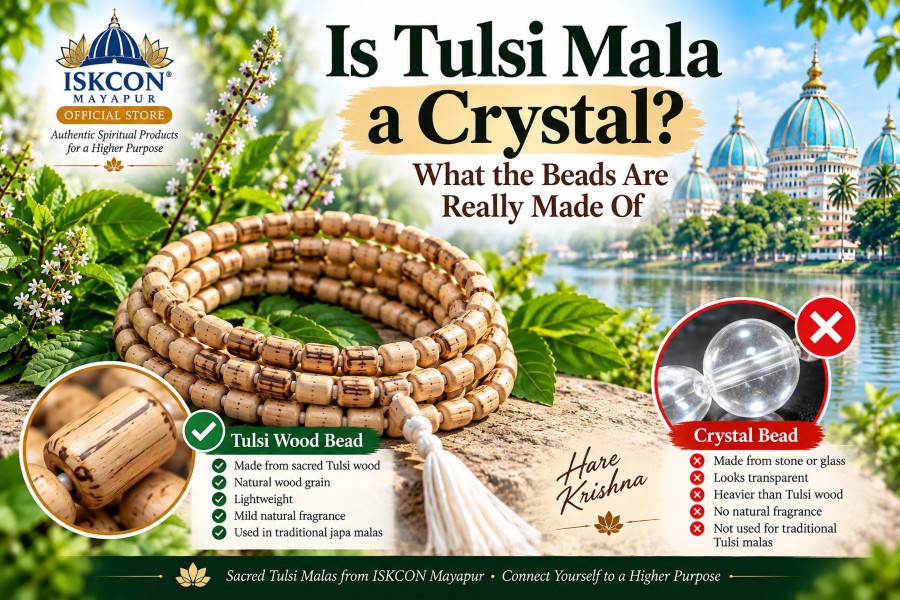 Is Tulsi Mala a Crystal? What the Beads Are Really Made OfTulsi malas often get mistaken for crystal jewellery online. Here's what tulsi beads are actually made of, why the...Read more
 -
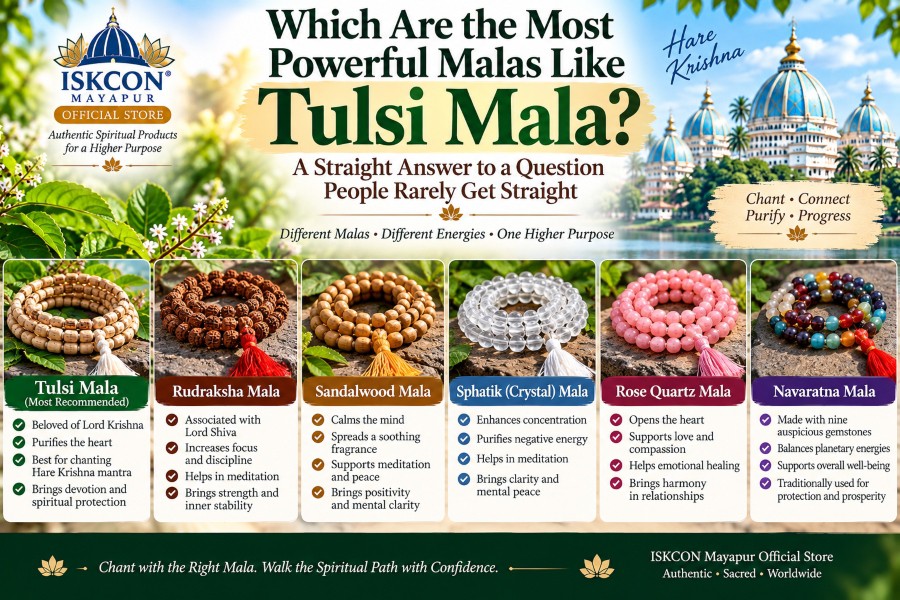 Which Are the Most Powerful Malas Like Tulsi Mala? A Straight Answer to a Question People Rarely Get StraightTulsi, rudraksha, sphatik, sandalwood, and navratna are all called "powerful" — but each belongs to a different...Read more
Leave a comment