
Why did Krishna run to embrace a poor brahmin in rags? Read the Sudama story from the Bhagavatam and learn how a...
Latest posts
-
 Krishna and Sudama: The Poor Brahmin Who Became Wealthy in LoveRead more
 -
 Vamana Avatar: How Three Steps Humbled Bali MaharajaRead more
Why did a powerful king give away three worlds to a boy asking for three steps? Learn the Vamana avatar story from...
-
 The Bhagavatam on Marriage: Duty, Love and Spiritual PartnershipRead more
What does the Bhagavatam say about marriage? Through the stories of Kardama and Devahuti, Rukmini's secret letter and...
-
 What Is Prema? The Bhagavatam's Highest Stage of Love for GodRead more
Prema is love for God with no "because" attached. Learn how the Bhagavatam describes it, the nine steps from faith to...
-
 Is Shiva Parvati Kalyana Mentioned in Srimad Bhagavatam? What the Scripture Really SaysRead more
Looking for Shiva and Parvati's wedding in the Srimad Bhagavatam? Find out what the scripture actually describes,...
-
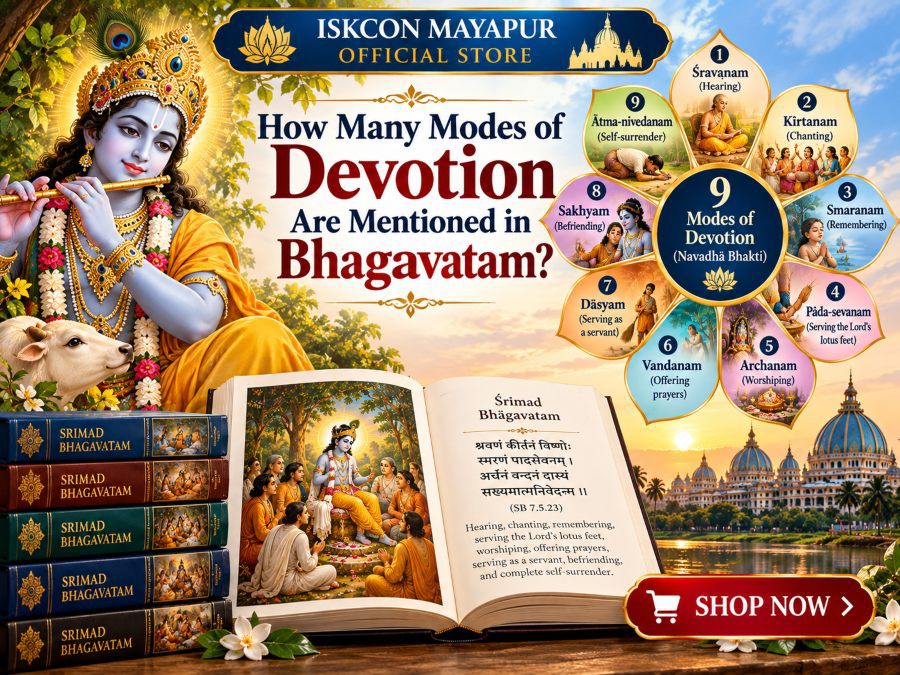 How Many Modes of Devotion Are Mentioned in Bhagavatam?Read more
A young boy named Prahlada listed nine ways to serve God, and the Bhagavatam keeps them as its answer. Learn what the...
-
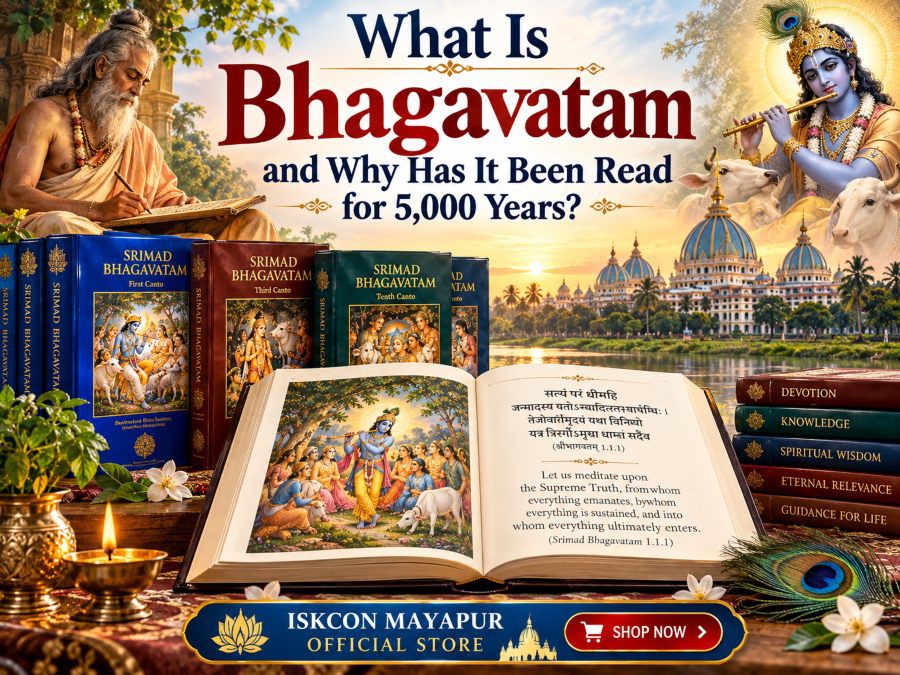 What Is Bhagavatam and Why Has It Been Read for 5,000 Years?Read more
A dying king asked one question, and the answer became the Bhagavatam. Learn what this Sanskrit scripture contains,...
-
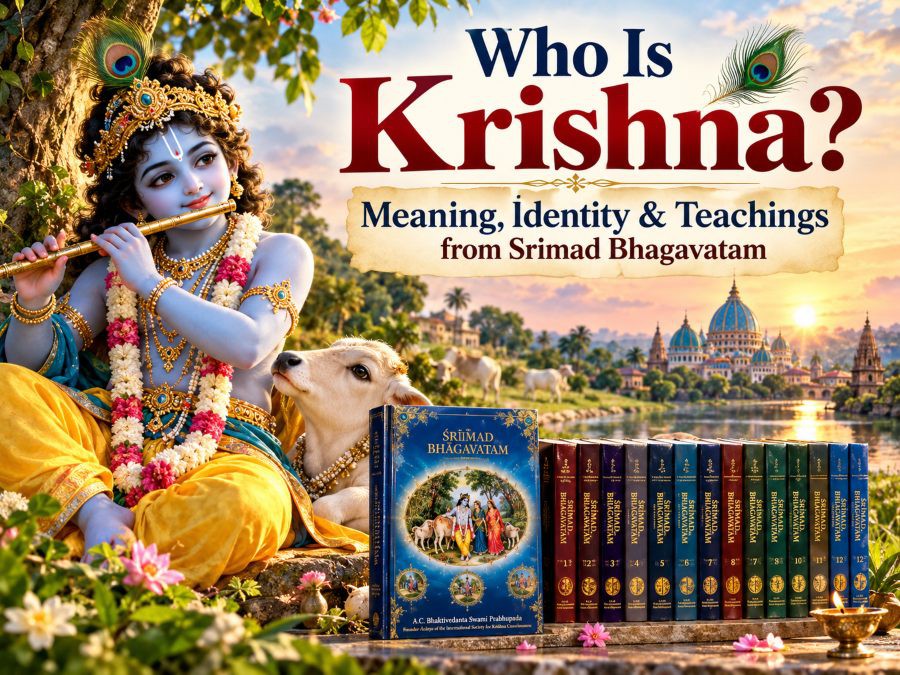 Who Is Lord Krishna? His Meaning, Teachings and Pastimes ExplainedRead more
Discover who Krishna is according to Srimad Bhagavatam, including His divine identity, childhood pastimes, teachings,...
-
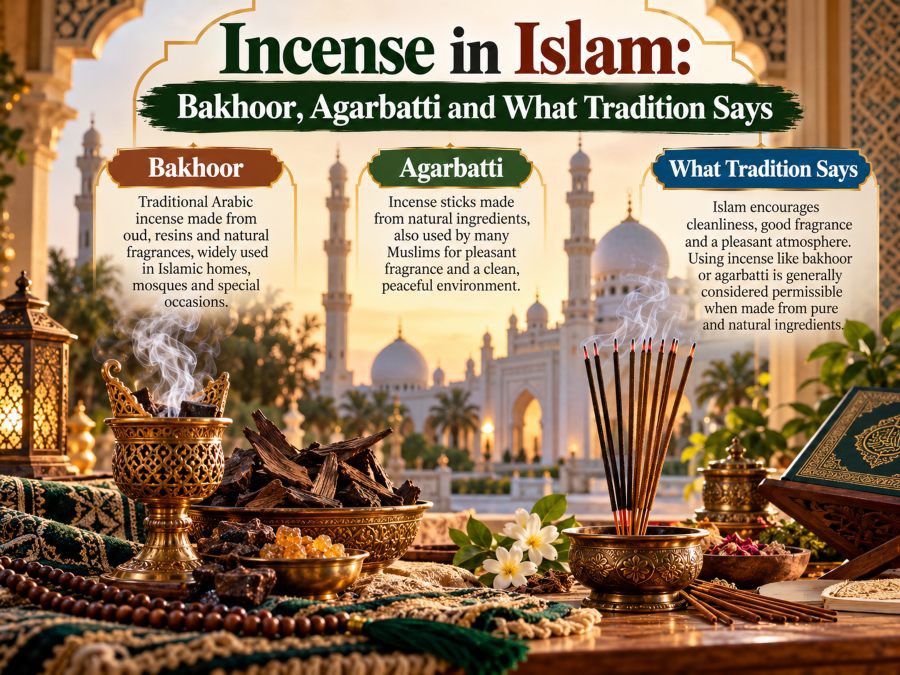 Incense in Islam: Bakhoor, Agarbatti and What Tradition SaysRead more
Is burning fragrance part of Muslim tradition? Explore incense in Islam, from the Prophetic practice of fumigating...
-
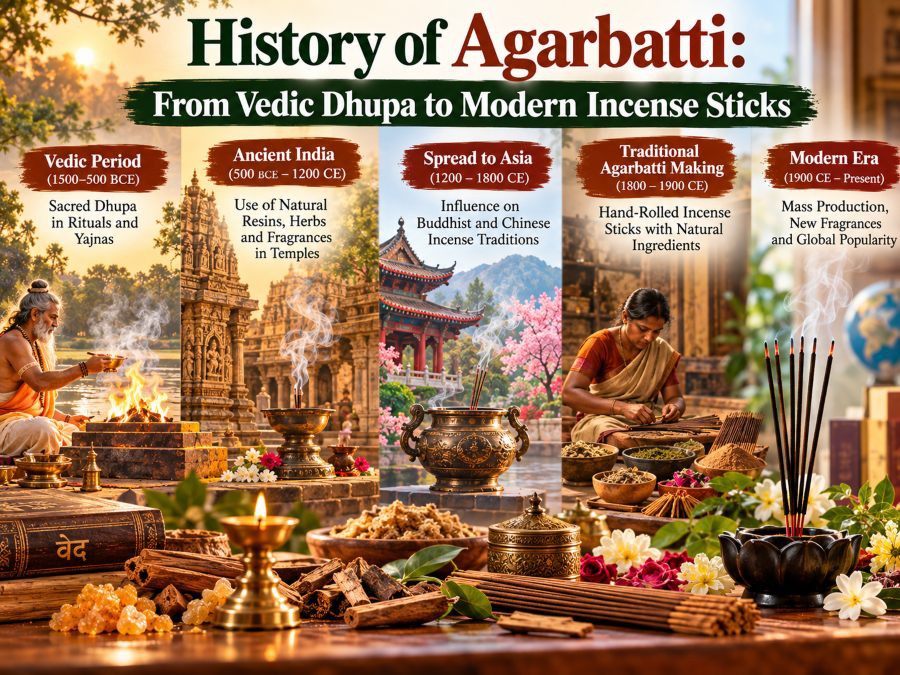 History of Agarbatti: From Vedic Dhupa to Modern Incense SticksRead more
Where did agarbatti really come from? Follow the history of agarbatti from Vedic fire rituals and temple dhupa to...
Blog categories
- Default category (0)
- MUSICAL INSTRUMENT (1)
- BOOK (5)
- DEVOTIONAL GIFT (0)
- Blog (30) click
- CHANDAN (12)
- Bhagavatam Wisdom Series (68)
- Krishna Consciousness (14)
- Mridangam Musical Instrument (6)
- Bhagavad Gita for Beginners (13)
- Bhagavad Gita As It Is (37) click
- Bhagavad Gita As It Is Telugu (0)
- Bhagavad Gita As It Is Marathi (0)
- Bhagavad Gita As It Is In Hindi (0)
- Bhagavad Gita As It Is In English (0)
- Bhagavad Gita As It Is In Bengali (8)
- Bhagavad Gita As It Is In Kannada (0)
- Bhagavad Gita As It Is In Gujarati (0)
- Bhagavad Gita As It Is In Panjabi (0)
- Bhagavad Gita As It Is In Tamil (0)
- Bhagavad Gita As It Is Odia (0)
- BHAGAVAD GITA As It Is GERMAN (0)
- Bhagavad Gita As It Is In French (0)
- Bhagavad Gita As It Is In Nepali (0)
- Bhagavad Gita As It Is In Assamese (0)
- Incense or Agarbatti (38)
- Lord Chaitanya Mahaprabhu (3)
- Vedic Temple Mayapur (14)
- kalki (15)
- Mahabharata – Dharma & Destiny (27)
- Vaishnava Scriptures (4)
- healthy product (4)
- chaitanya mahaprabhu (5)
- Tulsi Mala Guide (17)
Search in blog
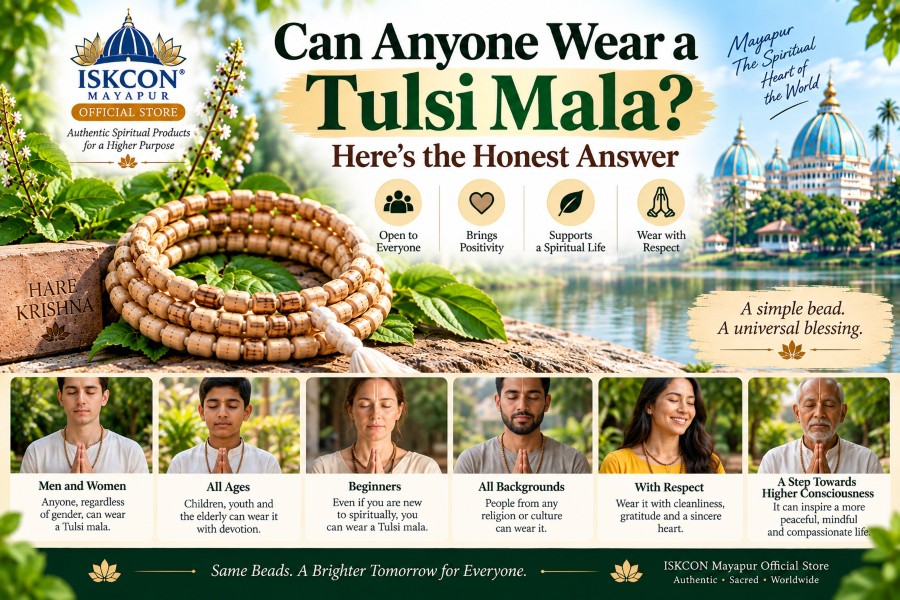
Can Anyone Wear a Tulsi Mala? Here's the Honest Answer
Who Is Allowed to Wear a Tulsi Mala?
A woman walks into a gift shop near a temple, picks up a strand of pale wooden beads, and hesitates before putting it down. "Am I even allowed to wear this?" She's not being overly cautious — she's genuinely unsure, and honestly, the internet doesn't make it easy to find a straight answer.
That hesitation is more common than you'd think. A Tulsi Mala carries enough religious weight that people reasonably worry about overstepping, wearing something that isn't "theirs" to wear, or accidentally disrespecting a tradition they're not fully part of. It's a fair concern. It also has a clearer answer than most people expect.
This article walks through who can actually wear a tulsi mala, what — if anything — is expected of someone before they put one on, and where the real boundaries are, as opposed to the imagined ones. If you're ready to explore your options, our kanthi mala styles cover everything from simple two-loop malas to bolder traditional cuts. But understanding the "who" question first will make choosing a lot easier.
The Short Answer: Yes, Genuinely Anyone Can Wear One
There's no formal gatekeeping around tulsi malas. No initiation certificate required at checkout, no religious ID card, no committee that approves candidates. Men, women, people of any nationality, any background, any level of familiarity with Vaishnava tradition — all of them can, and regularly do, wear tulsi beads.
This surprises people who assume, reasonably, that something this steeped in specific religious meaning must come with strict entry requirements. It doesn't, and understanding why reveals something important about how the tradition actually works.
Why There's No "Permission" System
Gaudiya Vaishnavism, the tradition tulsi worship comes from most directly, is built around the idea that devotion is available to anyone, regardless of birth, background, or prior religious affiliation. This isn't a minor theological footnote — it's close to the central premise of the entire movement, going back to Sri Chaitanya Mahaprabhu himself, who taught that chanting the Holy Name and engaging in devotional practice was open to all people, not reserved for a particular caste or lineage.
Given that foundation, restricting tulsi malas to a select few would actually contradict the tradition's own core teaching. The mala exists to support and express devotion, not to mark exclusive membership in a closed club. If anyone can chant the maha-mantra — and the tradition explicitly says anyone can — it follows that anyone can wear the beads associated with that practice too.
But "Can" and "Should Right Now" Are Different Questions
Here's where it gets slightly more nuanced. While there's no formal restriction on who can wear a tulsi mala, there's a reasonable question about who should, and when, based on what wearing one traditionally represents.
A kanthi mala worn continuously around the neck is generally understood, within the tradition, as signaling some level of personal commitment — not necessarily formal initiation, but at least a genuine intention to live by certain standards and engage seriously with the practice. Wearing one purely as a fashion accessory, with zero interest in what it represents, sits a bit oddly with what the object is actually for, even though nobody will stop you at the door for doing it.
This isn't about gatekeeping. It's closer to the difference between wearing a wedding ring you found on the street versus one that actually means something to you. Nobody's checking. But the object carries more weight when the wearing reflects something real.
What About People Outside the Tradition Entirely?
This is probably the most common version of the underlying question: can someone who isn't Hindu, isn't specifically Vaishnava, has no formal religious affiliation at all, still wear a tulsi mala respectfully?
Generally, yes — with a bit of basic awareness. Plenty of people encounter tulsi through yoga practice, general interest in Eastern spirituality, or simple aesthetic appreciation, and choose to wear one without any formal connection to Gaudiya Vaishnavism specifically. This is broadly accepted, provided it's approached with a reasonable degree of respect rather than treating it as a random costume accessory.
What "reasonable respect" actually looks like in practice:
- Understanding, at least broadly, what the object represents rather than wearing it purely as decoration
- Not mixing it carelessly with symbols from unrelated traditions in a way that flattens its specific meaning
- Treating it with basic physical care — not tossing it on the floor, not handling it carelessly
None of this requires deep theological study. It just requires treating the object as something with meaning, rather than as generic jewellery.
Do You Need to Be Initiated First?
This question comes up constantly, and the answer is straightforward: no, initiation is not a prerequisite for wearing a tulsi mala. In fact, it often works the other direction — many people start wearing a kanthi mala specifically as an early step in their practice, well before any formal initiation takes place, as a way of gradually building commitment and identifying with the tradition they're exploring.
Formal initiation in ISKCON and related communities typically comes with its own specific commitments and often its own dedicated mala, sometimes given directly by a guru as part of the initiation process itself. But that's a separate, later milestone. Wearing tulsi beads earlier, as part of exploring or beginning a practice, is completely normal and widely encouraged rather than discouraged.
Gender: Another Non-Issue That Gets Treated Like One
Some people specifically ask whether tulsi malas are restricted by gender — whether it's primarily a men's item, or whether women wearing one is somehow different or less traditional. It isn't. Men and women both wear kanthi malas and use japa malas for chanting, with no meaningful distinction in the tradition regarding who's permitted to do so based on gender.
If anything, japa malas in particular are used identically across genders — the mechanics of counting mantras don't change based on who's holding the beads, and there's no separate "women's chanting practice" that requires different equipment.
What Actually Comes With Wearing One, If You Take It Seriously
While there's no formal barrier to entry, it's worth being honest about what wearing a kanthi mala traditionally signals within the community, for anyone who wants to approach it thoughtfully rather than just factually correctly.
In ISKCON specifically, tulsi neck beads are commonly associated with a commitment to four regulative principles: avoiding meat, fish, and eggs; avoiding intoxication; avoiding gambling; and avoiding illicit sexual activity. These aren't formal requirements enforced by anyone checking on you — nobody audits your diet before letting you buy a mala. But they represent the lifestyle standard the mala traditionally accompanies, for people who wear it as a genuine marker of devotional commitment rather than as casual accessory.
If that feels like a significant step you're not ready for yet, that's completely fine — and it's worth knowing that a japa mala, used specifically for chanting practice, doesn't carry the same implied lifestyle commitment. You can begin chanting on one today, regardless of where you currently stand on those broader lifestyle questions.
Choosing Your First Mala, If You've Decided to Wear One
Once you've settled the "can I" question for yourself, the practical question becomes which style actually suits you. This is where personal comfort and simplicity matter more than any rule about who's allowed to wear what.
For a genuinely easy starting point, something like the Kanthi Mala 2 Round is a sensible first choice — a simple, traditional two-loop style made from smooth round beads, without any unusual cut or bold visual statement that might feel like too much for someone still finding their footing with the practice. It's the kind of mala that sits quietly under a collar and doesn't ask anything of you beyond wearing it consistently.
More elaborate styles — three loops, barrel-shaped beads, larger and bolder cuts — are equally available to anyone, first-timers included. There's no seniority system dictating that beginners must start small and "earn" a more elaborate mala later. Comfort and personal taste are the only real deciding factors here, not any hierarchy of permission.
The Bottom Line
Nobody is excluded from wearing a tulsi mala based on background, religion, nationality, or gender. The tradition it comes from is explicitly built on the idea that devotional practice is open to everyone, which makes broad accessibility a feature of the tradition rather than an oversight or a loophole.
What actually matters more than eligibility is intention. Wearing one with some awareness of what it represents, treating it with basic care, and being honest with yourself about whether you're wearing it as a meaningful step in a practice or purely as an accessory — that's the real distinction worth thinking about. The mala itself was never the gate. How seriously you engage with what it represents always was.
Posted in: Tulsi Mala Guide
Related posts
-
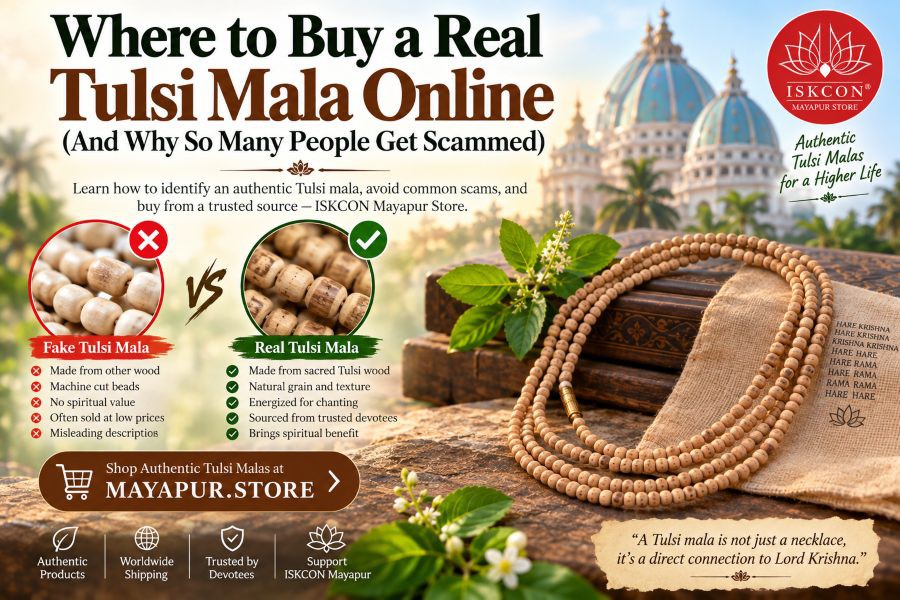 Where to Buy a Real Tulsi Mala Online Most tulsi malas sold online are fake, dyed, or mislabeled. Here's how to spot genuine tulsi wood, why traceability...Read more
 -
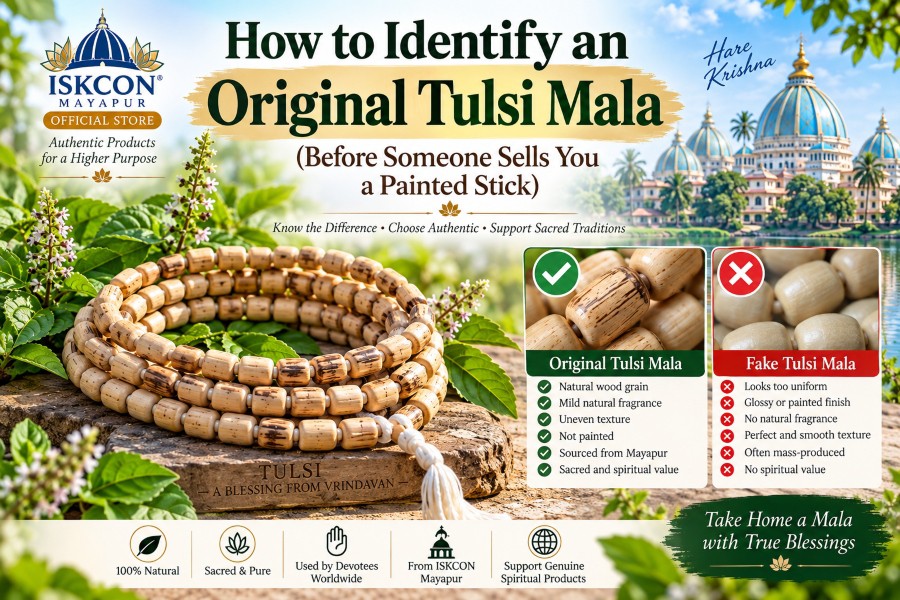 How to Identify an Original Tulsi Mala (Before Someone Sells You a Painted Stick)Most fake tulsi beads look convincing in a photo but fail the moment you hold them. Here are the weight, smell,...Read more
 -
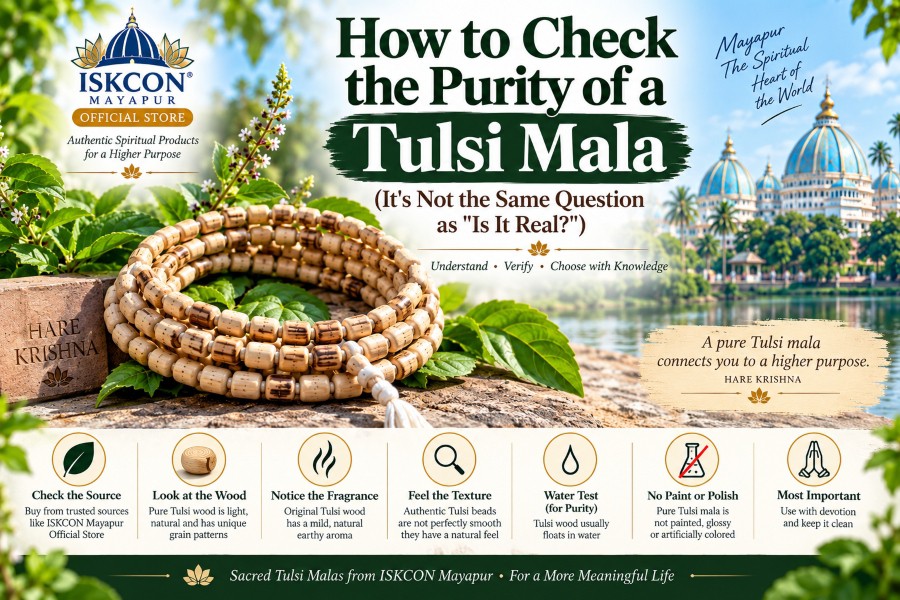 How to Check the Purity of a Tulsi Mala (It's Not the Same Question as "Is It Real?")Purity isn't the same as authenticity. Here's how to check both — whether the beads are genuinely tulsi wood, and...Read more
 -
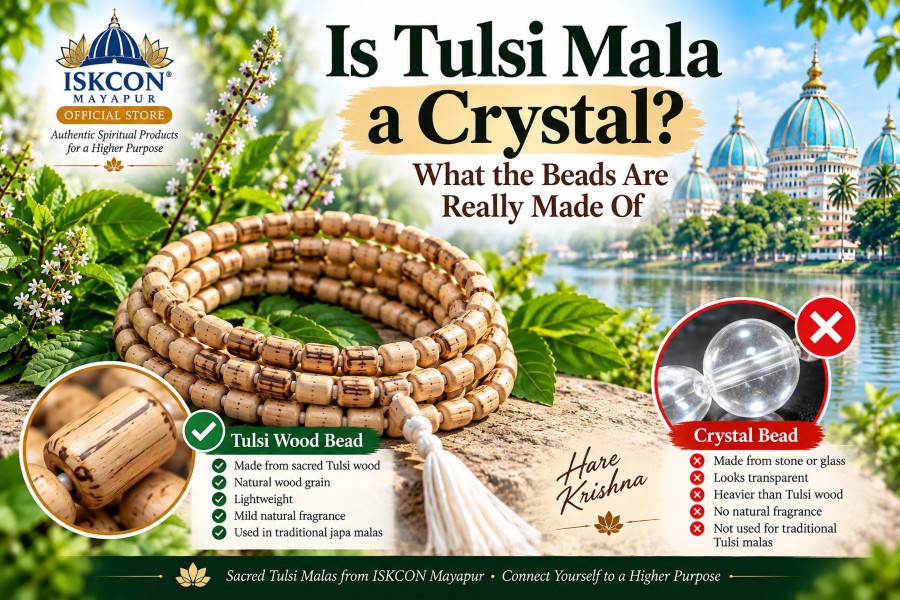 Is Tulsi Mala a Crystal? What the Beads Are Really Made OfTulsi malas often get mistaken for crystal jewellery online. Here's what tulsi beads are actually made of, why the...Read more
 -
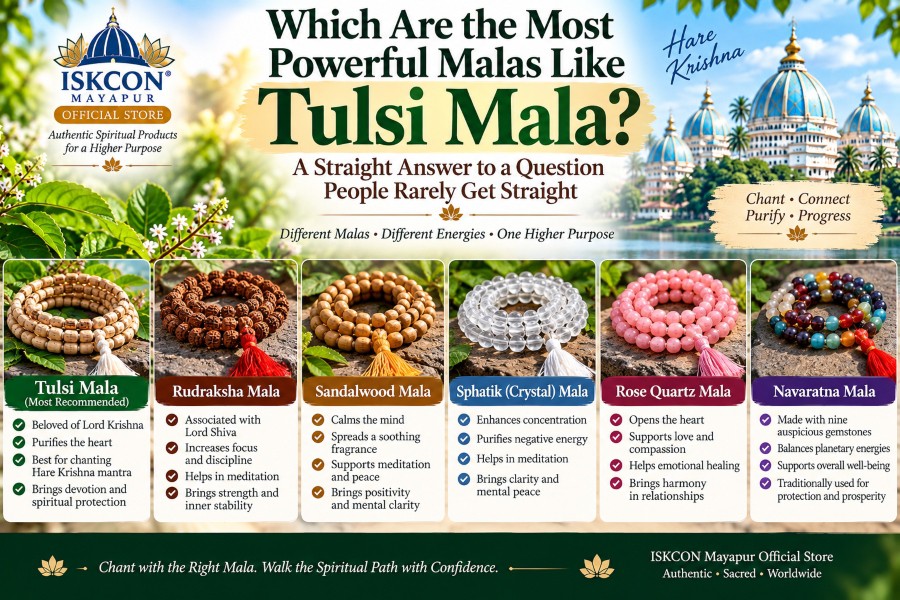 Which Are the Most Powerful Malas Like Tulsi Mala? A Straight Answer to a Question People Rarely Get StraightTulsi, rudraksha, sphatik, sandalwood, and navratna are all called "powerful" — but each belongs to a different...Read more
Leave a comment