
Why did Krishna run to embrace a poor brahmin in rags? Read the Sudama story from the Bhagavatam and learn how a...
Latest posts
-
 Krishna and Sudama: The Poor Brahmin Who Became Wealthy in LoveRead more
 -
 Vamana Avatar: How Three Steps Humbled Bali MaharajaRead more
Why did a powerful king give away three worlds to a boy asking for three steps? Learn the Vamana avatar story from...
-
 The Bhagavatam on Marriage: Duty, Love and Spiritual PartnershipRead more
What does the Bhagavatam say about marriage? Through the stories of Kardama and Devahuti, Rukmini's secret letter and...
-
 What Is Prema? The Bhagavatam's Highest Stage of Love for GodRead more
Prema is love for God with no "because" attached. Learn how the Bhagavatam describes it, the nine steps from faith to...
-
 Is Shiva Parvati Kalyana Mentioned in Srimad Bhagavatam? What the Scripture Really SaysRead more
Looking for Shiva and Parvati's wedding in the Srimad Bhagavatam? Find out what the scripture actually describes,...
-
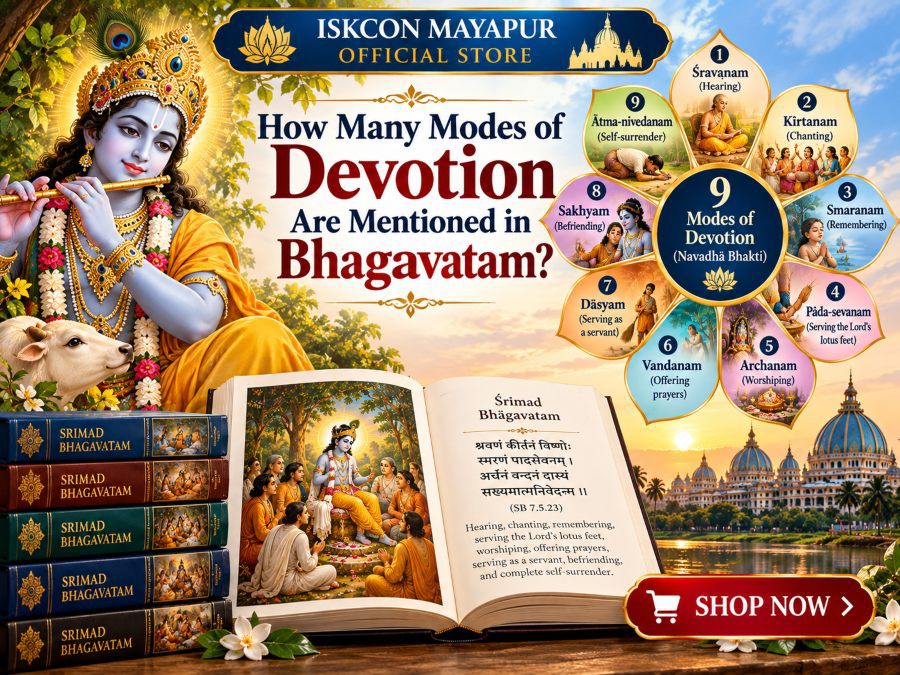 How Many Modes of Devotion Are Mentioned in Bhagavatam?Read more
A young boy named Prahlada listed nine ways to serve God, and the Bhagavatam keeps them as its answer. Learn what the...
-
 What Is Bhagavatam and Why Has It Been Read for 5,000 Years?Read more
A dying king asked one question, and the answer became the Bhagavatam. Learn what this Sanskrit scripture contains,...
-
 Who Is Lord Krishna? His Meaning, Teachings and Pastimes ExplainedRead more
Discover who Krishna is according to Srimad Bhagavatam, including His divine identity, childhood pastimes, teachings,...
-
 Incense in Islam: Bakhoor, Agarbatti and What Tradition SaysRead more
Is burning fragrance part of Muslim tradition? Explore incense in Islam, from the Prophetic practice of fumigating...
-
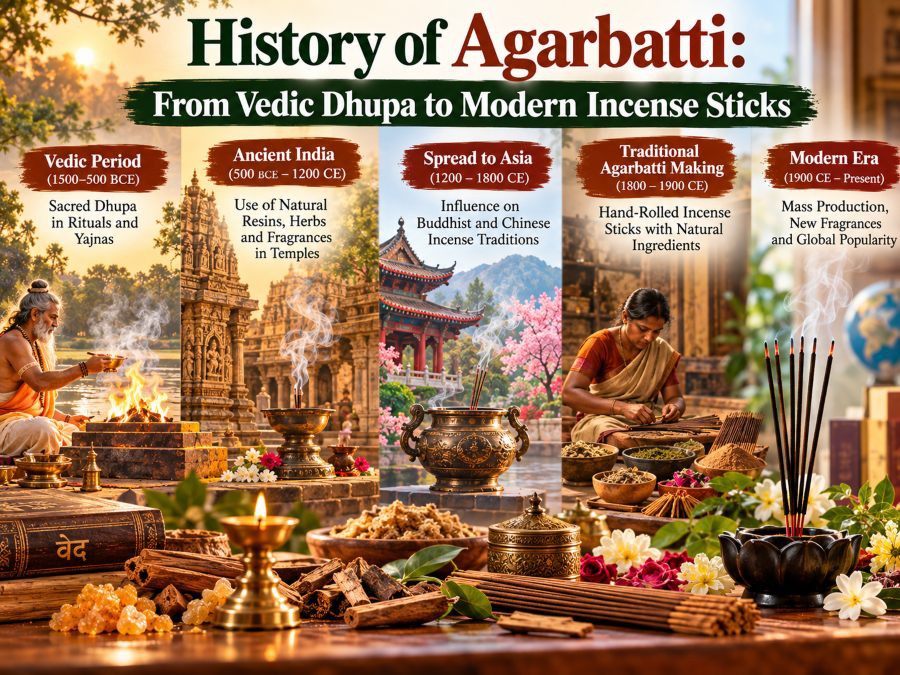 History of Agarbatti: From Vedic Dhupa to Modern Incense SticksRead more
Where did agarbatti really come from? Follow the history of agarbatti from Vedic fire rituals and temple dhupa to...
Blog categories
- Default category (0)
- MUSICAL INSTRUMENT (1)
- BOOK (5)
- DEVOTIONAL GIFT (0)
- Blog (30) click
- CHANDAN (12)
- Bhagavatam Wisdom Series (68)
- Krishna Consciousness (14)
- Mridangam Musical Instrument (6)
- Bhagavad Gita for Beginners (13)
- Bhagavad Gita As It Is (37) click
- Bhagavad Gita As It Is Telugu (0)
- Bhagavad Gita As It Is Marathi (0)
- Bhagavad Gita As It Is In Hindi (0)
- Bhagavad Gita As It Is In English (0)
- Bhagavad Gita As It Is In Bengali (8)
- Bhagavad Gita As It Is In Kannada (0)
- Bhagavad Gita As It Is In Gujarati (0)
- Bhagavad Gita As It Is In Panjabi (0)
- Bhagavad Gita As It Is In Tamil (0)
- Bhagavad Gita As It Is Odia (0)
- BHAGAVAD GITA As It Is GERMAN (0)
- Bhagavad Gita As It Is In French (0)
- Bhagavad Gita As It Is In Nepali (0)
- Bhagavad Gita As It Is In Assamese (0)
- Incense or Agarbatti (38)
- Lord Chaitanya Mahaprabhu (3)
- Vedic Temple Mayapur (14)
- kalki (15)
- Mahabharata – Dharma & Destiny (27)
- Vaishnava Scriptures (4)
- healthy product (4)
- chaitanya mahaprabhu (5)
- Tulsi Mala Guide (17)
Search in blog
Can a Non-Vegetarian Wear Tulsi Mala? The Honest Answer
Can a Non-Vegetarian Wear Tulsi Mala? Here's the Honest Answer
Picture this: someone walks into a puja shop, picks up a beautiful Tulsi Mala, and then hesitates right before paying. "Wait," they think, "I eat meat sometimes — am I even allowed to wear this?" That single moment of doubt stops more people from starting a devotional practice than any scripture ever could. So let's answer the question directly, without dancing around it: can a non-vegetarian wear Tulsi Mala, or does eating meat automatically disqualify someone from wearing sacred beads?
The short answer is yes. The longer answer is far more interesting, and it says a lot about how devotion actually works versus how people assume it works.
Why This Question Even Exists
Diet and spirituality have been tangled together for centuries, and not just in Hinduism. Plenty of traditions link food choices to purity, discipline, or moral standing. So it's not strange that people assume a sacred object like a Tulsi Mala comes with a dietary entry requirement.
Here's the thing, though. That assumption confuses cause and effect. Vegetarianism isn't a prerequisite for devotion in Vaishnava tradition — it's often a result of it. Many practitioners naturally shift toward a plant-based diet as their practice deepens, not because a rulebook forced them, but because their relationship with food changes alongside their relationship with everything else. Expecting someone to arrive at that point before they're even allowed to start is like telling a beginner runner they can't buy running shoes until they've finished a marathon.
So What Does Wearing a Tulsi Mala Actually Require?
Nothing dramatic. Genuinely.
A Tulsi Mala is generally worn by:
- People drawn to Krishna or Vishnu bhakti, at any stage of that journey
- Beginners exploring mantra meditation and japa
- Devotees raised in Vaishnava households, including children
- Curious newcomers who feel a pull toward the practice without fully understanding the philosophy yet
- People at every point on the dietary spectrum — strict vegetarians, occasional meat-eaters, and everyone in between
Notice what's missing from that list: a food test. No priest checks your last meal before handing you a mala. No scripture says "verify vegetarian status before permitting wear." The gatekeeping some people imagine simply doesn't exist in practice.
But Doesn't Scripture Say Something About Purity?
Yes, and this is where nuance actually matters instead of getting flattened into a yes-or-no rule.
Vaishnava texts do connect certain foods, including meat, with a heavier or more agitated state of consciousness, and they encourage a sattvic (pure, calming) diet as part of spiritual growth. That's real. But encouragement toward a goal is different from a locked door blocking entry until the goal is reached.
Think about it logically for a second. If wearing a Tulsi Mala required strict vegetarianism first, the mala would be useless as a tool for transformation — it would only be available to people who'd already transformed. That defeats the entire point. The mala is meant to support someone's journey, including the early, messy, imperfect parts of it, not just reward the finish line.
Does Eating Meat "Contaminate" the Mala?
This one deserves a direct answer: no, wearing a Tulsi Mala while eating non-vegetarian food doesn't spiritually damage or contaminate the beads.
What actually matters more is intention and respect. A person who eats meat but wears their mala mindfully, chants with sincerity, and treats the practice seriously is in a completely different position than someone who wears one purely as decoration with zero interest in what it represents. Diet isn't the deciding factor there — attention is.
That said, plenty of devotees do choose to remove their mala during meals, particularly meat-based ones, not out of guilt but out of respect, the same way someone might take off a wedding ring before doing something messy. It's a personal habit, not an enforced rule.
What About People Actively Trying to Cut Down on Meat?
This is actually one of the more common and quietly beautiful situations. Someone starts wearing a Tulsi Mala, and over months or years, their food choices shift on their own — less meat, more plant-based meals, not from pressure but from a gradual change in what feels aligned with their inner life.
If that's you, you're not doing anything wrong by wearing the mala before that shift completes. You're doing exactly what the mala is designed for: walking alongside a gradual, honest process instead of faking a finished version of yourself.
A few things worth remembering during that transition:
- Progress isn't linear. Some weeks you'll eat more plant-based meals than others, and that's normal.
- Guilt doesn't speed anything up. It just adds noise. Consistency in your practice matters more than dietary perfection.
- Small swaps count. Replacing even one non-vegetarian meal a week with something plant-based is real movement, not a failure to hit some invisible target.
Choosing the Right Mala for Where You Are
Not every Tulsi Mala is identical, and beginners sometimes overthink which style suits their situation. It genuinely isn't that complicated.
If you're newer to daily chanting or want something lighter and easier to wear all day, a Kanthi Mala 3 Round Small Beads style is a common starting choice — the smaller bead size keeps it comfortable around the neck, and the three rounds give it a fuller, more traditional look without feeling heavy or bulky. It's a practical option for someone who wants to build the habit of wearing a mala daily without it constantly reminding them of some strict standard they haven't reached yet.
There's no "beginner mala" versus "advanced mala" hierarchy here, despite what some online forums imply. Choose based on comfort and what feels right, not based on some imagined ranking of spiritual worthiness.
A Quick Word on Family and Social Pressure
Diet-shaming around religious items isn't always about scripture — sometimes it's just relatives or acquaintances projecting their own assumptions. Maybe an aunt raised an eyebrow when she saw the mala next to a plate of chicken curry. Maybe a friend joked that "you're not doing it right."
Here's a useful way to think about it: social commentary and spiritual instruction are not the same thing. One comes from cultural habit and personal opinion; the other comes from an actual tradition with its own internal logic, and that logic, as we've covered, doesn't demand dietary perfection as an entry fee. It's worth separating the two before letting someone else's raised eyebrow talk you out of a practice that's genuinely meaningful to you.
If anything, using the mala as a quiet anchor during moments of judgment — a physical reminder that your journey doesn't need outside approval — is one of the more practical, grounding ways to actually use it.
What If You're Not Planning to Give Up Meat at All?
This deserves its own honest section, because not everyone who wears a Tulsi Mala is on a path toward eventual vegetarianism, and that's fine too.
Some people wear the mala primarily for the calming effect it has, or as a cultural connection to family tradition, or simply because chanting with it feels grounding, without any specific plan to overhaul their diet. Devotional practice isn't a single, uniform track that everyone has to run at the same pace toward the same finish line. People engage with it differently, for different reasons, and at different depths — and none of those variations require justification to anyone else.
If your relationship with meat isn't changing anytime soon, that doesn't disqualify your mala from meaning something real to you. It just means your version of the practice looks a certain way right now, and that's allowed to be true without an expiration date attached.
Common Myths That Deserve to Be Retired
Myth 1: "Wearing a Tulsi Mala while eating meat is disrespectful." Disrespect comes from mockery or carelessness, not from being at an earlier stage of dietary change. Millions of practicing devotees eat non-vegetarian meals at some point in their journey while wearing their mala daily.
Myth 2: "You'll face bad consequences if you don't switch to vegetarian food immediately." Spiritual growth doesn't work like a countdown timer. Traditions built around gradual transformation generally don't punish people for being mid-process.
Myth 3: "Only fully vegetarian people are 'real' devotees." This creates a false hierarchy that most serious practitioners actively reject. Sincerity of practice matters more than a checklist of dietary milestones.
Myth 4: "The mala loses its power if a non-vegetarian wears it." A wooden bead doesn't run on dietary fuel. Its significance comes from what the wearer brings to the relationship, not from external verification of their eating habits.
Myth 5: "You have to hide the mala when eating non-vegetarian food." Some people do remove it out of personal preference, as mentioned earlier, but there's no rule demanding secrecy. Hiding implies shame, and shame was never part of the original intention behind wearing one.
What Actually Matters More Than Your Diet
If diet isn't the deciding factor, what is? A few things, honestly:
- Consistency. Wearing the mala regularly, with some awareness of what it represents, matters more than any single meal choice.
- Intention behind chanting. If you use the mala for japa, sincerity in that practice outweighs almost everything else.
- Respect in handling. Simple habits — not letting it touch the floor, keeping it reasonably clean, storing it properly — show more genuine regard than abstract dietary purity ever could.
- Honesty with yourself. Pretending to be further along than you are helps nobody. Wearing the mala as an honest companion to wherever you currently stand is far more valuable than performing perfection.
The Bottom Line
Nobody needs to pass a dietary exam before wearing a Tulsi Mala. Vegetarianism can be part of a deepening spiritual practice, but it's a direction to grow toward, not a locked gate blocking beginners out. Whether you eat meat occasionally, regularly, or not at all, the mala is available to you the same way it's available to anyone else willing to wear it with some genuine respect.
Start where you actually are, not where you think you're supposed to be. The rest tends to follow on its own timeline, one honest day at a time. And if anyone tells you otherwise, remember that the beads around your neck were never meant to be a scoreboard — they were meant to be a companion.
Posted in: Tulsi Mala Guide
Related posts
-
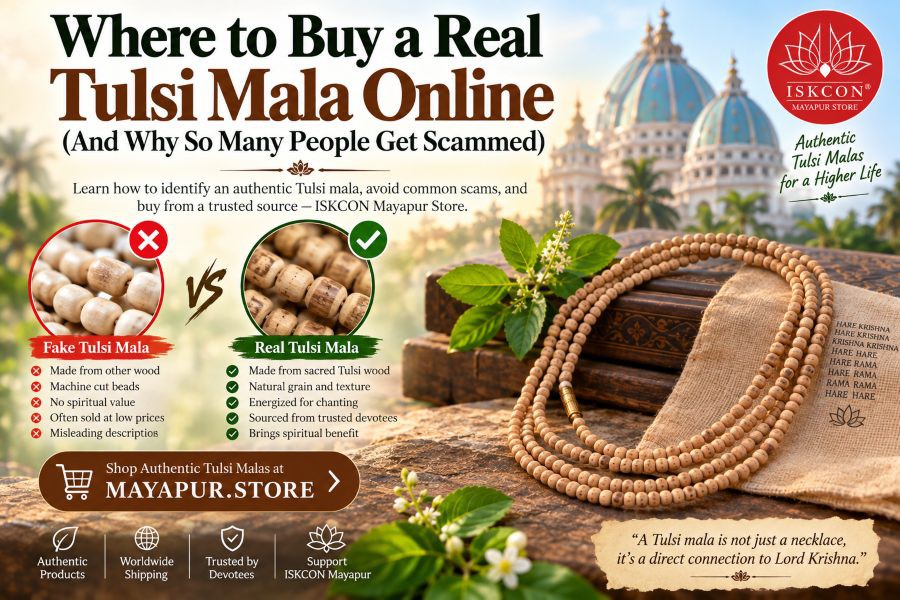 Where to Buy a Real Tulsi Mala Online Most tulsi malas sold online are fake, dyed, or mislabeled. Here's how to spot genuine tulsi wood, why traceability...Read more
 -
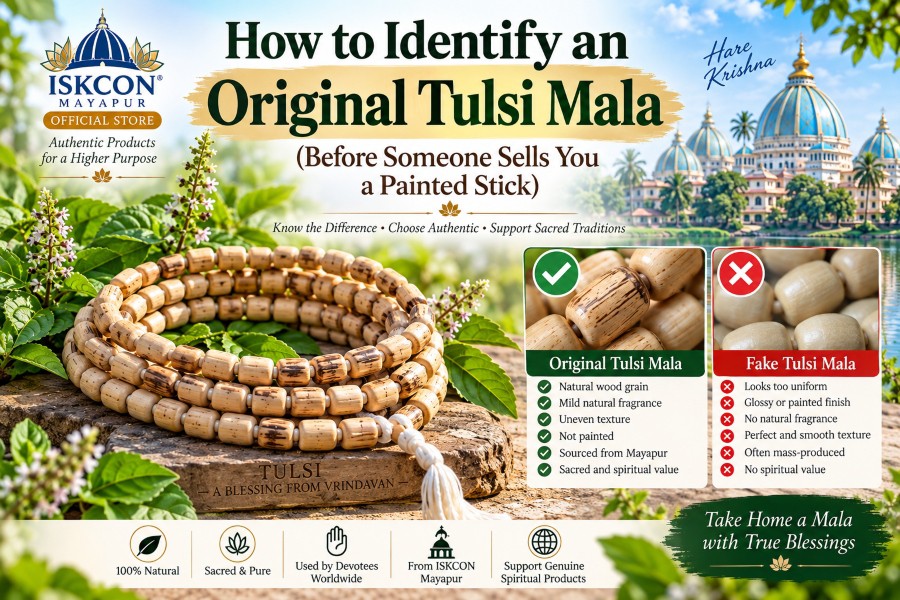 How to Identify an Original Tulsi Mala (Before Someone Sells You a Painted Stick)Most fake tulsi beads look convincing in a photo but fail the moment you hold them. Here are the weight, smell,...Read more
 -
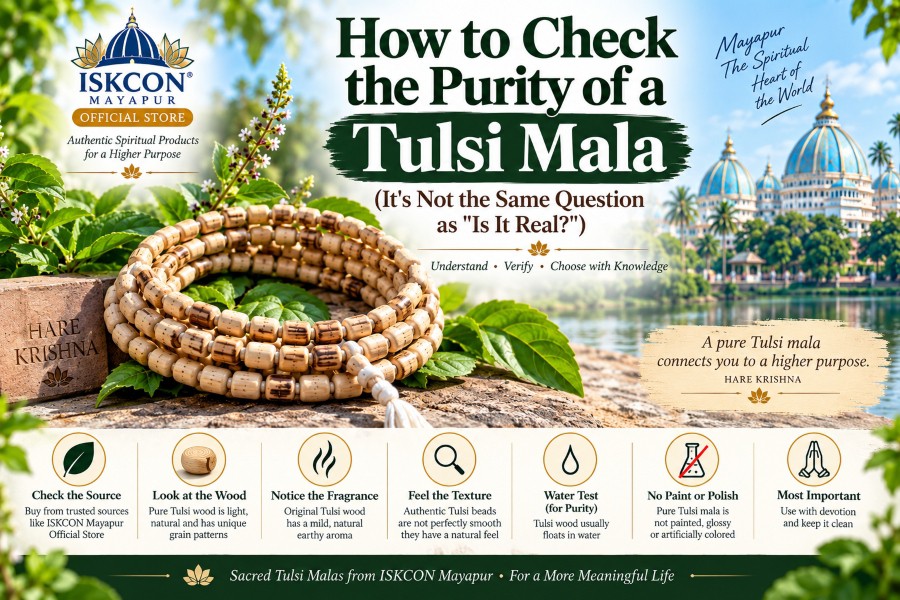 How to Check the Purity of a Tulsi Mala (It's Not the Same Question as "Is It Real?")Purity isn't the same as authenticity. Here's how to check both — whether the beads are genuinely tulsi wood, and...Read more
 -
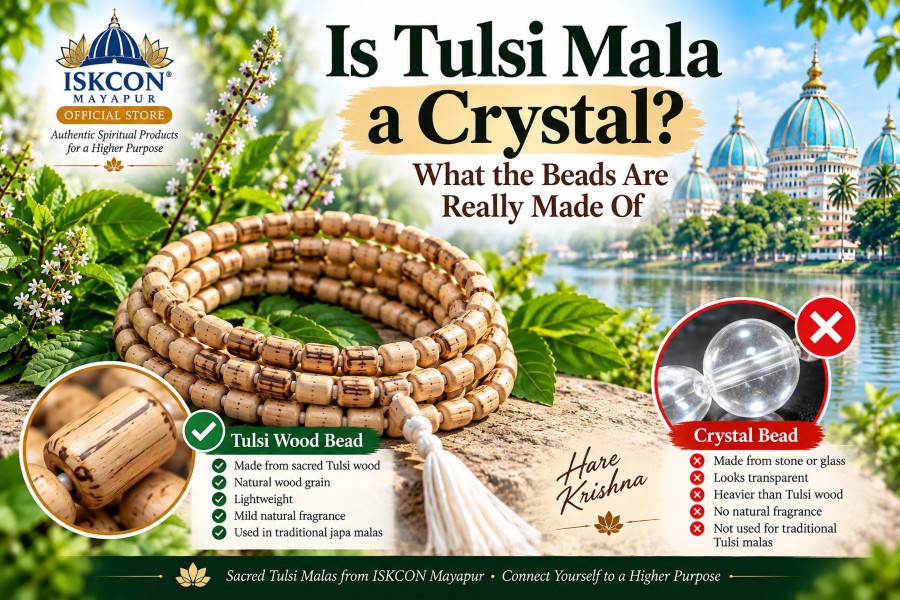 Is Tulsi Mala a Crystal? What the Beads Are Really Made OfTulsi malas often get mistaken for crystal jewellery online. Here's what tulsi beads are actually made of, why the...Read more
 -
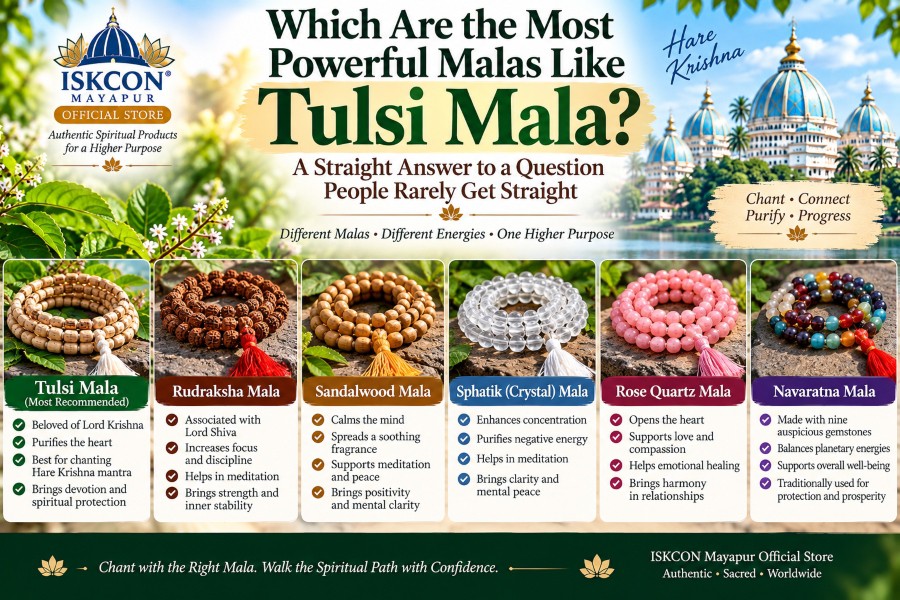 Which Are the Most Powerful Malas Like Tulsi Mala? A Straight Answer to a Question People Rarely Get StraightTulsi, rudraksha, sphatik, sandalwood, and navratna are all called "powerful" — but each belongs to a different...Read more
Leave a comment