
Why did Krishna run to embrace a poor brahmin in rags? Read the Sudama story from the Bhagavatam and learn how a...
Latest posts
-
 Krishna and Sudama: The Poor Brahmin Who Became Wealthy in LoveRead more
 -
 Vamana Avatar: How Three Steps Humbled Bali MaharajaRead more
Why did a powerful king give away three worlds to a boy asking for three steps? Learn the Vamana avatar story from...
-
 The Bhagavatam on Marriage: Duty, Love and Spiritual PartnershipRead more
What does the Bhagavatam say about marriage? Through the stories of Kardama and Devahuti, Rukmini's secret letter and...
-
 What Is Prema? The Bhagavatam's Highest Stage of Love for GodRead more
Prema is love for God with no "because" attached. Learn how the Bhagavatam describes it, the nine steps from faith to...
-
 Is Shiva Parvati Kalyana Mentioned in Srimad Bhagavatam? What the Scripture Really SaysRead more
Looking for Shiva and Parvati's wedding in the Srimad Bhagavatam? Find out what the scripture actually describes,...
-
 How Many Modes of Devotion Are Mentioned in Bhagavatam?Read more
A young boy named Prahlada listed nine ways to serve God, and the Bhagavatam keeps them as its answer. Learn what the...
-
 What Is Bhagavatam and Why Has It Been Read for 5,000 Years?Read more
A dying king asked one question, and the answer became the Bhagavatam. Learn what this Sanskrit scripture contains,...
-
 Who Is Lord Krishna? His Meaning, Teachings and Pastimes ExplainedRead more
Discover who Krishna is according to Srimad Bhagavatam, including His divine identity, childhood pastimes, teachings,...
-
 Incense in Islam: Bakhoor, Agarbatti and What Tradition SaysRead more
Is burning fragrance part of Muslim tradition? Explore incense in Islam, from the Prophetic practice of fumigating...
-
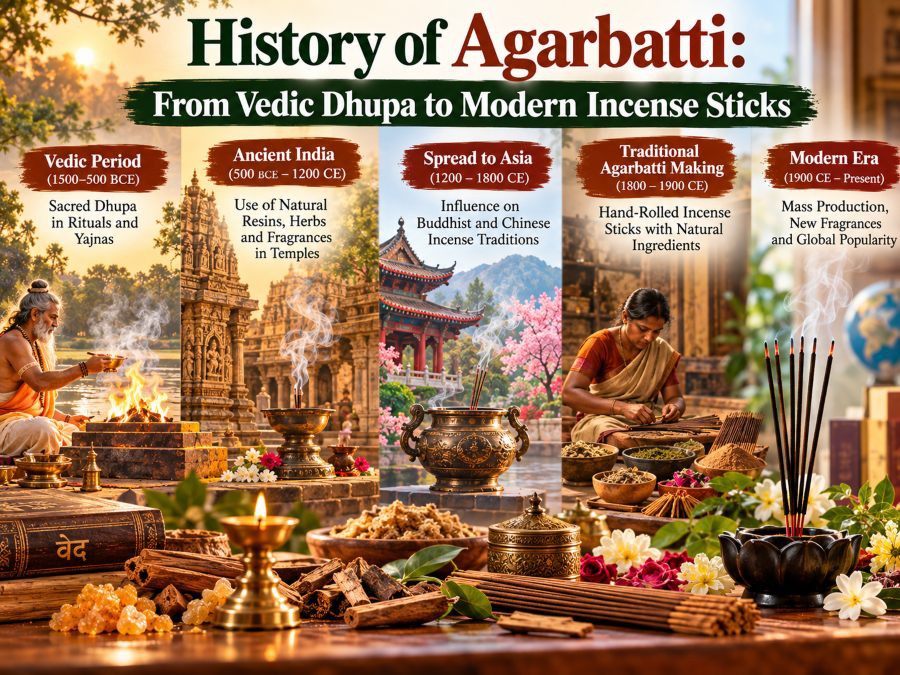 History of Agarbatti: From Vedic Dhupa to Modern Incense SticksRead more
Where did agarbatti really come from? Follow the history of agarbatti from Vedic fire rituals and temple dhupa to...
Blog categories
- Default category (0)
- MUSICAL INSTRUMENT (1)
- BOOK (5)
- DEVOTIONAL GIFT (0)
- Blog (30) click
- CHANDAN (12)
- Bhagavatam Wisdom Series (68)
- Krishna Consciousness (14)
- Mridangam Musical Instrument (6)
- Bhagavad Gita for Beginners (13)
- Bhagavad Gita As It Is (37) click
- Bhagavad Gita As It Is Telugu (0)
- Bhagavad Gita As It Is Marathi (0)
- Bhagavad Gita As It Is In Hindi (0)
- Bhagavad Gita As It Is In English (0)
- Bhagavad Gita As It Is In Bengali (8)
- Bhagavad Gita As It Is In Kannada (0)
- Bhagavad Gita As It Is In Gujarati (0)
- Bhagavad Gita As It Is In Panjabi (0)
- Bhagavad Gita As It Is In Tamil (0)
- Bhagavad Gita As It Is Odia (0)
- BHAGAVAD GITA As It Is GERMAN (0)
- Bhagavad Gita As It Is In French (0)
- Bhagavad Gita As It Is In Nepali (0)
- Bhagavad Gita As It Is In Assamese (0)
- Incense or Agarbatti (38)
- Lord Chaitanya Mahaprabhu (3)
- Vedic Temple Mayapur (14)
- kalki (15)
- Mahabharata – Dharma & Destiny (27)
- Vaishnava Scriptures (4)
- healthy product (4)
- chaitanya mahaprabhu (5)
- Tulsi Mala Guide (17)
Search in blog

Can Women Wear Tulsi Mala for Chanting? The Honest Answer
Can Women Wear Tulsi Mala for Chanting? Let's Settle This
Here's a question that shows up in devotional forums, temple courtyards, and late-night WhatsApp groups more often than you'd expect: can women actually wear a Tulsi Mala for chanting, or is that somehow reserved for men? If you've ever hesitated before picking up a mala because someone once implied it "wasn't really for you," this article is here to clear that up completely, with reasoning instead of vague reassurance.

The short version: yes, women wear Tulsi Malas for chanting, and they always have. The longer version explains exactly why the confusion exists in the first place — and why it doesn't hold up once you look at actual practice instead of assumption.
Where Does This Doubt Even Come From?
Nobody invents a question like this out of nowhere. Usually, it traces back to one of two things.
First, some people confuse Tulsi Mala practice with certain temple priesthood roles, which in some traditions do have gender-specific restrictions around ritual duties like performing arati or handling the deity directly. That's a real distinction — but it applies to formal ritual roles, not to personal chanting or wearing beads for meditation.
Second, cultural habits sometimes get mistaken for religious law. In some regions, older generations associate visible spiritual markers — malas, tilak, sacred threads — more strongly with male practitioners simply because that's what was more commonly seen publicly. Visibility isn't the same as permission, though. Plenty of women chanted quietly at home for generations without it being photographed or discussed the same way.
Put those two things together, and you get a myth that sounds plausible but doesn't actually come from scripture or established devotional practice.
What Vaishnava Tradition Actually Says About This
Gaudiya Vaishnava philosophy is built around a fairly radical idea for its time: the soul has no gender. The body does, obviously, but the spiritual self underneath it is described as beyond male or female categorization entirely. Chanting practices, including the use of a japa mala, are addressed to that soul-level identity, not to the physical body wearing the beads.
That's not a modern reinterpretation, either. Historical devotional communities, including groups closely connected to Sri Chaitanya's movement, included women as active chanters and practitioners from early on. Restricting mala use to men would directly contradict the philosophical foundation the entire tradition rests on.
So Who's Actually Wearing Tulsi Malas for Chanting?
In real, everyday practice, the following people commonly wear one:
- Women practicing daily japa, whether that's 16 rounds, four rounds, or a handful of rounds squeezed in during a busy morning
- Mothers passing the habit to daughters, the same way it's passed to sons in many families
- Women in leadership roles within temple communities, including those who teach, organize kirtan, or guide newcomers
- Solo practitioners chanting privately, with no temple affiliation at all, simply using the mala as a personal meditation tool
- Young girls given their first mala as part of family tradition, long before formal initiation ever enters the picture
None of that reads like an exception to a male-default rule. It reads like standard practice, because it is.
Does Menstruation Change Anything?
This question comes up a lot, so it's worth addressing honestly instead of skipping past it.
Some traditional customs recommend pausing temple deity worship or certain ritual activities during menstruation, rooted in older ideas about rest and energetic sensitivity during that time. Practices around this vary widely by region, family, and individual comfort — there's no single universal rule everyone follows identically.
But here's the important distinction: personal chanting with a Tulsi Mala isn't the same category as formal temple ritual. Many women continue their daily japa without interruption during menstruation, treating it as a private meditative practice rather than a public ritual duty. Others choose to pause, based on family custom or personal preference. Both approaches exist comfortably within the broader tradition, and neither one is "more correct" than the other. This is genuinely a personal or family decision, not a fixed universal mandate.
Choosing a Mala That Actually Works for Daily Chanting
Once the "am I allowed" question is out of the way, the more useful question becomes practical: which mala actually fits your routine?
For women chanting daily, comfort matters more than people expect. A mala that feels heavy or bulky around the neck often ends up sitting in a drawer instead of being worn. This is where a Kanthi Mala 3 Round Small Beads style tends to work particularly well — the smaller bead size keeps it light enough for all-day wear, while three rounds give a fuller, more traditional look without adding real weight or bulk. It's a practical middle ground for someone building a consistent chanting habit rather than reserving the mala for special occasions only.
There's genuinely no "women's mala" versus "men's mala" distinction in the tradition itself. Bead size and round count are about comfort and personal preference, not gender.
What About Wearing It During Pregnancy or Postpartum?
This is another question that comes up often enough to deserve a direct answer. Pregnancy and the postpartum period bring their own set of traditional customs in many families, ranging from dietary adjustments to temporary pauses on certain ritual activities. Chanting with a personal mala, though, generally isn't treated the same way as formal temple duties in this context either.
Many women continue their japa practice throughout pregnancy, and some describe it as one of the more grounding parts of an otherwise unpredictable stretch of life. There's no tradition-wide rule requiring a woman to remove her mala or pause chanting during this time. Family customs vary, as they do with most personal practice questions, but nothing in the philosophy itself treats pregnancy as disqualifying.
Addressing the "But My Grandmother Said..." Factor
A lot of hesitation around this topic doesn't come from scripture at all — it comes from an older relative's offhand comment, repeated enough times that it started sounding like established rule. That's worth naming directly, because it happens constantly.
Family customs deserve respect, and if a household has its own established practice around who wears what and when, that's a legitimate personal choice. But it's worth separating family habit from religious requirement. One reflects a particular household's history; the other reflects the actual philosophical basis of the practice. Conflating the two often ends up limiting people unnecessarily, especially women who were told "that's not really for us" without anyone ever pointing to an actual source for that claim.
If you're navigating this kind of pushback, it can help to gently ask where the rule actually comes from. More often than not, the honest answer is "that's just what I was told," rather than anything rooted in scripture or established tradition.
Common Myths That Need to Go
Myth 1: "Only male priests or monks can wear a Tulsi Mala." That confuses formal temple ritual roles with personal chanting practice. The two aren't the same thing, and the restriction that applies to one doesn't automatically apply to the other.
Myth 2: "Women need special permission to start chanting with a mala." No permission slip exists. Women begin japa practice the same way anyone does — by picking up a mala and starting.
Myth 3: "A woman wearing a Tulsi Mala in public will be judged or questioned." Unfortunately, isolated judgmental comments do happen occasionally, mostly rooted in the visibility bias mentioned earlier — but that reflects individual opinion, not actual doctrine. It says more about the person commenting than about any real rule being broken.
Myth 4: "Married women can't wear one because it might conflict with other jewelry." There's no conflict here at all. Many married women wear a Tulsi Mala alongside a mangalsutra or other traditional jewelry without any contradiction; they represent completely different aspects of life.
Myth 5: "You need years of practice before you're 'ready' to wear one." Readiness isn't measured in years. A first-time chanter and a decade-long practitioner both wear the same kind of mala, and both are equally welcome to.
Building a Chanting Habit That Actually Sticks
Wearing the mala is one part of the picture. Using it consistently is the part that actually shapes a practice over time.
A few things that genuinely help:
- Start smaller than you think you need to. A handful of rounds daily, done consistently, beats an ambitious number attempted once and abandoned.
- Anchor it to an existing routine. Chanting right after waking up or right before sleep tends to stick better than trying to find a random free moment during a busy day.
- Track it loosely, not obsessively. A simple tally or app reminder can help build consistency, but turning it into a rigid performance metric tends to backfire. The goal is a habit, not a scoreboard.
- Don't chase a "perfect" mindset before starting. Distracted, imperfect chanting still counts. Waiting for total focus before beginning is a trap that delays practice indefinitely.
- Keep the mala visible, not hidden away. A mala tucked in a drawer gets forgotten. One kept somewhere you'll actually see it daily gets used.
- Let your pace evolve naturally. Some weeks will feel easier than others, and that's completely normal rather than a sign something's wrong.
Why This Question Matters Beyond the Mala Itself
There's something bigger happening underneath this whole topic. When someone questions whether women can wear a Tulsi Mala for chanting, they're really questioning whether spiritual practice belongs equally to everyone or only to a specific group by default. Vaishnava tradition, at its philosophical core, answers that question generously — the soul isn't gendered, devotion isn't gate-kept by biology, and the tools of practice, including the mala itself, were never designed with an exclusion clause built in.
Anyone still holding onto the old assumption is working from cultural leftover, not actual teaching.
The Bottom Line
Women wearing a Tulsi Mala for chanting isn't an exception, a modern adjustment, or something requiring special justification. It's simply standard devotional practice, supported by the same philosophical foundation the entire tradition is built on. Whether you're picking up your very first mala today or you've been chanting for years, the beads around your neck were never asking about your gender in the first place — only about your sincerity in using them.
Wear it. Chant with it. Let it do exactly what it was always meant to do — quietly, consistently, without asking a single question about who you are before it starts working.
Posted in: Tulsi Mala Guide
Related posts
-
 Where to Buy a Real Tulsi Mala Online Most tulsi malas sold online are fake, dyed, or mislabeled. Here's how to spot genuine tulsi wood, why traceability...Read more
 -
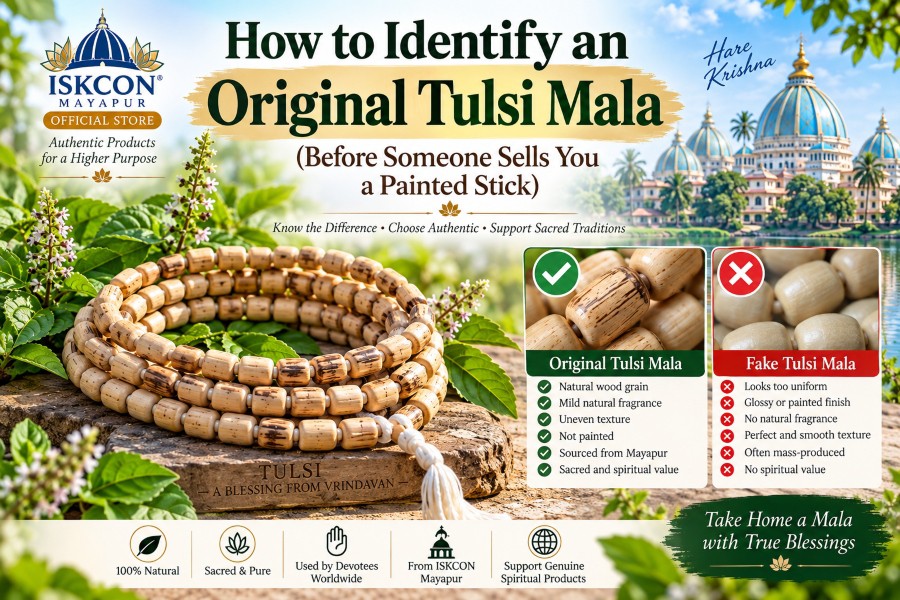 How to Identify an Original Tulsi Mala (Before Someone Sells You a Painted Stick)Most fake tulsi beads look convincing in a photo but fail the moment you hold them. Here are the weight, smell,...Read more
 -
 How to Check the Purity of a Tulsi Mala (It's Not the Same Question as "Is It Real?")Purity isn't the same as authenticity. Here's how to check both — whether the beads are genuinely tulsi wood, and...Read more
 -
 Is Tulsi Mala a Crystal? What the Beads Are Really Made OfTulsi malas often get mistaken for crystal jewellery online. Here's what tulsi beads are actually made of, why the...Read more
 -
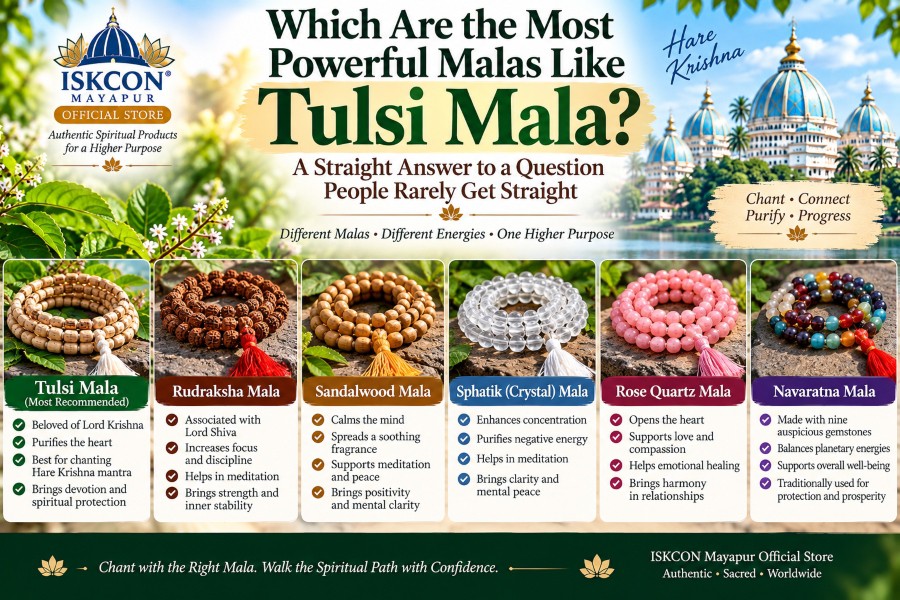 Which Are the Most Powerful Malas Like Tulsi Mala? A Straight Answer to a Question People Rarely Get StraightTulsi, rudraksha, sphatik, sandalwood, and navratna are all called "powerful" — but each belongs to a different...Read more
Leave a comment