
Why did Krishna run to embrace a poor brahmin in rags? Read the Sudama story from the Bhagavatam and learn how a...
Latest posts
-
 Krishna and Sudama: The Poor Brahmin Who Became Wealthy in LoveRead more
 -
 Vamana Avatar: How Three Steps Humbled Bali MaharajaRead more
Why did a powerful king give away three worlds to a boy asking for three steps? Learn the Vamana avatar story from...
-
 The Bhagavatam on Marriage: Duty, Love and Spiritual PartnershipRead more
What does the Bhagavatam say about marriage? Through the stories of Kardama and Devahuti, Rukmini's secret letter and...
-
 What Is Prema? The Bhagavatam's Highest Stage of Love for GodRead more
Prema is love for God with no "because" attached. Learn how the Bhagavatam describes it, the nine steps from faith to...
-
 Is Shiva Parvati Kalyana Mentioned in Srimad Bhagavatam? What the Scripture Really SaysRead more
Looking for Shiva and Parvati's wedding in the Srimad Bhagavatam? Find out what the scripture actually describes,...
-
 How Many Modes of Devotion Are Mentioned in Bhagavatam?Read more
A young boy named Prahlada listed nine ways to serve God, and the Bhagavatam keeps them as its answer. Learn what the...
-
 What Is Bhagavatam and Why Has It Been Read for 5,000 Years?Read more
A dying king asked one question, and the answer became the Bhagavatam. Learn what this Sanskrit scripture contains,...
-
 Who Is Lord Krishna? His Meaning, Teachings and Pastimes ExplainedRead more
Discover who Krishna is according to Srimad Bhagavatam, including His divine identity, childhood pastimes, teachings,...
-
 Incense in Islam: Bakhoor, Agarbatti and What Tradition SaysRead more
Is burning fragrance part of Muslim tradition? Explore incense in Islam, from the Prophetic practice of fumigating...
-
 History of Agarbatti: From Vedic Dhupa to Modern Incense SticksRead more
Where did agarbatti really come from? Follow the history of agarbatti from Vedic fire rituals and temple dhupa to...
Blog categories
- Default category (0)
- MUSICAL INSTRUMENT (1)
- BOOK (5)
- DEVOTIONAL GIFT (0)
- Blog (30) click
- CHANDAN (12)
- Bhagavatam Wisdom Series (68)
- Krishna Consciousness (14)
- Mridangam Musical Instrument (6)
- Bhagavad Gita for Beginners (13)
- Bhagavad Gita As It Is (37) click
- Bhagavad Gita As It Is Telugu (0)
- Bhagavad Gita As It Is Marathi (0)
- Bhagavad Gita As It Is In Hindi (0)
- Bhagavad Gita As It Is In English (0)
- Bhagavad Gita As It Is In Bengali (8)
- Bhagavad Gita As It Is In Kannada (0)
- Bhagavad Gita As It Is In Gujarati (0)
- Bhagavad Gita As It Is In Panjabi (0)
- Bhagavad Gita As It Is In Tamil (0)
- Bhagavad Gita As It Is Odia (0)
- BHAGAVAD GITA As It Is GERMAN (0)
- Bhagavad Gita As It Is In French (0)
- Bhagavad Gita As It Is In Nepali (0)
- Bhagavad Gita As It Is In Assamese (0)
- Incense or Agarbatti (38)
- Lord Chaitanya Mahaprabhu (3)
- Vedic Temple Mayapur (14)
- kalki (15)
- Mahabharata – Dharma & Destiny (27)
- Vaishnava Scriptures (4)
- healthy product (4)
- chaitanya mahaprabhu (5)
- Tulsi Mala Guide (17)
Search in blog

When You Should NOT Wear a Tulsi Mala: The Honest Exceptions
When You Should NOT Wear a Tulsi Mala: The Honest Exceptions Nobody Mentions
Most articles about Tulsi Mala tell you when to wear one, how to wear one, and why practically everyone qualifies. Fair enough — that's mostly true. But here's a question that rarely gets an honest answer: are there actual moments when you shouldn't wear a Tulsi Mala? Not myths dressed up as rules, but real, practical, or respectful reasons to take it off temporarily. If you've got a genuine tulsi wood mala around your neck right now and you're wondering whether certain situations call for removing it, this article gives you the honest, non-alarmist version.
To be clear upfront: none of what follows is about spiritual punishment or bad luck. It's about practicality, respect, and common sense — the same reasoning you'd apply to any meaningful object you wear daily.

Let's Kill the Fear-Based Version First
Somewhere along the way, a lot of well-meaning but inaccurate "rules" attached themselves to Tulsi Mala wearing — claims that removing it briefly causes spiritual harm, or that certain ordinary activities are somehow forbidden while wearing one. That framing does more damage than good, because it turns a genuinely comforting daily practice into a source of low-grade anxiety.
The real answer is calmer than that. There are situations where removing the mala makes sense, but none of them come from fear of punishment. They come from three simple categories: practicality, hygiene, and respect — for the mala itself, for others, and for the activity at hand.
Category One: Practical Situations Where Removal Just Makes Sense
These are common-sense moments, not spiritual violations:
- Swimming or bathing in open water. Chlorine, saltwater, and prolonged submersion aren't great for wood beads long-term, and the string can weaken with repeated soaking. Removing it here is about preserving the mala, not avoiding some ritual impurity.
- Intense physical labor or contact sports. Anything involving a real risk of the mala snagging, breaking, or getting yanked — construction work, wrestling, heavy machinery — is a reasonable moment to set it aside temporarily.
- Medical procedures requiring jewelry removal. Surgery, certain scans, or hospital protocol sometimes require removing all neck items regardless of what they are. This is a hygiene and safety matter, not a devotional one.
- Extended manual cleaning involving harsh chemicals. Bleach, strong detergents, or solvents can degrade the wood's finish. Taking it off during heavy cleaning protects the material.
None of these situations reflect disrespect toward the mala. They reflect basic care, the same way you'd remove a nice watch before doing yard work.
Category Two: Moments Where Respect Toward the Mala Itself Matters
This category leans more traditional, and it's worth understanding even if you don't follow every point strictly.
Traditionally, many devotees choose to remove or cover their mala during:
- Using the restroom. This is one of the more consistently followed customs, rooted in treating the mala as something set apart from ordinary bodily functions, out of respect rather than fear.
- Physical intimacy. Many practitioners remove their mala during this time as a matter of maintaining a clear boundary between the sacred and the personal.
- Handling non-vegetarian food directly, such as cooking or preparing meat. Some devotees prefer to set the mala aside during this specific activity, even if they don't follow strict dietary rules otherwise, simply as a gesture of separation.
Again — none of these are enforced by anyone standing over your shoulder, and skipping them doesn't trigger any kind of spiritual consequence. They're customary practices some devotees follow out of personal reverence, not universal law.
Category Three: When Wearing One Might Be More About Performance Than Practice
This is the category almost nobody talks about honestly, and it deserves real attention.
There are moments when wearing a Tulsi Mala visibly starts to feel less like genuine devotion and more like a display — worn specifically to be seen, to signal something to others, or to claim a spiritual identity without the daily practice actually backing it up. That's not a "sin" exactly, but it's worth pausing on.
A few honest questions worth asking yourself:
- Am I wearing this because it supports my actual chanting practice, or because I want to be perceived a certain way?
- Would I still wear it if nobody else could see it?
- Does putting it on feel like returning to something meaningful, or performing a role?
If the honest answer leans heavily toward performance, that's not a reason to stop wearing it forever — but it might be worth reconnecting with why you started in the first place before continuing. The mala works best as a private companion to practice, not a public costume piece.
Damaged or Deteriorating Malas: When Replacement Makes More Sense Than Continued Wear
Here's a practical point that gets overlooked constantly. Wood ages. Beads crack, strings fray, and eventually a mala reaches a point where continuing to wear it does more harm to the object than good.
Signs it's time to retire a mala rather than keep wearing it:
- Visible cracking across multiple beads, not just minor surface wear
- A string that's clearly fraying and at risk of snapping unexpectedly
- Beads that have lost their shape entirely from repeated moisture exposure
- A mala that's been broken and re-strung so many times it barely resembles its original form
There's no shame or spiritual failure in retiring a worn-out mala. Many devotees keep an old one as a personal keepsake and begin wearing a fresh one, without treating the transition as a big ceremonial event. A Kanthi Mala 2 Round makes a solid, comfortable replacement choice for daily wear — practical, unfussy, and easy to settle into as a new daily companion once an older mala has genuinely reached the end of its life.
What to Do With an Old Mala Instead of Simply Discarding It
Retiring a worn-out mala raises a natural follow-up question: what actually happens to it afterward? Throwing sacred wood beads into a regular trash bin feels wrong to most devotees, even those who aren't especially ritualistic about other things.
Common, respectful options include:
- Returning it to a river or body of flowing water, following a tradition applied to many sacred items considered too worn to keep using
- Placing it at the base of a Tulsi plant, letting the wood return to soil connected to its origin
- Keeping it in a personal drawer or small shrine space as a quiet memento, without any obligation to dispose of it at all
- Passing pieces of it along to a trusted temple or community elder, if local custom includes that practice
There's no single correct method here, and no strict deadline for deciding. An old mala sitting respectfully in a drawer for months before a decision is made isn't doing anything wrong in the meantime.
Travel and Airport Security: A Genuinely Practical Concern
Here's a situation almost nobody addresses directly, despite how often it comes up for people who travel. Wooden beads generally pass through airport security without issue, but some travelers still feel uncertain about wearing visible religious items through customs or security checkpoints in unfamiliar countries.
Realistically, a Tulsi Mala draws no more attention than any other necklace at most checkpoints. If personal comfort or unfamiliarity with a specific country's customs makes someone want to pack it in a bag rather than wear it through security, that's a perfectly reasonable practical choice, not a spiritual compromise. The mala isn't diminished by spending a flight tucked into a pouch instead of around the neck.
When Family or Cultural Context Genuinely Calls for Discretion
This one's less about the mala itself and more about navigating real-world social situations sensibly.
Some workplaces, certain formal events, or specific cultural contexts might call for a lower profile on visible religious items — not because anything's wrong with wearing one, but because navigating those spaces smoothly sometimes benefits from discretion. Tucking a mala under a collar during a job interview, for instance, isn't a betrayal of practice. It's a practical read of the room, no different from choosing more formal clothing for the same occasion.
This is entirely a personal judgment call, not a rule anyone else gets to impose. But pretending social context never matters would be dishonest, so it's worth naming directly.
What NOT Wearing a Mala Temporarily Does Not Mean
Let's clear up a few things this article is not saying, because misinterpretation happens easily with topics like this.
- It doesn't mean the mala "stopped working." A short break for practical reasons doesn't undo whatever benefit daily wear was providing.
- It doesn't mean starting over from scratch. Picking it back up after a temporary removal isn't a restart requiring any special ritual.
- It doesn't mean you're a less serious practitioner. Removing a mala for surgery, swimming, or heavy labor has nothing to do with the depth of someone's devotion.
- It doesn't require an explanation to anyone. These are personal, practical choices, not decisions requiring outside justification.
The Bottom Line
There genuinely are moments to remove a Tulsi Mala — swimming, intense physical labor, certain hygiene situations, or simply when a mala has physically worn out beyond reasonable use. None of these moments involve spiritual risk or punishment. They're common-sense pauses, not failures of devotion.
What actually matters is the pattern over time: a mala worn consistently, with genuine intention, that occasionally comes off for a practical reason, still represents a real and sincere practice. The mala was always meant to support your life, not complicate it with anxiety over every temporary removal.
If there's one thing worth carrying away from all of this, it's a shift in how the question itself gets framed. Instead of asking "am I allowed to take this off right now," a more useful question is simply "does this moment call for practicality, respect, or discretion, and is removing it the sensible response?" Nine times out of ten, the answer arrives easily once fear is taken out of the equation. The mala isn't monitoring you for slip-ups. It's there to support a practice you're building on your own terms, one ordinary day at a time, with room for the occasional necessary pause built right in.
Posted in: Tulsi Mala Guide
Related posts
-
 Where to Buy a Real Tulsi Mala Online Most tulsi malas sold online are fake, dyed, or mislabeled. Here's how to spot genuine tulsi wood, why traceability...Read more
 -
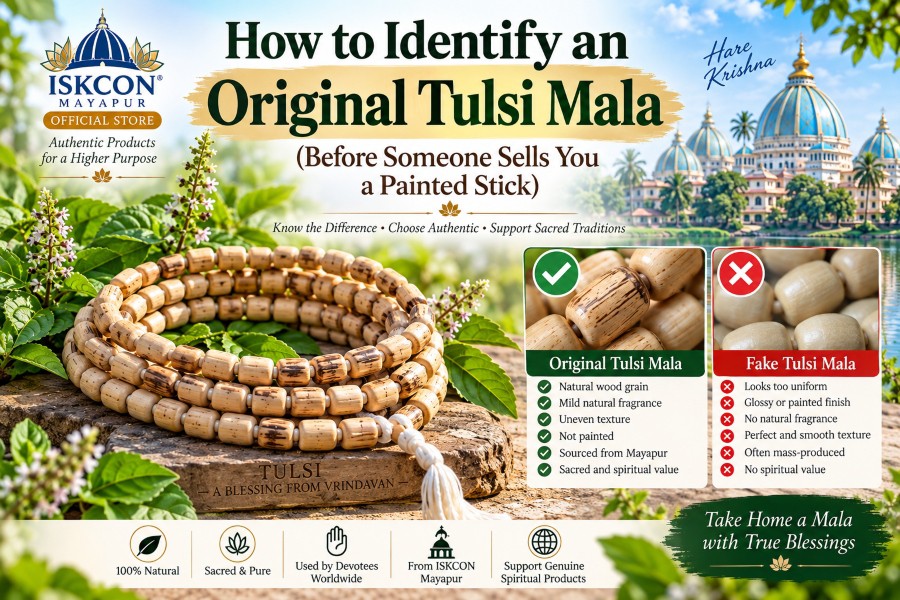 How to Identify an Original Tulsi Mala (Before Someone Sells You a Painted Stick)Most fake tulsi beads look convincing in a photo but fail the moment you hold them. Here are the weight, smell,...Read more
 -
 How to Check the Purity of a Tulsi Mala (It's Not the Same Question as "Is It Real?")Purity isn't the same as authenticity. Here's how to check both — whether the beads are genuinely tulsi wood, and...Read more
 -
 Is Tulsi Mala a Crystal? What the Beads Are Really Made OfTulsi malas often get mistaken for crystal jewellery online. Here's what tulsi beads are actually made of, why the...Read more
 -
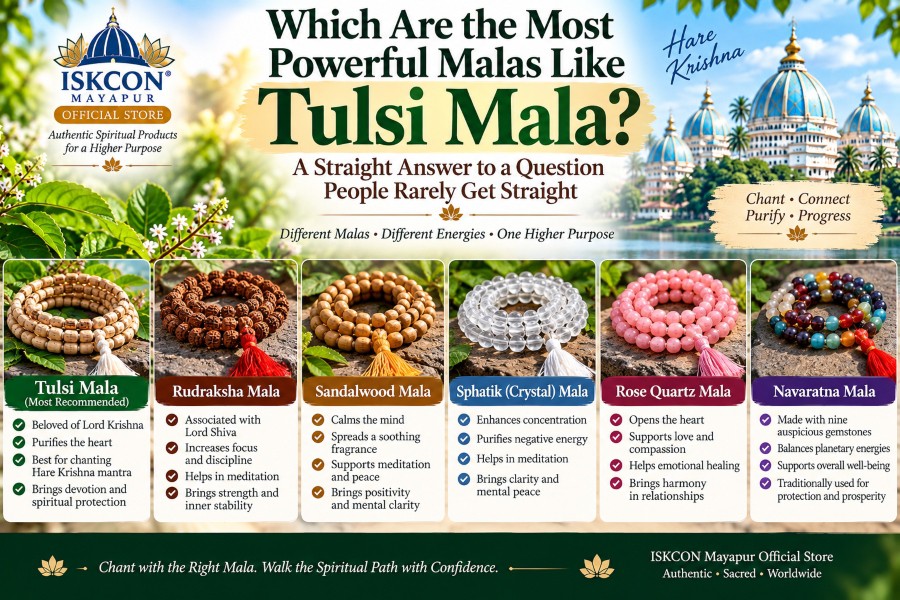 Which Are the Most Powerful Malas Like Tulsi Mala? A Straight Answer to a Question People Rarely Get StraightTulsi, rudraksha, sphatik, sandalwood, and navratna are all called "powerful" — but each belongs to a different...Read more
Leave a comment