
Why did Krishna run to embrace a poor brahmin in rags? Read the Sudama story from the Bhagavatam and learn how a...
Latest posts
-
 Krishna and Sudama: The Poor Brahmin Who Became Wealthy in LoveRead more
 -
 Vamana Avatar: How Three Steps Humbled Bali MaharajaRead more
Why did a powerful king give away three worlds to a boy asking for three steps? Learn the Vamana avatar story from...
-
 The Bhagavatam on Marriage: Duty, Love and Spiritual PartnershipRead more
What does the Bhagavatam say about marriage? Through the stories of Kardama and Devahuti, Rukmini's secret letter and...
-
 What Is Prema? The Bhagavatam's Highest Stage of Love for GodRead more
Prema is love for God with no "because" attached. Learn how the Bhagavatam describes it, the nine steps from faith to...
-
 Is Shiva Parvati Kalyana Mentioned in Srimad Bhagavatam? What the Scripture Really SaysRead more
Looking for Shiva and Parvati's wedding in the Srimad Bhagavatam? Find out what the scripture actually describes,...
-
 How Many Modes of Devotion Are Mentioned in Bhagavatam?Read more
A young boy named Prahlada listed nine ways to serve God, and the Bhagavatam keeps them as its answer. Learn what the...
-
 What Is Bhagavatam and Why Has It Been Read for 5,000 Years?Read more
A dying king asked one question, and the answer became the Bhagavatam. Learn what this Sanskrit scripture contains,...
-
 Who Is Lord Krishna? His Meaning, Teachings and Pastimes ExplainedRead more
Discover who Krishna is according to Srimad Bhagavatam, including His divine identity, childhood pastimes, teachings,...
-
 Incense in Islam: Bakhoor, Agarbatti and What Tradition SaysRead more
Is burning fragrance part of Muslim tradition? Explore incense in Islam, from the Prophetic practice of fumigating...
-
 History of Agarbatti: From Vedic Dhupa to Modern Incense SticksRead more
Where did agarbatti really come from? Follow the history of agarbatti from Vedic fire rituals and temple dhupa to...
Blog categories
- Default category (0)
- MUSICAL INSTRUMENT (1)
- BOOK (5)
- DEVOTIONAL GIFT (0)
- Blog (30) click
- CHANDAN (12)
- Bhagavatam Wisdom Series (68)
- Krishna Consciousness (14)
- Mridangam Musical Instrument (6)
- Bhagavad Gita for Beginners (13)
- Bhagavad Gita As It Is (37) click
- Bhagavad Gita As It Is Telugu (0)
- Bhagavad Gita As It Is Marathi (0)
- Bhagavad Gita As It Is In Hindi (0)
- Bhagavad Gita As It Is In English (0)
- Bhagavad Gita As It Is In Bengali (8)
- Bhagavad Gita As It Is In Kannada (0)
- Bhagavad Gita As It Is In Gujarati (0)
- Bhagavad Gita As It Is In Panjabi (0)
- Bhagavad Gita As It Is In Tamil (0)
- Bhagavad Gita As It Is Odia (0)
- BHAGAVAD GITA As It Is GERMAN (0)
- Bhagavad Gita As It Is In French (0)
- Bhagavad Gita As It Is In Nepali (0)
- Bhagavad Gita As It Is In Assamese (0)
- Incense or Agarbatti (38)
- Lord Chaitanya Mahaprabhu (3)
- Vedic Temple Mayapur (14)
- kalki (15)
- Mahabharata – Dharma & Destiny (27)
- Vaishnava Scriptures (4)
- healthy product (4)
- chaitanya mahaprabhu (5)
- Tulsi Mala Guide (17)
Search in blog

Is a Tulsi Mala Good for a Child to Wear? What Parents Should Know
Is a Tulsi Mala Good for a Child to Wear? What Parents Actually Need to Know
A grandmother slips a tiny wooden mala around her newborn grandson's neck before anyone's even discussed it. A five-year-old insists on wearing the same beads she saw her mother chanting with that morning. Scenes like these play out in Vaishnava households constantly, and yet parents outside that immediate context often pause and wonder: is a Tulsi Mala actually good for a child to wear, or is this something better left until they're older? If you've been comparing the lightest tulsi malas available, specifically hoping to find something safe and comfortable enough for a young child, this article covers both the spiritual reasoning and the practical safety side honestly.
Short answer: yes, with some genuinely important practical considerations depending on the child's age. Let's walk through both the meaningful part and the sensible part, because parents deserve both.

Why Families Introduce Tulsi Mala to Children So Early
This isn't a modern trend. Introducing children to devotional items early has deep roots in Vaishnava family life, and the reasoning behind it holds up when you actually examine it.
A few reasons families do this:
- Normalizing devotion as ordinary, not exceptional. A child who grows up with a mala around their neck doesn't experience devotional practice as a separate, formal thing introduced later in life. It's simply part of who they are from the start.
- Building association before explanation. Children absorb rhythm and habit long before they grasp abstract theology. Wearing a mala daily plants a seed that intellectual understanding can grow into later.
- Continuing a family lineage. In many households, this is simply what's done — the same way a family passes down a particular way of celebrating festivals or a specific home recipe.
- A tangible blessing. Parents often frame it less as "teaching a lesson" and more as offering ongoing protection and connection, similar to how many cultures place a protective item on infants regardless of religious background.
None of this requires the child to understand or consent to the deeper philosophy first. A toddler doesn't grasp the meaning of a family heirloom bracelet either, but that doesn't stop families from valuing the gesture of giving one.
The Honest Safety Conversation Nobody Skips (And Neither Should You)
Here's where this article needs to be more careful than most, because spiritual reasoning alone shouldn't override basic child safety. If you're a parent considering this for a young child, the practical side matters just as much as the devotional one.
Genuine safety considerations, by age:
- Infants and very young toddlers (under roughly 2–3 years): Choking and strangulation risk from any string-based neck item is a real, well-documented concern for this age group, and it applies to a Tulsi Mala exactly as it would to any other necklace, cord, or pendant. Many pediatric safety guidelines recommend avoiding anything around an infant's neck, particularly during unsupervised sleep, regardless of what the item represents.
- Older toddlers and young children who are mobile and curious: The bigger risk shifts toward small beads coming loose and becoming a choking hazard if a child chews on or pulls apart the mala, which younger children frequently do with anything new around their neck.
- School-age children: Generally the safest range for full-time wear, since the strangulation and choking risks drop significantly once a child is older, more coordinated, and less prone to mouthing objects.
This isn't meant to scare anyone away from the practice — it's meant to make sure the spiritual gesture doesn't accidentally create a physical risk that outweighs its intended purpose. Plenty of thoughtful, devoted parents choose alternative approaches for the youngest age group specifically because of this.
Practical Alternatives for Very Young Children
If the safety considerations above make you want to wait before putting a mala directly around an infant's neck, there are genuinely good alternatives that preserve the intention without the physical risk.
- Wrist malas instead of neck malas. A properly sized, securely fastened wrist mala removes the strangulation concern almost entirely while still giving a young child something tangible to wear.
- Placing the mala near the child rather than on them. Some families keep a small mala tied to a crib rail, placed on a shelf near where the child sleeps, or kept in a small pouch attached to clothing rather than worn around the neck during infancy.
- Supervised-only wear. Some parents put the mala on during specific supervised moments — a puja, a family gathering, a photo — and remove it the rest of the time until the child is developmentally past the highest-risk age.
- Waiting until early toddlerhood or later, and treating that later date as its own small, meaningful milestone rather than something delayed reluctantly.
None of these alternatives dilute the spiritual gesture. They simply adapt the how while keeping the why fully intact.
Choosing the Right Mala Once a Child Is Old Enough for Daily Wear
Once safety considerations are addressed and a family decides a child is ready for regular wear, comfort becomes the next real priority. Children, understandably, will pull off or refuse to wear anything that feels heavy, scratchy, or awkward.
For this stage, a Kanthi Mala 2 Round is a genuinely practical option. It sits lighter around a smaller neck than heavier multi-round styles, and the two-round design offers a fuller, more traditional look without adding unnecessary bulk for a child's frame. Parents introducing a first "real" mala to a child often find this middle-ground weight easier for a child to tolerate all day compared to bulkier adult styles.
Bead size matters here too — smaller, smoother beads tend to sit more comfortably against a child's skin, and a snugly fitted length (not loose enough to catch on things, not so tight it's uncomfortable) makes daily wear far more sustainable than a mala that constantly needs adjusting.
What About Naptime and Sleep, Even for Older Children?
This deserves its own mention because it's a genuinely practical detail parents overlook once a child is past the highest-risk infant stage. Even for a school-age child, some families choose to remove the mala before sleep simply as a matter of comfort — a string-based item pressing against the neck during hours of rolling around isn't particularly restful, mala or otherwise.
There's no rule requiring removal at bedtime for an older, safely-aged child, but it's a reasonable, low-stakes habit worth considering regardless of the devotional aspect. Comfort during sleep is a practical parenting decision, not a spiritual one, and it's fine to treat it that way.
Involving Your Child in the Decision as They Grow
As children get older, somewhere around the age where they start expressing clear preferences about clothing and appearance, it becomes worth including them directly in the conversation rather than deciding entirely on their behalf.
- Ask if they want to wear it, rather than assuming the answer. Some children take genuine pride in it; others feel self-conscious, especially around peers unfamiliar with the practice.
- Explain the "why" in terms that fit their age, adjusting the depth of explanation as they mature and ask more detailed questions.
- Respect a period of resistance without treating it as failure. A child who takes it off for a while at school, then chooses to wear it again later on their own, is going through a normal process of building their own relationship with the practice, not rejecting the family's values.
Letting a child gradually take ownership of the decision, rather than treating it as a fixed parental mandate forever, tends to produce a far more genuine, lasting connection to the practice once they're old enough to choose for themselves.
Does a Child Need to Understand the Meaning First?
This question comes up a lot, and it's worth answering directly: no, understanding isn't a prerequisite.
Children absorb meaning gradually, through repetition and example, not through a single explained lesson that has to land perfectly before the practice begins. A five-year-old wearing a mala because "mama wears one too" is building an association that deepens naturally over years, the same way a child raised around music develops an ear for it long before formal lessons start.
What actually helps more than early theological explanation:
- Modeling the behavior consistently. Children notice what parents actually do far more than what parents explain in words.
- Simple, age-appropriate answers when questions come up. "It helps us remember to be kind and calm" resonates with a young child more than a detailed philosophical explanation would.
- Letting curiosity lead. Kids often ask more sophisticated questions on their own timeline than parents expect, and those organic questions are usually the best teaching moments.
Common Myths Parents Encounter
Myth 1: "A child wearing a Tulsi Mala must follow the same rules as an adult devotee." Not true. Children are held to reasonable, age-appropriate expectations, not the full framework of adult devotional discipline.
Myth 2: "If a child accidentally breaks the mala, it's a bad omen." Beads break. It happens constantly with active children, and it's treated as an ordinary, practical event, not a spiritual warning sign.
Myth 3: "A child needs to be formally initiated before wearing one." Diksha and childhood mala-wearing are entirely separate. Countless children wear a mala for years, sometimes their whole childhood, without any formal initiation involved.
Myth 4: "Only children from strictly religious households should wear one." Plenty of families introduce this gently, more as cultural connection and grounding ritual than strict religious observance, without treating it as an all-or-nothing spiritual commitment.
Trusting Your Own Read of Your Child
At the end of the day, no article, including this one, knows your specific child's temperament, safety needs, or readiness better than you do. Some toddlers are calm and unlikely to pull at something new around their neck; others investigate everything with their hands and mouth constantly. That real, individual difference matters more than any general guideline.
If something feels off — the mala seems too tight, your child keeps tugging at it anxiously, or you're simply not comfortable yet — there's no rush. The tradition isn't going anywhere, and a slightly later, more comfortable start beats a rushed one that creates unnecessary stress for either of you.
The Bottom Line
A Tulsi Mala can be a genuinely meaningful thing for a child to wear, carrying real cultural and devotional value that many families cherish across generations. But meaning and safety aren't in competition here — they can both be honored at once, simply by matching the how to your child's actual age and temperament. Start with sensible precautions for the youngest ages, choose a comfortable, well-fitted style once daily wear begins, and let understanding grow at its own natural pace. That combination serves both the tradition and the child far better than rushing either one.
Posted in: Tulsi Mala Guide
Related posts
-
 Where to Buy a Real Tulsi Mala Online Most tulsi malas sold online are fake, dyed, or mislabeled. Here's how to spot genuine tulsi wood, why traceability...Read more
 -
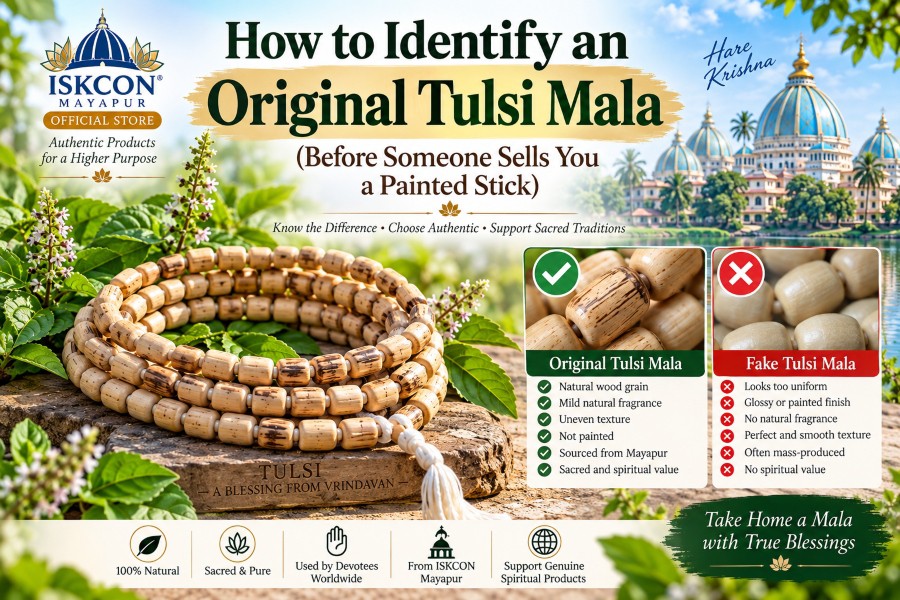 How to Identify an Original Tulsi Mala (Before Someone Sells You a Painted Stick)Most fake tulsi beads look convincing in a photo but fail the moment you hold them. Here are the weight, smell,...Read more
 -
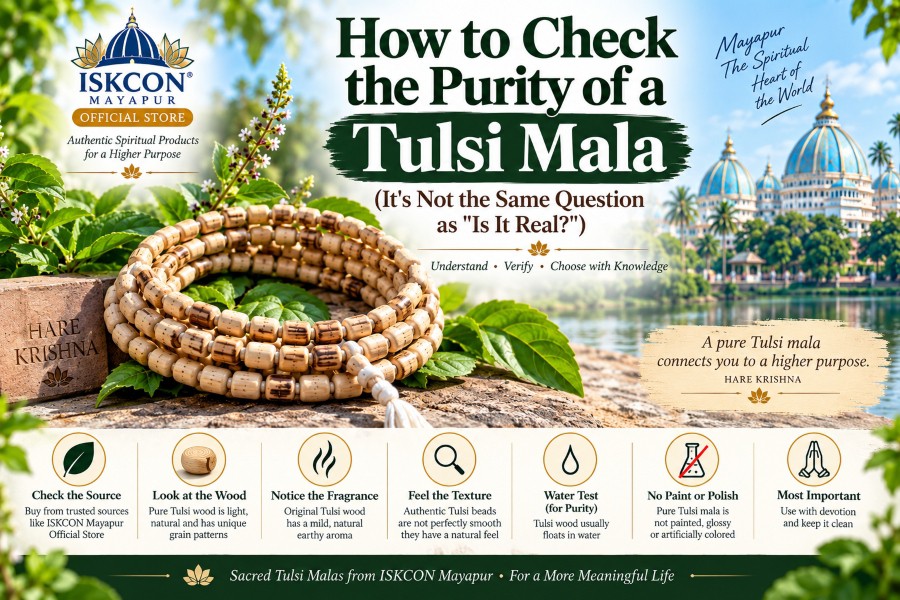 How to Check the Purity of a Tulsi Mala (It's Not the Same Question as "Is It Real?")Purity isn't the same as authenticity. Here's how to check both — whether the beads are genuinely tulsi wood, and...Read more
 -
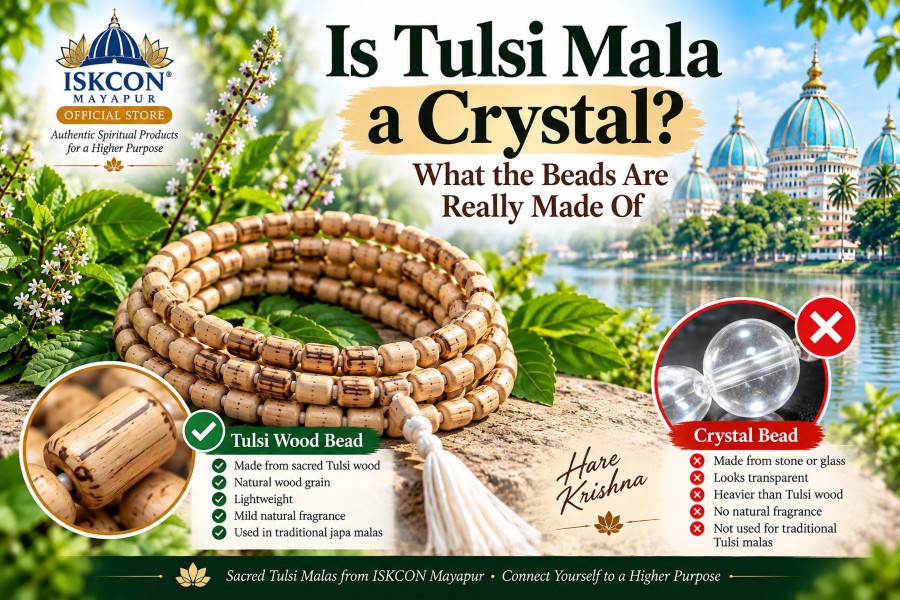 Is Tulsi Mala a Crystal? What the Beads Are Really Made OfTulsi malas often get mistaken for crystal jewellery online. Here's what tulsi beads are actually made of, why the...Read more
 -
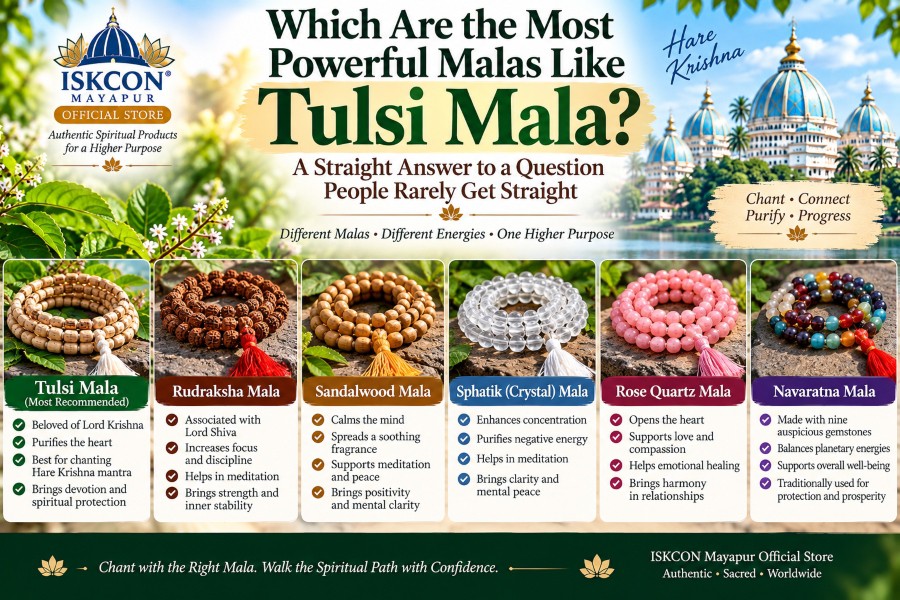 Which Are the Most Powerful Malas Like Tulsi Mala? A Straight Answer to a Question People Rarely Get StraightTulsi, rudraksha, sphatik, sandalwood, and navratna are all called "powerful" — but each belongs to a different...Read more
Leave a comment