
Why did Krishna run to embrace a poor brahmin in rags? Read the Sudama story from the Bhagavatam and learn how a...
Latest posts
-
 Krishna and Sudama: The Poor Brahmin Who Became Wealthy in LoveRead more
 -
 Vamana Avatar: How Three Steps Humbled Bali MaharajaRead more
Why did a powerful king give away three worlds to a boy asking for three steps? Learn the Vamana avatar story from...
-
 The Bhagavatam on Marriage: Duty, Love and Spiritual PartnershipRead more
What does the Bhagavatam say about marriage? Through the stories of Kardama and Devahuti, Rukmini's secret letter and...
-
 What Is Prema? The Bhagavatam's Highest Stage of Love for GodRead more
Prema is love for God with no "because" attached. Learn how the Bhagavatam describes it, the nine steps from faith to...
-
 Is Shiva Parvati Kalyana Mentioned in Srimad Bhagavatam? What the Scripture Really SaysRead more
Looking for Shiva and Parvati's wedding in the Srimad Bhagavatam? Find out what the scripture actually describes,...
-
 How Many Modes of Devotion Are Mentioned in Bhagavatam?Read more
A young boy named Prahlada listed nine ways to serve God, and the Bhagavatam keeps them as its answer. Learn what the...
-
 What Is Bhagavatam and Why Has It Been Read for 5,000 Years?Read more
A dying king asked one question, and the answer became the Bhagavatam. Learn what this Sanskrit scripture contains,...
-
 Who Is Lord Krishna? His Meaning, Teachings and Pastimes ExplainedRead more
Discover who Krishna is according to Srimad Bhagavatam, including His divine identity, childhood pastimes, teachings,...
-
 Incense in Islam: Bakhoor, Agarbatti and What Tradition SaysRead more
Is burning fragrance part of Muslim tradition? Explore incense in Islam, from the Prophetic practice of fumigating...
-
 History of Agarbatti: From Vedic Dhupa to Modern Incense SticksRead more
Where did agarbatti really come from? Follow the history of agarbatti from Vedic fire rituals and temple dhupa to...
Blog categories
- Default category (0)
- MUSICAL INSTRUMENT (1)
- BOOK (5)
- DEVOTIONAL GIFT (0)
- Blog (30) click
- CHANDAN (12)
- Bhagavatam Wisdom Series (68)
- Krishna Consciousness (14)
- Mridangam Musical Instrument (6)
- Bhagavad Gita for Beginners (13)
- Bhagavad Gita As It Is (37) click
- Bhagavad Gita As It Is Telugu (0)
- Bhagavad Gita As It Is Marathi (0)
- Bhagavad Gita As It Is In Hindi (0)
- Bhagavad Gita As It Is In English (0)
- Bhagavad Gita As It Is In Bengali (8)
- Bhagavad Gita As It Is In Kannada (0)
- Bhagavad Gita As It Is In Gujarati (0)
- Bhagavad Gita As It Is In Panjabi (0)
- Bhagavad Gita As It Is In Tamil (0)
- Bhagavad Gita As It Is Odia (0)
- BHAGAVAD GITA As It Is GERMAN (0)
- Bhagavad Gita As It Is In French (0)
- Bhagavad Gita As It Is In Nepali (0)
- Bhagavad Gita As It Is In Assamese (0)
- Incense or Agarbatti (38)
- Lord Chaitanya Mahaprabhu (3)
- Vedic Temple Mayapur (14)
- kalki (15)
- Mahabharata – Dharma & Destiny (27)
- Vaishnava Scriptures (4)
- healthy product (4)
- chaitanya mahaprabhu (5)
- Tulsi Mala Guide (17)
Search in blog
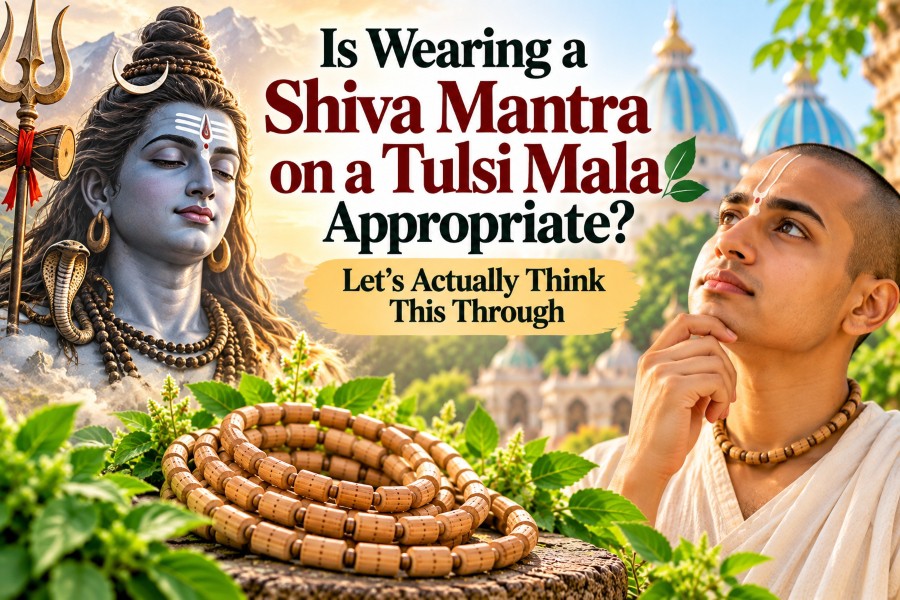
Is Wearing a Shiva Mantra on a Tulsi Mala Appropriate?
Is Wearing a Shiva Mantra on a Tulsi Mala Appropriate? Let's Actually Think This Through
Someone walks into a puja shop wanting two things at once: a Tulsi Mala for its calming, grounding presence, and a pendant engraved with "Om Namah Shivaya" to hang alongside it. Is that combination fine, or does it mix two things that were never meant to sit together? This question comes up more often than you'd expect, and most answers online either dodge it completely or hand out a flat "no" without explaining why. If you're considering a Vaishnava kanthi mala and wondering whether a Shiva mantra belongs on it, this article walks through the actual reasoning instead of just the verdict.
Short answer first: it's a genuinely reasonable question with a more layered answer than a simple yes or no, and understanding why matters more than memorizing the conclusion.
Why This Question Even Makes Sense to Ask
Hindu devotional practice isn't monolithic. Vishnu worship, Shiva worship, Devi worship, and countless regional and family traditions all coexist, sometimes within the same household, sometimes even within the same person's personal practice. So it's completely natural to wonder whether devotional items can blend across these traditions, the way someone might wear items from different but related spiritual lineages elsewhere in the world.
The honest answer requires understanding what a Tulsi Mala actually represents, rather than treating it as a generic, interchangeable "Hindu prayer bead" that works the same regardless of which mantra gets paired with it.
What a Tulsi Mala Specifically Represents
This is the part that actually answers the question, so it's worth taking seriously instead of skimming past it.
Tulsi isn't a neutral plant within Hindu tradition — she's specifically and deeply associated with Vishnu and Krishna worship. Vaishnava texts describe her as intimately connected to the Lord, sometimes depicted as his eternal consort in plant form. A mala made from her wood isn't just "sacred beads, generically." It's a devotional tool built specifically for Vaishnava practice, carrying that particular lineage and symbolism in its material itself.
Compare that to rudraksha, which carries the opposite association — deeply connected to Shiva worship, traditionally used for mantras and practices oriented toward that deity. Each material isn't interchangeable scaffolding for any mantra you want to attach to it. The material itself already carries a specific devotional identity.
So What Happens When You Pair Tulsi With a Shiva Mantra?
Here's where the real answer lives, and it's more nuanced than a flat prohibition.
From a strict Vaishnava perspective, pairing a Shiva mantra directly onto a Tulsi Mala creates a kind of symbolic mismatch — combining a devotional tool built specifically for one deity's worship with mantra practice oriented toward another. It's not framed as offensive to Shiva, whom Vaishnava tradition holds in genuine respect as a great devotee of Vishnu himself. The concern is more about coherence than conflict — using a tool built for one specific devotional focus while practicing mantra work aimed somewhere else.
From a broader, more universalist Hindu perspective, many practitioners see all deities as manifestations of one underlying divine reality, and from that view, the specific pairing matters far less. Someone operating from that framework might see no real tension in the combination at all.
Neither view is "wrong" exactly — they come from different theological starting points. But if you're specifically working within Gaudiya Vaishnava practice, where the Tulsi Mala tradition actually originates, the more coherent and traditionally grounded approach keeps the mantra practice aligned with what the mala itself represents.
Why Coherence Actually Matters in Practice, Not Just Theory
This isn't just an abstract theological point — it has a real, practical effect on how a mantra practice actually feels and functions.
Devotional practice works partly through consistent symbolic reinforcement. Wearing something specifically connected to Krishna or Vishnu, while chanting mantras with that same focus, creates a unified, mutually reinforcing practice. Every element points the same direction. Add a mismatched element — a mantra oriented elsewhere, worn on a mala built for a different lineage — and you introduce a kind of internal split that can genuinely dilute the felt coherence of the practice, even if nothing "bad" technically happens.
Think of it less like breaking a rule and more like mixing metaphors in a single sentence. Nothing catastrophic occurs, but the clarity and power of what you're doing weakens a little, simply because the pieces aren't pulling in the same direction.
What About People Who Genuinely Practice Both Traditions?
This is a real situation for plenty of people, and it deserves an honest answer rather than being waved away.
Some practitioners maintain a devotional life that includes both Vishnu and Shiva worship, often shaped by family background, regional custom, or personal spiritual exploration. For these practitioners, the most coherent approach usually isn't blending both onto a single item, but rather keeping the tools separate while honoring both practices.
A practical way to handle this:
- Use the Tulsi Mala specifically for Vishnu or Krishna-oriented mantra practice, keeping that association clean
- Use a separate rudraksha mala for Shiva-oriented mantras, maintaining its own distinct lineage and symbolism
- Treat each mala as a dedicated tool for its respective practice, rather than trying to make one item serve both purposes simultaneously
This approach actually strengthens both practices rather than diluting either one. Each mala stays coherent with what it was built for, and the practitioner gets the benefit of both traditions without the symbolic confusion of mixing them into a single object.
Choosing a Mala That Actually Fits Vaishnava Practice
If you're specifically building or refining a Krishna or Vishnu-oriented chanting practice, choosing a mala that stays coherent with that focus matters more than people initially expect.
A Kanthi Mala 3 Round is a solid, traditional choice for exactly this purpose. Three rounds give it a substantial, established presence, and staying with a straightforward Tulsi wood design keeps the entire practice symbolically aligned — no mixed materials, no competing associations, just a clean, dedicated tool built for Vaishnava mantra practice specifically.
Simplicity here isn't a limitation. It's actually the point. A mala that doesn't try to serve every possible devotional direction at once ends up serving its actual purpose more effectively.
What If You Already Bought One With a Mismatched Mantra?
This is worth addressing directly, since plenty of people arrive at this question after the fact, not before. Maybe a mala was a gift, or bought without knowing the distinction covered above.
There's no need for alarm or an urgent replacement. Nothing harmful has occurred by owning or having briefly worn a mismatched combination. The most sensible path forward is simply adjusting from here: if you're building a genuine Vaishnava mantra practice, consider setting that particular item aside for a more coherent one going forward, or using it for something more general — a keepsake, a reminder, a piece with sentimental rather than active devotional function. There's no ceremony required to "correct" a past purchase, and no reason to feel it was a mistake worth dwelling on.
Regional Variation Worth Knowing About
Like most nuanced devotional questions, this one isn't handled identically everywhere. Some regions and communities hold looser boundaries between Vaishnava and Shaiva practice, particularly in areas with strong syncretic traditions where household worship regularly includes multiple deities without a strict separation between their respective tools.
Other communities, especially those closely tied to specific Gaudiya Vaishnava lineages, maintain firmer distinctions and would more consistently recommend keeping Tulsi Mala practice specifically aligned with Krishna and Vishnu devotion. Neither approach is universally "more correct" — they reflect different regional histories and theological emphases that developed over centuries.
If you're part of a specific community or lineage, it's worth checking what convention that particular group follows rather than assuming one universal answer applies everywhere. This article reflects the more traditionally grounded Gaudiya Vaishnava reasoning specifically, since that's the lineage the Tulsi Mala itself comes from.
Talking to a Teacher or Elder About This
If this question genuinely matters to your practice, and the reasoning above still leaves some uncertainty, talking with someone more experienced in your specific tradition is worth more than any general article, this one included. A teacher familiar with your particular lineage and community can speak to nuances that a broad overview simply can't capture, including family-specific customs or regional practices that might shape the answer for your exact situation.
Common Myths and Overcorrections Worth Addressing
Myth 1: "Wearing a Shiva mantra on Tulsi is deeply offensive to Shiva." This overstates the concern. Vaishnava tradition holds Shiva in high regard; the issue isn't disrespect toward him, but symbolic coherence within a specific devotional tool.
Myth 2: "You can never own both a Tulsi Mala and a rudraksha mala." Not true. Plenty of practitioners own both, using each for its own distinct purpose, without any contradiction.
Myth 3: "Mixing mantras and materials will cause spiritual harm." There's no tradition of punishment attached to this. It's a question of coherence and effectiveness in practice, not risk or danger.
Myth 4: "Only advanced practitioners need to think about this distinction." Beginners benefit from understanding this early, actually, since it helps build a clean, focused practice from the start rather than untangling confusion later.
Myth 5: "This is a rigid, universal rule everyone follows identically." As covered above, plenty of practitioners hold a more universalist view where this distinction matters less. This is a tradition-specific consideration, not a single fixed law binding everyone equally.
A Simple Way to Decide for Yourself
If you're still unsure which approach fits your own practice, a few honest questions help clarify things:
- Am I specifically building a Krishna or Vishnu-focused practice? If so, keeping the Tulsi Mala dedicated to that focus likely serves you better.
- Do I practice across multiple traditions genuinely, not just casually? If so, separate dedicated malas for each tradition probably suit you more than combining them into one.
- Am I drawn to a specific mantra mostly out of curiosity rather than established practice? If so, it might be worth exploring that mantra's own traditional pairing rather than attaching it to an unrelated mala out of convenience.
The Bottom Line
Pairing a Shiva mantra with a Tulsi Mala isn't forbidden in some punitive sense, but it does create a symbolic mismatch that most traditionally grounded Vaishnava practitioners choose to avoid, specifically because coherence between the tool and the practice tends to make devotional work more focused and effective. If your practice centers on Krishna or Vishnu, keeping your Tulsi Mala dedicated to that lineage, and using a separate mala for any Shiva-oriented mantra work, honors both traditions properly rather than blurring the line between them.
The beads themselves aren't the point. What they represent, and how consistently that meaning lines up with what you're actually practicing, is where the real value lives.
Posted in: Tulsi Mala Guide
Related posts
-
 Where to Buy a Real Tulsi Mala Online Most tulsi malas sold online are fake, dyed, or mislabeled. Here's how to spot genuine tulsi wood, why traceability...Read more
 -
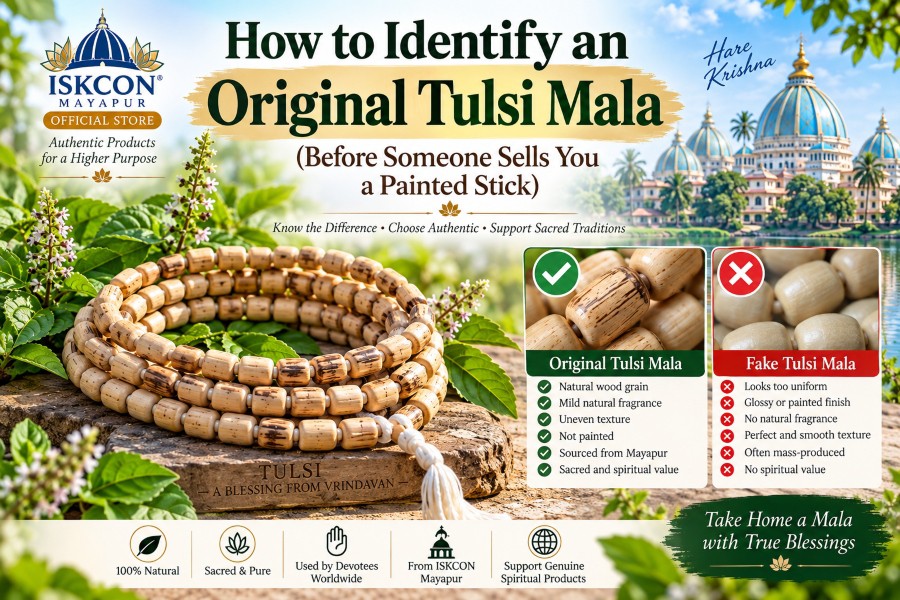 How to Identify an Original Tulsi Mala (Before Someone Sells You a Painted Stick)Most fake tulsi beads look convincing in a photo but fail the moment you hold them. Here are the weight, smell,...Read more
 -
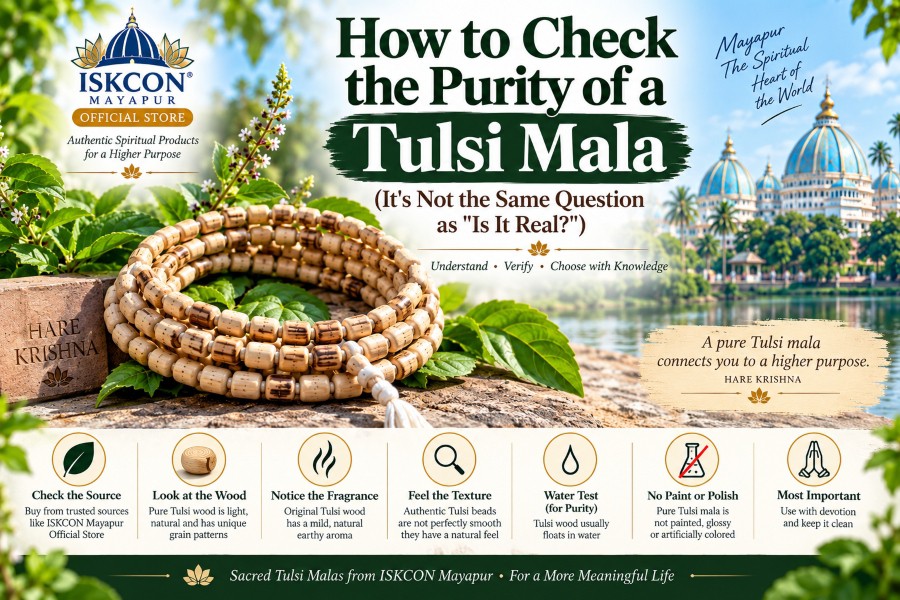 How to Check the Purity of a Tulsi Mala (It's Not the Same Question as "Is It Real?")Purity isn't the same as authenticity. Here's how to check both — whether the beads are genuinely tulsi wood, and...Read more
 -
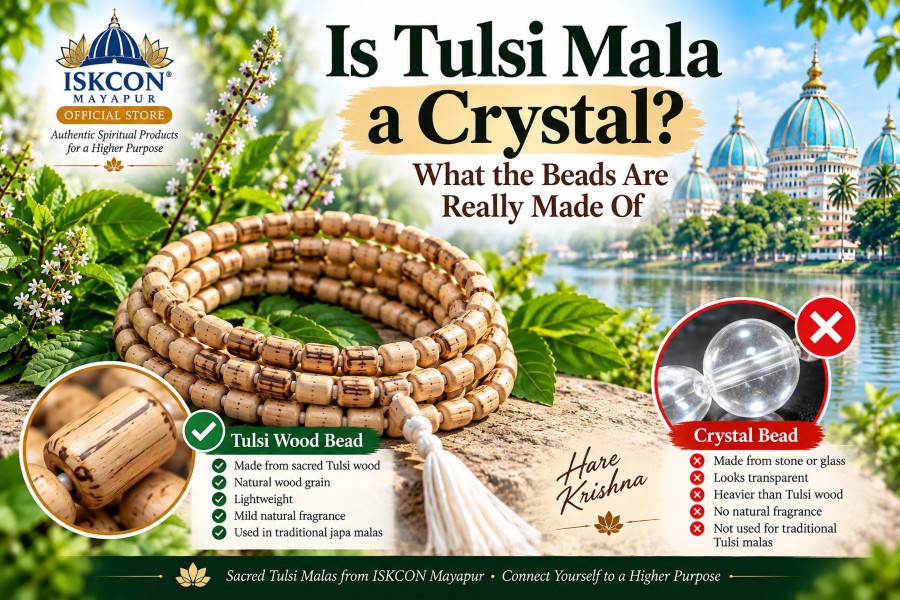 Is Tulsi Mala a Crystal? What the Beads Are Really Made OfTulsi malas often get mistaken for crystal jewellery online. Here's what tulsi beads are actually made of, why the...Read more
 -
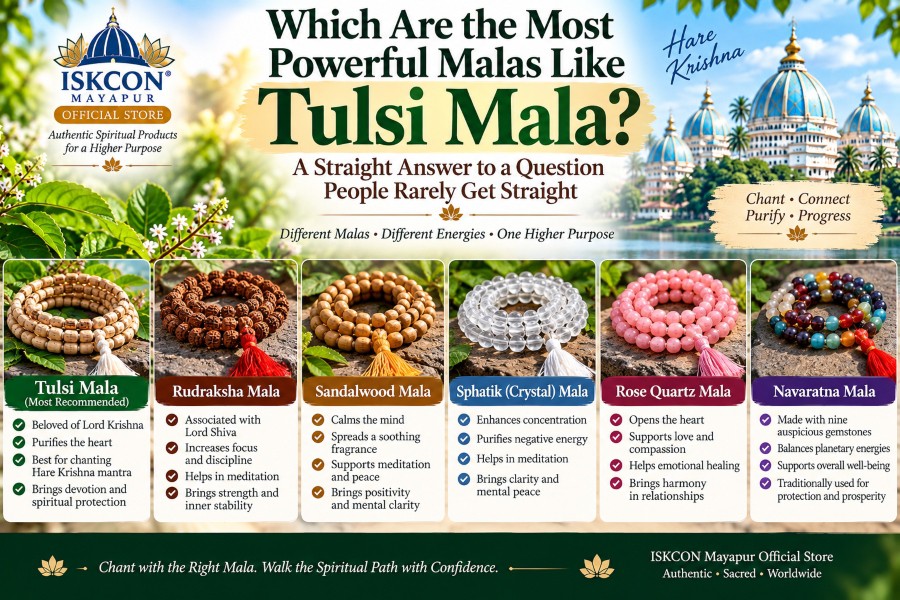 Which Are the Most Powerful Malas Like Tulsi Mala? A Straight Answer to a Question People Rarely Get StraightTulsi, rudraksha, sphatik, sandalwood, and navratna are all called "powerful" — but each belongs to a different...Read more
Leave a comment