
Why did Krishna run to embrace a poor brahmin in rags? Read the Sudama story from the Bhagavatam and learn how a...
Latest posts
-
 Krishna and Sudama: The Poor Brahmin Who Became Wealthy in LoveRead more
 -
 Vamana Avatar: How Three Steps Humbled Bali MaharajaRead more
Why did a powerful king give away three worlds to a boy asking for three steps? Learn the Vamana avatar story from...
-
 The Bhagavatam on Marriage: Duty, Love and Spiritual PartnershipRead more
What does the Bhagavatam say about marriage? Through the stories of Kardama and Devahuti, Rukmini's secret letter and...
-
 What Is Prema? The Bhagavatam's Highest Stage of Love for GodRead more
Prema is love for God with no "because" attached. Learn how the Bhagavatam describes it, the nine steps from faith to...
-
 Is Shiva Parvati Kalyana Mentioned in Srimad Bhagavatam? What the Scripture Really SaysRead more
Looking for Shiva and Parvati's wedding in the Srimad Bhagavatam? Find out what the scripture actually describes,...
-
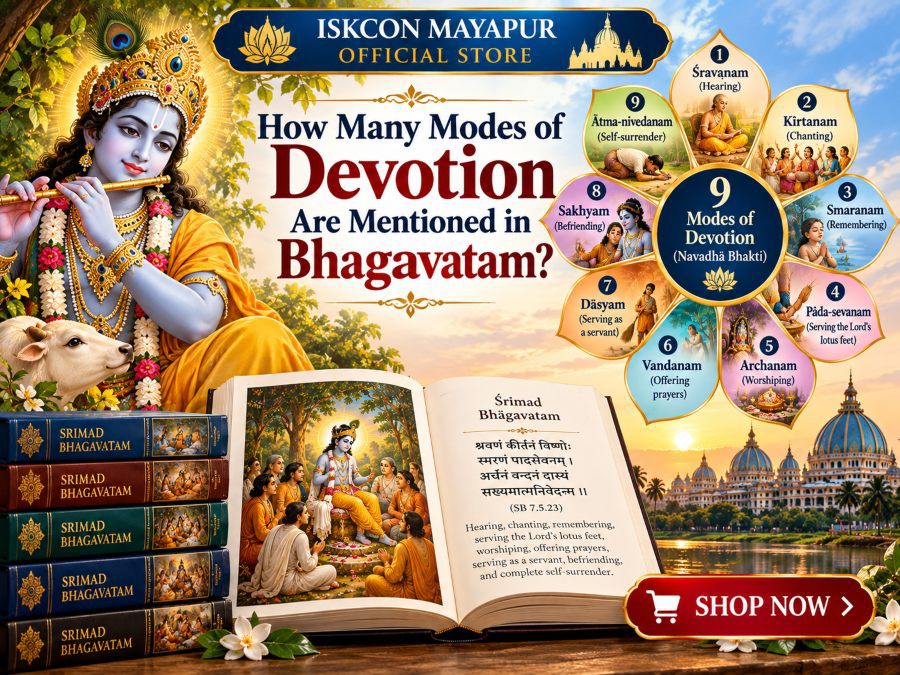 How Many Modes of Devotion Are Mentioned in Bhagavatam?Read more
A young boy named Prahlada listed nine ways to serve God, and the Bhagavatam keeps them as its answer. Learn what the...
-
 What Is Bhagavatam and Why Has It Been Read for 5,000 Years?Read more
A dying king asked one question, and the answer became the Bhagavatam. Learn what this Sanskrit scripture contains,...
-
 Who Is Lord Krishna? His Meaning, Teachings and Pastimes ExplainedRead more
Discover who Krishna is according to Srimad Bhagavatam, including His divine identity, childhood pastimes, teachings,...
-
 Incense in Islam: Bakhoor, Agarbatti and What Tradition SaysRead more
Is burning fragrance part of Muslim tradition? Explore incense in Islam, from the Prophetic practice of fumigating...
-
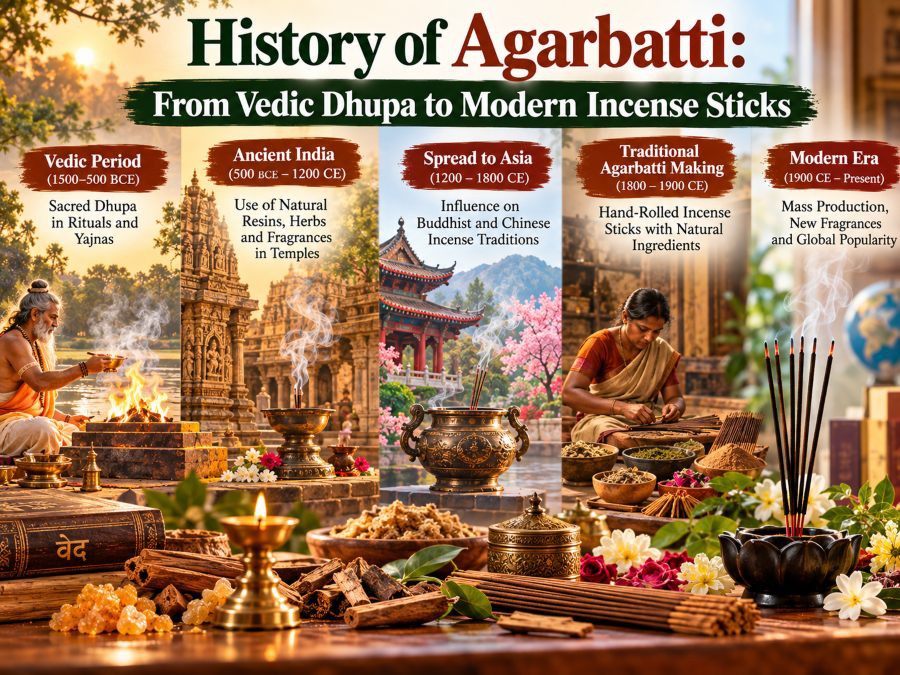 History of Agarbatti: From Vedic Dhupa to Modern Incense SticksRead more
Where did agarbatti really come from? Follow the history of agarbatti from Vedic fire rituals and temple dhupa to...
Blog categories
- Default category (0)
- MUSICAL INSTRUMENT (1)
- BOOK (5)
- DEVOTIONAL GIFT (0)
- Blog (30) click
- CHANDAN (12)
- Bhagavatam Wisdom Series (68)
- Krishna Consciousness (14)
- Mridangam Musical Instrument (6)
- Bhagavad Gita for Beginners (13)
- Bhagavad Gita As It Is (37) click
- Bhagavad Gita As It Is Telugu (0)
- Bhagavad Gita As It Is Marathi (0)
- Bhagavad Gita As It Is In Hindi (0)
- Bhagavad Gita As It Is In English (0)
- Bhagavad Gita As It Is In Bengali (8)
- Bhagavad Gita As It Is In Kannada (0)
- Bhagavad Gita As It Is In Gujarati (0)
- Bhagavad Gita As It Is In Panjabi (0)
- Bhagavad Gita As It Is In Tamil (0)
- Bhagavad Gita As It Is Odia (0)
- BHAGAVAD GITA As It Is GERMAN (0)
- Bhagavad Gita As It Is In French (0)
- Bhagavad Gita As It Is In Nepali (0)
- Bhagavad Gita As It Is In Assamese (0)
- Incense or Agarbatti (38)
- Lord Chaitanya Mahaprabhu (3)
- Vedic Temple Mayapur (14)
- kalki (15)
- Mahabharata – Dharma & Destiny (27)
- Vaishnava Scriptures (4)
- healthy product (4)
- chaitanya mahaprabhu (5)
- Tulsi Mala Guide (17)
Search in blog

Can You Wear a Tulsi Mala Without Diksha? The Honest Answer
Can You Wear a Tulsi Mala Without Diksha? Here's What Actually Happens
Imagine standing in front of a Tulsi Mala display, genuinely drawn to it, and then freezing because someone once told you "you can't wear that until you're initiated." That single sentence has stopped more curious beginners from starting a chanting practice than almost anything else. So let's answer it plainly: can you wear a Tulsi Mala without diksha (formal initiation)? Yes. Completely, unambiguously, yes — and understanding why clears up a surprising amount of confusion around how devotional practice actually works.

Diksha and daily mala-wearing get lumped together constantly, as if one can't exist without the other. They're related, sure. But treating them as a single locked package misunderstands how most practitioners actually begin.
Why This Myth Sticks Around
Nobody starts with false ideas out of nowhere — there's usually a kernel of truth twisted into something stricter than it originally was.
Here's the actual kernel: when someone receives diksha from a spiritual teacher, they're typically given a Tulsi Mala as part of that process, often specifically prepared or chanted over by the guru. That mala carries specific significance tied to the guru-disciple relationship from that point forward. It's meaningful, formal, and tradition-rich.
The mistake happens when people assume that because initiated devotees receive a mala this way, wearing any mala must require the same formal process. That's a logical leap, not an actual rule. Plenty of things happen at initiation that don't become prerequisites for everything related to them. A wedding ring means something specific after marriage — but nobody's arrested for wearing a ring before the ceremony.
What Diksha Actually Is (And Isn't)
Diksha is formal spiritual initiation, where a disciple commits to a specific spiritual teacher and receives guidance, often including a mantra, within an established lineage. It's a serious, considered step, usually taken after a period of genuine practice and reflection rather than on a whim.
What diksha represents:
- A formal commitment to a guru and lineage
- Receiving specific mantra instruction meant for one's personal practice
- Entry into a more structured, accountable relationship with a spiritual teacher
- A milestone many practitioners work toward over months or years, not a starting requirement
What diksha is not:
- A mandatory gate before anyone can chant
- A requirement for wearing devotional items like a Tulsi Mala
- Something forced on beginners or newcomers
- A one-size-fits-all timeline everyone follows identically
Once you separate what diksha actually covers from what people assume it covers, the confusion around mala-wearing mostly dissolves on its own.
So Who Wears a Tulsi Mala Before Initiation?
Honestly? Most people who eventually get initiated wore one long before that point.
This includes:
- Beginners testing out a daily chanting habit, seeing if japa fits into their life before making any formal commitment
- People raised in devotional households, who received their first mala as children, decades before any initiation conversation comes up
- Curious newcomers exploring bhakti from the outside, drawn to the practice without yet knowing whether they'll pursue formal initiation at all
- Long-term uninitiated practitioners, some of whom chant daily for years, deeply and sincerely, without ever formally taking diksha — and that's a completely valid, respected path within the tradition
- Visitors and guests at temples, given a mala as a gift or blessing, with zero expectation attached about future initiation
If wearing a Tulsi Mala genuinely required diksha first, none of these situations would exist. They exist constantly, in nearly every devotional community.
Does Wearing One Early "Skip Ahead" Disrespectfully?
This worry comes up a lot, and it's worth addressing directly because it holds a lot of people back unnecessarily.
Wearing a mala before initiation isn't jumping a queue or claiming status you haven't earned. Nobody looks at an uninitiated person wearing a Tulsi Mala and assumes they're falsely representing themselves as initiated — the two things aren't confused with each other in practice. A mala is a personal devotional tool first; its deeper significance around guru-lineage only applies to the specific mala given during initiation, not to mala-wearing as a general category.
Think of it this way: attending yoga classes doesn't require a certification first. You attend, you practice, you build a relationship with it — and if you eventually decide to pursue teacher training, that's a separate, later step built on top of the foundation you already laid. Chanting with a Tulsi Mala works the same way.
What Actually Changes After Diksha, Then?
If the mala itself isn't the dividing line, what is? A few real things shift after initiation:
- The mantra becomes more specific and personally guided, often received directly from the guru rather than learned more generally
- Accountability increases, since the disciple now has an ongoing relationship with a specific teacher tracking their progress
- The mala received at initiation often carries particular significance, sometimes treated with additional care because of how and by whom it was given
- A sense of formal belonging within a lineage develops, connecting the practitioner to a longer chain of teachers and students
None of these are about permission to wear beads. They're about depth, structure, and relationship — layers added onto a practice that was already happening, not a switch that turns the practice on for the first time.
Choosing a Mala for This Early Stage
If you're in this pre-diksha phase and want to start chanting seriously, picking the right physical mala matters more than people expect, mostly because comfort determines whether you'll actually stick with daily practice.
A Kanthi Mala 3 Round Barrel-Shaped Beads style works well for exactly this stage. The barrel shape sits comfortably against the neck without the sharper edges some rounder bead styles can have, and three rounds give a fuller, more substantial look — useful if you want your mala to feel established even while your practice is still developing. It's a solid, practical choice for someone building consistency rather than waiting for a "more official" version to become available later.
There's no special "pre-diksha mala" category separate from everything else, by the way. The distinction matters for how you think about the mala, not for what physically exists on the shelf.
What If You Never Pursue Diksha at All?
This is worth addressing directly, because plenty of sincere practitioners fall into exactly this category and rarely see it discussed openly.
Some people chant daily for decades, build a genuine, steady relationship with their practice, and simply never take formal initiation — not out of avoidance, but because it never becomes the right fit for their circumstances, or because they're deeply content with an independent practice. This isn't a lesser path or a permanent "in-progress" state waiting to be completed. Within Vaishnava tradition, sincere chanting itself carries real spiritual value regardless of formal status, and plenty of respected practitioners across generations have lived exactly this way.
If diksha eventually feels right, it's there. If it doesn't, the daily practice built with an ordinary Tulsi Mala still stands on its own, complete and meaningful, without needing formal validation to justify it.
A Note on Family Expectations Around Initiation Timing
Sometimes the pressure to rush toward diksha doesn't come from tradition at all — it comes from well-meaning family members eager to see a loved one "officially" committed to a practice they've been quietly building for years.
That pressure, understandable as it is, can backfire. Initiation taken too early, before genuine readiness, often ends up feeling more like an obligation than a considered choice, and that undercuts exactly the kind of sincerity the whole process is meant to reflect. A slower, more organic path — starting with a simple mala, building consistency, letting curiosity deepen naturally — tends to produce a far sturdier foundation than rushing toward a formal milestone before it's genuinely wanted.
If someone around you is pushing a timeline that doesn't match your own readiness, it's completely reasonable to say so. Practice deepens on its own schedule, not someone else's calendar.
Common Myths Worth Retiring
Myth 1: "You need a guru's permission before wearing any Tulsi Mala." Permission is required for receiving a mala from a specific guru during initiation. It's not required for picking one up and starting daily practice independently.
Myth 2: "Wearing one without diksha is spiritually risky." There's no tradition of punishment attached to early, sincere practice. If anything, starting earlier tends to be encouraged, not discouraged.
Myth 3: "Uninitiated people can't really chant properly." Chanting the maha-mantra or other widely available mantras doesn't require initiation. Millions of practitioners do this daily without having taken diksha, some for their entire lives.
Myth 4: "You'll have to throw away your old mala once you get initiated." Not true. Many devotees keep their earlier mala as a personal keepsake or backup, alongside whatever they received during initiation. Nothing requires discarding it.
Myth 5: "Only people planning to get initiated eventually should wear one." Plenty of long-term practitioners never pursue formal initiation and chant just as consistently and sincerely as those who do. The mala doesn't require a stated future plan to be meaningful right now.
Building Genuine Practice Before Initiation
If you're wearing a mala and chanting without diksha, here's what actually matters during this stage:
- Consistency over intensity. A handful of rounds daily, done reliably, builds more real practice than sporadic ambitious sessions.
- Curiosity about the philosophy. Reading, listening to kirtan, or spending time around devotional community deepens understanding organically, without forcing a timeline.
- Honest self-reflection, not performance. You don't need to look or sound like a long-term practitioner. Where you actually are is the starting point that matters.
- No rush toward initiation for its own sake. Diksha works best as a considered decision after genuine practice, not a box checked to seem more "legitimate."
The Bottom Line
You can absolutely wear a Tulsi Mala without diksha, and doing so doesn't misrepresent your spiritual status, disrespect the tradition, or skip a required step that doesn't actually exist. Formal initiation adds depth and structure to an already-existing relationship with practice — it doesn't create permission for that practice to begin in the first place.
If you're standing in front of a mala right now, wondering whether you're "allowed," the honest answer is simple: you already are. Start wearing it, start chanting, and let the rest of your practice unfold at whatever pace feels genuine to you.
Posted in: Tulsi Mala Guide
Related posts
-
 Where to Buy a Real Tulsi Mala Online Most tulsi malas sold online are fake, dyed, or mislabeled. Here's how to spot genuine tulsi wood, why traceability...Read more
 -
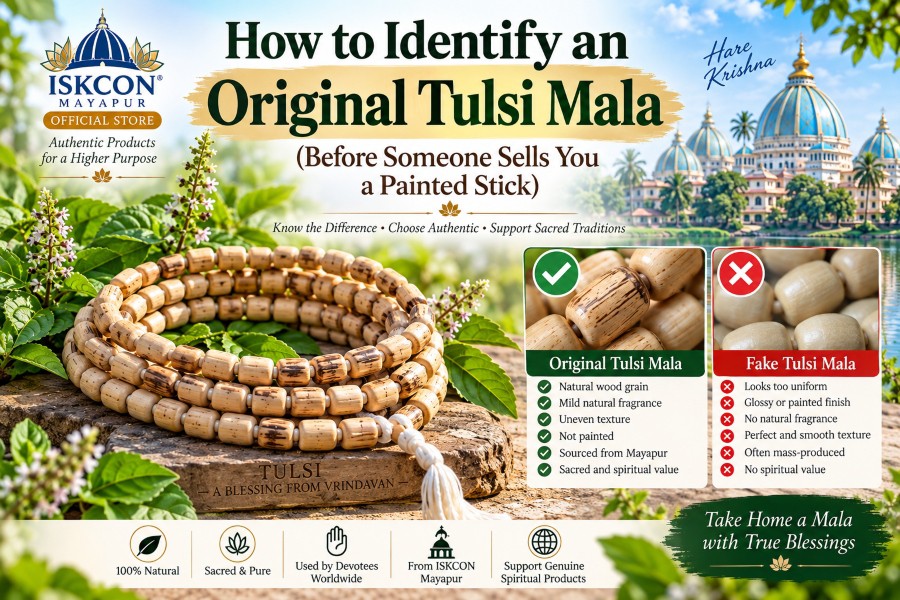 How to Identify an Original Tulsi Mala (Before Someone Sells You a Painted Stick)Most fake tulsi beads look convincing in a photo but fail the moment you hold them. Here are the weight, smell,...Read more
 -
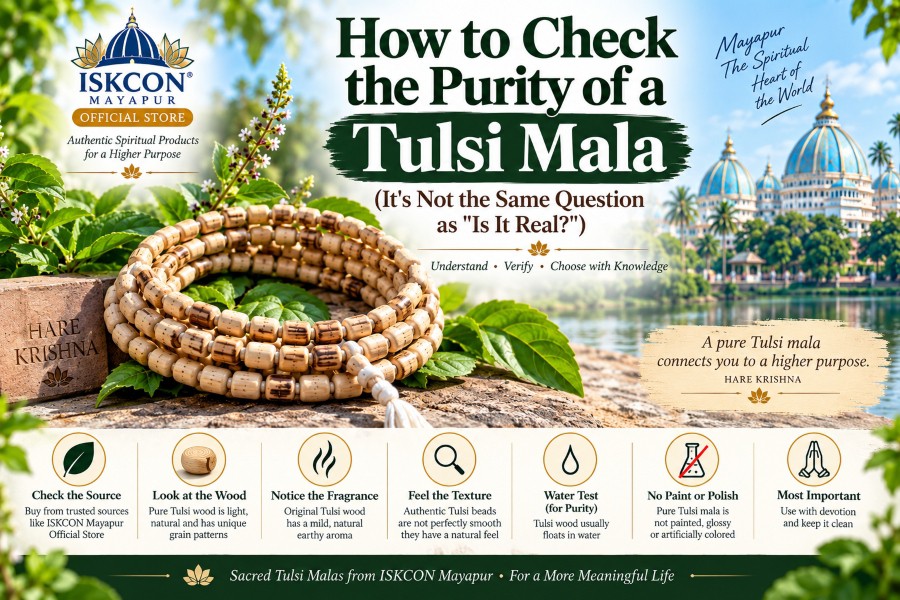 How to Check the Purity of a Tulsi Mala (It's Not the Same Question as "Is It Real?")Purity isn't the same as authenticity. Here's how to check both — whether the beads are genuinely tulsi wood, and...Read more
 -
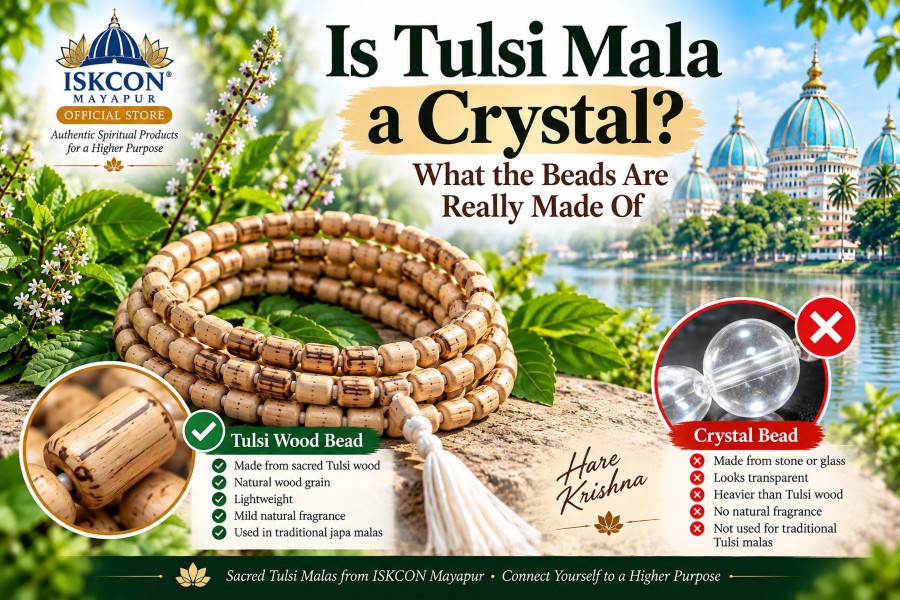 Is Tulsi Mala a Crystal? What the Beads Are Really Made OfTulsi malas often get mistaken for crystal jewellery online. Here's what tulsi beads are actually made of, why the...Read more
 -
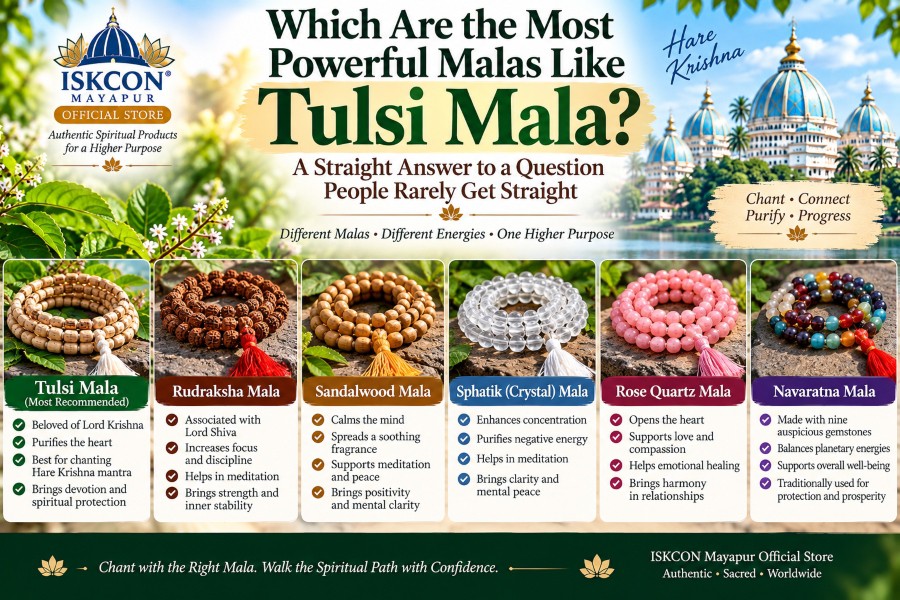 Which Are the Most Powerful Malas Like Tulsi Mala? A Straight Answer to a Question People Rarely Get StraightTulsi, rudraksha, sphatik, sandalwood, and navratna are all called "powerful" — but each belongs to a different...Read more
Leave a comment